Solving the Real-World Barriers to Better Patient Care with the Right Accountable Care Organization Model
The U.S. healthcare system is in the midst of a high-stakes transformation. As costs continue to soar and chronic conditions become the norm rather than the exception, the pressure is on to deliver care that’s not only effective but also efficient, coordinated, and centered around the patient.
This is where the Accountable Care Organization (ACO) healthcare model comes into play. More than just a policy shift, it represents a fundamental rethinking of how care is delivered, measured, and paid for.
But is the system ready for it? Can traditional workflows and outdated technology support such an ambitious change? The stakes are real, especially for smaller providers and rural clinics already stretched thin. For ACOs to succeed, we must confront the tough questions and find solutions that work in the real world. If you're navigating the shift to value-based care, understanding what makes an ACO thrive (or fail) has never been more urgent.
Why ACOs Matter in Today’s Healthcare Landscape
The ACO healthcare model was developed to transform how care is delivered, shifting the focus from volume to value. At its core, the model aims to deliver better care for individuals, improve population health, and reduce overall healthcare costs. Under programs like the Medicare Shared Savings Program (MSSP), participating providers share responsibility and financial incentives for meeting quality and efficiency benchmarks.
With the rising burden of chronic disease, aging populations, and unsustainable healthcare spending, the ACO model is more relevant than ever. According to a systematic review published by CMS, over 214 ACOs participating in Medicare programs saved an estimated $2.8 billion over a decade without any decline in quality of care (Nyweide, 2025). This shows the potential impact of ACOs when they function as intended.
Yet, while the vision is promising, execution remains complex. Many healthcare organizations, especially smaller and rural ones, struggle to implement the model due to financial, operational, and technological barriers.
What an Effective ACO Model Should Have to Fight Challenges
The ideal ACO healthcare model must be equipped to tackle specific challenges that commonly derail care coordination, patient engagement, and outcome improvement. Let’s break this down into key focus areas:
1. Seamless Data Integration and Interoperability
Coordinated care requires seamless data flow between hospitals, primary care providers, specialists, and community health organizations. However, data fragmentation remains a widespread issue. Providers often operate within different EHR systems, leading to gaps in patient information and communication. These challenges are further compounded in academic and multi-provider settings, where institutional silos and disparate data systems hinder integrated care delivery (Tallia & Howard, 2012).
A study of Rural Health Clinics (RHCs) revealed that over 43% cited inadequate capital for IT upgrades as a significant barrier to ACO participation. Without robust data integration, care teams lack a full picture of patient history, treatment plans, and progress (Ortiz et al., 2013).
2. Real-Time Risk Identification and Population Health Management
The success of the ACO healthcare model depends on identifying at-risk individuals before their health conditions escalate. Yet, many providers lack the tools to proactively monitor patients and stratify them by risk level.
Data from CMS indicates that ACOs with better analytics capabilities were more successful in reducing costs and improving care (Nyweide, 2025). Providers need dashboards that can flag rising-risk patients, track clinical trends, and support data-driven decisions.
3. Patient Engagement and Adherence Support
One of the core promises of ACOs is a patient-centered approach. However, that’s hard to achieve when patients are disengaged or overwhelmed by fragmented care instructions.
In the RHC study, 58% of clinic leaders saw improved patient quality of care as the biggest benefit of ACO participation, followed closely by “a focus on the patient” at 54%. But turning that aspiration into reality requires tools that help patients understand, follow, and commit to their care plans especially those managing chronic conditions.
4. Streamlined Governance and Operational Alignment
Successful ACOs require more than technology they need clear governance. Coordinating multiple organizations under one financial and quality umbrella is complex, as implementation studies show that internal misalignment and lack of structured leadership often slow down ACO development (Walker et al., 2017).
As shown in the Silver Cross Hospital case study, misalignment between stakeholders, unclear roles, and lack of shared leadership structures can stall progress (Morrissette, 2012). ACOs must have well-defined operational workflows that balance collaboration with accountability.
5. Regulatory Compliance and Quality Reporting
Medicare ACOs must meet more than 30 quality metrics annually. Tracking and reporting these manually is resource-intensive, especially for small practices or clinics operating with lean administrative teams.
Legal and regulatory barriers were cited by 51% of RHCs as a major concern in joining ACOs (Ortiz et al., 2013). Any scalable ACO model must automate reporting tasks and ensure compliance without overwhelming providers.
6. Sustainable Financial Models and Shared Savings
Financial risk is a make-or-break factor. While shared savings are an incentive, many smaller providers fear downside risk or lack the bargaining power to earn meaningful returns.
Concerns around financing were the most frequently cited barrier to ACO participation by RHCs (Ortiz et al., 2013). To work, the ACO model must be financially viable not just for large health systems but also for smaller, independent, or rural providers who need affordable, scalable solutions.
How Calcium Is Addressing These Challenges
Digital health platforms like Calcium are redefining what’s possible in the ACO healthcare model. By integrating smart technology with human-centered design, Calcium helps providers and patients stay aligned, informed, and proactive. Here’s how:
360° Data Integration and Provider Insights
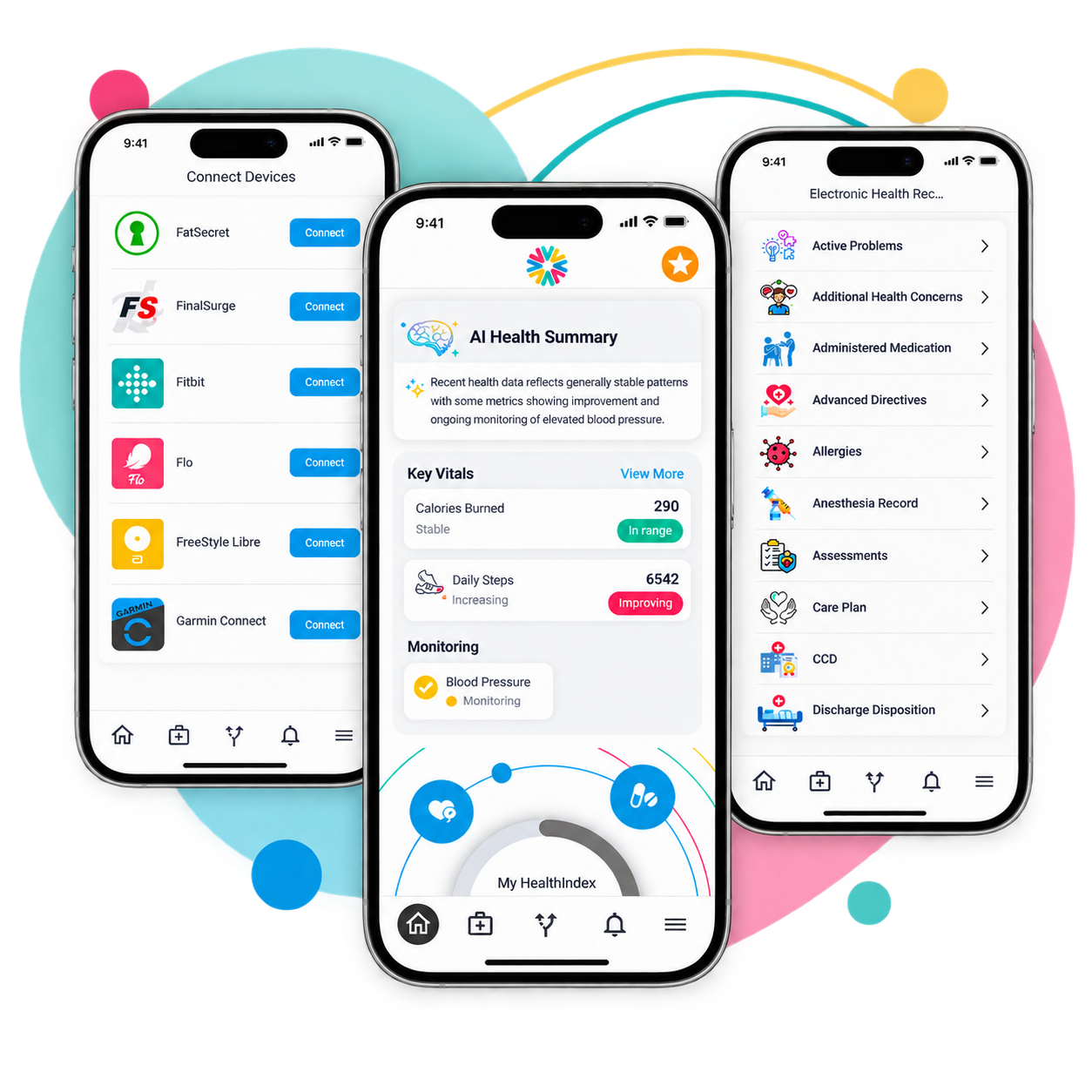
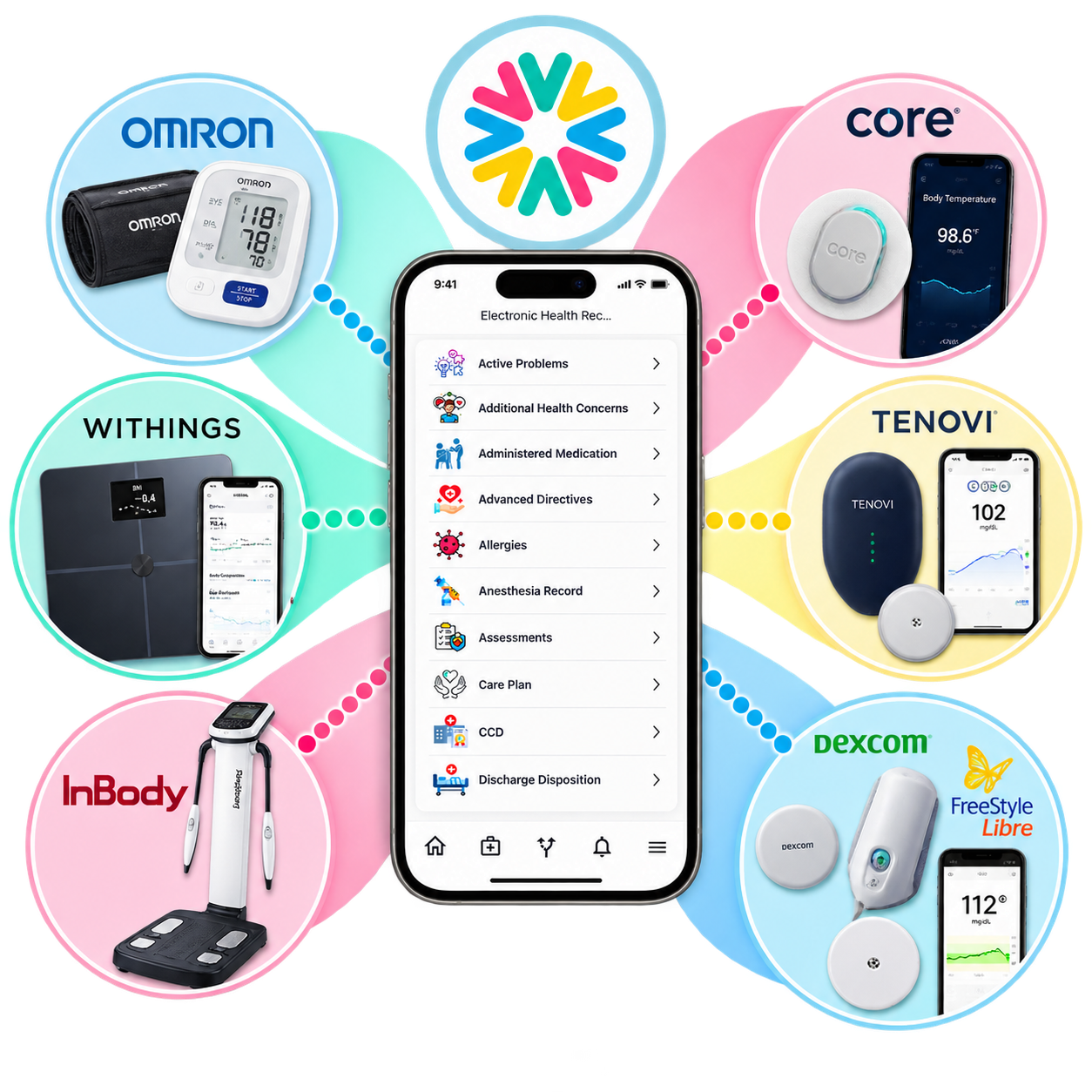
Calcium Core gives healthcare teams real-time access to electronic health records, medical device data, patient-reported outcomes, and app-tracked vitals. This full-circle data integration enables true interoperability across care settings.
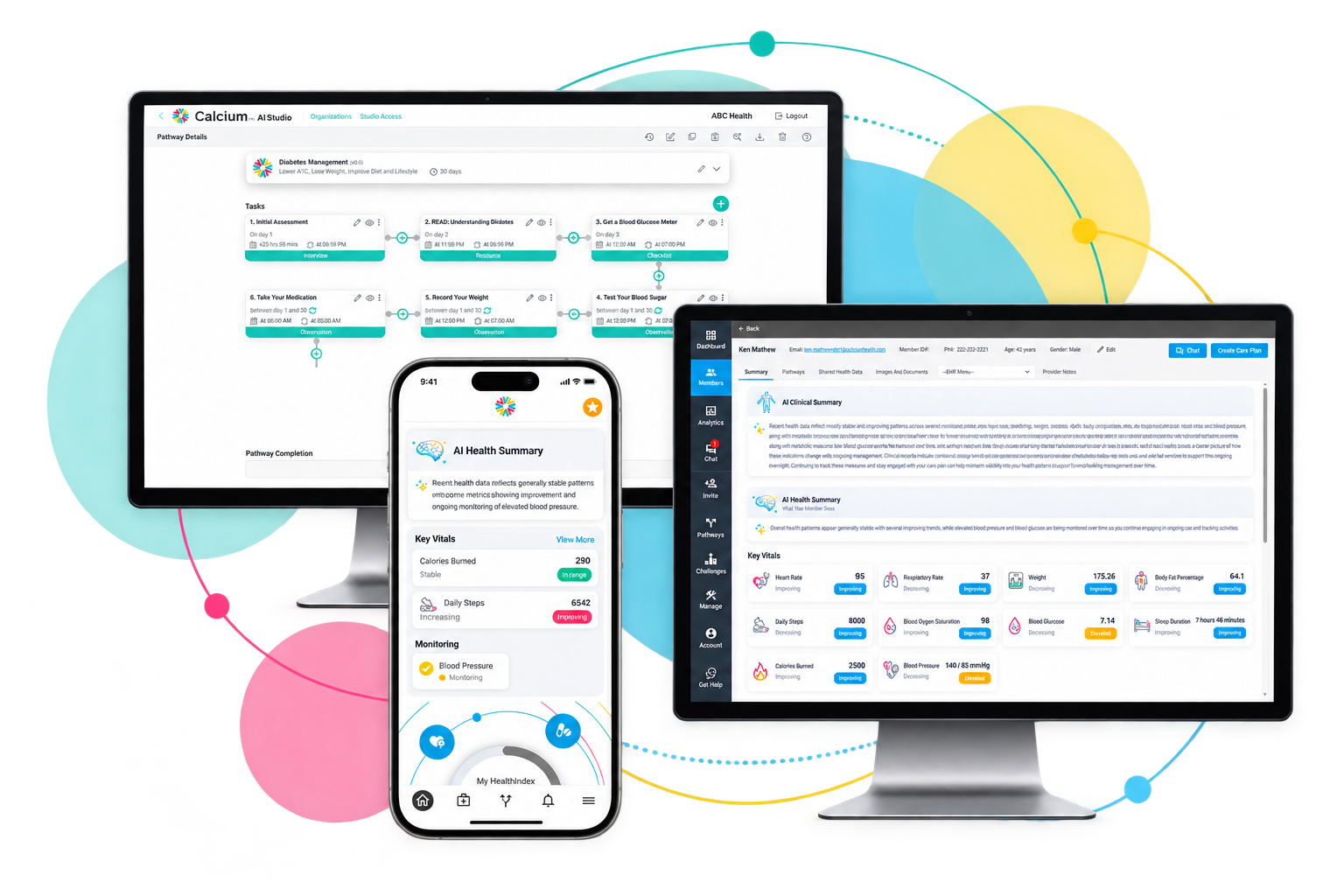
With one unified dashboard, providers can monitor patient progress, view lab results, and receive alerts about missed medications or abnormal vitals—all in real time. By resolving data fragmentation, providers gain a complete view of patient history and treatment progress in one place.
AI-Powered Risk Stratification and Pathway Automation
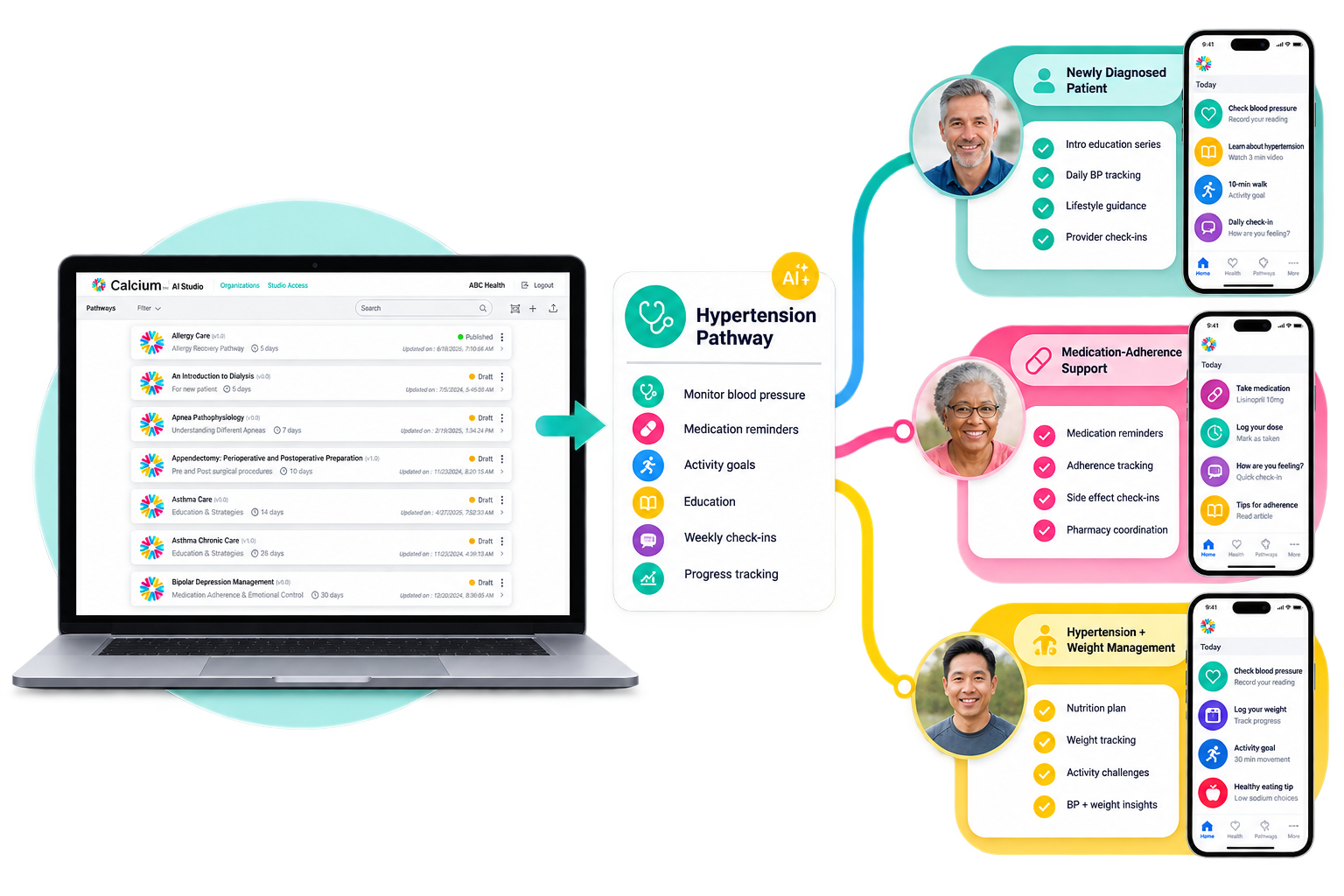
Using Calcium AI Studio, providers can build intelligent care pathways that adapt in real time to patient behavior, vitals, and engagement. Whether managing a chronic illness or guiding recovery after surgery, these digital pathways provide tailored, step-by-step instructions.
More importantly, providers can assign, track, and adjust these pathways from within the dashboard making it easier to manage large patient populations without compromising quality.
Patient Engagement Through the Super App
The Calcium Super App empowers patients to take an active role in their health. Features include:
- Personalized care pathways with progress tracking
- Daily medication reminders and symptom logging
- Health journal entries and educational content
- Gamified achievements and motivational messaging
By turning daily health management into a guided experience, the app drives compliance and long-term behavior change two essentials for meeting ACO quality benchmarks.
Governance-Friendly Design for Multi-Provider Collaboration
For ACOs involving multiple clinics, practices, or provider types, governance and structure can be tricky. Calcium supports flexible organizational hierarchies, allowing administrators to create sub-groups, assign care teams, and manage permissions easily.
This capability supports the kind of collaborative governance needed for complex ACO models without causing operational gridlock.
Simplified Reporting and Compliance Monitoring
Calcium automates the collection of quality measure data from various sources devices, apps, patient responses, and EHRs making compliance reporting significantly easier.
This built-in functionality helps practices of all sizes stay aligned with CMS and private payer requirements, ensuring they remain eligible for shared savings and value-based contracts.
Financial Accessibility and Scalability
Calcium’s modular approach and cloud-based infrastructure make it accessible to smaller providers who otherwise wouldn’t have the resources to participate in ACOs.
With no need for expensive hardware or long implementation timelines, clinics can start improving outcomes and lowering costs almost immediately positioning themselves for success in the ACO healthcare model without overextending their budgets.
The Wrap
The ACO healthcare model isn’t just a trend it’s the future of value-driven care.
But success depends on more than good intentions. It requires the right infrastructure, tools, and technology to overcome the challenges that stall progress and compromise outcomes. From fragmented data to patient disengagement and resource constraints, the road to ACO success is filled with real obstacles.
Fortunately, platforms like Calcium are bridging the gap between vision and reality. Whether you're a large health system or a small clinic exploring value-based care, Calcium offers scalable, intuitive solutions designed to help you thrive in the ACO model.
Reference
- Ortiz, J., Bushy, A., Zhou, Y., & Zhang, H. (2013). Accountable Care Organizations: Benefits and Barriers as Perceived by Rural Health Clinic Management. Rural and Remote Health, 13(2), 2417. https://pmc.ncbi.nlm.nih.gov/articles/PMC3761377/
- Walker, D. M., Hefner, J. L., Sova, L. N., Hilligoss, B., Song, P. H., & McAlearney, A. S. (2017). Implementing Accountable Care Organizations. Journal of Healthcare Management, 62(6), 419–431. https://doi.org/10.1097/jhm-d-16-00021
- Tallia, A. F., & Howard, J. (2012). An Academic Health Center Sees Both Challenges And Enabling Forces As It Creates An Accountable Care Organization. Health Affairs, 31(11), 2388–2394. https://doi.org/10.1377/hlthaff.2012.0155
- Nyweide, D. J. (2025). The First Decade of ACO Model Evaluations in the Medicare Program: A Systematic Review. Medical Care Research and Review. https://doi.org/10.1177/10775587251325914
- Morrissette, S. G. (2012). Governance Issues in the Transition to Accountable Care: A Case Study of Silver Cross Hospital. Hospital Topics, 90(4), 104–112. https://doi.org/10.1080/00185868.2012.737755