
DIGITAL HEALTH PLATFORM FOR SURGICAL CARE
Better Prepared Patients. Better Connected Surgical Care.
Your clinical expertise. Your surgical protocols. A more connected way to support every patient.
Connect the surgical journey from pre-op preparation through post-op recovery.
Calcium helps surgical groups, ambulatory surgery centers, plastic surgery practices, and hospital surgical lines bring preparation, patient guidance, health information, and recovery updates into one connected digital experience. Give patients clearer next steps while helping your team focus attention where it matters most.
A BETTER WAY TO CONNECT SURGICAL CARE
Surgery Is an Episode. Manage It Like One.
One connected journey. Before surgery. After surgery. Around the patient.
Link preparation, patient participation, and recovery around a continuous plan.
Surgical care does not begin at check-in or end at discharge. It includes the preparation that makes the procedure possible, the information that informs care, and the everyday actions that support recovery. Calcium connects these stages through Digital Pathways, shared patient information, and provider oversight. Instead of treating each interaction as a separate task, your organization can establish a guided journey that keeps patients participating and gives your team a clearer view of what needs attention.
Prepare With Purpose
Turn clinician-approved preparation instructions into scheduled activities, education, reminders, and questions. Help patients understand what comes next while creating opportunities to identify confusion or incomplete steps before surgery.
Connect the Patient Picture
Bring available records, patient responses, pathway activity, and supported health measurements into a more longitudinal view. Give authorized teams additional context for conversations and follow-up across the surgical episode.

Keep Recovery Connected
Extend the discharge plan through structured guidance, recovery activities, and patient check-ins. Create a practical connection between what patients experience at home and what your assigned care team can review and monitor.
THE SURGICAL CARE GAP
The Procedure Is Planned. The Journey Around It Can Still Be Fragmented.
Disconnected preparation and recovery create work your surgical team should not have to repeat.
Your team can plan an excellent procedure and still encounter problems in the activities surrounding it. A patient misunderstands preparation instructions. An important question remains unanswered. Staff repeat the same information across multiple calls.
After discharge, recovery updates arrive inconsistently or not at all. These gaps create additional work and uncertainty for patients and providers. A more connected surgical journey starts by addressing the coordination challenges that occur before patients arrive and after they return home.

Fragmented Preparation
Instructions, patient information, preparation tasks, and questions can be scattered across handouts, phone calls, portals, and different organizations. Staff must connect the pieces while patients try to understand what they need to do.
Repetitive Coordination
Reminders, preparation checks, routine education, and follow-up calls consume time across every surgical case. When each interaction requires manual initiation, supporting more patients can mean creating more work for an already busy team.
Limited Recovery Visibility
The patient leaves the facility, but the surgical journey continues. Without structured check-ins, teams may have little information about recovery until someone calls, reports a concern, or returns for an appointment.
Inconsistent Patient Experiences
Different surgeons, procedures, and locations can create different instructions and follow-up routines. Appropriate clinical variation matters, but avoidable inconsistency makes the experience harder for patients to follow and organizations to manage.
THE CONNECTED SURGICAL WORKFLOW
Keep Care Moving From Preparation Through Recovery
Translate your protocols into patient action, useful information, and appropriate follow-up.
A connected surgical program needs more than a sequence of automated messages. It needs appropriate guidance, opportunities for patients to respond, and clear ownership of what happens next.
Calcium supports that workflow by linking patient activities with information your team can review. Begin with your clinical protocols, define the preparation and recovery steps, and establish who handles questions or concerns. Then use the digital journey to reinforce participation and inform follow-up throughout the episode.
1. Prepare
Start with the right pathway.
Select the patient group, approve the clinical content, and assign the right Digital Pathway. Establish preparation activities, educational resources, questions, and reminders that reflect your care model.

2. Review
See what may need attention.
Review available patient responses, pathway participation, and relevant health information. Identify unanswered questions or incomplete activities that warrant contact before the scheduled procedure.
3. Guide
Make the next step clear.
Deliver approved instructions and reminders through the Calcium Super App. Give patients practical direction as they move from preparation into recovery, rather than relying exclusively on memory and printed materials.

4. Monitor
Invite meaningful recovery updates.
Ask patients to report symptoms, complete recovery check-ins, and share appropriate measurements. Collect information that relates to the care plan rather than creating unnecessary reporting work.

5. Prioritize
Connect information with human attention.
Use patient responses, status, and configured alerts to organize review. The responsible team determines urgency, contacts patients when needed, and documents clinical decisions through established processes.

6. Improve
Learn from the journey.
Review member participation, patient feedback, recurring questions, and workflow performance. Then refine the assigned pathways and review processes as your team learns where patients need more support.
WHAT CONNECTED SURGICAL CARE MAKES POSSIBLE
More Visibility. Less Routine Coordination. A More Consistent Journey.
Put digital guidance to work around the priorities your surgical organization already manages.
The value of connected surgical care shows up in practical moments: a patient completes an important preparation step, a nurse sees a concern before making another routine call, or a recovery question reaches the right team.
Calcium brings digital guidance and provider visibility together around those moments. The goal is not simply more communication. It is a more organized way to support patients, use staff time, and understand where your surgical workflows need attention.
Support Better Preparation
Support Better Preparation
Reinforce instructions with scheduled activities, education, and reminders. Help patients ask questions, report barriers, and complete important preparation steps while giving staff visibility into areas that may require follow-up.
Reduce Repetitive Outreach
Automate appropriate education, reminders, and routine check-ins throughout the surgical journey. Reduce repetitive outreach while reserving personal calls and clinical conversations for patients and situations requiring greater human attention.
Keep Recovery in View
Collect structured patient updates after discharge, including symptoms, participation, and recovery progress. Give surgical teams greater context between scheduled appointments and help identify situations that may warrant additional follow-up.
Support More Predictable Surgery Days
Identify preparation gaps earlier and give staff greater visibility into readiness-related issues that could create avoidable disruption. Support smoother surgical days while maintaining established scheduling, clearance, and clinical workflows.
Create Consistency Across Your Organization
Build shared pathway foundations across procedures, surgeons, and locations while supporting appropriate clinical variation. Give patients a more organized, recognizable experience and help teams deliver surgical workflows more consistently.

Make Program Performance More Visible
Review pathway participation, patient responses, feedback, and available trends alongside operational measures. Give leaders greater visibility into program performance, identify recurring opportunities, and understand where surgical workflows need improvement.
GUIDANCE PATIENTS CAN PUT INTO PRACTICE
Give Patients Confidence About What Comes Next
Put preparation and recovery guidance where patients can return to it throughout the journey.
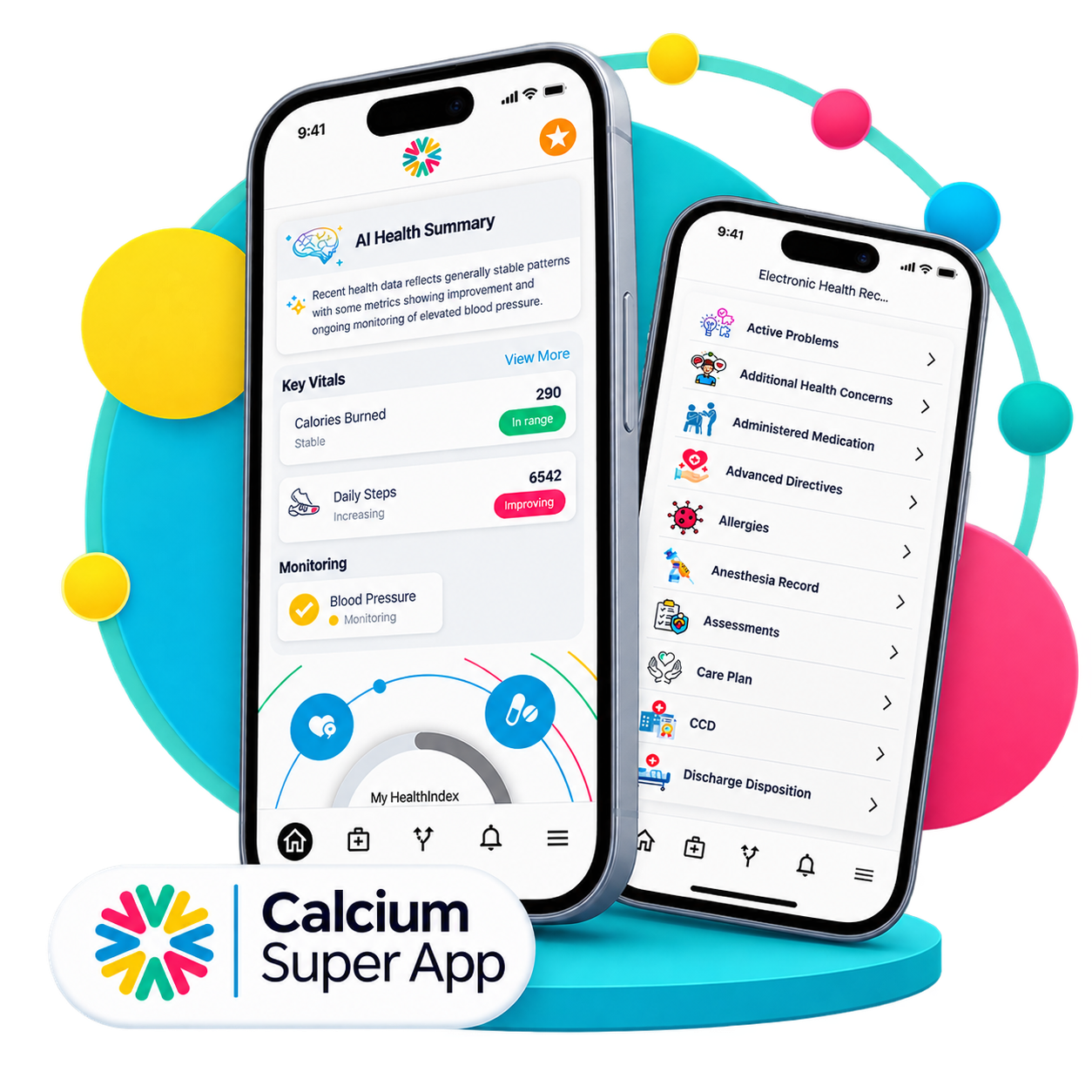
Patients should not have to remember every instruction from a consultation or search through multiple documents to understand their next step. The Calcium Super App gives them a place to engage with assigned surgical pathways, review guidance, track activities, and share relevant updates.
Your team determines the clinical content, while the app helps make participation part of the patient’s daily routine. The experience connects preparation and recovery without asking patients to navigate the journey alone.
Prehab: Get Healthier Before Surgery
Help patients improve modifiable health factors before surgery with clinician-directed Digital Pathways for weight management, blood pressure control, physical activity, nutrition, smoking cessation, and other optimization goals. Reinforce daily actions, track relevant progress, and help patients work toward the health targets their care team establishes before a procedure.
Before Surgery: Clearer Preparation
Help patients prepare for surgery with clinician-approved instructions, educational resources, medication-related reminders, readiness questions, and scheduled activities. Reinforce important steps throughout the pre-op period, give patients a clear understanding of what comes next, and provide opportunities to identify questions or preparation barriers before the day of surgery.
After Surgery: A Guided Recovery Experience
Extend the care plan beyond discharge with clinician-approved recovery guidance, medication reminders, symptom questions, activities, and progress check-ins. Help patients understand what they should be doing throughout recovery while creating recurring opportunities to share their experiences, concerns, and progress with the surgical team responsible for their care.
Between Interactions: A Place to Stay Organized
Give patients one convenient place to access assigned Digital Pathways, medication tracking, health journaling, shared health information, reminders, and other relevant activities. Help them stay organized between appointments while keeping important information and everyday health actions connected to the care plan established by their clinical team.
A CLEARER VIEW FOR THE SURGICAL TEAM
See Beyond the Surgical Encounter
Bring patient participation, reported concerns, and available health information into the review process.
A surgical team needs more than confirmation that a message was sent. It needs to understand what the patient completed, what they reported, and whether additional contact may be appropriate.
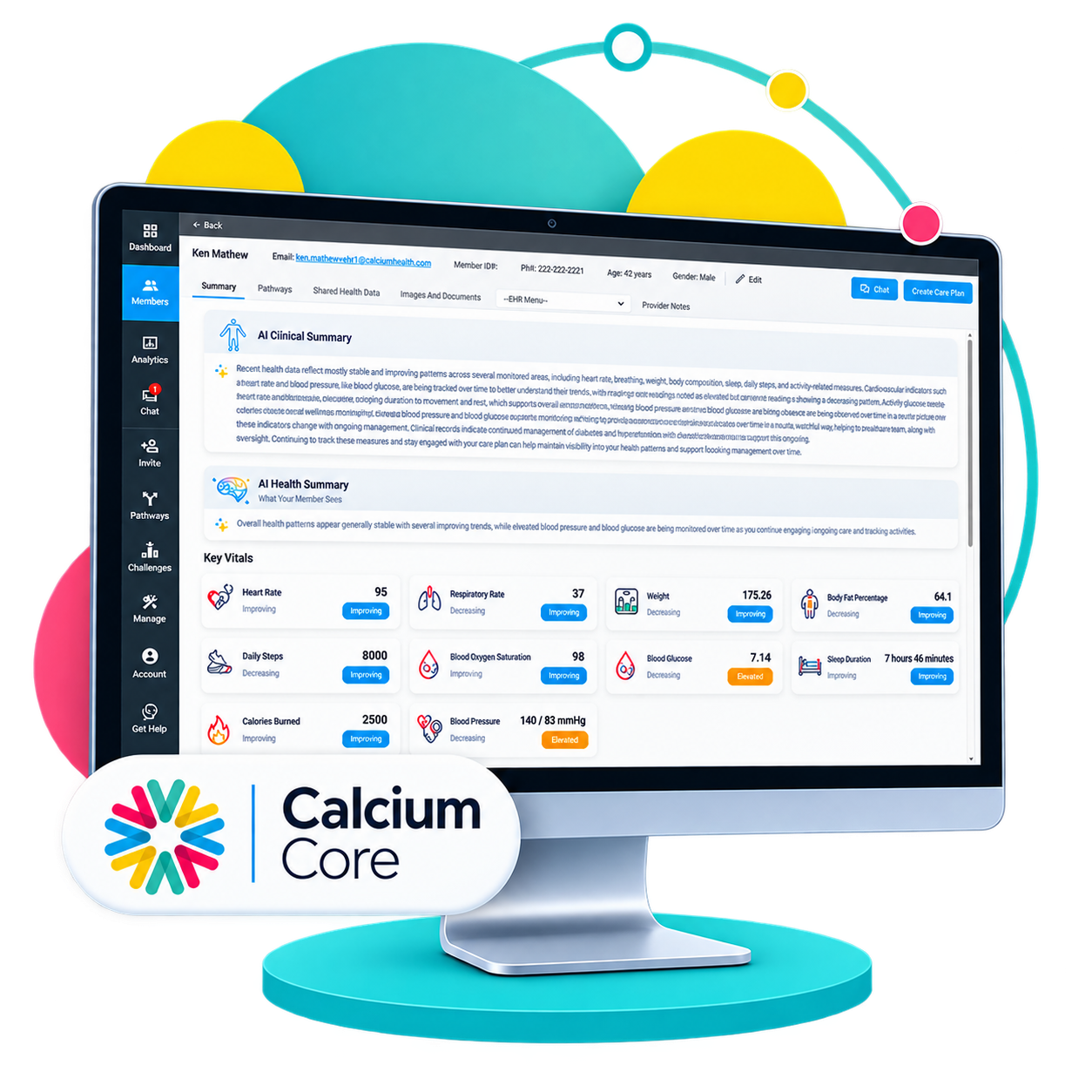
Calcium Core brings available health information and shared pathway activity into a provider-facing environment. Your staff can review patient responses, follow trends, and organize attention around reported needs. That context supports more informed conversations before surgery and a more structured approach to follow-up afterward.
Review Preparation and Participation
See assigned pathways, available responses, and recent patient activity. Use that information to support preparation conversations and identify patients who may need help participating.
Understand Reported Changes
Review patient responses alongside available records and shared measurements. Consider the patient’s context before deciding whether outreach, additional assessment, or a change in the care plan is appropriate.
Organize Follow-Up
Use group views, patient status, and alerts to help structure staff review. Establish who handles each group and how questions move from review to an appropriate response.
Learn Across Your Patient Group
Review available pathway responses and health trends across your program. Identify recurring questions or participation barriers that may indicate an opportunity to improve guidance.
ONE CONNECTED PLATFORM
Connect Provider Oversight With Patient Action
Calcium Core, AI Studio, and the Super App work together around your surgical program.
Surgical coordination works best when the patient’s experience and the team’s workflow are connected. Calcium brings those roles together through three complementary components: Core for provider visibility, AI Studio for pathway development, and the Super App for patient participation.
Together, they help your organization translate its surgical protocols into a guided digital experience. Your clinical team remains responsible for care, while Calcium supplies the tools to deliver guidance, collect updates, and review the journey over time.
Calcium Core
See and organize the patient journey.
Bring available clinical records, patient-shared health information, Digital Pathway responses, and supported device data into a provider-facing environment. Organize patients into groups, review activity and trends, and support the team’s follow-up process.
Calcium AI Studio
Turn your protocols into Digital Pathways.
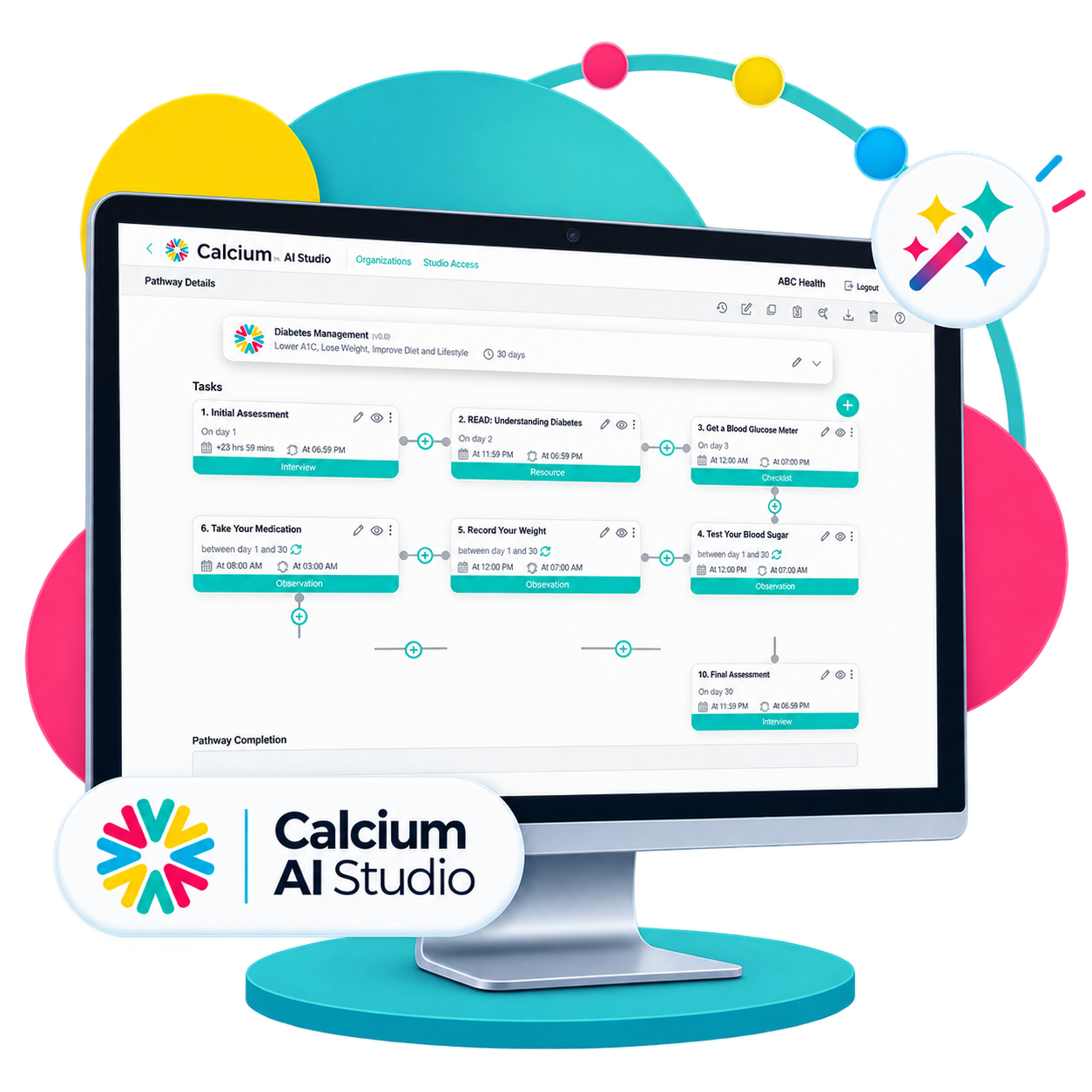
Create pathways, adapt existing pathways, or begin with an AI-generated draft. Configure the content around your program, then have clinical owners review and approve the instructions, questions, and activities before publication and patient assignment.
Calcium Super App
Put the pathway in the patient’s hands.
Give patients access to assigned pathways, reminders, medication tracking, health journaling, and shared health information. Create recurring opportunities for patients to participate and provide updates before surgery and throughout recovery.
BUILT AROUND YOUR SURGICAL ORGANIZATION
One Platform. Different Surgical Priorities.
Configure the experience around the way your team delivers care.
An ambulatory surgery center, a plastic surgery practice, and a hospital service line do not evaluate technology in exactly the same way. One may prioritize preparation and staff capacity; another may emphasize patient experience or consistency across locations.
Calcium provides a shared foundation that can be configured around those different priorities. Start with the workflows most relevant to your organization, then connect patient guidance, available information, and team review in a way that supports your surgical model.
Ambulatory Surgery Center (ASC)
Help Every Case Arrive Better Prepared.
Keep patient preparation moving without making every reminder another staff task. Use procedure-specific pathways to reinforce instructions, collect readiness responses, and support follow-up before arrival. Continue the connection after discharge with structured recovery guidance and check-ins. Focus your initial program on the preparation or communication challenges that create the most friction for your ASC.

Plastic and Cosmetic Surgery Practices
Extend Your Standard of Care Beyond the Practice.
Give patients a more organized experience before and after their procedure. Reinforce expectations, provide approved recovery guidance, and invite updates that help staff understand patient questions. Maintain a personal standard of care while using digital pathways for routine activities that do not require a new phone call. Evaluate the experience through patient feedback, participation, and communication workload.
Surgical Groups and Practices
Scale Your Practice Without Losing Consistency.
Create a common foundation for patient preparation and recovery across your group. Adapt pathways for different procedures and surgeon preferences while maintaining shared expectations for patient guidance and staff review. Organize patients by relevant groups and build a repeatable approach that can grow with your practice, rather than recreating the coordination process every time a new surgeon or location joins.
Hospital Surgical Service Lines
Connect Care Across the Surgical Episode.
Support a more consistent patient journey across surgeons, facilities, and care settings. Translate approved protocols into Digital Pathways, extend patient participation beyond discharge, and give teams additional information for review. Use a focused service-line program to evaluate readiness, recovery engagement, and coordination work while keeping clinical governance and documentation aligned with your existing processes.
WHY CALCIUM
More Than a Surgical App. A Connected Layer Around the Episode.
Make your existing expertise, information, and protocols work together beyond the appointment.
A reminder can prompt an action. A record can supply context. A dashboard can display information. The opportunity is to connect those functions around the surgical patient rather than ask staff to bridge every gap manually.
Calcium combines Digital Pathways, shared health information, patient participation, and provider review in one platform. That connected approach helps your existing protocols work beyond appointments while preserving the clinical relationships and judgment at the center of surgical care.
From Instructions to Guided Participation
Move beyond distributing information. Give patients recurring opportunities to complete activities, revisit guidance, and share questions connected to the plan your team has approved.
From Separate Records to Connected Context
Bring available clinical and patient-generated information into the review process. Help staff understand pathway participation and reported concerns alongside relevant health history and measurements.
From Routine Outreach to Focused Attention
Use automation for appropriate reminders and check-ins. Connect the resulting information with a defined review process so the team can direct personal attention where it is needed.
FAQ
1. What is a digital surgical care pathway?
A digital surgical care pathway turns your clinical instructions into a guided sequence of patient activities before and after surgery. It can include education, preparation tasks, medication reminders, recovery questions, and progress tracking. Calcium delivers these activities through the Super App and makes shared responses available to authorized teams in Core. Your clinicians determine the content and appropriate follow-up, keeping medical decisions with the professionals responsible for each patient’s individual care throughout the surgical episode.
2. How does Calcium support preoperative readiness?
Calcium helps teams translate preparation protocols into scheduled education, reminders, checklists, and patient questions. Patients can see what they need to complete and report concerns before their procedure. Staff can review participation and available responses to identify activities requiring follow-up. This supports earlier conversations about preparation barriers rather than relying entirely on last-minute telephone calls. Completing a digital pathway does not establish medical clearance; the responsible surgical and anesthesia teams retain those final clinical decisions.
3. Can Calcium help reduce cancellations and surgical delays?
Calcium can support efforts to reduce preparation-related disruption by reinforcing instructions and making incomplete activities or reported concerns easier to review. These capabilities address part of the readiness process, not every cause of cancellation. Operating room availability, staffing, authorization, clinical changes, and other factors still matter. Your organization should measure cancellation reasons and preparation performance before and after implementation to assess impact. Calcium does not guarantee fewer cancellations or replace existing scheduling and clearance systems.
4. How does Calcium support recovery after discharge?
Your team can assign recovery pathways with approved instructions, medication reminders, symptom questions, and activities appropriate to the procedure. Patients share updates through the Super App, while authorized staff review available responses and supported measurements in Core. This creates a structured connection between discharge and subsequent scheduled appointments. Your organization defines review schedules, response responsibilities, and escalation procedures. Digital recovery support complements clinical follow-up and should not be presented to patients as continuous emergency surveillance.
5. How can Calcium reduce routine staff workload?
Calcium automates appropriate patient reminders, educational activities, and recurring patient check-ins that would otherwise require repeated manual initiation. Core brings pathway participation, responses, and alerts into the provider environment so staff can organize review around patient needs. The objective is to reserve personal attention for questions and concerns that require it. Teams should measure total coordination time, including onboarding and review, to determine whether the implemented workflow delivers a meaningful reduction in routine administrative work.
6. Can we customize pathways by procedure, surgeon, or location?
Yes. Calcium AI Studio supports creating, editing, and cloning Digital Pathways, allowing teams to adapt an established clinical pathway for different procedures and clinical preferences. Your organization can define the education, questions, reminders, activities, and timing appropriate to each program. Published pathways can then be assigned to patients. Clinical leaders should approve variations and establish ownership for future updates, so customization supports appropriate flexibility without creating conflicting instructions across surgeons, locations, or phases of care.
7. How does Calcium fit ambulatory surgery center workflows?
An ambulatory surgery center can use Calcium to organize patient preparation before arrival and structured recovery support after discharge. Procedure pathways provide instructions, reminders, questions, and opportunities to share relevant updates. Staff can review participation and follow up when preparation gaps or concerns appear. This supports the coordination surrounding a surgical case rather than replacing the ASC’s scheduling, documentation, or anesthesia processes. A focused pilot can help determine where digital engagement best supports existing workflows.
8. What does Calcium offer plastic and cosmetic surgery practices?
Calcium helps practices extend their standard of care into the preparation and recovery experience. Procedure pathways can reinforce expectations, organize instructions, deliver reminders, and invite patients to share recovery updates. Staff gain additional context for responding to questions and reviewing concerns. This creates a structured digital connection without requiring every routine interaction to begin with a phone call. Practices can evaluate patient feedback and communication workload while preserving individualized clinical attention and realistic recovery expectations.
9. How can surgical groups and hospital service lines use Calcium?
Surgical groups and hospital service lines can build shared Digital Pathways while adapting content for procedures, sites, and clinical preferences. Calcium Core supports organizations and subgroups, helping teams organize patients and available information. This can support consistent preparation and recovery experiences across a broader surgical program. Leaders should define pathway ownership, review responsibilities, and program measures. Calcium complements existing clinical systems and quality initiatives rather than independently managing every operational component of the surgical service.
10. What patient information can surgical teams see?
Depending on patient authorization and available connections, Calcium Core can organize clinical records, medications, diagnoses, laboratory results, prior procedures, pathway responses, and shared health measurements. Supported device and health app information can add further context. Access depends on the organization’s configuration and the information actually available for that patient. Teams should verify clinically important details, reconcile discrepancies, and identify missing records rather than assume that any aggregated view represents a complete or current surgical history.
11. Can Calcium incorporate wearable and medical device information?
Calcium can bring supported wearable, health app, and connected medical device information into the patient’s broader health picture. Depending on the connection, this may include activity, weight, blood pressure, glucose, or other measurements relevant to a clinician’s plan. Device use should reflect the procedure and the patient’s needs. Confirm compatibility, data availability, and review responsibilities during implementation. Consumer measurements and intermittent data should not be treated as substitutes for clinical assessment or continuous medical monitoring.
12. How does AI Studio support surgical pathway development?
Calcium AI Studio helps teams develop Digital Pathways through AI-assisted drafting, editing, and adaptation of existing content. Teams can also build pathways manually or clone established pathways for new requirements. Clinical owners review the instructions, questions, activities, and timing before publication and assignment. This supports pathway development while preserving professional oversight. AI-generated drafts are not independently approved treatment protocols, and AI Studio should not be positioned as autonomously diagnosing complications or clearing patients for surgery.
13. Does Calcium replace our EHR or require full integration?
Calcium is designed to complement your EHR and existing clinical processes. Its role is to connect patient guidance, shared health information, and pathway participation around the surgical episode. Integration requirements depend on your systems, the data needed, and the workflows selected for launch. Record availability does not automatically mean bidirectional exchange or documentation writeback. During evaluation, confirm supported connections, information ownership, access arrangements, and where staff will document clinical decisions and follow-up for your program.
14. Who reviews alerts and postoperative concerns?
Your organization determines who reviews patient responses and alerts, when that review occurs, and how concerns are escalated. Calcium provides digital tools for collecting information and supporting review; clinical responsibility remains with the care team. Patients need clear instructions about response times, urgent contacts, and what to do outside monitored hours. They should not wait for an app response during an emergency. Programs also need an outreach process for missing check-ins or patients needing assistance.
15. How do we get started and measure success?
Start with a surgical care demo focused on one procedure, patient group, or workflow challenge. Identify a clinical owner, select the pathway activities, confirm data requirements, and establish review responsibilities. Agree on a baseline and practical measures such as enrollment, preparation completion, staff coordination time, recovery participation, and patient feedback. Evaluate clinical and financial outcomes using appropriate organizational data. Expand only after the initial program demonstrates a useful, manageable fit for patients and your team.