
VBC SOLUTIONS FOR ACCOUNTABLE CARE ORGANIZATIONS
Turn Population Health Insight Into Preventive Action
Connect risk intelligence, patient action, and care-team follow-up in a more scalable model for accountable care.
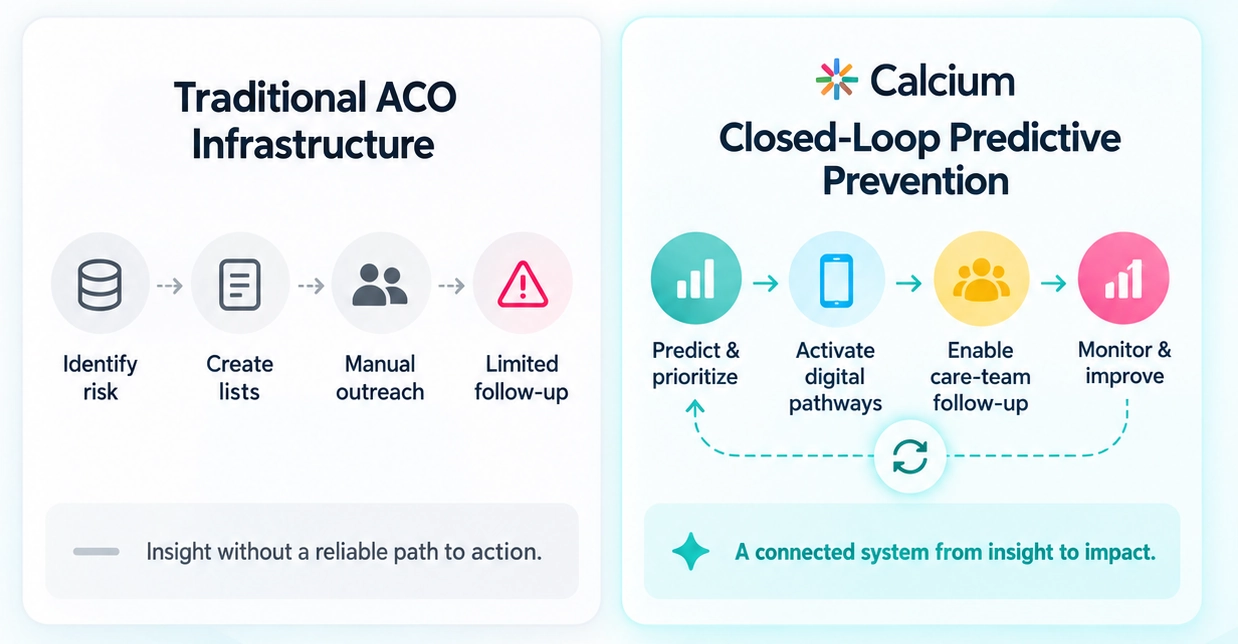
Your ACO may already have sophisticated analytics, claims intelligence, EHR data, registries, and risk-stratification tools. But knowing which patients are at risk is only the beginning. The harder challenge is turning that insight into timely, consistent action across a large population.
THE ACO PREVENTION GAP
Knowing Who Is at Risk Is Only the Beginning
Population health intelligence creates value only when your organization can turn it into meaningful action.
The problem is not necessarily a lack of intelligence. It is the distance between intelligence and intervention.
ACOs have invested significantly in the infrastructure needed to understand population risk. Analytics can identify high-cost populations, care gaps, utilization patterns, and patients who may be more likely to deteriorate. Yet the intervention that follows often depends on manual outreach, disconnected engagement tools, and limited care-management capacity. That creates a critical gap that becomes increasingly important as organizations assume greater responsibility for cost, quality, and patient outcomes.
WHY PREVENTION IS HARD TO SCALE
More Data Does Not Automatically Create Better Intervention
ACOs must coordinate information, patients, and limited clinical resources across populations that never stop changing.
The operational difficulty of accountable care comes from scale. Thousands of attributed patients may have different combinations of chronic disease, social circumstances, utilization patterns, medications, providers, and care needs. Meanwhile, care-management teams have finite time.
Patient conditions can change between encounters, and even sophisticated risk models cannot execute the follow-up themselves. Sustainable prevention therefore requires more than analytics: it requires a repeatable operating model that connects available information to patient participation and accountable care-team action.
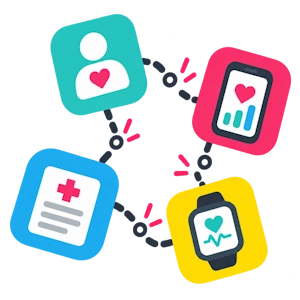
Fragmented Patient Information
Critical patient signals are scattered across systems.
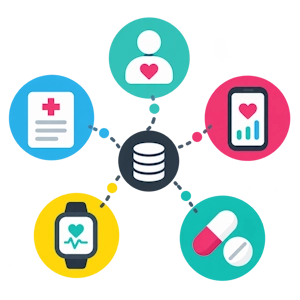
Relevant data may sit across EHRs, outside encounters, devices, apps, medications, and patient reports. Care teams need connected context without spending valuable time manually searching multiple systems.
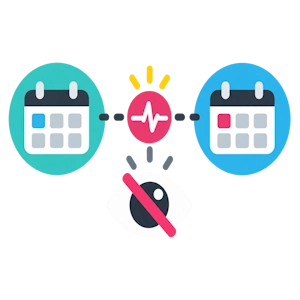
Limited Between-Visit Visibility
Important health changes happen between scheduled encounters.
Symptoms, vitals, medications, and behaviors can change long before the next appointment. Without structured updates, care teams may not recognize meaningful changes until a patient requires additional care.
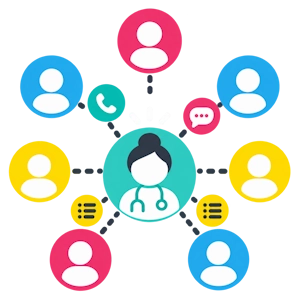
Limited Care-Management Capacity
High-touch outreach is difficult to scale effectively.
Calls, reminders, education, and follow-ups can improve care, but require substantial staff time. ACOs need scalable engagement that preserves human attention for patients who warrant direct intervention.

Static Population Risk Lists
Patient risk can change faster than worklists.
A high-risk patient may remain stable while another patient begins deteriorating. Care teams need current information that helps them recognize changing needs and prioritize the right interventions sooner.
Inconsistent Patient Follow-Through
Care plans succeed only when patients take action.
Medications, monitoring, appointments, screenings, nutrition, and exercise happen largely outside the clinic. ACOs need practical ways to reinforce care plans and support ongoing patient participation between visits.
Disconnected Digital Point Solutions
Separate technologies can create fragmented intervention workflows.
Analytics, engagement, monitoring, and care-management tools may operate independently. ACOs need a connected approach that moves patients consistently from identified need through intervention, follow-up, monitoring, and reassessment.
FROM INSIGHT TO ACTION
Connect the Patient, the Care Plan, and the Care Team
Create a practical prevention layer around the population-health infrastructure you already have.
Calcium is not designed to replace the investments that already support your ACO. Your EHR remains the clinical system of record. Existing analytics and risk tools can continue identifying priority populations. Your clinicians and care managers continue to make medical and operational decisions.
Calcium adds a complementary layer that helps selected programs work between encounters—turning approved care plans into structured patient activity, bringing relevant updates into view, and helping staff organize follow-up around changing patient needs.

Know More
Bring More of the Patient Journey Into View
Combine available clinical context with pathway responses, patient-reported information, and connected health data so teams can better understand what is occurring between encounters.
Act Earlier
Put Preventive Plans Into Motion
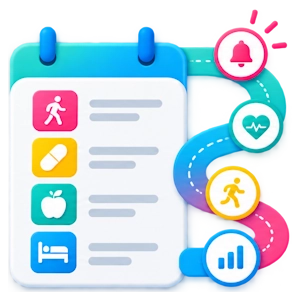
Deliver clinician-reviewed Digital Pathways that translate program goals into manageable education, reminders, questions, monitoring activities, and other patient actions.
Focus Attention
Make Human Outreach More Intentional
Use patient status, pathway activity, reported information, and configured signals to help teams organize review and determine where direct human attention may be appropriate.
PREDICT. PRIORITIZE. PREVENT.
Create a Continuous Prevention Cycle
Move beyond identifying risk by connecting intelligence to intervention, monitoring, and reassessment.
Risk is not static. A patient's needs can change as symptoms develop, adherence slips, measurements move, utilization occurs, or engagement declines. Calcium's Predictive Prevention framework gives ACOs a structured way to organize that changing picture.
Available risk intelligence helps identify potential needs; care teams prioritize where review is warranted; Digital Pathways support patient action; relevant activity is monitored; and the organization reassesses what should happen next according to its own clinical and operational protocols.
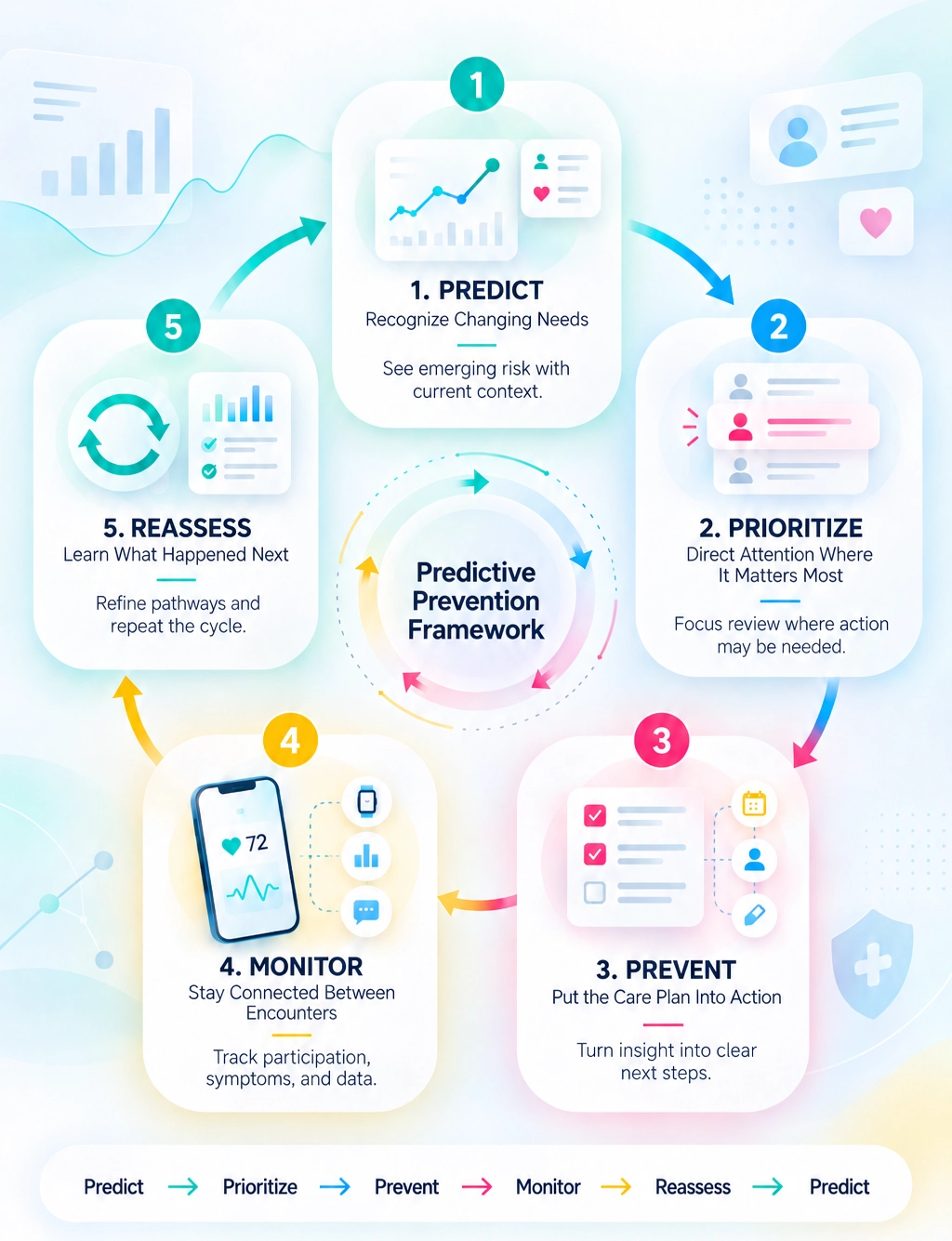
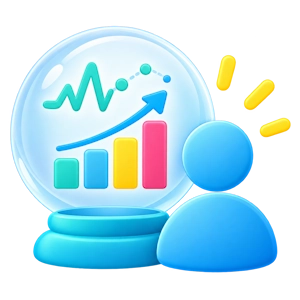
1. Predict
Recognize Changing Needs
Use available risk intelligence, validated models, agreed clinical criteria, EHR context, patient-reported information, and supported connected-health signals to identify patterns that may warrant review.
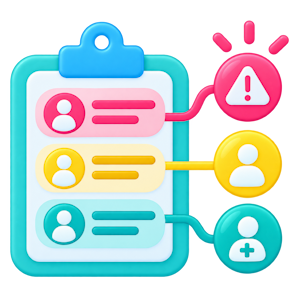
2. Prioritize
Direct Attention Where It May Matter Most
Organize patients using appropriate risk information, condition, utilization, pathway participation, reported concerns, and configured alerts.
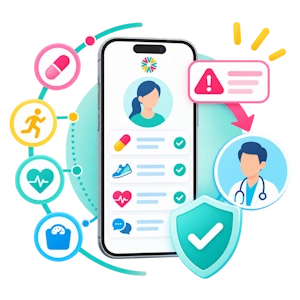
3. Prevent
Put the Care Plan Into Action
Assign clinician-approved Digital Pathways, outreach activities, preventive programs, or condition-specific interventions matched to the patient's needs.
4. Monitor
Stay Connected Between Encounters
Follow pathway participation, patient-reported symptoms, medication-related questions, supported device measurements, and other approved information over time.

5. Reassess
Learn What Happened Next
Review responses, patient trajectory, outreach activity, nonresponse, and program results. Refine pathways, review criteria, or intervention strategies as appropriate.
WORKFORCE LEVERAGE
Know Who May Need Your Care Team Today
Use technology to extend routine support while reserving clinical attention for the moments that require it.
Care-management capacity is one of the hardest constraints in Value-Based Care. Nurses and care managers cannot maintain high-touch outreach with every attributed patient, yet waiting until a patient becomes obviously unstable can limit the opportunity for prevention.
Calcium helps create a more scalable division of labor: appropriate routine guidance and check-ins can occur digitally, while pathway responses, changing information, and configured signals can help staff identify patients who may benefit from personal review or outreach.
Automate the Routine
Use Digital Pathways for recurring education, reminders, check-ins, patient questions, monitoring activities, and other program-approved tasks.
Surface Exceptions
Bring reported concerns, missed pathway activities, changing supported measurements, and configured alerts into an organized provider-facing workflow.

Preserve Human Judgment
Your clinical organization establishes review criteria, escalation rules, response times, treatment decisions, and documentation responsibilities.
CARE BETWEEN VISITS
Turn the Care Plan Into Everyday Patient Action
Make it easier for patients to understand what to do next—and easier for care teams to see when support may be needed.
The success of an accountable-care strategy depends heavily on what patients do when no clinician is in the room. Medications must be managed. Symptoms need to be recognized. Preventive appointments must be completed. Health measurements may need to be recorded. Lifestyle recommendations have to fit into real life.
Calcium's Super App and Digital Pathways provide a structured way to extend clinician-approved plans into the days and weeks between encounters while giving authorized teams relevant feedback on participation.
Medication Manager
Support medication adherence with reminders, tracking, and simple ways for patients to report questions or barriers needing follow-up.
Symptom Monitoring
Use targeted check-ins and feedback promptsto help patients report new symptoms, changing concerns, or other issues between scheduled clinical visits.
Home Health Tracking
Collect supported home measurements, including blood pressure, glucose, weight, heart rate, activity, and other relevant health data safely.
Preventive Care Support
Reinforce screenings, appointments, follow-up activities, and other preventive priorities selected by your organization for ongoing patient support.

Patient Health Literacy
Deliver clear, plain-language education at the right point in each pathway to improve understanding and support informed participation.

Lifestyle Health Support
Support clinician-approved goals for nutrition, activity, sleep, stress, and other daily behaviors that shape healthier routines over time.
Pathway Progress Tracking
Give patients a clear view of pathway participation, completed activities, upcoming tasks, and progress toward defined care goals.

Secure Health Data Sharing
Let patients securely share supported health information with authorized providers, caregivers, and trusted members of their care circle.
WHERE TO START
Focus Prevention Where Earlier Action Can Matter Most
Apply Calcium to defined populations where better follow-through, visibility, and care-team prioritization can support accountable-care goals.
Enterprise transformation does not have to begin with the entire attributed population. A stronger starting point is often a clearly defined cohort with an identifiable care challenge, an accountable clinical owner, and measurable operating goals.
Calcium can support several high-value ACO programs where patient activity between encounters and timely review are especially important. These use cases can also provide practical entry points for pilots before broader expansion across conditions, practices, or geographic regions.
1. Chronic Disease Stabilization
Keep long-term care moving between visits.
Support patients managing diabetes, hypertension, heart disease, COPD, chronic kidney disease, obesity, and multiple conditions through recurring education, self-management activities, symptom questions, medication support, and appropriate home measurements.
ACO value:
More structured chronic-care participation and earlier opportunities for care-team review.
2. Transitions of Care
Extend the discharge plan into the recovery period.
Provide recovery guidance, reminders, symptom questions, medication-related prompts, follow-up tasks, and other defined pathway activities after hospitalization.
ACO value:
A more organized method for maintaining continuity during a period of elevated clinical vulnerability.
3. Rising-Risk Patient Management
Act before emerging risk becomes an obvious crisis.
Use approved risk information, patient responses, pathway activity, utilization context, and supported health data to identify patients who may warrant additional review.
ACO value:
Help care teams move from static risk stratification toward more dynamic intervention workflows.

4. Preventive Care & Gap Closure
Preventive Care & Gap Closure
Turn identified gaps into defined patient actions.
Create pathways around screening reminders, wellness visits, follow-up appointments, monitoring activities, education, and other organization-selected preventive priorities.
ACO value:
Connect quality-improvement strategies to structured patient participation.
5. Medication & Treatment Follow-Through
Make adherence barriers easier to see.
Provide reminders, tracking, education, questions, and opportunities for patients to report medication concerns or difficulties with their treatment plan.
ACO value:
Give clinicians and pharmacists more context for appropriate medication conversations.

6. Multi-Condition Care
Create a more coherent experience for medically complex patients.
Bring condition-specific guidance into a coordinated patient journey rather than asking people to manage multiple disconnected digital programs.
ACO value:
Support patients whose total risk reflects interacting chronic conditions rather than one diagnosis alone.
LONGITUDINAL PATIENT CONTEXT
Connect the Signals That Can Change the Next Decision
Make clinical, patient-reported, pathway, and connected-health information more useful to the people responsible for follow-up.
ACO technology teams already manage enormous volumes of data. The opportunity is not simply to add another repository. It is to make relevant information useful within a prevention workflow.
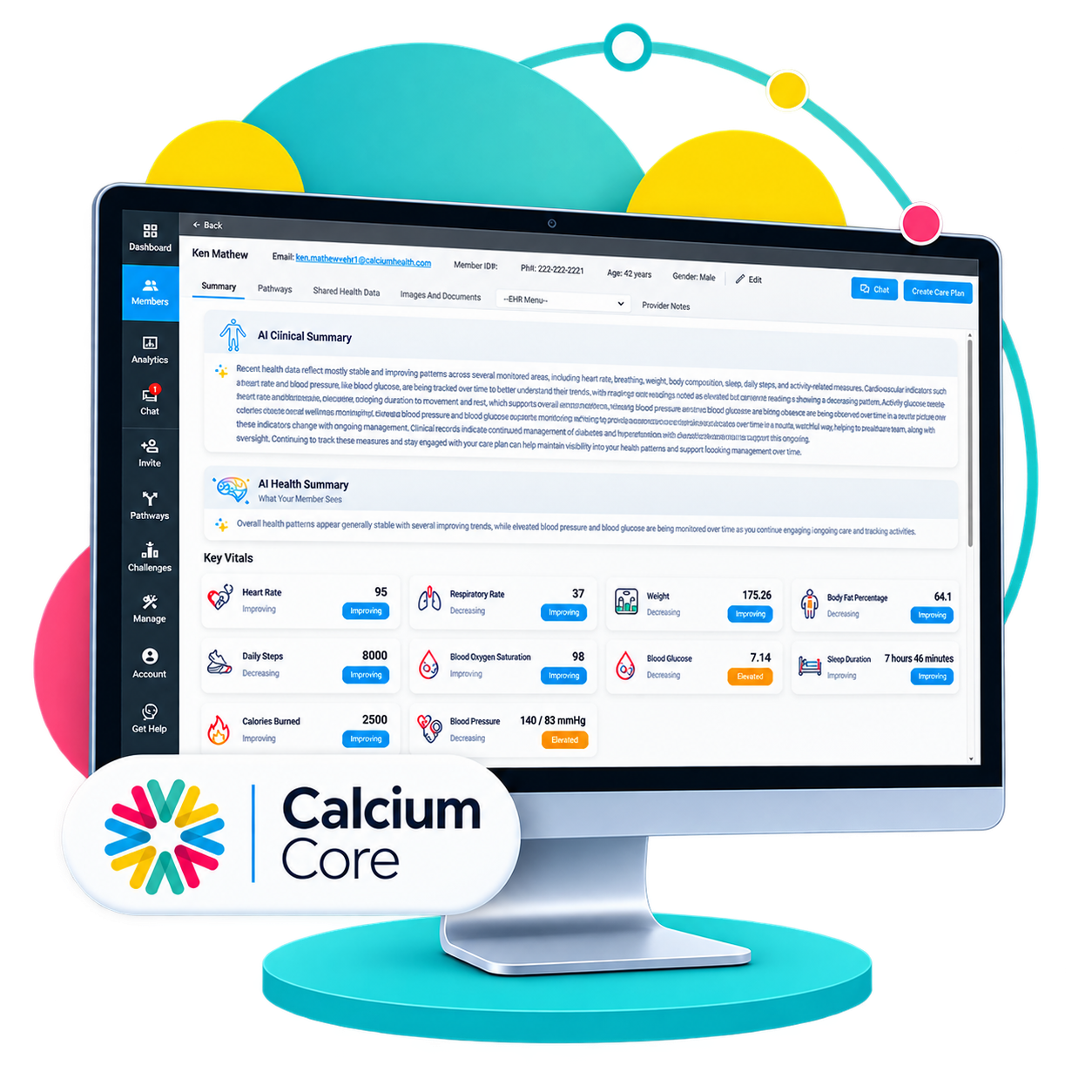
Calcium Core can bring available health records, pathway activity, patient-entered information, and supported device or app data into a provider-facing view. Combined with the ACO's existing population-health and risk infrastructure, that context can help teams better understand patient trajectory and determine appropriate next steps.
Electronic Health Records (EHR)
View available diagnoses, medications, labs, procedures, encounters, allergies, vitals, and other supported clinical information within one connected patient context.
Digital Pathway Activity Data
Review patient responses, completed tasks, reported symptoms, pathway participation, and other activity signals within a structured care-management context.
Patient-Reported Health Data
Bring patient-entered observations, journal entries, symptoms, and shared updates into a broader longitudinal view of the individual patient.
Connected Medical Device Data
Incorporate supported readings from connected medical devices and wearables to add relevant between-visit information to the broader patient context.

Connected Health App Data
Connect supported patient-generated information from compatible health and wellness apps to expand visibility into ongoing health activity between encounters.
ONE CONNECTED PLATFORM
Bring Patient Guidance and ACO Oversight Together
Use three connected Calcium components to design programs, engage patients, and help care teams review what happens next.
Scalable prevention requires an experience for both sides of the care relationship. Patients need simple guidance they can follow in everyday life, while clinical teams need an organized way to manage programs and review relevant information.
Calcium combines three connected components around those roles: Calcium Core for provider oversight, Calcium AI Studio for pathway creation and management, and the Calcium Super App for patient participation. Together they create a digital framework that can support ACO programs beyond the encounter.
Calcium Core
Give Care Teams an Action-Oriented View
Calcium Core provides the provider-facing environment for managing connected patients and Digital Pathways while reviewing available health information, pathway responses, trends, shared data, and configured alerts.
ACO uses include:
- Patient and cohort organization
- Pathway assignment and management
- Patient-level health-data review
- Shared clinical and connected-health information
- Analytics and trends
- Configured alerts
- Secure patient chat
- Team and organization management
Calcium AI Studio
Turn Clinical Programs Into Digital Experiences
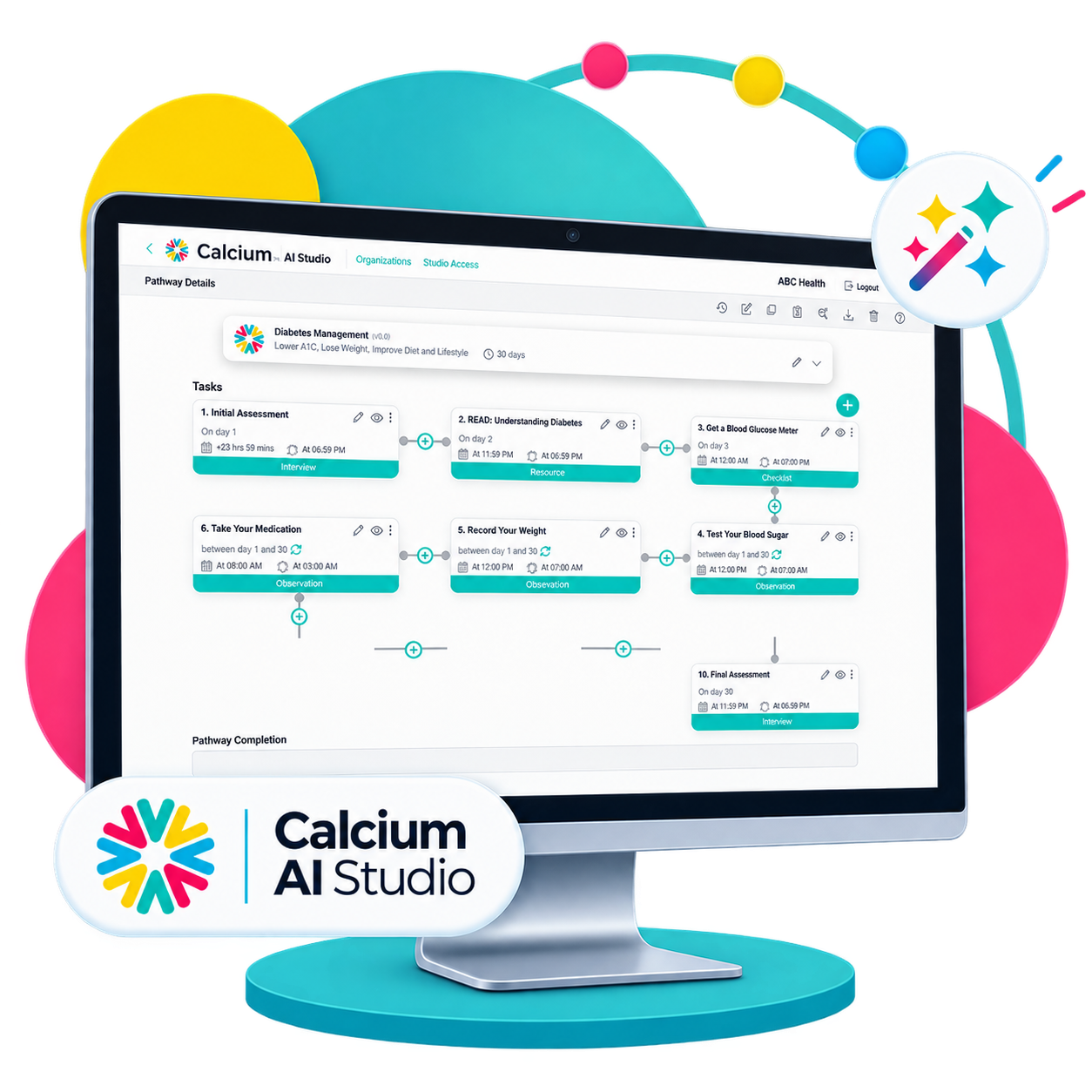
Calcium AI Studio helps provider teams create, edit, and manage Digital Pathways for specific conditions, populations, and care programs.
Teams can use AI-assisted tools to develop pathway drafts and then have clinical owners review, edit, approve, and govern the content before deployment.
Pathway components can include:
- Education
- Questions and check-ins
- Reminders
- Tasks
- Monitoring activities
- Medication support
- Scheduling logic
- Conditional workflows
- Motivational content
- Escalation-related signals
Calcium Super App
Put the Prevention Plan Into the Patient's Hands
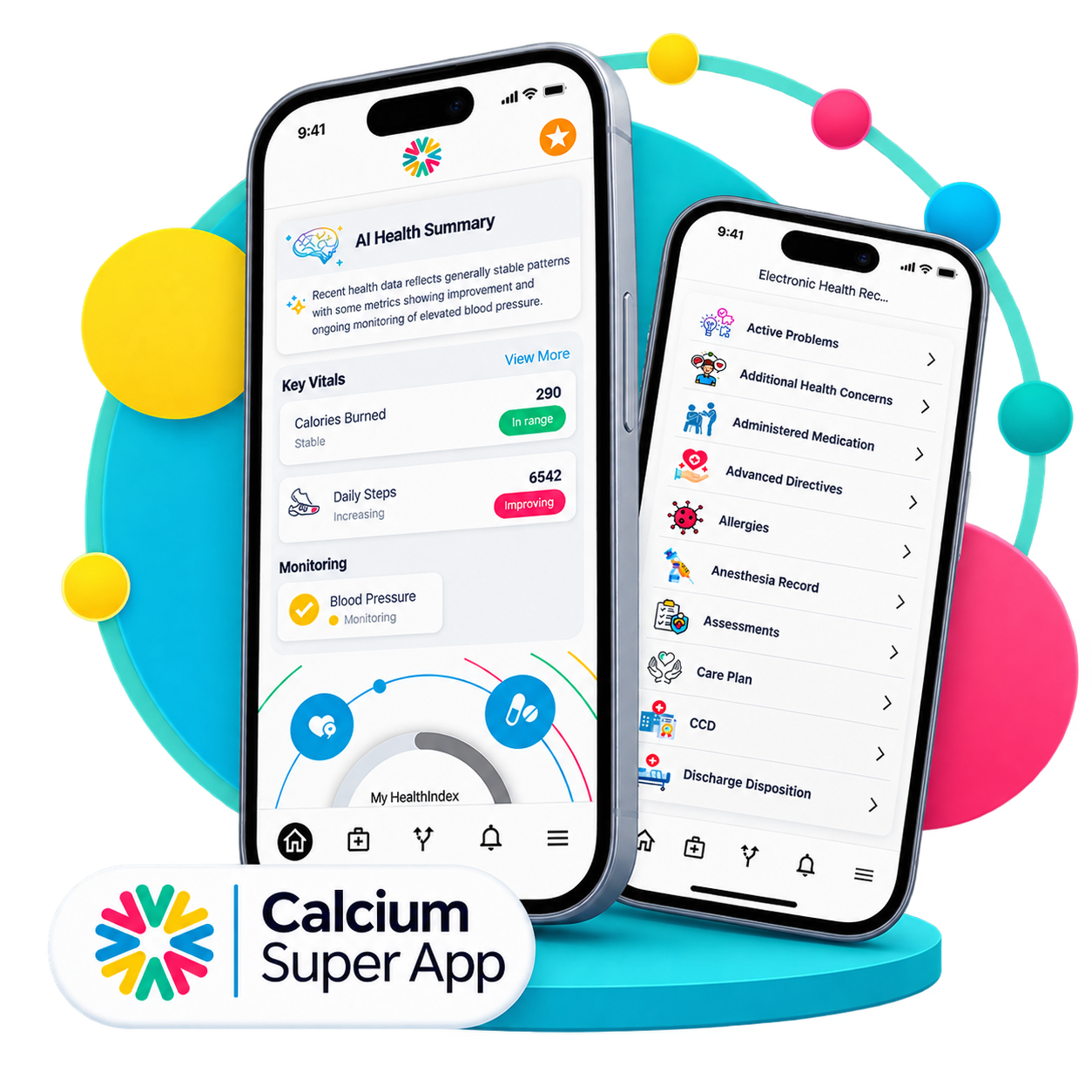
Patients use the Calcium Super App to participate in assigned pathways, receive reminders, track health information, manage medications, connect supported health data, access available medical records, and securely share information.
Patient value includes:
- One mobile health experience
- Digital Pathways
- Medication management
- Vitals tracking
- Health journal
- Supported device and app integrations
- Electronic health record access
- Secure data sharing
START FOCUSED. LEARN. EXPAND.
Begin With One Population and One Measurable Prevention Problem
A defined pilot can demonstrate workflow fit before enterprise-wide expansion.
The strongest ACO implementation does not have to begin with every attributed life. Start with a population where the problem is well understood, leadership is engaged, and earlier intervention could create meaningful clinical or operational value.
Together, the organization can define who enters the program, which patient actions matter, what the care team reviews, when outreach occurs, and how success will be measured. That creates a controlled environment for learning before additional cohorts or workflows are added.

1. Select the Population
Choose a defined cohort such as heart failure, diabetes, hypertension, recently discharged patients, high utilizers, or another strategic population.

2. Design the Intervention
Define the Digital Pathway, education, questions, measurements, reminders, review criteria, and patient experience.
3. Establish Clinical Ownership
Decide who reviews information, what triggers outreach, how escalation works, where clinical actions are documented, and how nonresponse is handled.
4. Measure and Refine
Review enrollment, participation, staff workload, outreach, pathway activity, patient responses, selected clinical indicators, and appropriate utilization outcomes.
WHY CALCIUM
Make More of the Intelligence Your ACO Already Has
Connect data, patient participation, and care-team follow-up in one prevention operating model.
ACOs do not necessarily need another platform that stops at reporting risk. They need practical ways to translate intelligence into repeatable intervention.
Calcium is differentiated by the connection between provider oversight, configurable Digital Pathways, a comprehensive patient Super App, supported longitudinal health information, and a Predictive Prevention framework designed around action. That combination allows organizations to start with the programs they already want to improve and build a more continuous relationship between risk recognition, patient behavior, and clinical follow-up.
From Risk Identification to Action
Differentiator 1
Connect identified needs to a defined patient or provider workflow.
From Care Plan to Patient Participation
Differentiator 2
Extend clinician-approved recommendations into recurring Digital Pathway activities.
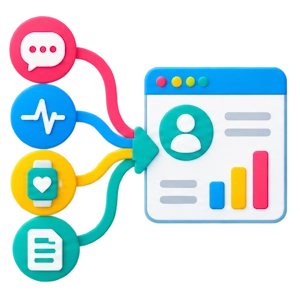
From Collected Information to Review
Differentiator 3
Bring patient responses and supported health information into an organized provider view.
From Review to Accountable Follow-Up
Differentiator 4
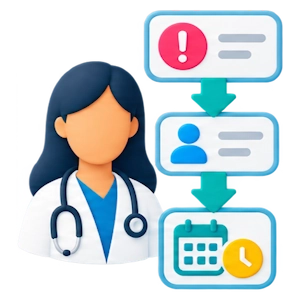
Tie defined signals to an owner, an expected response, and an escalation process.
From One Program to a Platform
Differentiator 5
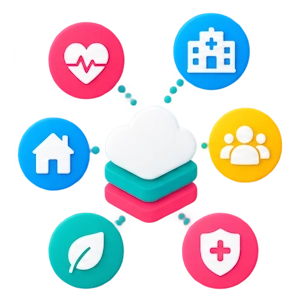
Use the same infrastructure across chronic disease, transitions of care, prevention, and other Value-Based Care initiatives.
Designed Around Clear Responsibilities
Scope data connections, establish appropriate sharing, approve pathway content, assign review ownership, and define escalation processes before launch.
Calcium’s value is not another isolated feature. It is a more connected way to put your care strategy into practice.
FAQ
1. Does Calcium replace our EHR, population health platform, or care-management team?
No. Calcium is designed to complement, not replace, your EHR, population health platform, analytics environment, or care management team. It provides a prevention execution layer that can connect selected risk information, Digital Pathways, patient-reported updates, supported device data, and provider review workflows. Your ACO remains responsible for the clinical record, treatment decisions, escalation protocols, staffing, documentation, quality reporting, and compliance requirements. Implementation should define ownership, review criteria, and system boundaries from the start operationally safely.
2. How can Calcium work with the risk intelligence our ACO already has?
Calcium helps translate existing risk intelligence into structured action. An ACO can use available risk scores, cohort definitions, clinical criteria, or other approved inputs to identify patients for outreach or Digital Pathways. Calcium then supports guided patient activities, collection of relevant updates, review of pathway participation, and configured alerts or work queues. The organization determines which risk models are appropriate, how patients are prioritized, and when clinical follow-up or escalation is required over time consistently.
3. How does Calcium help care teams prioritize patients?
Care teams can use Calcium Core to organize patients by program, pathway participation, configured alerts, reported information, and other available signals. This helps staff create a more focused review process instead of relying only on broad static lists. Calcium does not independently determine clinical urgency. Your ACO defines review criteria, response expectations, escalation rules, and ownership. The objective is to help limited clinical resources concentrate on patients whose changing information may warrant timely human attention.
4. What are Calcium Digital Pathways?
Digital Pathways are configurable, clinician-reviewed care experiences delivered through the Calcium Super App. They can include education, reminders, questions, symptom check-ins, medication support, health-data collection, lifestyle activities, preventive-care prompts, and other program steps. Pathways can support chronic disease management, transitions of care, preventive programs, medication follow-through, and other ACO initiatives. Clinical owners decide what content, timing, logic, monitoring, and escalation criteria are appropriate before pathways are assigned, launched, monitored, and refined across populations over time.
5. Can Calcium support chronic disease programs?
Yes. Calcium can support programs for conditions such as diabetes, hypertension, heart disease, COPD, chronic kidney disease, obesity, and multi-condition care. The platform can extend clinician-approved plans into recurring patient activities, collect relevant patient-reported information, incorporate supported home measurements, and provide care teams with longitudinal context for follow-up. Calcium does not replace diagnosis, treatment, or clinical monitoring responsibilities; the organization defines which patients enroll, what information is reviewed, and how care decisions are made consistently.
6. Can Calcium support transitions of care after hospitalization?
Yes. Post-discharge pathways can provide structured recovery guidance, reminders, medication-related questions, symptom check-ins, follow-up prompts, and other organization-approved activities after a hospital stay. Care teams can review pathway participation and supported patient updates through Calcium Core according to defined workflows. This can give an ACO a more organized way to extend transition plans beyond discharge. The organization remains responsible for discharge instructions, clinical assessment, urgent-response processes, medication reconciliation, and all required documentation consistently over time.
7. Can Calcium incorporate patient-generated and connected-device data?
Calcium can receive and organize supported patient-generated information, including responses entered through the Super App and data from compatible health apps, wearables, and connected medical devices. Examples may include blood pressure, glucose, weight, heart rate, activity, sleep, and other supported measures. Availability depends on the specific integration and implementation. Your ACO should determine which data are clinically appropriate to use, how frequently they are reviewed, and what thresholds or patterns require follow-up under established protocols.
8. How does Calcium help engage patients between visits?
Calcium supports patient activation by turning an approved care plan into manageable actions that can occur between visits. Patients can receive reminders, education, questions, tracking activities, and pathway tasks through the Super App, while authorized teams can review participation and relevant shared information. The goal is to give patients a practical routine for following recommendations and give the care team structured opportunities to see barriers, questions, or changing needs between clinical encounters and everyday self-management.
9. Does Calcium provide 24/7 clinical monitoring?
No. Calcium should not be presented as a substitute for continuous clinical surveillance, emergency response, or a staffed monitoring service. The platform can collect supported information, organize pathway activity, and surface configured signals for review, but the provider organization must establish who monitors information, when reviews occur, how urgent concerns are handled, and what patients should do in an emergency. These responsibilities should be defined during implementation and communicated to participating patients and care teams.
10. How does artificial intelligence fit into the Calcium platform?
AI can support pathway creation, pattern recognition, prioritization, and other workflow functions, but clinical governance remains essential. Calcium AI Studio helps teams create and manage draft Digital Pathways that clinical owners can review, edit, and approve before use. Any predictive or decision-support application should be implemented with defined data sources, model limitations, review criteria, accountability, and escalation rules. Calcium is designed to augment clinical workflows and attention allocation, not replace judgment or independent medical decision-making.
11. Can our ACO start with a limited pilot?
Yes. A focused pilot is often the most practical way to begin. An ACO can select a defined population, such as patients with heart failure, diabetes, recent hospital discharge, or another high-priority cohort, then establish pathway content, review ownership, escalation procedures, and success measures. Early evaluation can examine enrollment, participation, staff workload, intervention activity, patient-reported information, and selected clinical or utilization outcomes. The organization can refine the workflow before expanding to additional populations or sites.
12. How should we measure an ACO pilot?
Pilot measurement should include clinical, operational, engagement, and financial indicators that match the program's objective. Examples include enrollment, pathway participation, completion of key activities, reported concerns, outreach, response times, medication-related barriers, preventive-care completion, staff workload, hospital utilization, emergency department use, or readmissions when appropriate. Baselines and comparison methods should be defined in advance. Results should be interpreted carefully, because improvement over time does not by itself prove that a single digital intervention caused the change.
13. Can Calcium help close preventive-care and quality gaps?
Calcium can support care-gap closure by turning selected preventive or chronic-care priorities into patient-facing pathway activities. Examples may include reminders for screenings, follow-up visits, home monitoring, medication questions, education, or other organization-approved actions. Teams can review participation and follow-up according to their protocols. Calcium should not be positioned as a complete quality-reporting or regulatory-submission system unless those capabilities are specifically implemented. The ACO remains responsible for measure specifications, documentation, data validation, and formal reporting accurately.
14. How difficult is integration with our existing infrastructure?
Calcium is designed to work as a complementary layer around existing healthcare infrastructure rather than forcing a replacement. Implementation can define how available EHR information, patient-generated data, supported device integrations, pathway activity, and other approved inputs flow into the Calcium experience. The exact integration model depends on the systems involved, data availability, security requirements, and priorities. A phased approach can start with a defined cohort and expand integrations as value and workflow fit are demonstrated.
15. What is the best way to begin evaluating Calcium for our ACO?
A productive first discussion should focus on the ACO's operating problem rather than on a generic software demonstration. Identify a population or workflow where earlier intervention could matter, clarify what data and risk signals already exist, map care-management steps, and define the gaps between identification and action. From there, Calcium can help explore a pathway, review workflow, scope, and measurement plan. The objective is a practical prevention use case with clear ownership and measurable goals.