
VALUE-BASED CARE SOLUTIONS FOR HEALTHCARE PROVIDERS
Turn Risk Intelligence Into Preventive Action
Predict. Prioritize. Prevent. Connect patient intelligence with ongoing guidance and timely care-team action.
Your organization is accountable for what happens beyond the appointment. Yet connecting patient information, daily health behaviors, and timely follow-up can place growing demands on your teams. Calcium helps close that gap by bringing together longitudinal patient information, personalized Digital Pathways, and provider oversight.
THE MISSING CONNECTION IN VALUE-BASED CARE
Your Analytics Found the Risk. What Happens Next?
Close the distance between population insight and practical patient support.
You may already know which populations need attention, which conditions drive costs, and where preventive care is falling behind. The harder question is what happens after those insights reach your team.
Who engages the patient? How does the care plan become daily action? What happens when symptoms change or participation stops? Calcium helps connect those steps, turning an identified need into an organized cycle of guidance, information sharing, review, and appropriate follow-up.

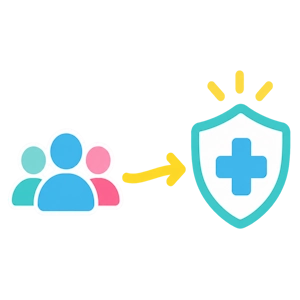
From Identified Risk to a Defined Response
Connect a population priority with a patient program, an appropriate Digital Pathway, and a care team responsible for follow-up.
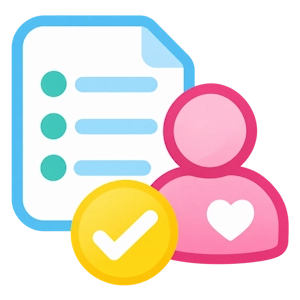
From Written Instructions to Patient Participation
Give patients recurring opportunities to understand the plan, complete activities, share information, and ask for support.
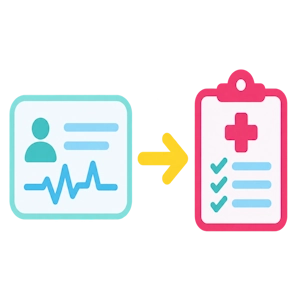
From Collected Information to Accountable Action
Make patient responses useful to the people who can review concerns, coordinate care, and decide what should happen next.
WHY PREVENTION IS HARD TO SCALE
The Problem Is Not Just More Data. It Is More Work Between the Data Points.
Address the everyday barriers that keep proactive care from becoming a dependable operating model.
A prevention strategy can look complete in a presentation and still break down in everyday care. Records sit in different systems. Patients struggle to follow recommendations. Staff work through long outreach lists without knowing what changed since yesterday.
These problems reinforce one another, making proactive care harder to deliver consistently. Calcium addresses the connections between these activities so your organization can build a practical response around patients, care teams, and the information they share.
Risk Without Follow-Through
Identifying patients at risk is only the beginning. Without structured guidance, ongoing updates, and coordinated follow-up, valuable population health insights may never translate into timely interventions that support prevention.

Care Teams at Capacity
Care managers face endless reminders, patient questions, and outreach demands. These repetitive tasks consume valuable time, limiting their ability to focus on patients who need personalized attention and clinical support.
Blind Spots Between Visits
Patient health can change significantly between appointments. Emerging symptoms, medication concerns, and shifting vitals may go unnoticed without consistent patient engagement, health updates, and clear follow-up.

Fragmented Patient Information
Clinical records, wearable devices, patient reports, and care programs generate valuable information. When these data remain disconnected, care teams struggle to understand changing patient needs and coordinate appropriate clinical responses.

Priorities That Fall Out of Date
Yesterday's risk assessment may not reflect today's patient needs. Changing symptoms, missed check-ins, and emerging concerns require updated information to help care teams continually reassess priorities and direct timely follow-up.

Plans That Don't Fit Daily Life
Even well-designed plans can overlook everyday challenges. Financial pressures, limited access, competing responsibilities, and patient uncertainty can undermine participation when guidance fails to address circumstances and practical barriers.
CONNECT INTELLIGENCE WITH INTERVENTION
The Digital Execution Layer for Value-Based Care
Extend your existing investments with a connected approach to patient guidance and provider follow-up.
Your existing systems and clinical teams already play essential roles in value-based care. Calcium helps extend their work into the time between encounters.
Bring supported health information into view, translate approved recommendations into Digital Pathways, and give patients a structured way to participate. Then use their responses and progress to inform care team review. The result is a connected operating approach that links population priorities with individual patient action and accountable clinical follow-up.
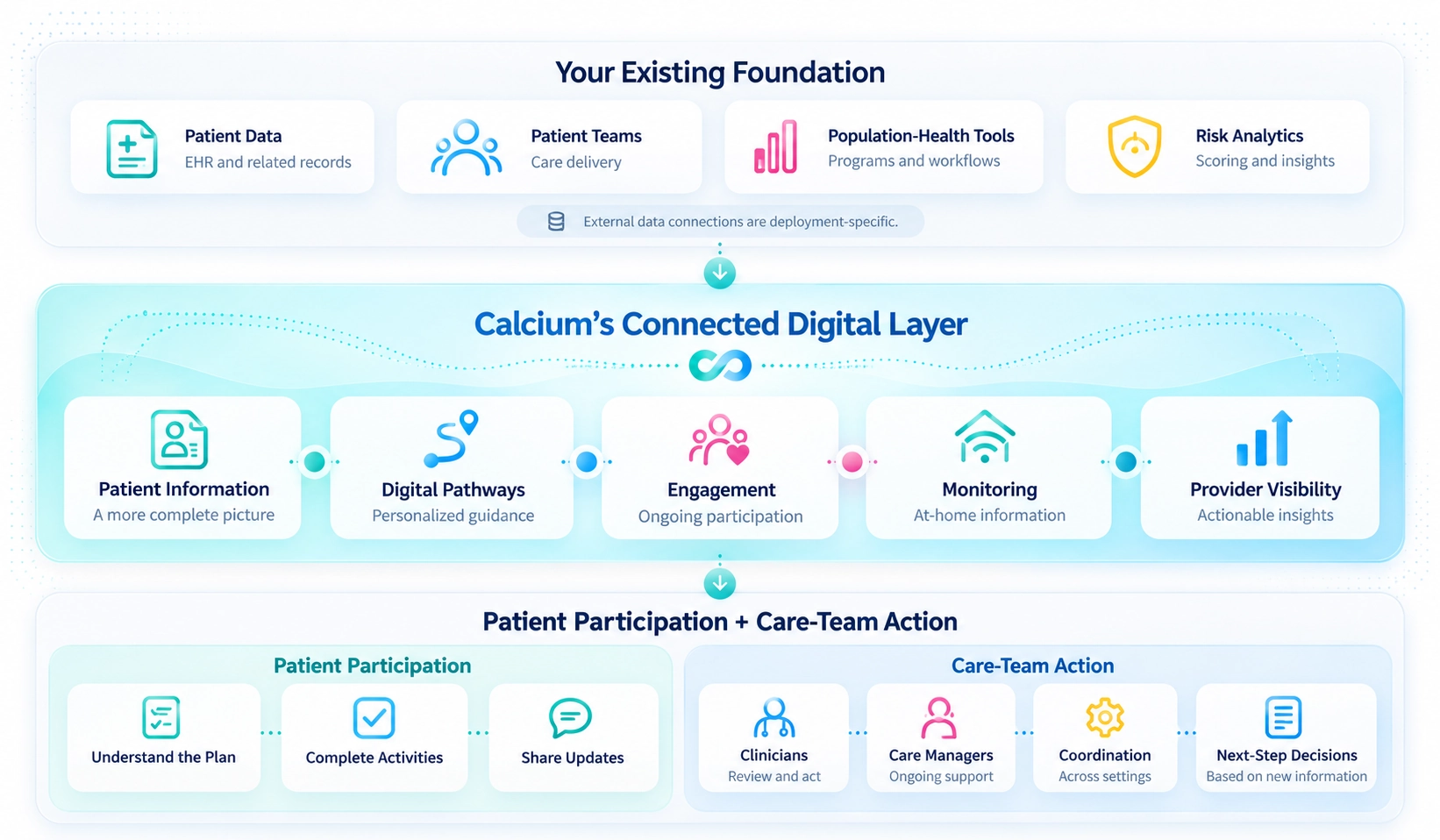
Calcium brings together supported patient information, Digital Pathways, recurring engagement, health tracking, and provider visibility to help make that program useful between encounters.
Keep the systems and expertise that matter. Connect them more closely to what patients do next.
CALCIUM’S PREDICTIVE PREVENTION FRAMEWORK
Predict. Prioritize. Prevent.
Turn changing patient information into a clearer opportunity for action.
Knowing that a patient may need help is only the beginning. Your team also needs relevant context, a practical way to prioritize review, and a response that reaches the patient.
Calcium’s Predictive Prevention framework connects these responsibilities through three complementary stages. Use available information to recognize changing needs, focus attention according to clinical priorities, and activate guidance and follow-up that support prevention. Each new patient interaction helps inform the next appropriate step.
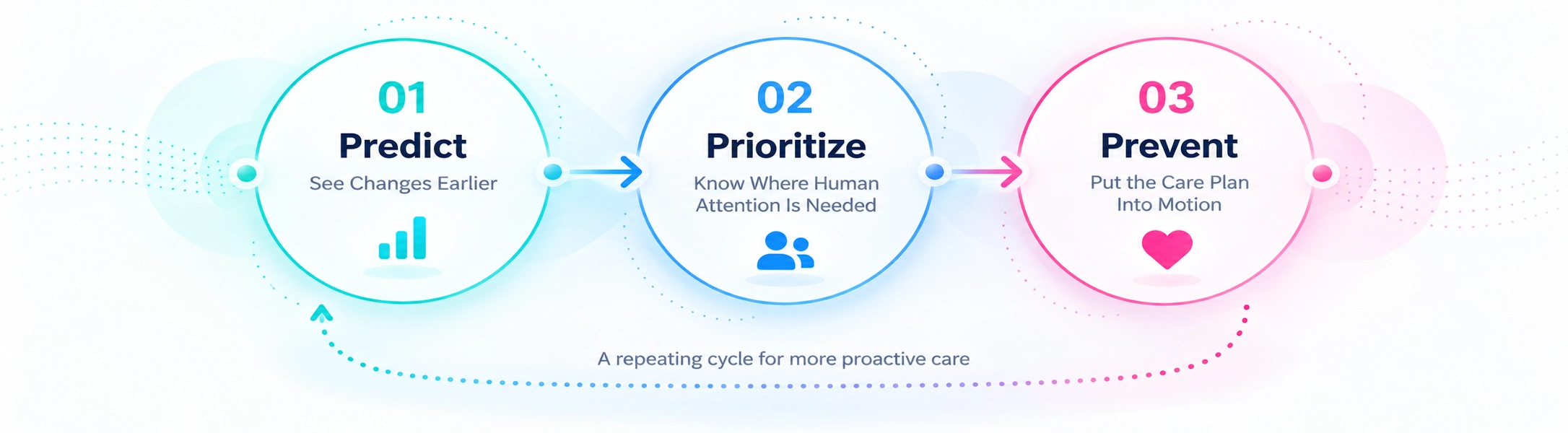

1. Predict
See Changing Needs Earlier
Bring longitudinal clinical information together with patient reports, pathway activity, and supported home measurements. Use that context alongside the risk models or clinical criteria established for your program to recognize patterns that may warrant review.
The opportunity is to understand more than a historical risk category—and connect emerging concerns with an appropriate response.
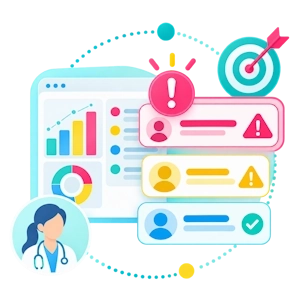
2. Prioritize
Know Where Human Attention Is Needed
Review patient status, responses, trends, and configured alerts in Calcium Core. Organize attention around meaningful changes and the needs your clinical team has defined.
A useful priority is more than a score. It connects a concern with someone responsible for reviewing it and deciding what happens next.
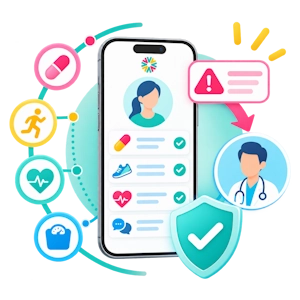
3. Prevent
Put the Care Plan Into Motion
Assign Digital Pathways that reinforce clinician-approved education, medication routines, health tracking, and preventive activities. Give patients manageable steps and recurring opportunities to share concerns.
Bring their progress back into the care-team workflow so guidance, monitoring, and appropriate intervention remain connected over time.
START WHERE THE NEED IS CLEAR
One Platform. Multiple Opportunities for More Proactive Care.
Build programs around the populations and care gaps that matter to your organization.
You do not need to solve every population health challenge at once. Start with a defined program where patient needs are clear and your team can act on the information it receives.
Calcium Digital Pathways can support chronic care, medication routines, recovery, preventive activities, and more complex patient journeys. Shape the experience around your clinical protocols and available resources, then evaluate participation and workflow performance before extending the approach to additional populations.

Chronic Condition Management
Support clinician-directed programs for diabetes, hypertension, heart disease, COPD, obesity, and other conditions. Combine education, health tracking, medication reminders, and recurring check-ins with provider review.
Program focus: More consistent participation in ongoing care.
Rising-Risk Patient Support
Extend attention beyond patients already receiving intensive care management. Use relevant changes in shared information and participation to help your team recognize patients who may need additional review.
Program focus: Identifying changing needs and organizing earlier outreach.
Medication Adherence Support
Reinforce prescribed routines with medication reminders, tracking, education, and questions about difficulties following the plan. Give patients a way to raise concerns for a clinician or pharmacist to address.
Program focus: Better visibility into medication routines and reported barriers.
Post-Discharge and Transitions of Care
Extend approved discharge instructions into the home through recovery activities, medication reminders, symptom questions, and follow-up prompts. Keep patient participation connected to the team responsible for transition support.
Program focus: Continuity from discharge to ongoing care.
Preventive Care and Quality Improvement
Create pathways that reinforce recommended screenings, wellness visits, health education, and preventive activities. Use patient responses to identify questions and barriers that may require personal outreach.
Program focus: Turning preventive recommendations into patient follow-through.

Complex & Multiple-Condition Care
Bring supported diagnoses, medications, measurements, and patient updates into a longitudinal view. Coordinate guidance around the individual’s priorities while clinical teams review potentially conflicting recommendations.
Program focus: A more coherent patient journey across multiple care needs.
FROM SIGNAL TO FOLLOW-THROUGH
Make Prevention a Connected Workflow
Link information, patient participation, and clinical response in a repeatable cycle.
Prevention becomes operational when every important step connects to the next. A patient receives guidance, shares an update, and knows how to seek help. A care team reviews the information and takes responsibility for the response.
Calcium supports this repeating workflow through connected patient data, Digital Pathways, monitoring, and provider tools. Your organization defines the clinical criteria, response expectations, and documentation processes that turn a stream of information into an accountable care program.

Connect the Patient Picture
Bring supported records, medications, patient reports, pathway activity, and connected measurements into view. Establish the patient’s participation, appropriate sharing, and the care team responsible for the program.

Recognize Relevant Signals
Review changing measurements, symptoms, questions, and participation against the criteria established for the program. Distinguish information requiring attention from activity that belongs in routine review.

Prioritize Patient Review
Use patient status and configured alerts to organize your care team attention. Define who reviews each concern, how quickly reviews should occur, and when a higher level of clinical assessment is appropriate.

Engage Through Digital Pathways
Deliver approved health education resources, important reminders, follow-up questions, and activities through the Super App. Match guidance to the patient’s care plan and give the patient a practical way to share updates.

Monitor Participation & Progress
Review new patient responses, supported measurements, and pathway activity over time. Establish a separate process for unanswered check-ins so missing patient health information does not become an invisible gap.

Respond and Close the Loop
The responsible care team follows up, documents the response in its clinical workflow, and adjusts the treatment or care plan when appropriate. Subsequent patient information helps inform the next review.
PUT HUMAN ATTENTION WHERE IT MATTERS
Your Care Managers Cannot Call Everyone
Help them see who needs the conversation—and automate appropriate routine touchpoints around it.
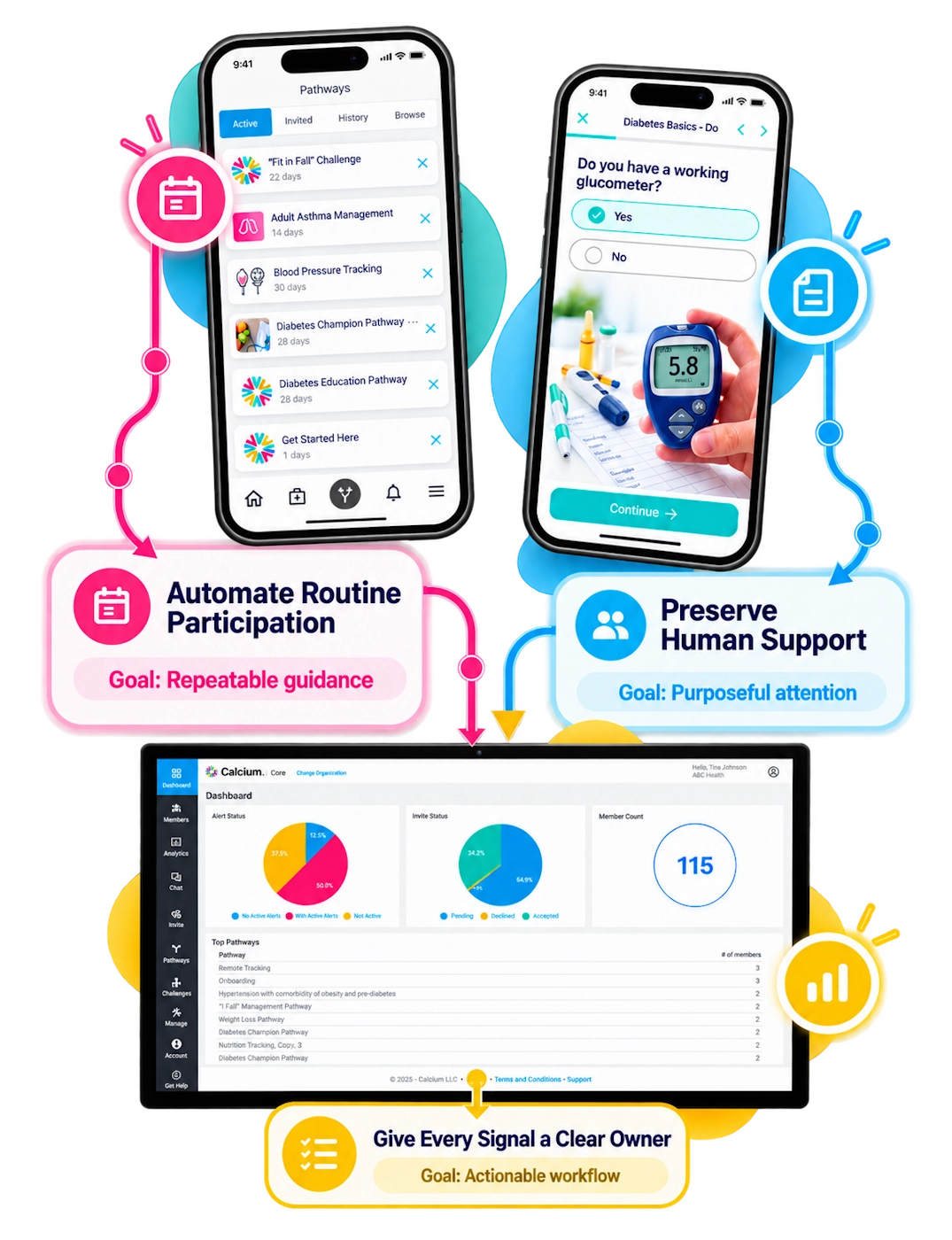
The value of a care manager is not the number of reminders they send. It is the judgment, problem solving, and personal support they bring when a patient needs help. Calcium lets your organization automate appropriate routine touchpoints while bringing patient activity and shared health information into view.
Build workflows that reserve human attention for meaningful concerns, unanswered questions, and barriers that digital guidance alone cannot resolve, without assuming that automation replaces a staffed care team.
Automate Routine Participation
Deliver scheduled reminders, education, recurring questionnaires, care-plan activities, and prompts to record health information. Give patients consistent opportunities to participate without requiring staff to initiate every interaction manually.
The goal: Make routine guidance repeatable.

Preserve Human Support
Focus clinical attention on reported concerns, changing needs, unclear instructions, medication questions, and practical barriers. Keep assessment, treatment decisions, and escalation with the professionals responsible for care.
The goal: Make personal attention more purposeful.

Give Every Signal a Clear Owner
Define who reviews patient information, what triggers outreach, and how follow-up is documented. Evaluate both the usefulness of alerts and the workload they create.
The goal: Build an actionable workflow, not another unattended inbox.
SEE THE CONNECTION IN PRACTICE
From Hospital Discharge to Connected Follow-Up
An illustrative heart failure journey shows how patient guidance and care-team review can work together.
Consider a patient living with heart failure who has recently returned home from the hospital. The discharge plan is established, but the care team still needs a practical connection to the patient’s recovery.
The following illustrative journey shows how Calcium can support that connection through assigned guidance, patient updates, and defined review responsibilities. It describes a possible workflow, not a documented customer result or a guarantee that a hospitalization will be prevented.
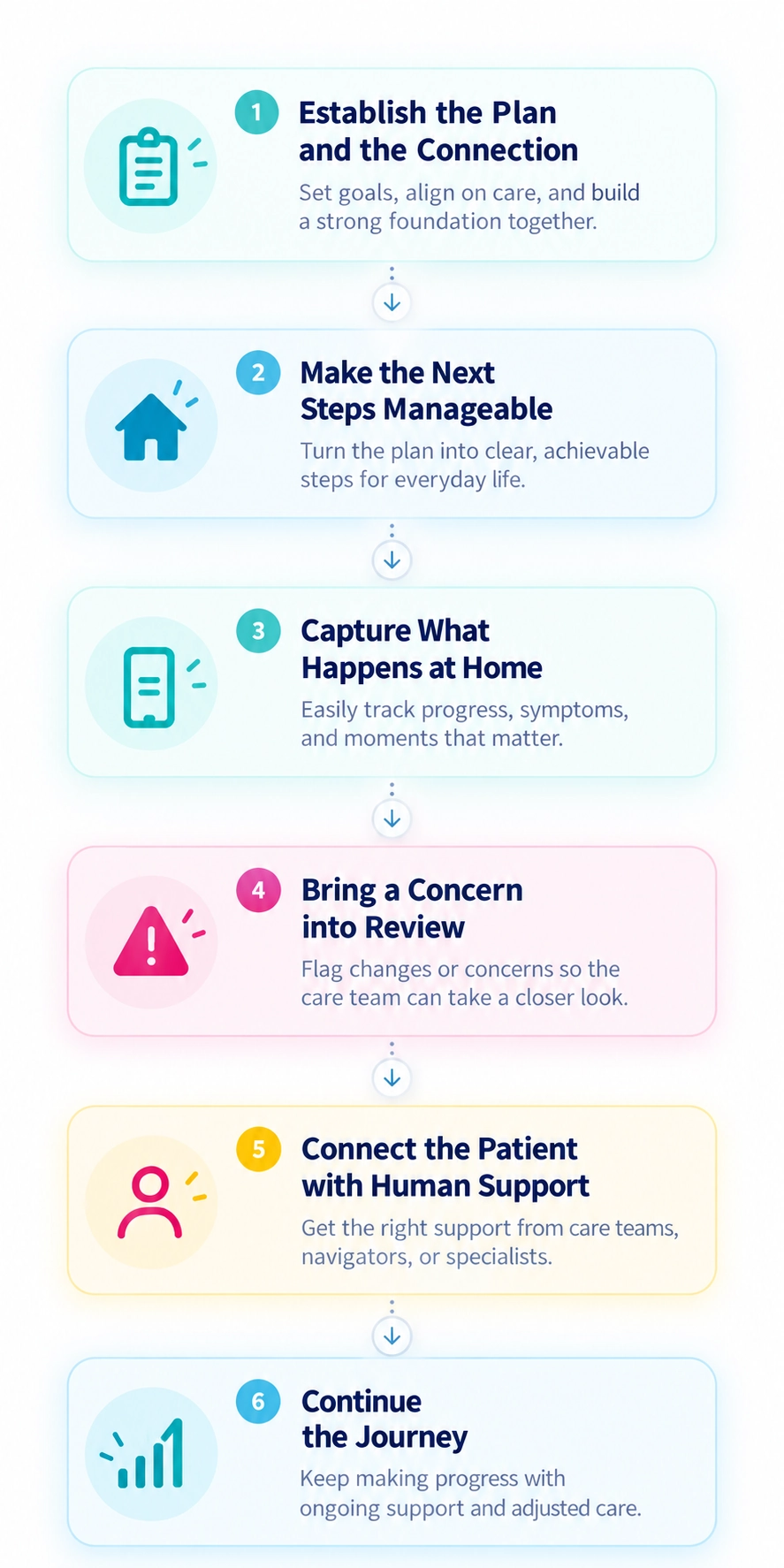
Establish the Plan and the Connection
The care team identifies the patient for its follow-up program, confirms participation and sharing, and assigns a clinician-approved pathway. The patient understands how the program works and how to seek help.

Make the Next Steps Manageable
The patient receives reminders, education, recovery activities, and questions aligned with the discharge plan. Guidance helps turn a set of instructions into a series of manageable actions.

Capture What Happens at Home
The patient shares requested measurements, reports symptoms, and answers questions about following the plan. A check-in might ask, “What questions or difficulties have come up since your last update?”
Bring a Concern Into Review
A response or supported measurement meets the program’s review criteria. The assigned team examines the information alongside the available clinical context and determines the appropriate next step.
Connect the Patient With Human Support
A nurse, care manager, or clinician follows up according to the organization’s protocols. The conversation addresses the concern and determines whether additional assessment or changes to the plan are needed.
Continue the Journey
The team documents its response, updates guidance when appropriate, and continues reviewing subsequent information. The patient remains connected to an ongoing process rather than a single discharge interaction.
BUILD A MEASURABLE BUSINESS CASE
Connect Better Follow-Through With the Outcomes That Matter
Evaluate patient participation, clinical capacity, quality, utilization, and program economics together.
Your business case should connect what the program does with the outcomes your organization is trying to improve. Start with measures close to the workflow: enrollment, participation, review, response, and staff effort. Then evaluate relevant clinical indicators, utilization, and costs using your organization’s data and an appropriate comparison.
Calcium provides tools for patient engagement and oversight within that broader evaluation, helping you examine whether a more connected care process creates value for your program.
Address Avoidable Utilization Upstream
Support the patient guidance and follow-up processes intended to address concerns before they become harder to manage.
Evaluate: Admissions, emergency department visits, and readmissions using an appropriate population, timeframe, and comparison.

Understand Total Program Economics
Consider the financial value of improved care processes alongside the resources needed to deliver them.
Evaluate: Relevant care costs, platform and implementation costs, staff effort, and financial results under your specific contract.
Make Clinical Capacity More Productive
Examine whether digital guidance changes the work required to support patients and respond to their needs.
Evaluate: Outreach effort, review time, response completion, alert usefulness, and staff experience.
Support Quality and Patient Participation
Connect preventive guidance and chronic care activity with the clinical goals established for your program.
Evaluate: Pathway participation, completed follow-up, verified preventive care, relevant clinical indicators, and patient experience.
THREE CONNECTED TOOLS
One Foundation for Patient Guidance and Provider Action
Connect care design, patient participation, and clinical oversight through the Calcium platform.
Effective prevention requires a connection between the people designing care, the patients following it, and the teams reviewing progress. Calcium brings those roles together through three connected platform components.
Core organizes provider visibility, AI Studio supports pathway creation and management, and the Super App delivers the patient experience. Together, they give your organization a foundation for translating clinical expertise into ongoing guidance and bringing relevant patient information back to the team responsible for care.
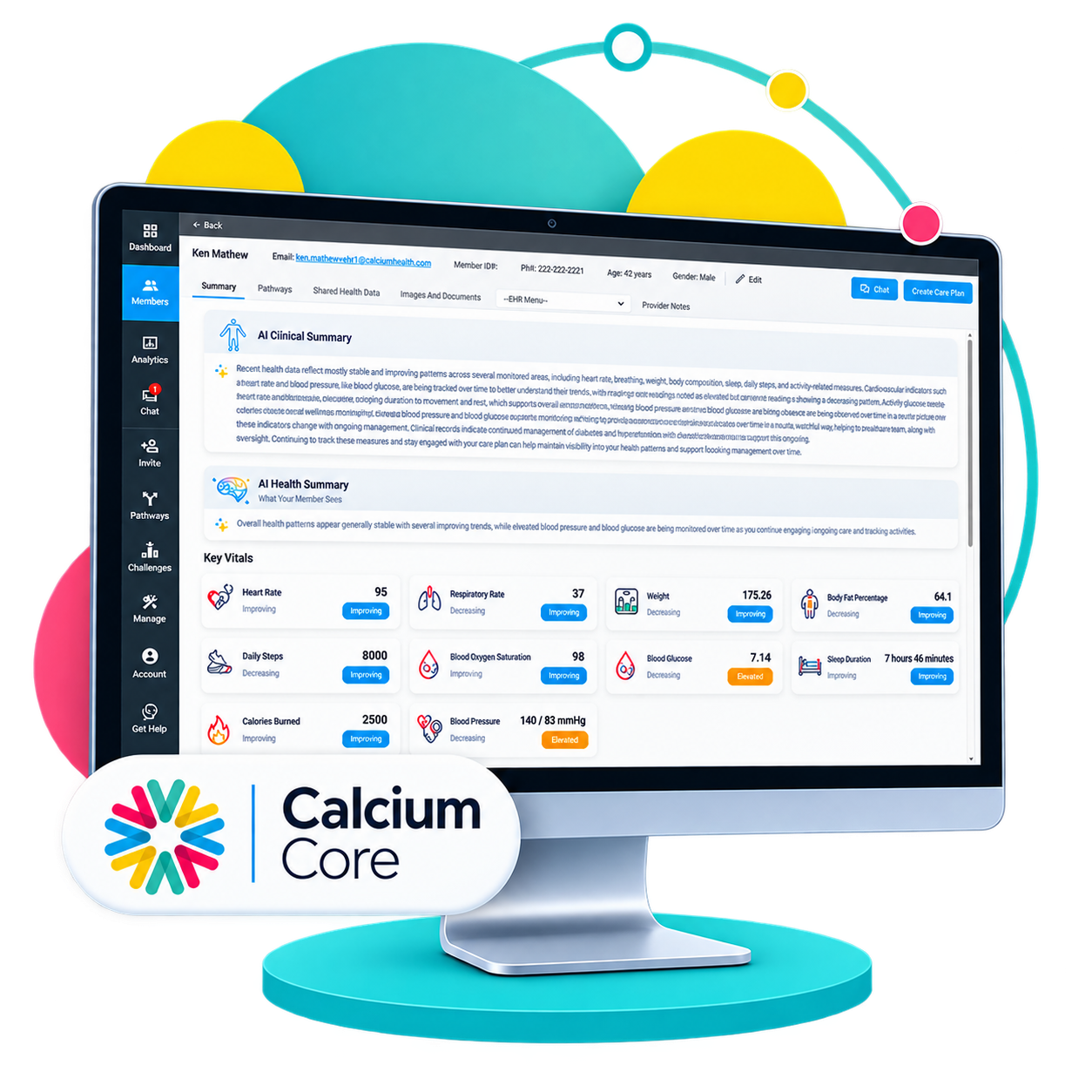
Calcium Core
The Provider’s View of the Patient Journey
Bring supported clinical records, patient-shared information, pathway responses, and connected measurements into a provider environment. Review patient status, activity, trends, and configured alerts to organize follow-up. Use individual views and group-level information to understand participation while keeping patient-level clinical decisions with your team.
Calcium AI Studio
Turn Clinical Expertise Into Digital Pathways
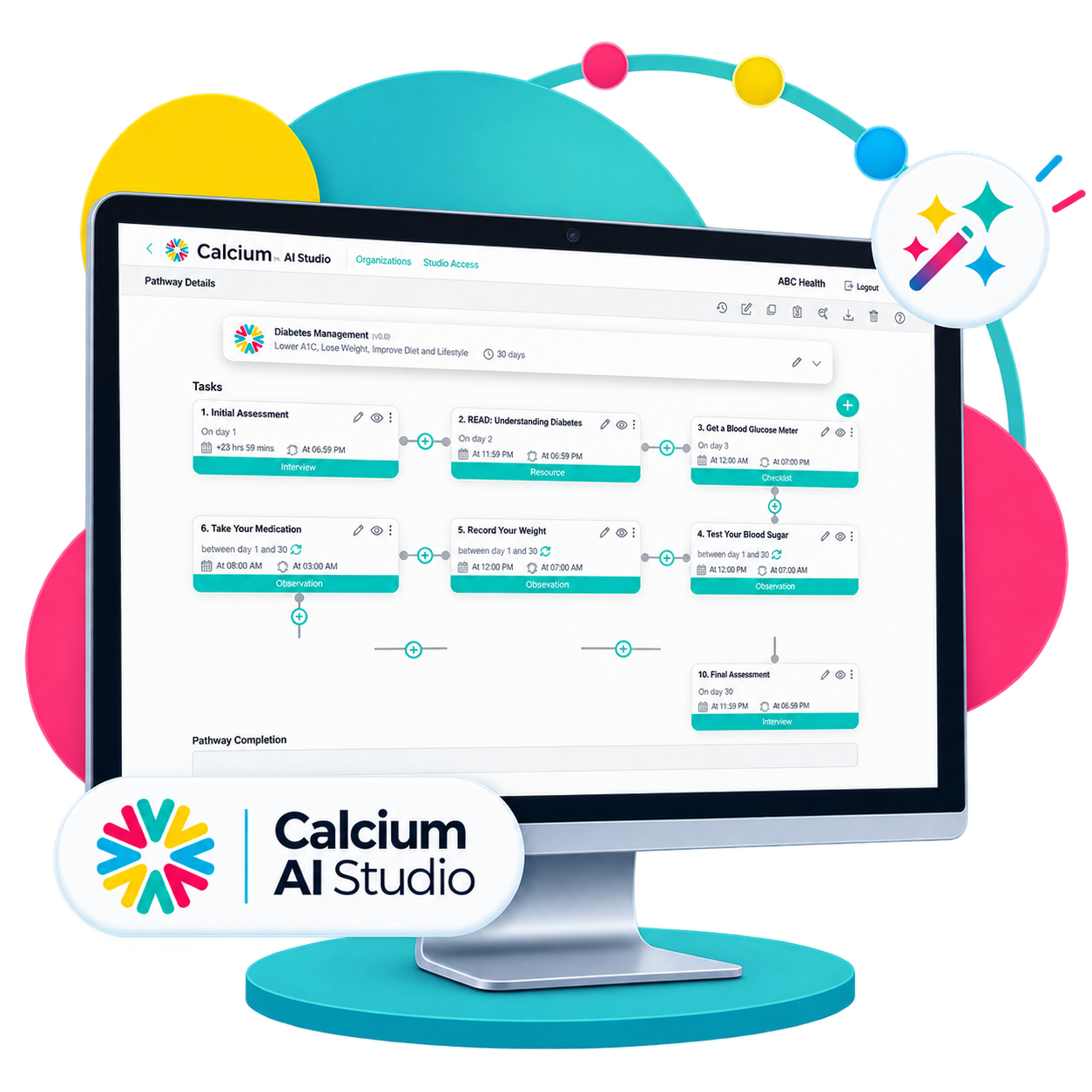
Create, clone, edit, and manage pathways around your program’s protocols and patient needs. Start manually or use AI to generate a draft, then review and configure the experience before publication. Translate approved education, questions, reminders, and activities into a repeatable patient journey.
Calcium Super App
Put the Care Plan Within Everyday Reach
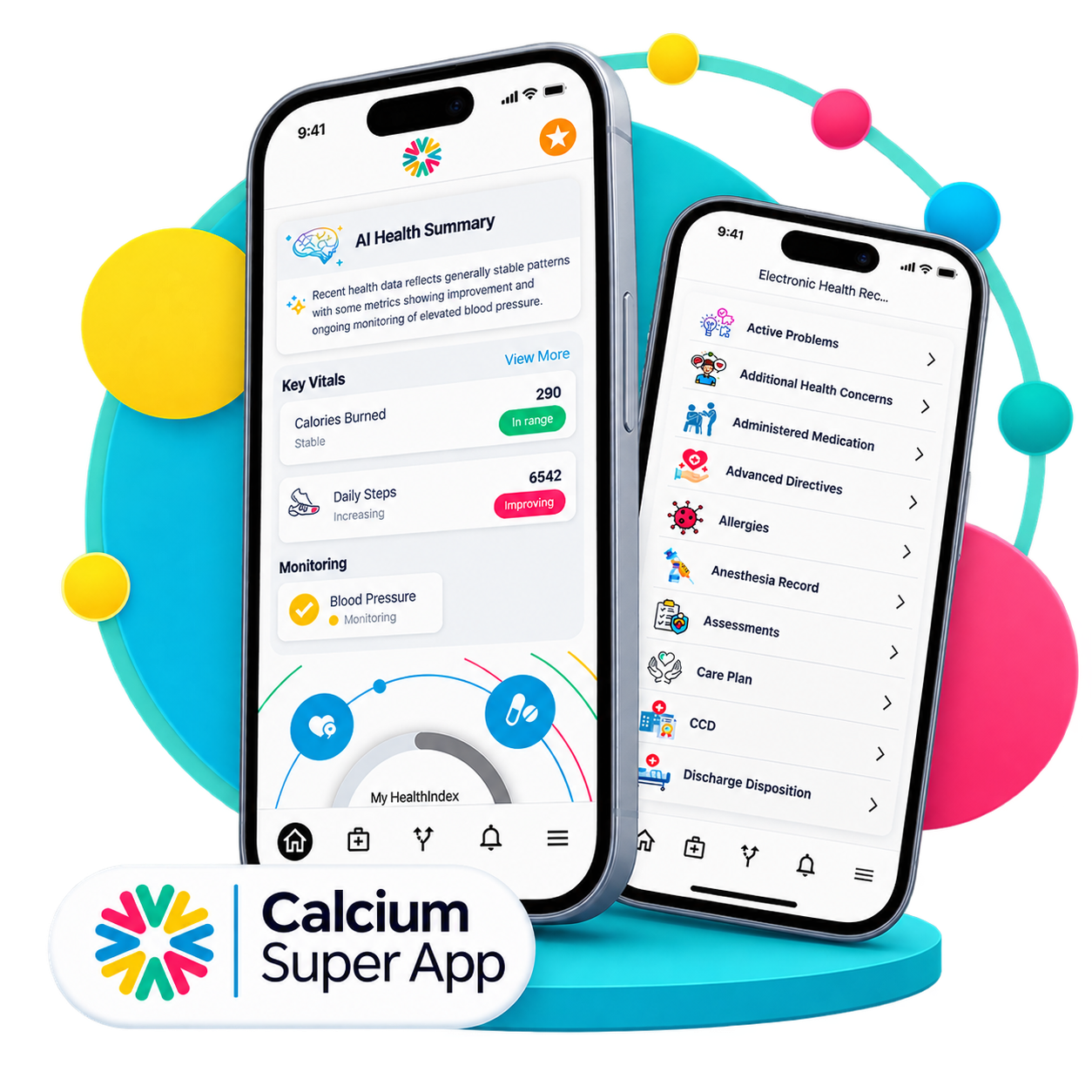
Give patients a place to access assigned pathways, track medications, record health information, use their health journal, and connect supported devices and apps. Patients can participate between visits and share relevant updates with authorized care teams, keeping the digital experience connected to their broader care.
WHY CALCIUM
Connect the Gaps. Do Not Create Another Silo.
Give existing VBC investments a clearer connection to patient action.
A new platform should have a clear role in your care environment. Calcium’s role is to connect patient guidance, shared health information, and provider review around an ongoing care journey.
Evaluate that role against the capabilities you already use, rather than assuming every existing system needs replacement. Identify the gaps that matter, confirm the necessary connections, and design a workflow that gives patients and staff a coherent experience instead of another disconnected task.
Alongside Your Electronic Health Record (EHR) System
Extend approved care plans into recurring patient activities while your organization maintains its clinical documentation and encounter workflows.
Alongside Your Population Health Analytics
Connect identified populations and program priorities with Digital Pathways, patient participation, and an accountable review process.
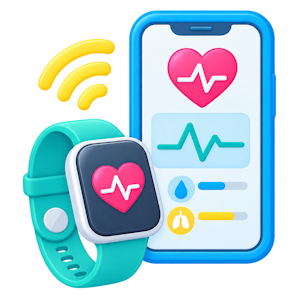
Alongside Your Remote Patient Monitoring (RPM)
Place supported measurements alongside patient-reported information, guidance, and pathway activity so the care team has additional context for review.

Alongside Your Care Management Protocols
Support routine digital engagement while preserving the clinical conversations, coordination, and judgment delivered by your staff.
Designed Around Clear Responsibilities
Scope data connections, establish appropriate sharing, approve pathway content, assign review ownership, and define escalation processes before launch.
Calcium’s value is not another isolated feature. It is a more connected way to put your care strategy into practice.
FOR PROVIDERS DELIVERING VALUE-BASED CARE
A Connected Approach Across VBC Organizations
Support your operating model, patient populations, and clinical priorities.
Value-based care takes different forms across organizations, contracts, and communities. Some teams are extending an established ACO program, while others are developing workflows for shared risk, accountable primary care, or coordinated episodes.
Calcium provides tools that can support those efforts without requiring every organization to follow the same operating model. Configure patient groups, pathways, and review responsibilities around your priorities, with attention to the people you serve and the resources available to support them.
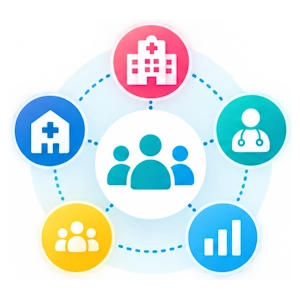
Accountable Care Organizations (ACOs)
Connect population-health priorities with chronic care engagement, preventive guidance, transition support, and patient-level follow-up across participating practices.
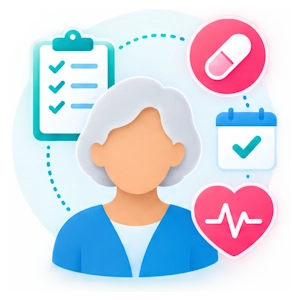
Medicare Advantage Provider Groups
Support clinician-directed programs for patients who need ongoing medication guidance, health tracking, preventive activities, and help navigating complex care plans.

Risk-Bearing Physician Groups
Extend proactive support beyond office visits through patient pathways and organized review, while fitting the program to the group’s clinical resources and responsibilities.
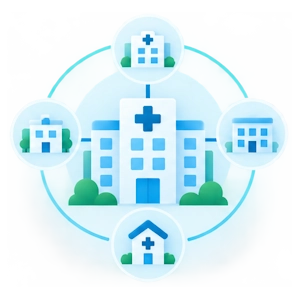
Integrated Delivery Networks (IDN)
Provide a connected patient engagement approach across selected facilities, service lines, and teams, with defined ownership for each program.
Health Systems in Shared-Risk Programs
Build focused initiatives around transitions, chronic conditions, or other priorities while evaluating the operational and financial fit of each deployment.

Clinically Integrated Networks
Support common digital care strategies across participating practices while configuring patient groups and pathways around the needs of the network and its clinical teams.
FAQ
1. What is Calcium’s value-based care solution?
Calcium connects patient information, Digital Pathways, and provider oversight to help healthcare organizations put preventive care into practice. Calcium Core gives teams a place to review shared information and patient activity. Calcium AI Studio helps create and manage pathways, while the Calcium Super App delivers guidance to patients. Together, these components support ongoing engagement, informed follow-up, and coordinated action between visits within the clinical programs and responsibilities established by your organization for its patient populations.
2. Can Calcium support ACOs and Medicare Advantage provider groups?
Calcium can support provider organizations participating in accountable care, Medicare Advantage risk arrangements, shared savings, and other VBC programs. Relevant organizations include ACOs, physician groups, health systems, integrated delivery networks, and clinically integrated networks. The common opportunity is connecting population priorities with ongoing patient participation and care team oversight. Program design should reflect your specific contracts, clinical responsibilities, patient needs, staffing, and available information rather than assuming every VBC organization operates under identical financial incentives.
3. How is Calcium different from population-health analytics?
Population health analytics helps organizations understand risk, utilization, and opportunities for improvement. Calcium complements that intelligence with tools for patient guidance, ongoing information collection, and provider review. Teams can assign Digital Pathways, monitor participation, review shared measurements, and organize appropriate outreach. The difference is the connection between identifying a need and supporting the response. Existing analytics capabilities, data exchange requirements, and potential workflow overlap should be reviewed together when defining how Calcium fits your program.
4. Does Calcium replace our EHR or care-management team?
No. Calcium is designed to extend care beyond encounters, not replace your EHR or the professionals responsible for patient care. It provides a connected environment for patient guidance, shared health information, pathway activity, and provider review. Your organization retains responsibility for clinical documentation, treatment decisions, staffing, and follow-up. Data access, integration requirements, and any proposed exchange with existing systems should be confirmed during planning so the deployment supports your workflows without assuming universal technical compatibility.
5. What does “Predict. Prioritize. Prevent.” mean?
Predict means using relevant health information and appropriate risk criteria to recognize changing needs. Prioritize means directing care team review toward patients whose circumstances warrant attention. Prevent means connecting those insights with clinician-approved guidance, ongoing patient participation, and appropriate intervention. Calcium brings these activities into a connected framework. Predictive models, data inputs, and clinical rules should be confirmed for each deployment, with validation matched to the population and intended use before informing patient care decisions.
6. How does Calcium help care teams prioritize patients?
Calcium Core helps teams review patient status, pathway responses, reported symptoms, health trends, and configured alerts. These signals can provide additional context alongside existing clinical assessments or risk information. A change in participation or measurements may prompt review, but it does not independently establish urgency or a diagnosis. Clinical leaders define review criteria and responsibilities. Teams should also address missing information and unanswered check-ins rather than treating a lack of activity as evidence of stability.
7. Can Calcium support chronic conditions and patients with multiple diagnoses?
Calcium Digital Pathways can support clinician-led programs for diabetes, hypertension, heart disease, COPD, obesity, and other chronic conditions. Pathways can include education, medication reminders, symptom questions, health tracking, and activities connected to the personalized care plan. Core brings supported information into a longitudinal provider view. For patients with multiple conditions, teams can coordinate guidance around individual priorities, review potential conflicts, and adjust the program as needs change while retaining responsibility for clinical assessment and treatment.
8. How do patients participate between visits?
Patients participate through the Calcium Super App, which offers assigned Digital Pathways, reminders, medication tracking, health journaling, and supported health information connections. Activities give patients practical opportunities to follow guidance and share updates between appointments. Engagement should be designed around individual needs, not assumed after enrollment. Teams should plan onboarding, explain information sharing, review participation, and maintain appropriate alternatives for people who cannot reliably use the app or need additional assistance from their care team.
9. Can Calcium help reduce repetitive care-management work?
Calcium can automate appropriate routine touchpoints, including reminders, educational activities, questionnaires, and scheduled patient check-ins. Core helps staff review participation, shared information, and configured alerts so outreach can be organized around identified needs. This creates opportunities to reduce repetitive manual work, but it does not eliminate clinical staffing requirements. Organizations should define ownership, response expectations, and escalation procedures, then measure workload changes during implementation rather than assuming automation automatically increases capacity or reduces total costs.
10. How can Calcium support post-discharge care and readmission-management programs?
Calcium can extend discharge instructions through Digital Pathways that reinforce follow-up, medication routines, recovery activities, and symptom reporting. Patients receive structured guidance while authorized teams review participation and reported concerns. This supports transition workflows intended to address problems earlier, but does not guarantee fewer readmissions. The provider remains responsible for clinical response and emergency instructions. Utilization outcomes should be evaluated using appropriate patient populations, reliable data, and a comparison approach that accounts for other influences.
11. What health information can Calcium bring together?
Calcium Core can organize available electronic clinical records, medications, laboratory results, pathway responses, patient-reported information, and connected health measurements. Available information depends on patient authorization, source access, device compatibility, and deployment configuration. Your organization should confirm the specific connections and refresh schedules needed for its program. Claims feeds, external risk scores, EHR writeback, and other proposed integrations require technical scoping rather than assumptions that every data source is included or continuously available in every deployment.
12. Can we create our own Digital Pathways, and how does AI help?
Yes. Calcium AI Studio supports creating, editing, cloning, and managing Digital Pathways. Teams can build pathways manually or use AI to generate a draft, then review and configure the content before publication and assignment. Pathways can include education, questions, reminders, activities, and tracking tailored to your program. Clinical owners should approve the guidance and maintain it over time. AI assistance supports pathway development; it does not replace clinical judgment or authorize autonomous patient treatment decisions.
13. How does Calcium support quality improvement and financial evaluation?
Calcium supports activities that can contribute to quality improvement, including preventive guidance, medication reminders, ongoing engagement, and chronic care follow-up. Organizations can evaluate participation and response alongside their clinical, utilization, and financial measures. Calcium should not be assumed to replace payer reporting, certified measure calculation, coding, or contract reconciliation systems. Establish baseline performance and appropriate comparisons before attributing improvements to the platform, and assess program costs when evaluating potential savings or financial value over time.
14. What should we consider about privacy, security, and clinical governance?
Calcium provides secure patient sharing and provider communication capabilities within its digital health platform. Organizations should review the proposed information flows, patient permissions, user access, and operational responsibilities during their security assessment. Request the contractual and technical documentation and confirm how the deployment fits your policies. Clinical governance also matters: establish who approves pathways, reviews incoming information, responds to concerns, and maintains the program. Security and responsible care delivery require technology and accountable organizational processes.
15. What is the best way to get started with Calcium?
Begin with a defined population and a specific care challenge, such as hypertension follow-up, diabetes engagement, or support after discharge. During a demo, discuss the patient journey, available data, staffing, pathway requirements, and evaluation priorities. A focused pilot can test participation and workflow fit before broader expansion. Agree on success measures and review responsibilities in advance, then use the findings to decide what to refine, continue, or extend across additional populations within your VBC program.