A Practical Guide to the Digital Solutions ACOs Need to Succeed in 2025
Navigating the healthcare landscape in 2025 is like steering a ship through shifting tides, especially for Accountable Care Organizations (ACOs). With value-based care tightening its grip and patient expectations evolving faster than ever, the tools that once carried ACOs to success are now barely enough to stay afloat. Digital transformation isn't a buzzword anymore; it’s the new standard.
Modern patients expect seamless, personalized care experiences. Providers need real-time insights, streamlined communication, and smarter ways to manage risk without adding to their already crushing workload. And health systems? They're under immense pressure to deliver better outcomes at lower costs or risk penalties that could sink their operations.
In this new reality, having the right accountable care organization tool is no longer optional; it's fundamental. So, how can forward-thinking ACOs equip themselves to not just survive, but thrive? Let’s dive into the top digital tools that will shape success in 2025 and beyond.
Why ACOs Must Invest in Digital Transformation
If you're leading an Accountable Care Organization (ACO) in 2025, standing still isn't an option. Value-based care models are racing ahead, and ACOs that hesitate to innovate will find themselves left behind. With tighter CMS regulations, higher patient expectations, and an aging population with chronic conditions, ACOs must lean hard into digital tools.
Patients today expect healthcare to work like every other part of their lives: fast, personalized, and available at their fingertips. Providers, meanwhile, are overwhelmed, struggling to coordinate care and manage skyrocketing administrative tasks. That's why the right, digital accountable care organization tools aren't just "nice-to-haves" anymore they're survival gear.
The Top 7 Digital Tools Every ACO Needs in 2025
Today’s ACOs must win by turning fragmented data, episodic care and siloed teams into a coordinated, proactive system.
1. Unified Patient Data Platforms
Let's be honest: fragmented health records are killing efficiency. Patients see multiple specialists, use wearables, and track fitness in apps yet most ACOs still can't pull all that data together into one clear picture (Wu et al., 2017).
A unified patient data platform changes that. Here's what you need:
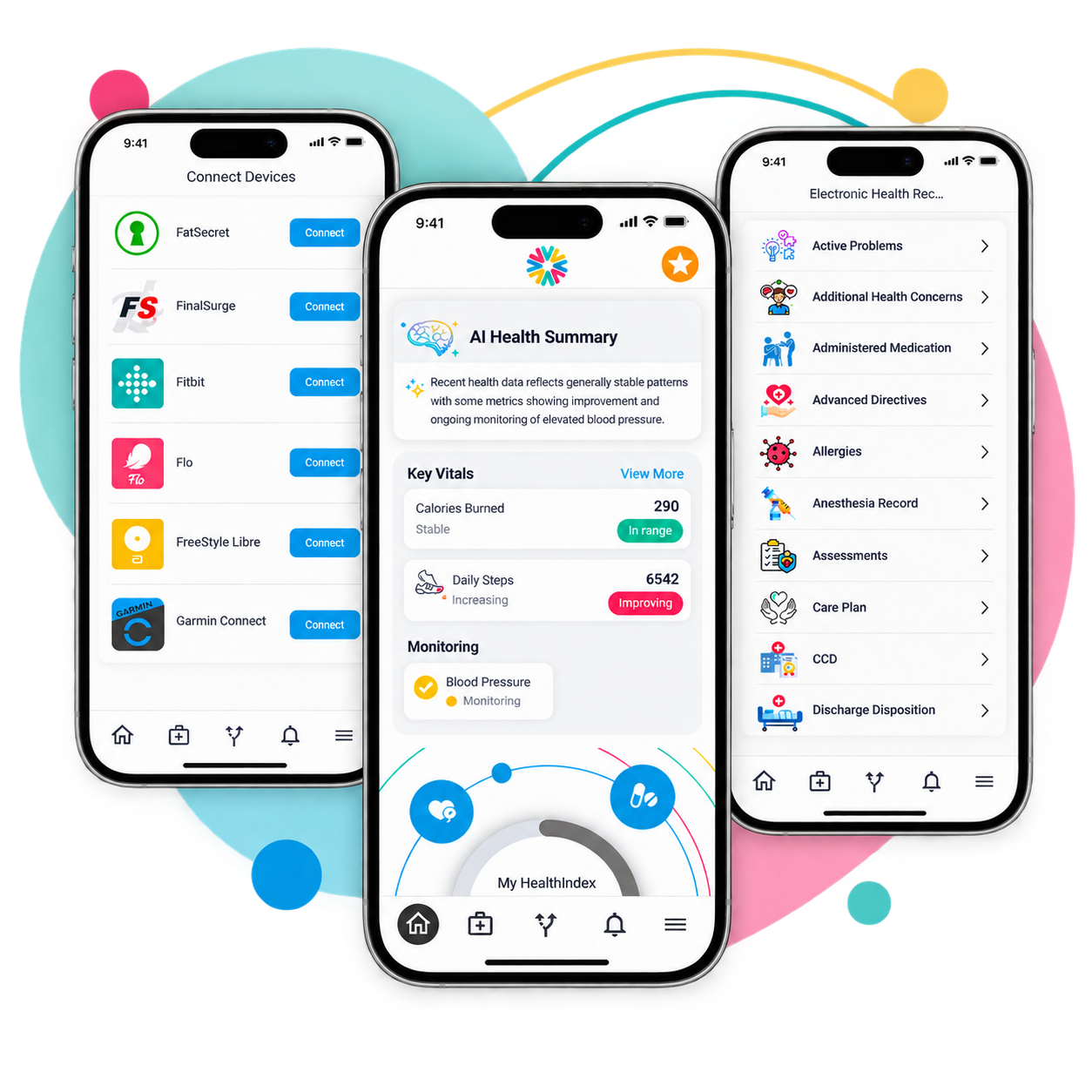
- Full integration with EHRs, health apps, and wearable devices
- Real-time health data streams that update patient profiles automatically
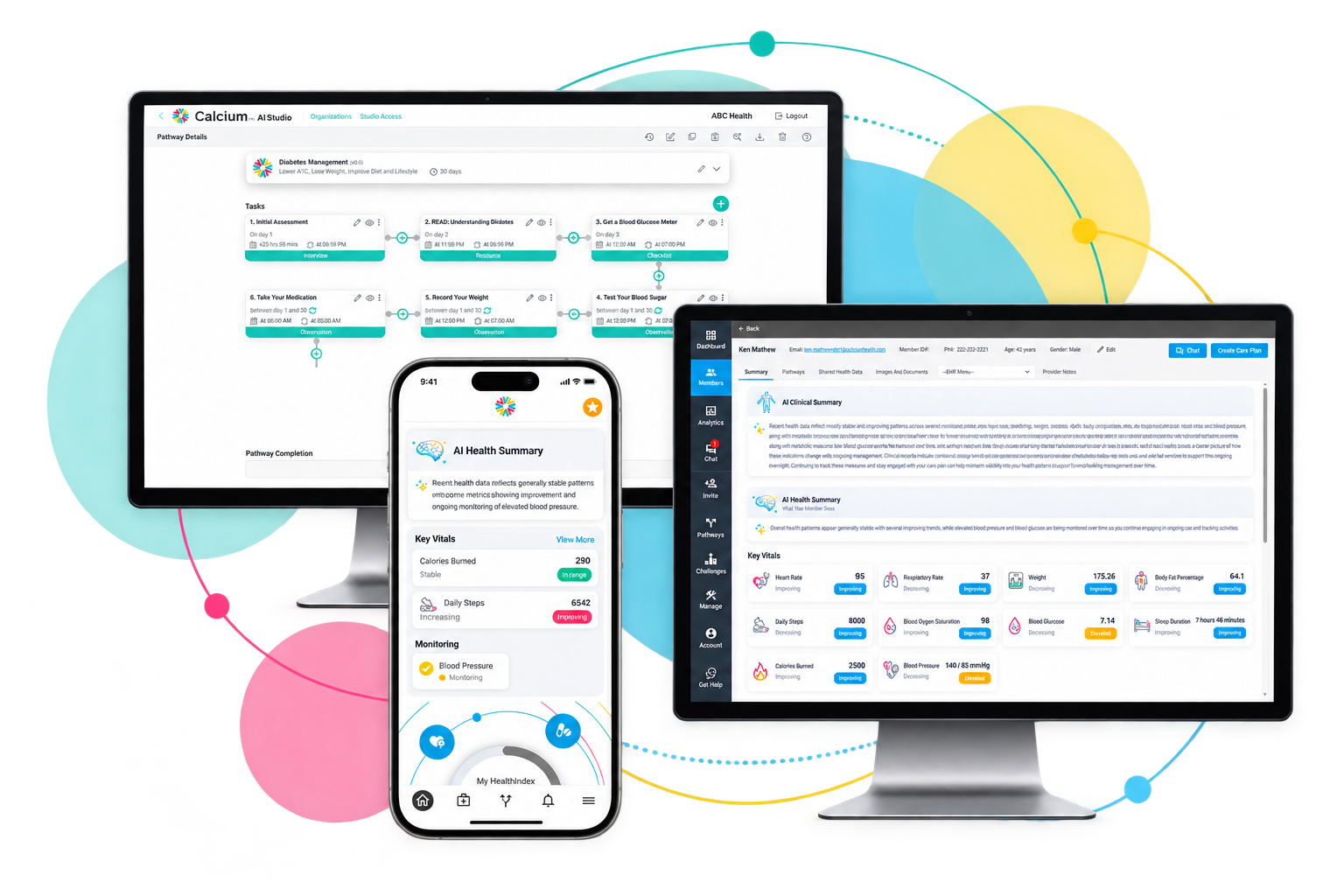
- Predictive health insights based on complete patient data
Platforms like Calcium Core are leading the way, offering ACOs a true 360° view. No more flying blind. No more redundant tests or delayed interventions.
2. Personalized Digital Care Pathways
Traditional care models are like one-size-fits-all hospital gowns awkward and ineffective. ACOs must offer something better: personalized care pathways (Sarasohn-Kahn, 2020).
Personalized pathways:
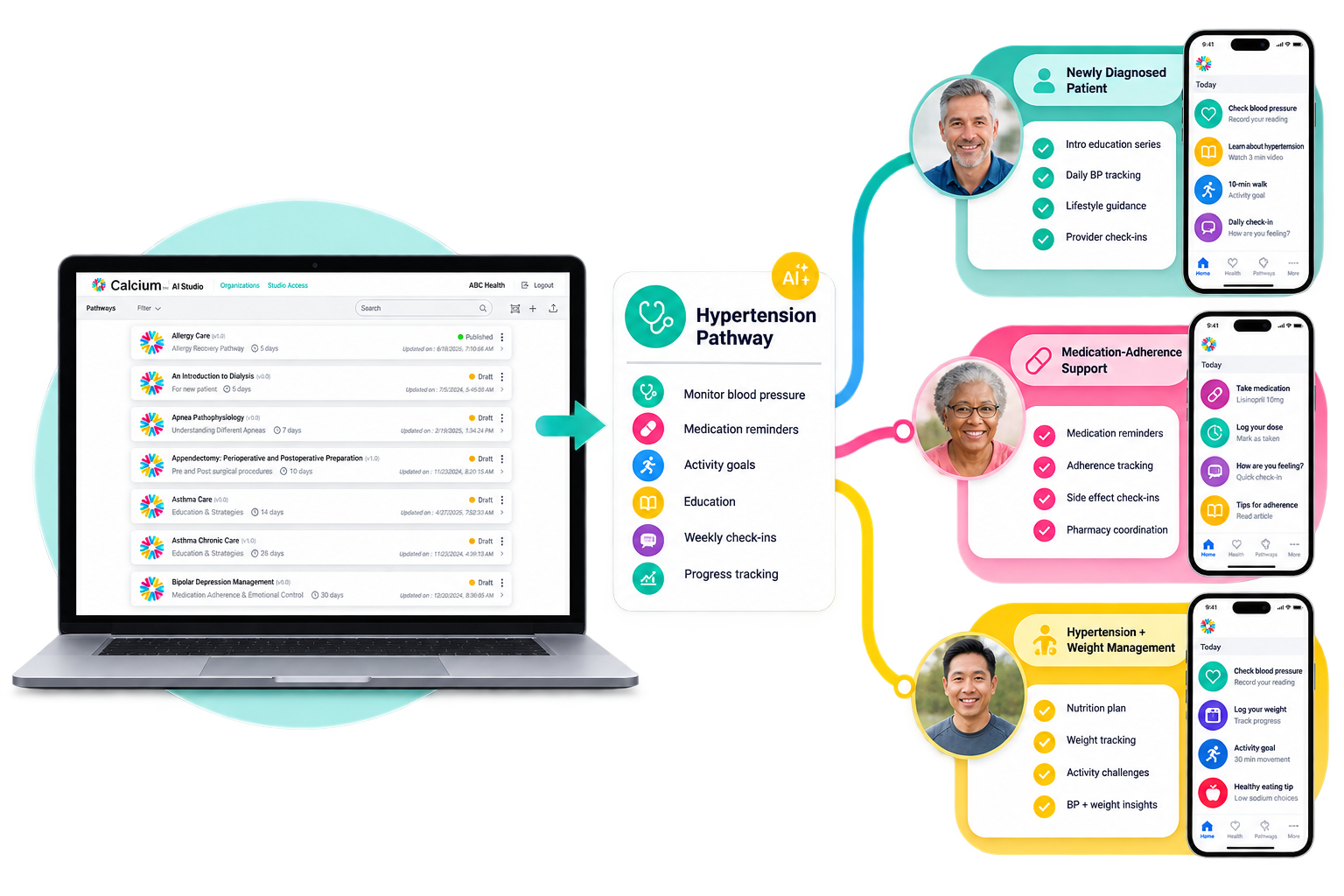
- Guide patients daily with tasks, education, and vitals tracking
- Adjust over time based on patient feedback and clinical data
- Keep patients on track between appointments
For example, Calcium's Super App creates AI-generated pathways tailored to each patient’s health needs. Think of it as having a digital care coach in your pocket, 24/7.
3. Remote Patient Monitoring (RPM) and Connected Devices
Want to catch a heart issue before it becomes a 911 call? Or help a diabetic patient manage their blood sugar before it spirals into an ER visit? Remote patient monitoring is the key. As real-time monitoring has been shown to reduce hospitalizations and emergency costs (Wu et al., 2017), it’s a critical function that the best accountable care organization tools must support.
Must-have features include:
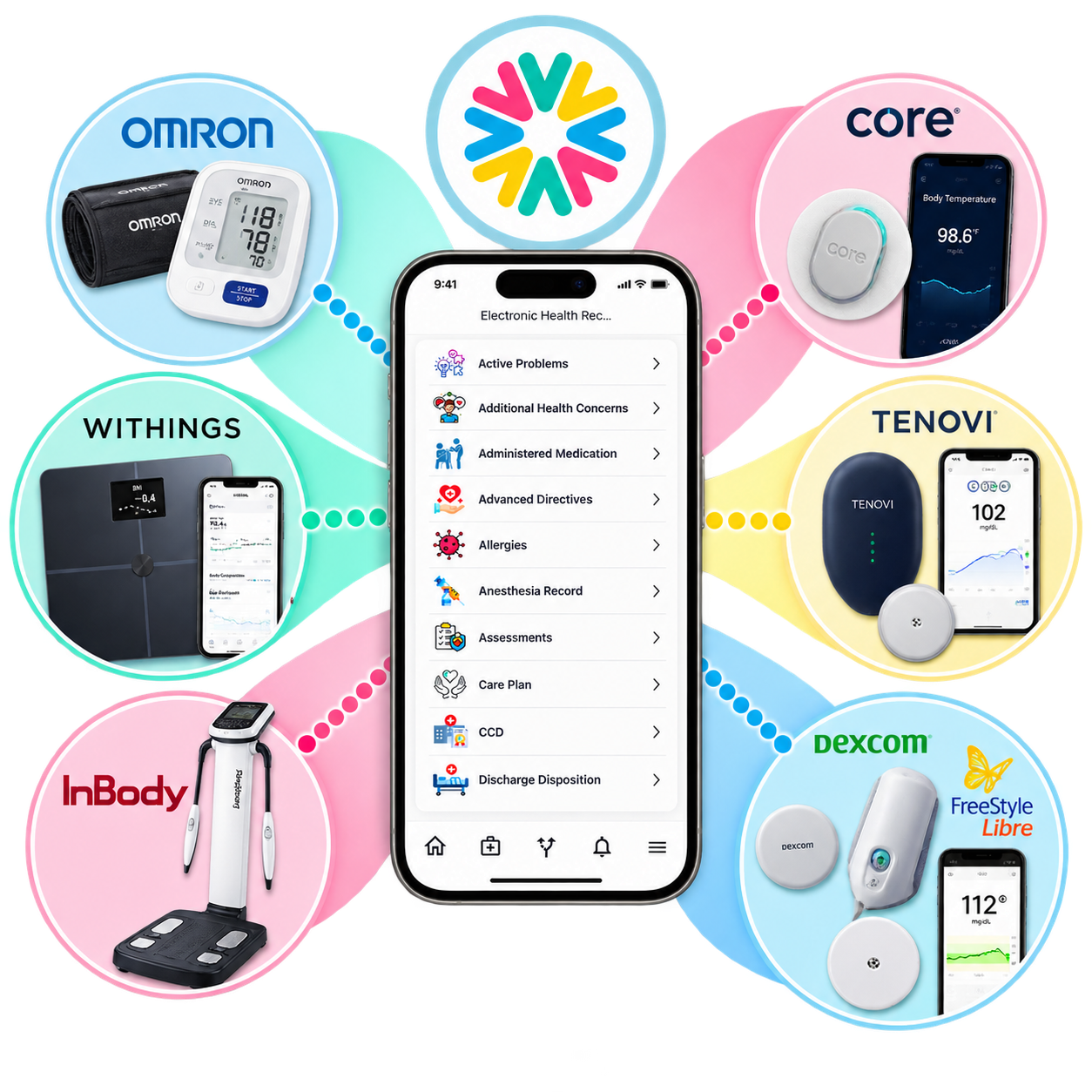
- Continuous tracking of vitals like blood pressure, glucose, weight, and heart rate
- Automated alerts when readings cross risk thresholds
- Integration with devices like Omron, Dexcom, Apple Watch, and Google Fit
As research shows, real-time monitoring reduces hospitalizations and emergency costs a win for patients and ACOs alike.
4. Digital Advance Care Planning (ACP) Tools
Advance care planning (ACP) conversations are crucial but awkward. Many providers avoid them, and patients often put them off until it's too late.
Digital ACP tools help bridge the gap. For example, studies have shown that digital ACP platforms improve engagement and empower better end-of-life decisions across diverse populations (Roberts et al., 2023).
An effective digital ACP tool will:
- Let patients define their values and treatment preferences
- Allow them to choose a surrogate decision-maker
- Generate legally binding documents easily and share them securely
Not only does this respect patient autonomy, but it also reduces unnecessary and costly interventions.
5. Predictive Analytics and Risk Stratification Engines
If ACOs are like ships navigating a stormy sea, predictive analytics are the radar. You can't manage risk if you can't see it coming (Wu et al., 2017).
Top predictive ACO tools:
- Flag rising-risk patients early, before they escalate into high-cost cases
- Analyze trends from vitals, claims, and engagement data
- Offer suggested interventions customized to each patient’s risk profile
Tools like Calcium Core don't just track they predict and prioritize, helping providers focus where they're needed most.
6. Secure Patient Communication Platforms
Imagine trying to manage a championship sports team without a way to talk to your players. That's what many ACOs do when they lack secure communication tools (Sarasohn-Kahn, 2020).
An effective patient communication platform must:
- Offer HIPAA-compliant chat and messaging
- Facilitate communication between the care team, patients, and family caregivers
- Integrate with the patient’s app and provider dashboard seamlessly
When patients feel connected, they’re more likely to stick to their care plans, show up for follow-ups, and trust their providers. Calcium’s built-in secure chat makes this simple and natural.
7. Behavioral Health Integration Tools
Behavioral health isn't just a "nice extra" anymore, it's central to overall health. Depression, anxiety, and substance use disorders directly impact chronic disease outcomes and healthcare costs. Integrating behavioral health services into the accountable care organization tool has been shown to lower emergency visits, reduce hospitalizations, and improve quality scores (Wu et al., 2017).
Essential features of behavioral health tools:
- Digital mental health pathways (like those found in Calcium’s Super App)
- Symptom journaling, mood tracking, and CBT-based activities
- Crisis alerts and secure referrals to therapy or psychiatric care
Studies confirm that integrating behavioral health can lower emergency room visits, reduce hospitalizations, and improve quality scores, all core goals for ACOs.
How Digital Tools Drive Better ACO Performance
Still wondering if digital investment really pays off? Let’s break it down:
- Improved Health Outcomes. Better chronic disease management, fewer gaps in preventive care
- Higher Patient Satisfaction. Patients feel heard, supported, and in control of their journey
- Financial Wins. Lower emergency and hospitalization rates mean better shared savings returns
- Equity Gains. Tools like digital ACPs have shown they can bridge racial and socioeconomic gaps in care (Roberts et al., 2024).
Think of it this way: traditional tools are like using paper maps in a GPS world. Digital tools give ACOs turn-by-turn directions and help avoid the potholes along the way.
The Wrap
The future of healthcare is digital, and for ACOs, the future is already here. Choosing the right accountable care organization tools could mean the difference between leading the pack or lagging behind. Success will belong to those who invest in technologies that unify data, personalize care, engage patients, and empower providers to deliver proactive, high-quality care.
At Calcium Health, we believe every ACO deserves tools that are as dynamic and forward-thinking as the patients and communities they serve. Our digital health platform offers a full suite of solutions from real-time patient data integration to AI-driven personalized care pathways designed to help ACOs thrive in a value-based world.
Reference
Wu, F. M., Shortell, S. M., Rundall, T. G., & Bloom, J. R. (2017). The role of health information technology in advancing care management and coordination in accountable care organizations. Health Care Management Review, 42(4), 282–291. https://doi.org/10.1097/hmr.0000000000000123
Roberts, R. L., Mohan, D. P., Cherry, K. D., Sanky, S., Huffman, T. R., Lukasko, C., Comito, A., Hashemi, D., Menn, Z. K., Fofanova, T. Y., & Andrieni, J. D. (2023). Deployment of a Digital Advance Care Planning Platform at an Accountable Care Organization. The Journal of the American Board of Family Medicine. https://doi.org/10.3122/jabfm.2023.230133R2
Roberts, L., Mohan, D. P., Cherry, K. D., Andrieni, J., & Fofanova, T. Y. (2024). Insights from Implementation of a Digital Advance Care Planning Solution Among ACO Patients with Serious Illness. Journal of Pain and Symptom Management, 67(5), e689–e690. https://doi.org/10.1016/j.jpainsymman.2024.02.157
Sarasohn-Kahn, J. (2020). Patients and Personal Health IT in the Era of Accountable Care. Engage!, 9–19. https://doi.org/10.4324/9780367648015-2