Turning Insights Into Action for Smarter, More Personalized Patient Care
In today’s healthcare environment, standing still isn’t just unproductive,it’s expensive. The shift to value-based care has pushed organizations to rethink not only how care is delivered, but when. The old model waiting for a patient to walk through the door with a worsening condition is being replaced by one that rewards foresight, prevention, and strategic intervention.
But making that shift from reactive to proactive care isn’t just a mindset change it’s a data challenge. With patients generating information from every angle EHRs, labs, devices, and even social determinants the question becomes: how do we turn that data into meaningful action?
That’s where analytics comes in. Not as a buzzword, but as the backbone of smart, scalable care. When used right, analytics doesn’t just tell us what’s happening—it tells us what to do next. And for any organization serious about succeeding in a value-based world, that insight is no longer optional. It’s essential.
Proactive Beats Reactive Every Time
In a value-based care (VBC) environment, being reactive is no longer enough. Waiting for patients to miss an appointment, experience complications, or end up in the ER simply doesn’t align with the goals of VBC: lower costs, better outcomes, and healthier populations.
But here’s the good news analytics gives us a way to flip the script.
By turning raw data into timely, actionable insights, healthcare teams can shift from reacting to problems to preventing them altogether. The key lies in using the right tools to make sense of data across systems and using those insights to deliver timely, personalized care.
What Proactive Care Really Means in a VBC Model
Proactive care is about anticipating needs before they turn into crises. In a traditional fee-for-service model, the system rewards volume. In VBC, it rewards results meaning you get paid for keeping people well, not just treating them when they’re sick.
That shift demands new strategies:
- Identifying high-risk patients before they decline
- Closing care gaps early, not after a report tells you they were missed
- Guiding patients through preventive services and chronic care consistently
- Adjusting care plans dynamically based on real-time feedback
This isn’t theoretical. Studies like “Measuring Value-Based Productivity: A CFA Approach” confirm that productivity in VBC is now measured through quality, coordination, and patient outcomes not just service counts. That means organizations need systems that support those goals.
How Analytics Drives Proactive Care at Every Stage
If you’re thinking of analytics as dashboards and spreadsheets, think bigger. Today’s analytics platforms can serve as the command center of your care operations. They don’t just tell you what happened they tell you what to do next.
Here are four essential ways analytics supports proactive care:
1. Risk Stratification: Spotting Trouble Before It Starts
It’s impossible to personalize care at scale without first understanding who needs what level of attention.
Modern analytics platforms sift through EHR data, lab results, claims history, and even social determinants to flag patients who are:
- High-risk (e.g., multiple chronic conditions, recent hospitalizations)
- Rising-risk (e.g., trending toward worsening health)
- Stable but overdue for preventive screenings
This helps care managers prioritize outreach, allocate resources efficiently, and catch issues before they escalate.
It’s like having a heat map of your patient population showing you where the fires could start, so you can respond early.
2. Care Gap Identification: Real-Time, Not Retroactive
Care gaps don’t wait for your quarterly reports. Every missed mammogram, flu shot, or A1c screening is a lost opportunity to intervene early.
That’s why real-time care gap identification is so important.
Using integrated data sources, a smart VBC platform can:
- Automatically identify overdue preventive services
- Flag patients due for labs, follow-ups, or medication reviews
- Trigger automated reminders or assign tasks to care team members
Instead of playing catch-up, your team stays ahead ensuring patients get the care they need, when they need it.
This aligns directly with insights from “Actionable Data Analytics in Oncology”, which highlights how clinical data often fails to drive real-world action due to poor integration and timing. Analytics solves that gap.
3. Personalized Intervention Planning
Every patient is different. Yet too often, care plans look the same. Analytics helps change that.
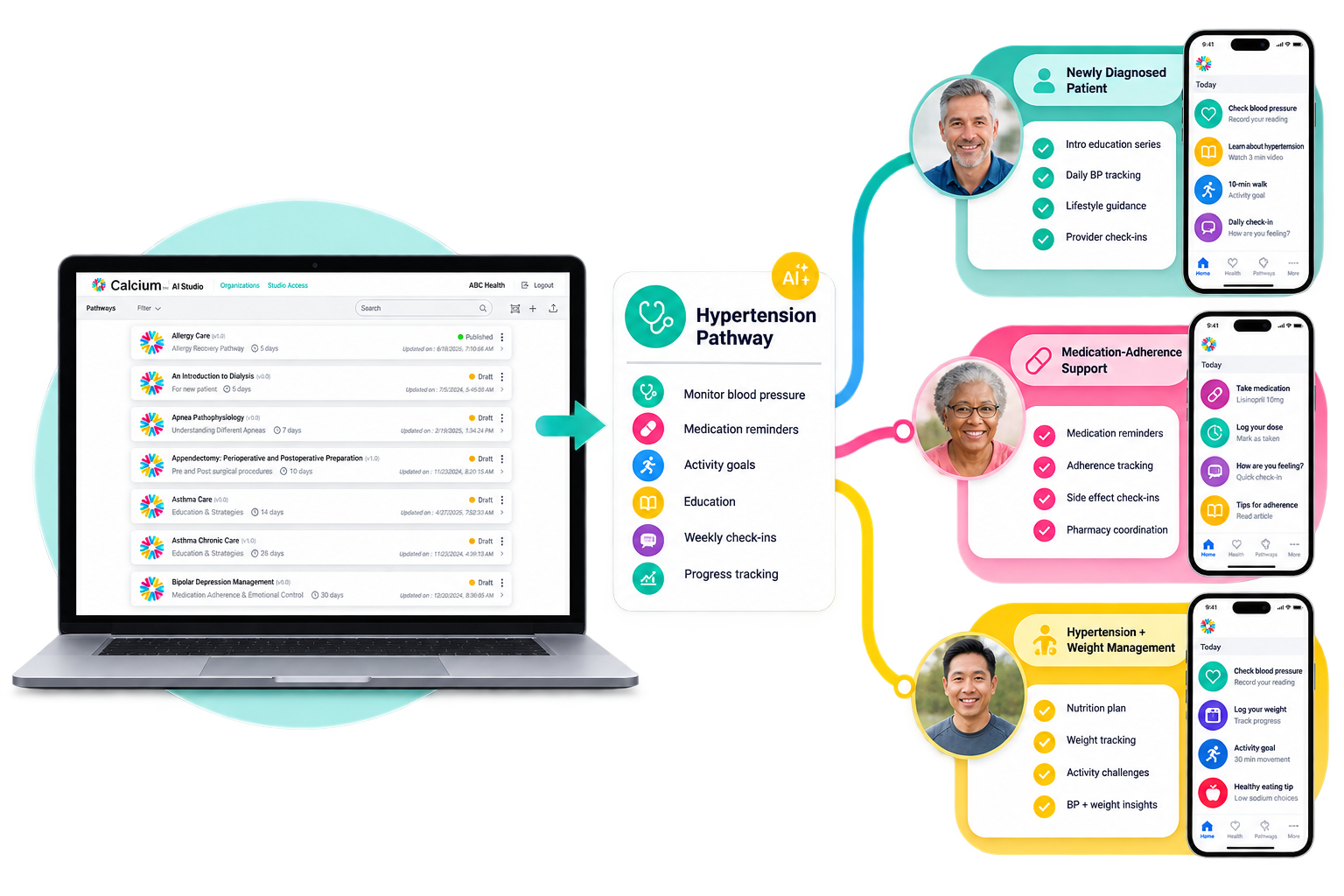
By layering clinical, behavioral, and social data, digital platforms can tailor care plans that are:
- Condition-specific (e.g., COPD with depression and food insecurity)
- Context-aware (e.g., patient has no car, caregiver support is limited)
- Dynamic (updated based on new data or patient-reported outcomes)
For example, a patient with diabetes and low digital literacy might be better served with text message reminders and nurse check-ins, while a younger patient with asthma might respond well to app-based journaling and gamified goals.
It’s the kind of customization that feels personal but scales efficiently.
4. Monitoring Outcomes and Closing the Feedback Loop
Once a plan is in motion, analytics doesn’t stop working. It powers continuous monitoring so care teams can:
- See which interventions are driving improvement
- Identify patients who aren’t engaging or progressing
- Adjust care plans based on what’s working and what’s not
The best platforms provide visual dashboards for clinicians and population health managers. They highlight performance on quality metrics, cost targets, and patient engagement benchmarks.
You’re not just collecting data you’re learning from it.
What’s Standing in the Way?
If this sounds ideal, you might be wondering, why aren’t more organizations doing it?
Here are the common barriers:
- Data silos: Systems don’t talk to each other
- Unstructured data: Notes and PDFs are hard to analyze
- Lack of trust in AI: Providers worry about “black box” recommendations
- Data overload: Teams don’t have time to sort through it manually
This was echoed in the “Actionable Data Analytics in Oncology” review, which found that oncology care teams often have data but not in a usable, trusted, or timely format.
Overcoming these barriers requires not just access to data, but systems that organize, prioritize, and activate that data.
Choosing the Right Platform for Proactive VBC Management
If you're looking to build or upgrade, a system that supports proactive care, you need a platform with the right capabilities.
Here’s what to look for:
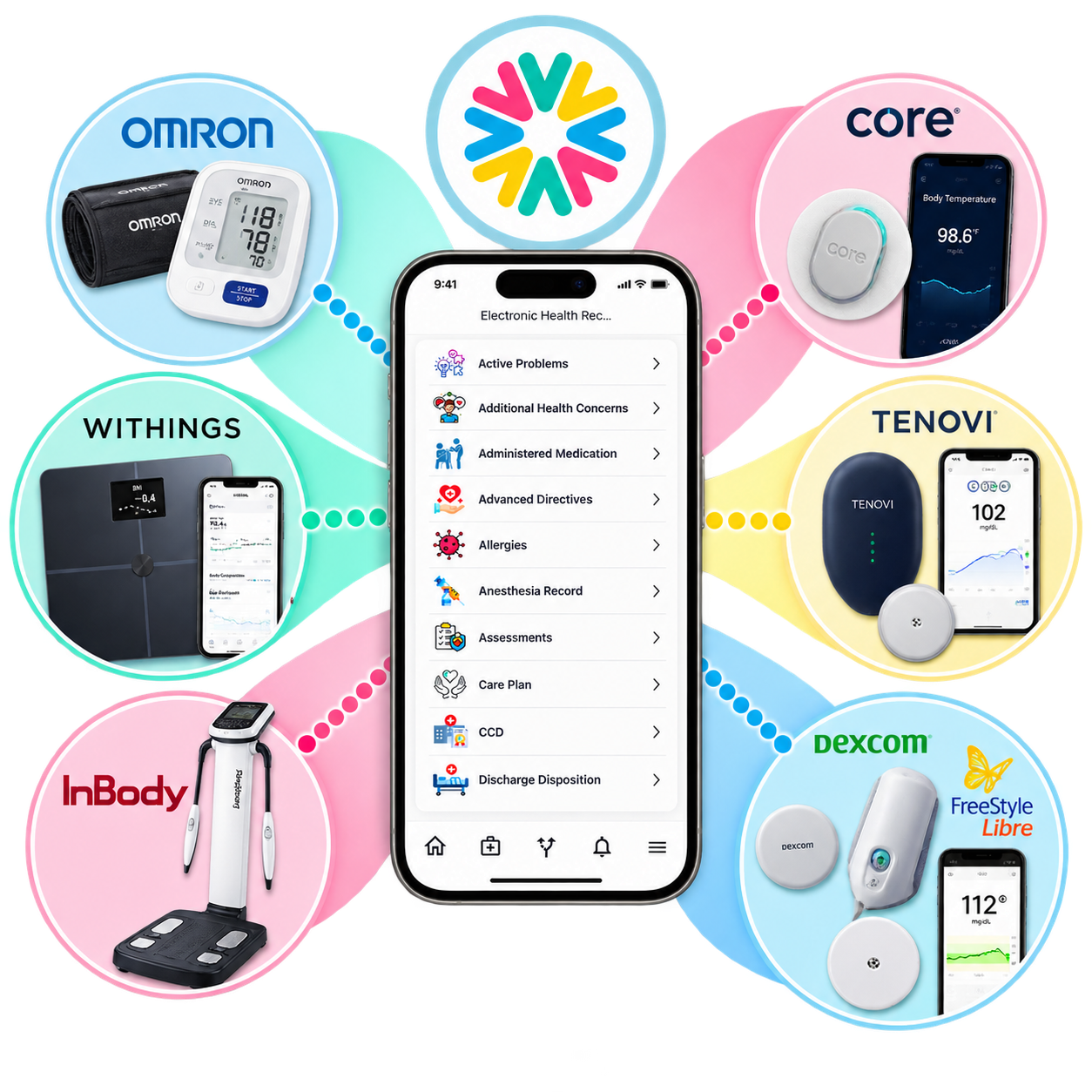
- Unified data integration across EHR, lab, pharmacy, and wearable sources
- Real-time care gap alerts tied to your population health goals
- Risk scoring and stratification tools that are transparent and customizable
- Patient-facing engagement tools for education, reminders, and reporting
- Behavioral health and SDOH support to guide whole-person care
- Dashboards and reporting for both clinicians and VBC administrators
And critically, it needs to fit into your team’s workflow not add extra burden.
How Calcium Makes Analytics Actionable
Calcium’s digital health platform is built for exactly this kind of transformation.
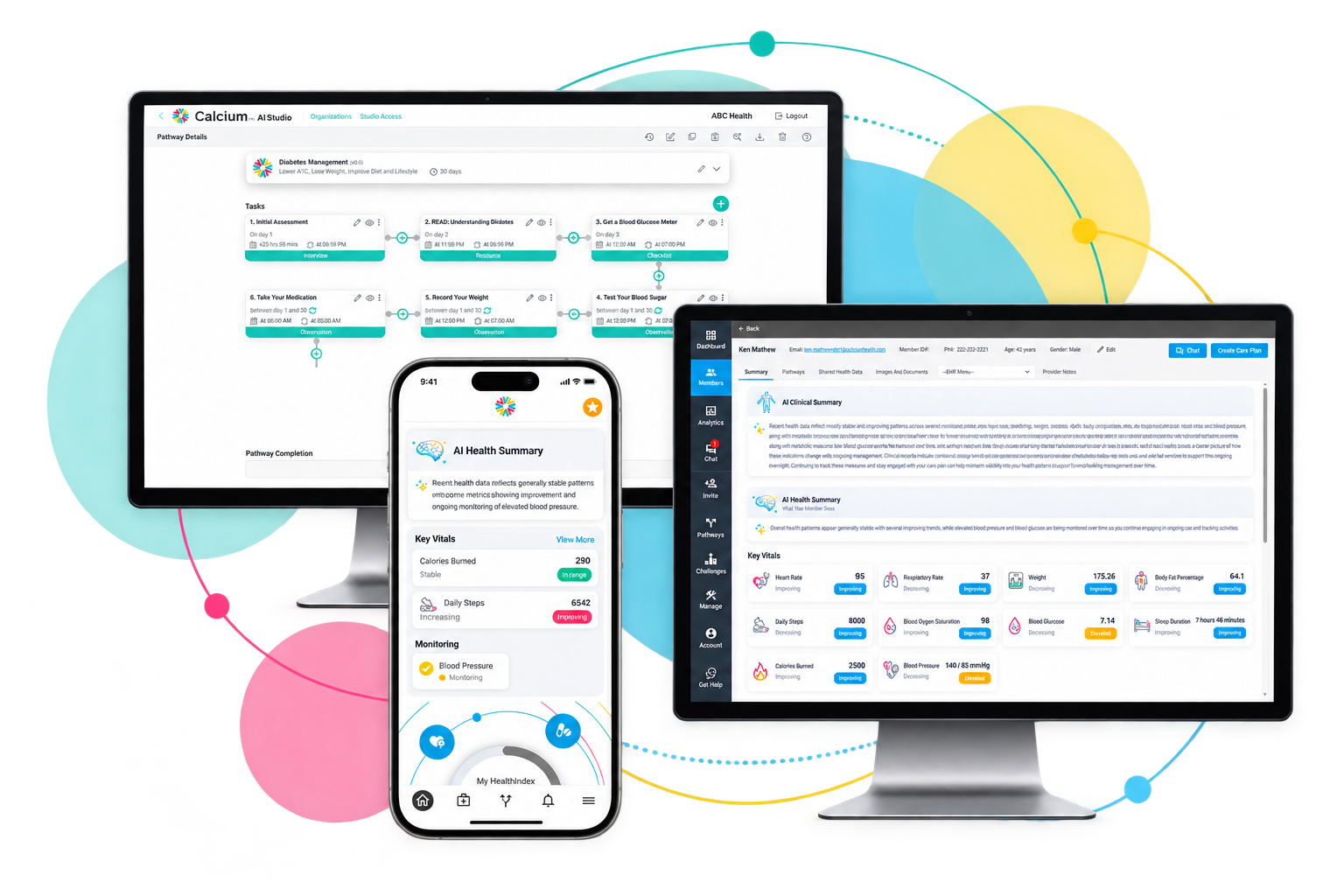
- With AI Studio, you can build personalized, data-driven care pathways that adapt based on patient behavior and health trends.
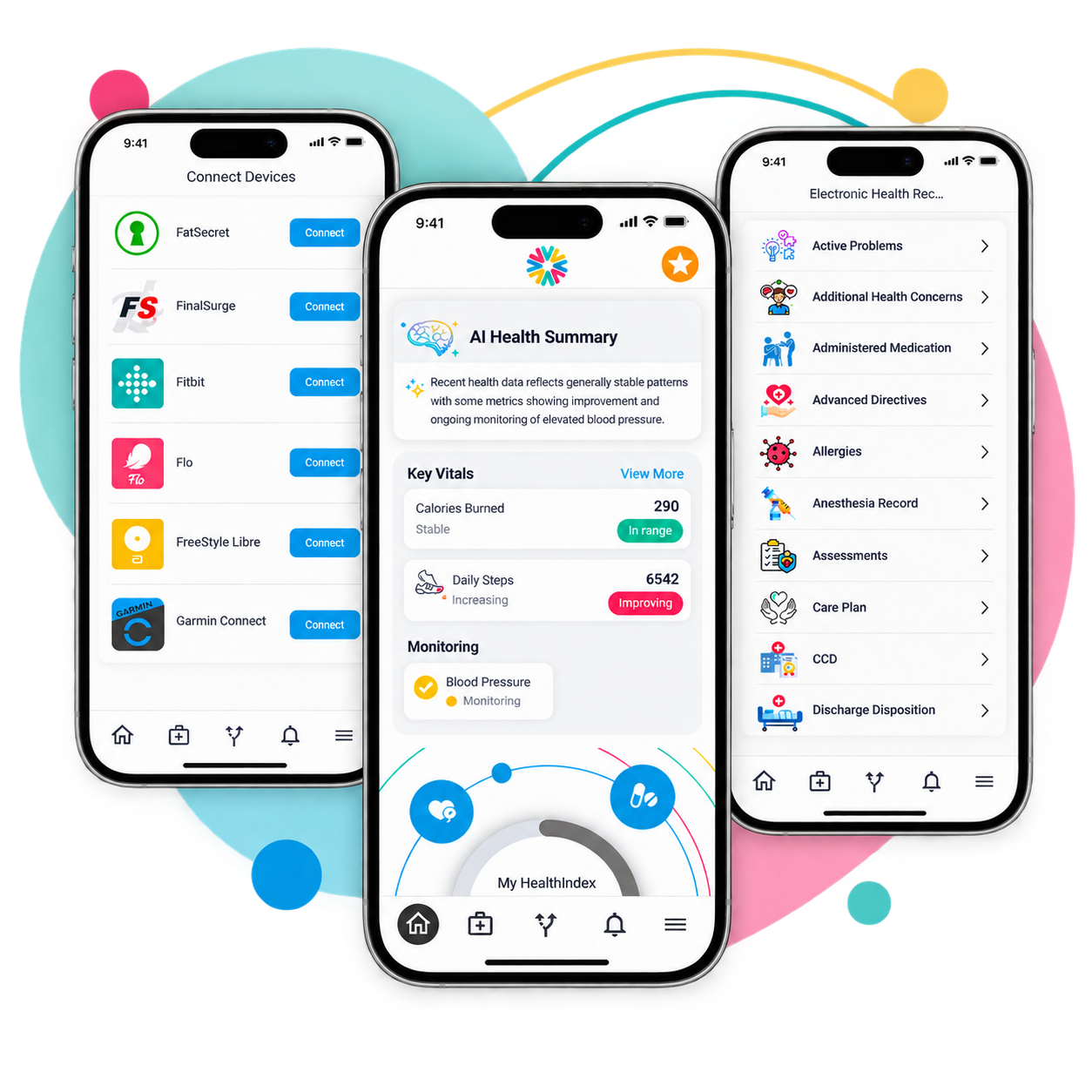
- With the Calcium Super App, patients stay engaged with symptom tracking, journaling, and education while your team receives alerts when something’s off track.
- And with Calcium Core, providers and care teams get real-time dashboards that surface who’s on track, who needs a nudge, and what to do next.
Together, these tools make analytics actionable and proactive care scalable.
The Wrap
Analytics is no longer just a reporting tool, it’s a strategic advantage in value-based care. By turning fragmented data into real-time, actionable insight, healthcare organizations can move from chasing problems to preventing them. Whether it's identifying high-risk patients, closing care gaps, or adjusting care plans on the fly, analytics gives your team the power to act early, act smarter, and deliver better results.
But insights are only as good as the platform delivering them. That’s why more organizations are turning to Calcium’s digital health platform. With intuitive dashboards, customizable care pathways, and smart patient engagement tools, Calcium makes proactive care a reality not just a goal.
Reference
- Hamid, M., Mustafa, Z., Idris, F., Abdullah, M., & Suradi, N. (2011). Measuring Value -Based Productivity: A Confirmatory Factor Analytic (CFA) Approach. International Journal of Business and Social Science, 2(6). https://core.ac.uk/download/pdf/159182569.pdf
- Hunke, F., Heinz, D., & Satzger, G. (2021). Creating customer value from data: foundations and archetypes of analytics-based services. Electronic Markets 32, p. 503-521. https://doi.org/10.1007/s12525-021-00506-y
- Inarumen, G. (2018, March 15). Integrative Pharmacoeconomics: Redefining Pharmacists’ Role in Formulary Design and Value-Based Healthcare Systems. International Journal of Computer Applications Technology and Research 7(12). https://doi.org/10.7753/IJCATR0712.1007
- Barkley, R., Greenapple, R., & Whang, J. (2014). Actionable Data Analytics in Oncology: Are We There Yet? Journal of Oncology Practice, 10(2), 93–96. https://doi.org/10.1200/jop.2013.001344