Unlocking Real-Time Collaboration, Smarter Decisions, and Better Outcomes Through Seamless Data Exchange
Information is power but in healthcare, information is power only if it flows freely to where it is needed.
Every provider, patient and policymaker agree: the future of medicine depends on the ability to connect data across systems, settings and stakeholders. Yet despite all the digital advances, healthcare still struggles with a fundamental question: Why is it so hard to make our data work together?
When lab results can’t be accessed by the ER, when primary care teams don’t know what specialists prescribed, and when patients can’t contribute their own health data — we’re not just facing inconvenience. We’re facing real risks to outcomes, efficiency and trust. The truth is, interoperability isn’t a “tech problem” anymore. It’s a care delivery issue. And solving it unlocks a new level of coordination, insight and personalization.
In this post, we’ll explore where interoperability is needed most and how getting it right can transform everything from ER visits to population health.
Why Interoperability Still Feels Out of Reach
Despite years of effort and billions invested, true data interoperability in healthcare remains elusive. We’ve come a long way from the days of paper charts and fax machines, but many providers still operate in digital silos. Records are fragmented. Systems can’t talk to one another. And most patients have no idea where all their data actually lives.
According to D. Kalra’s study, this isn’t just a technical issue it’s a structural and semantic challenge. Health data often gets shared without context, meaning critical details about diagnoses, medications or lab results can get lost in translation between systems.
So, what does it look like when interoperability actually works? When data flows securely and meaningfully across care teams, devices and organizations? That’s where the real power of digital health transformation shines and where the Calcium Digital Health Platform can make a difference.
Let’s explore some of the top real-world use cases where interoperability isn’t just helpful, it’s essential.
Use Case #1: Emergency Room Visits & Transitions of Care
Imagine a patient arrives at the ER unconscious. The team has no access to their history, medications, allergies or chronic conditions. Sound familiar? This scenario plays out every day and it’s one of the most dangerous failures in modern care.
Interoperability makes those blind spots disappear.
When systems are connected, ER providers can instantly pull in a patient’s records from external hospitals, primary care providers or even wearables. That kind of access can speed up triage, reduce duplicate tests and literally save lives.
With Calcium Core, for example, ER staff can view a unified patient profile including vitals, medications, procedures and notes even if the patient was last seen at another hospital or an out-of-network specialist. It’s like having the entire care history right at your fingertips, in real time.
Use Case #2: Coordinated Chronic Disease Management
Chronic conditions like diabetes, hypertension and heart failure require a team approach. But without interoperability, that team often works in silos.
The endocrinologist adjusts insulin. The PCP manages blood pressure. A dietitian tracks weight and nutrition. But if none of them have a shared view of the patient’s data, it’s a recipe for miscommunication, missed flags and medication conflicts.
Interoperability enables all care team members to work from a single, coordinated record. When labs, notes and patient-reported outcomes flow across systems, everyone stays on the same page.
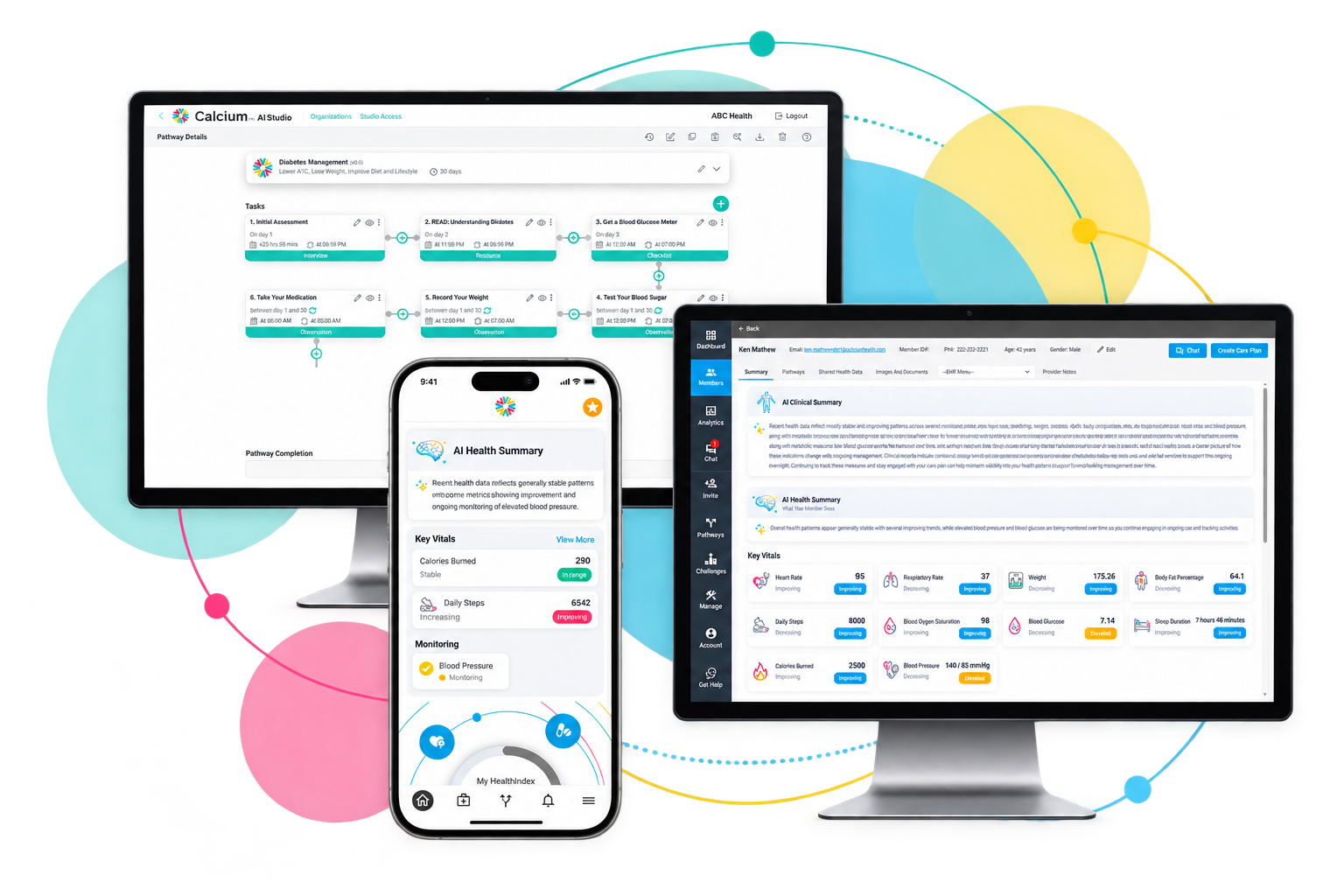
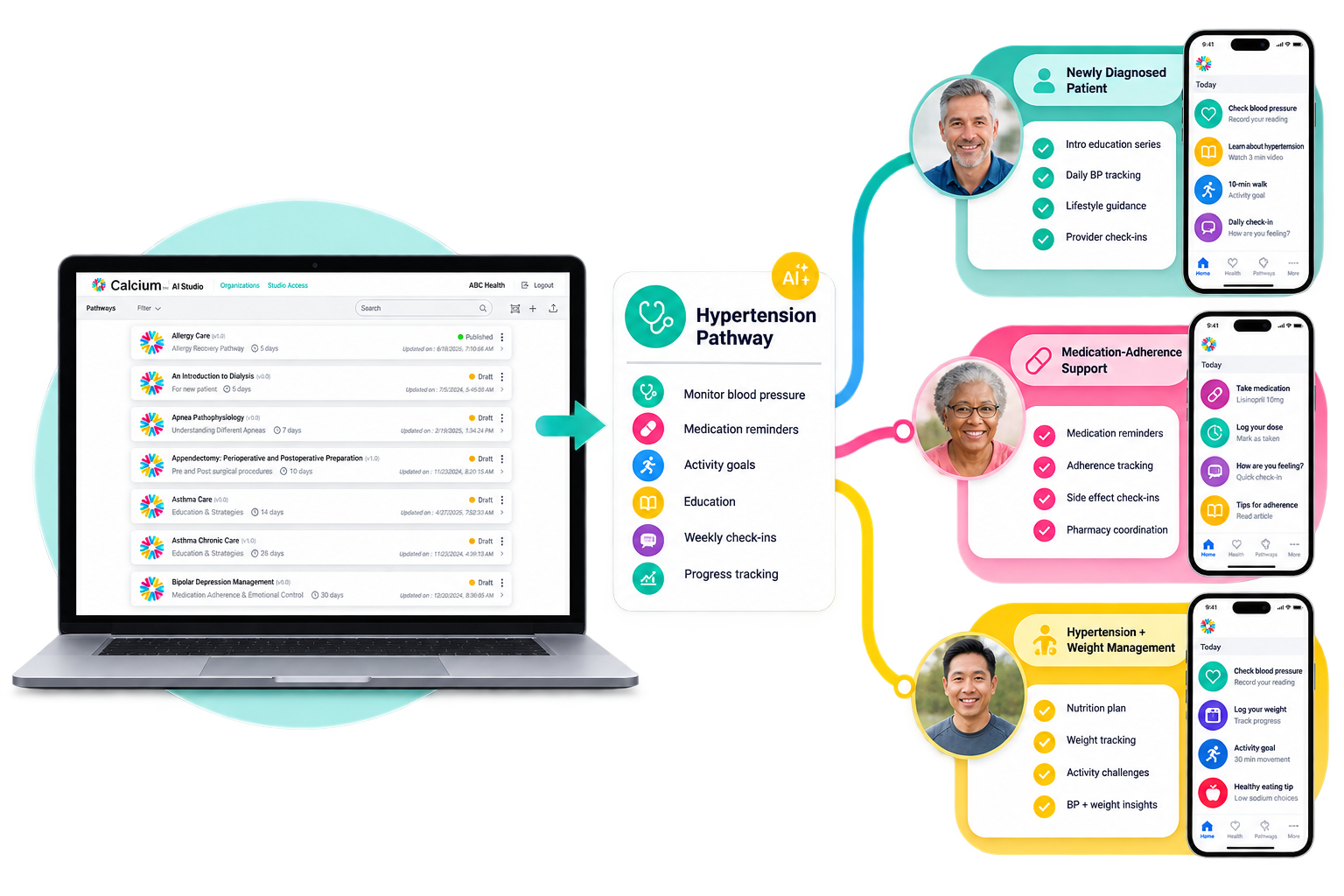
Calcium’s AI-driven digital care pathways go one step further. Providers can assign patients condition-specific pathways that sync real-time data from smart devices. The platform then flags trends and triggers alerts based on risk making proactive care not only possible but simple.
Use Case #3: Behavioral and Mental Health Integration
Behavioral health is often left out of the interoperability conversation, yet it’s deeply intertwined with physical health. Depression can affect diabetes control. Anxiety can mimic cardiac symptoms. And untreated mental illness can lead to repeat hospital visits.
The problem? Mental health data is often stored separately due to stigma, regulation or system limitations.
That’s where secure, patient-permissioned interoperability becomes key. With platforms like the Calcium Super App, patients can journal symptoms, track mood patterns and share selected insights with their care team. This creates a richer, more holistic view of the patient without compromising privacy or control.
Now, a PCP can see a patient’s recent depression scores alongside their blood pressure readings. A therapist can understand how physical symptoms may be driving emotional distress. It’s integrated care in its truest form.
Use Case #4: Remote Patient Monitoring & Post-Discharge Follow-Up
One of the biggest gaps in healthcare happens after the patient leaves the building. Discharged patients often don’t follow up. They forget meds. Symptoms return. And too often, they end up back in the ER.
Remote patient monitoring (RPM) offers a solution but only when that data can flow back into the provider’s workflow in real time.
That’s what makes interoperability with consumer and clinical devices so powerful.
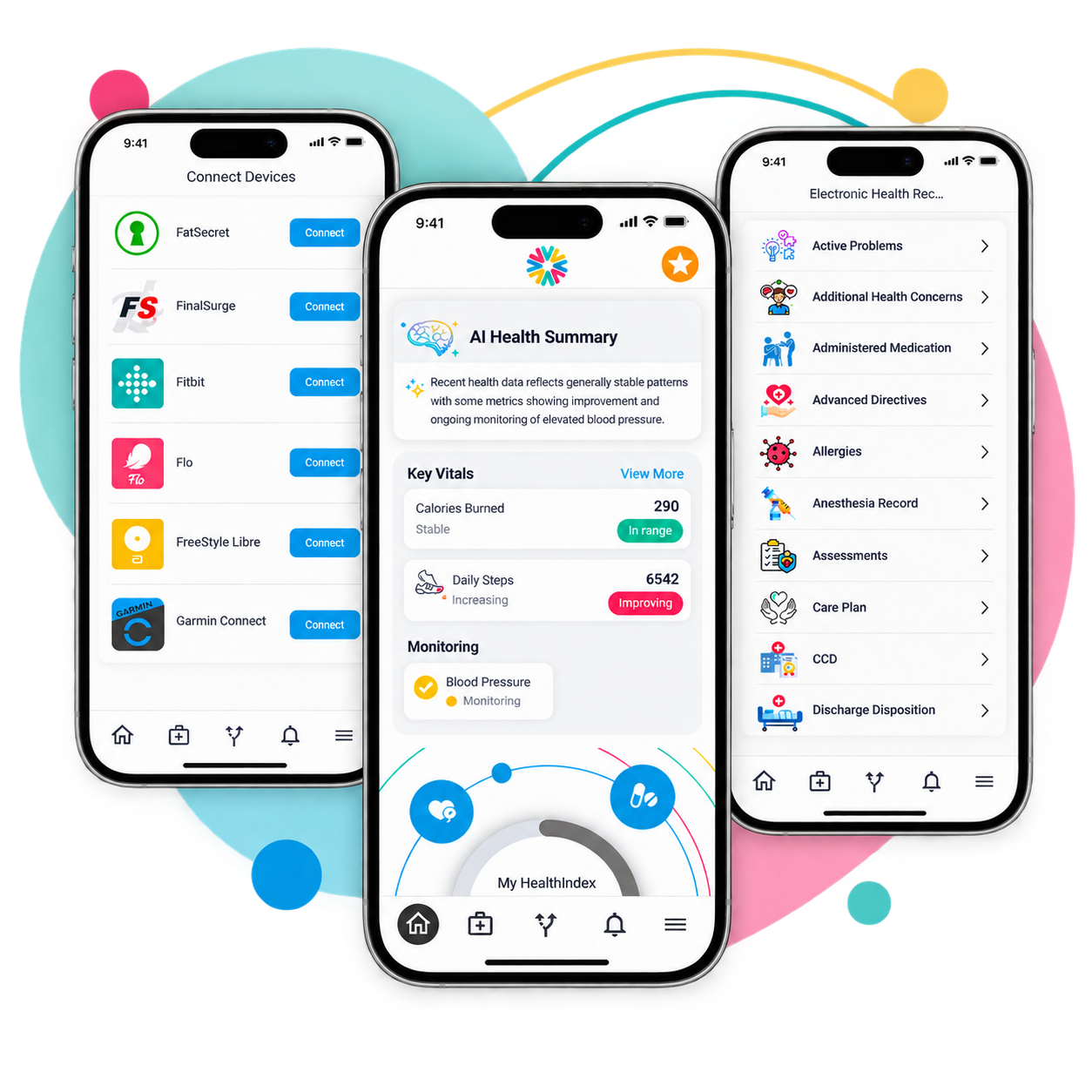
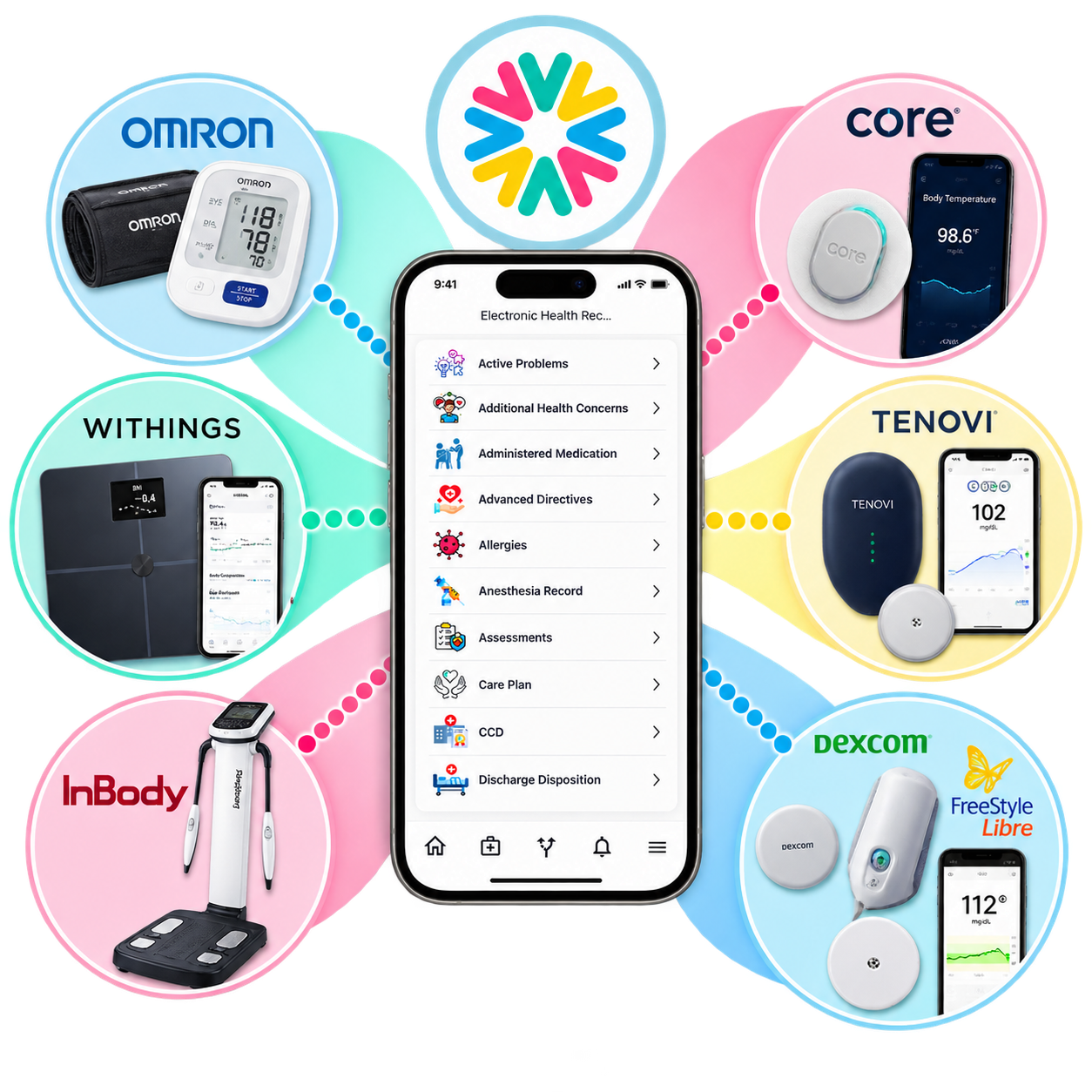
Calcium integrates with Apple Health, Fitbit, Omron, Dexcom and dozens of other smart health tools. Patients can track blood pressure, glucose, oxygen levels or post-op pain right from home. The data flows into Calcium Core dashboards, giving clinicians a real-time window into recovery.
Even better? The platform sends alerts when thresholds are crossed, helping care teams intervene early and avoid costly complications.
Use Case #5: Public Health & Population Level Insights
Interoperability doesn’t just help individual patients it transforms population health.
When systems connect across communities, public health agencies can track outbreaks, identify social determinants of health, and deploy resources more strategically. Hospitals can analyze readmission trends and target outreach to high-risk groups. Payers can support value-based care contracts with actual outcome data.
But this only works if the data is standardized, de-identified (where needed), and available across care settings.
Calcium’s backend architecture supports population health views across conditions, demographics and engagement levels. Providers can filter by risk tier, assign digital pathways in bulk, and see which patients are on track and which need intervention.
That’s not just smart care. It’s scalable care.
How Calcium Makes Interoperability Work Without Replacing Your EHR
Many health systems hesitate to fix their interoperability issues because it feels like an all-or-nothing decision. Do we rip out our EHR? Start from scratch?
With Calcium, you don’t have to.
Calcium is a digital health platform that layers over existing systems, connecting the dots between data silos while enhancing what you already use.
Here’s how it supports seamless, secure interoperability:
- HL7 and FHIR-compliant: Built on the most widely used national standards
- Patient-owned records: Patients can pull, view and share their own data from 95% of U.S. health systems
- Structured clinical modules: Data is organized into meds, vitals, conditions and pathways not buried in notes
- HIPAA-compliant and secure: Encryption, audit logs, and access controls are built in
- Consumer and clinical data integration: Wearables, smart devices and health apps all feed into the platform
The result? A connected, context-rich health ecosystem that makes it easier to provide the right care at the right time no matter where the patient has been.
The Wrap
When data moves, healthcare improves. It’s that simple and that powerful.
From better ER outcomes to more coordinated chronic care, real-time remote monitoring to smarter population health strategies, interoperability isn’t just a technical milestone. It’s the key to making healthcare more connected, proactive and patient-centered.
But achieving true interoperability requires more than just flipping a digital switch. It means choosing platforms that are built to unify, standardize and activate health information across systems, devices and users. That’s exactly what the Calcium Digital Health Platform delivers. Whether you're a provider looking to close care gaps or a health system leader ready to modernize data workflows, Calcium empowers your teams with the visibility, structure and security you need.
Reference
- Kalra D. (2006). Electronic health record standards. Yearbook of medical informatics, 136–144. https://pubmed.ncbi.nlm.nih.gov/17051307/
- Ambinder E. P. (2005). A history of the shift toward full computerization of medicine. Journal of oncology practice, 1(2), 54–56. https://doi.org/10.1200/JOP.2005.1.2.54
- Hoerbst, A., & Ammenwerth, E. (2010). Electronic health records. A systematic review on quality requirements. Methods of information in medicine, 49(4), 320–336. https://doi.org/10.3414/ME10-01-0038
- Häyrinen, K., Saranto, K., & Nykänen, P. (2008). Definition, structure, content, use and impacts of electronic health records: A review of the research literature. International Journal of Medical Informatics, 77(5), 291–304. Elsevier Ireland Ltd. Retrieved from https://doi.org/10.1016/j.ijmedinf.2007.09.001.
- Safran, C., & Goldberg, H. (2000). Electronic patient records and the impact of the Internet. International Journal of Medical Informatics, 60(1), 77–83. https://doi.org/10.1016/S1386-5056(00)00106-4
- Hassey, A., Gerrett, D., & Wilson, A. (2001). A survey of validity and utility of electronic patient records in a general practice. BMJ, 322(7299), 1401–1405. https://doi.org/10.1136/bmj.322.7299.1401
- Greenhalgh, T., Potts, H. W. W., Wong, G., Bark, P., & Swinglehurst, D. (2009). Tensions and paradoxes in electronic patient record research: A systematic literature review using the meta-narrative method. The Milbank Quarterly, 87(4), 729–788. https://doi.org/10.1111/j.1468-0009.2009.00578.x