How Smarter Systems and Patient-Centered Platforms Are Revolutionizing Care Coordination and Clinical Efficiency
Managing Electronic Health Records (EHRs) in a small clinic is hard enough but when you scale that across a network of physicians, specialties, and facilities, the complexity multiplies fast. Every misstep can lead to wasted time, lost data, or even patient risk.
For group practices and health systems, the stakes are high: smooth EHR management means streamlined operations, better patient care, and happier providers. Yet many organizations still struggle to make their EHRs work for them not the other way around. With healthcare increasingly shifting toward data-driven and value-based models, getting EHR management right isn’t optional. It’s essential.
Whether you’re a health IT leader, a clinician drowning in clicks, or an executive planning your digital health strategy, now’s the time to ask: is your EHR setup helping or hurting your mission?
The Challenge of Managing EHRs at Scale
Managing Electronic Health Records (EHRs) in a solo practice is tough. Managing them across a large group practice or multi-site health system? That’s a whole different beast.
Between different workflows, user roles, system requirements and compliance regulations, it’s no wonder EHR management often becomes more about putting out fires than delivering better care. Yet, effective EHR management is critical to improving clinical outcomes, operational efficiency and patient experience especially in environments that rely on complex, collaborative care.
So what’s going wrong? According to research from Herbst & Ammenwerth, most EHR systems fail at the basics: poor usability, fragmented data, weak security and almost zero support for patient empowerment. That’s a problem no large health organization can afford to ignore.
Let’s break down the most common pitfalls in EHR management and explore best practices that can help solve them, especially with modern platforms like Calcium.
Common EHR Management Pitfalls in Group Settings
Managing EHRs across large teams and facilities comes with its own set of headaches. Here are the biggest pain points practices face today:
1. Data Fragmentation
EHRs in one department don’t always speak to those in another. And forget about syncing with outside labs or specialists. This leaves providers with an incomplete picture of the patient’s health, often forcing them to hunt for records or worse, repeat tests.
2. Misaligned Workflows
As Ambinder noted in his study on oncology clinics, many EHRs disrupt clinical routines instead of supporting them. When workflows feel forced or clunky, clinicians end up working around the system, not with it.
3. Role-Based Access & Security Gaps
Large provider groups require robust role management. But juggling permissions across dozens or hundreds of staff can create risks. Either access is too tight and disrupts care, or it’s too loose and jeopardizes compliance.
4. Interoperability Deficits
Even the best-run internal system hits a wall when it can't connect externally. Whether it's with another hospital, a lab vendor or a specialist, lack of interoperability turns care coordination into a game of telephone.
5. Unusable or Unactionable Data
Data overload is real. Without tools to highlight what’s clinically relevant, important information gets buried. Doctors don’t need more data they need better insight.
6. Patients Left Out of the Loop
Traditional EHRs weren’t built for patient access. That means patients can’t easily view, share or act on their own health records cutting them out of their own care plan.
7. Administrative Burnout
Too many clicks. Too much documentation. Too many workarounds. When providers spend more time staring at screens than interacting with patients, everyone loses.
Best Practices for Effective EHR Management
So how can group practices and health systems do better? The answer lies in combining smart strategy with smarter technology.
Here are the top best practices every healthcare leader should adopt:
A. Standardize and Integrate Your Systems
Start by reducing fragmentation. Where possible, consolidate EHR systems or use platforms that unify them.
Key steps to take:
- Choose systems that support interoperability standards like HL7 and FHIR
- Use a platform (like Calcium) that connects with 95% of U.S. health systems
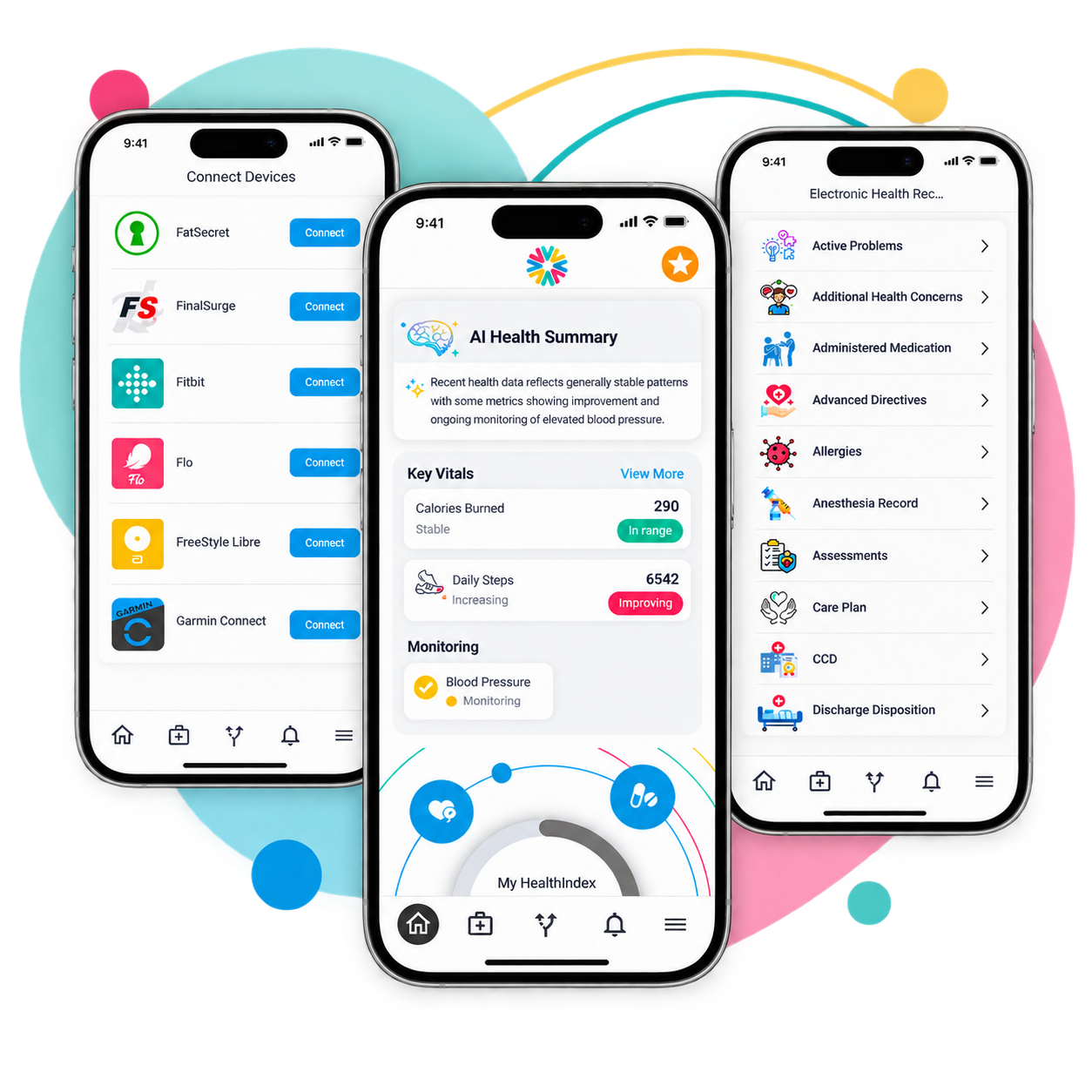
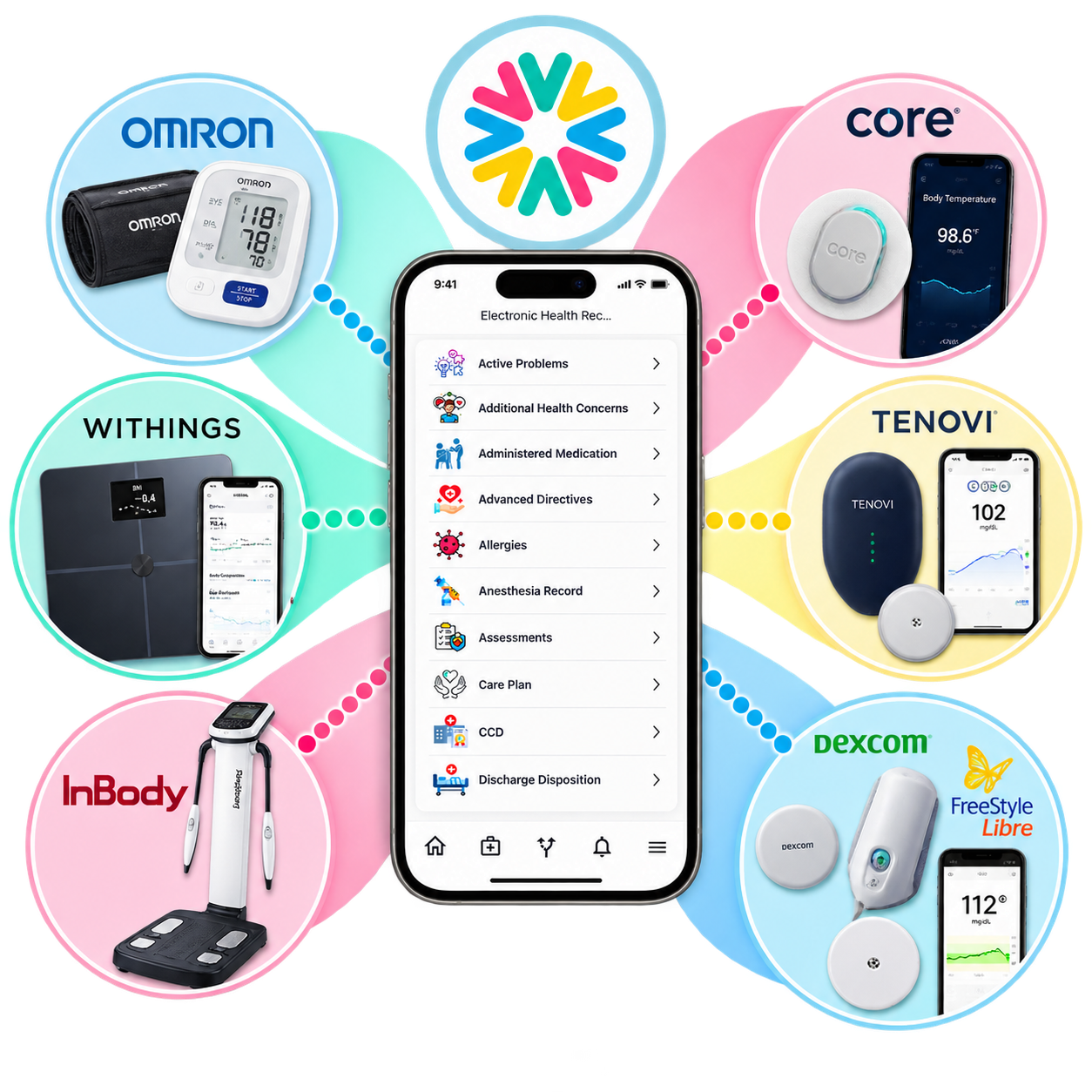
- Integrate real-time data sources like wearables and home medical devices
When your data lives in one ecosystem, everything becomes easier from clinical decision-making to analytics.
B. Build Workflows Around the Clinician, Not the System
Doctors shouldn’t have to fight the EHR. Instead, involve clinicians early in the implementation and customization process. Tailor dashboards, forms and reports to fit how care actually happens in your organization.
And don’t forget: as new needs emerge, revisit and refine. The most successful health systems treat workflow optimization as a continuous process, not a one-time setup.
C. Use Role-Based Access with Built-In Security
Strong security doesn’t have to slow down care. Set up tiered access controls so each staff member sees only what they need nothing more, nothing less.
Platforms like Calcium offer built-in HIPAA compliance, audit logs and encryption by default. That makes it easier to stay compliant without reinventing the wheel every time you add a new user.
D. Turn Data Into Actionable Insights
Not all data is equally useful. Prioritize systems that organize records into clinical modules: medications, vitals, conditions, procedures and more. Then, layer in analytics tools or AI-driven alerts that surface what matters most, when it matters.
Think of it as upgrading from a filing cabinet to a smart assistant.
E. Give Patients Control of Their Records
It’s time to move past portals. With tools like the Calcium Super App, patients can view, manage and share their full health history from their phone.
They can:
- Track symptoms and vitals
- Receive medication reminders
- Follow personalized digital care plans
- Share real-time data with family or providers
Empowered patients are more engaged and that translates into better outcomes and fewer gaps in care.
F. Validate and Improve Data Quality
As seen in recent research on EPR validation tools like EPR-Val, accurate data requires more than good intentions. Invest in training, regular audits and tools that flag inconsistencies or missing entries.
A few best practices here include:
- Requiring structured data fields for high-priority information
- Running periodic data quality reports
- Reviewing discrepancies during care team huddles or chart audits
G. Reduce the Admin Burden Through Automation
Not every alert needs a human. Set up automated reminders for follow-ups, screenings or pathway steps. Use tools that auto-populate documentation based on previous entries or real-time device inputs.
The goal is simple: free up time for actual care.
How the Calcium Platform Powers Smart EHR Management
Calcium isn’t just another EHR it’s a digital health platform designed to complement and enhance what you already use. Here’s how it solves real-world EHR challenges:
Seamless Integration Across Systems
Whether you’re using Epic, Cerner, athenahealth or another vendor, Calcium connects to your existing setup and expands it. From vitals and lab results to app-tracked sleep data, everything flows into one secure, unified record.
Tailored Tools for Patients and Providers
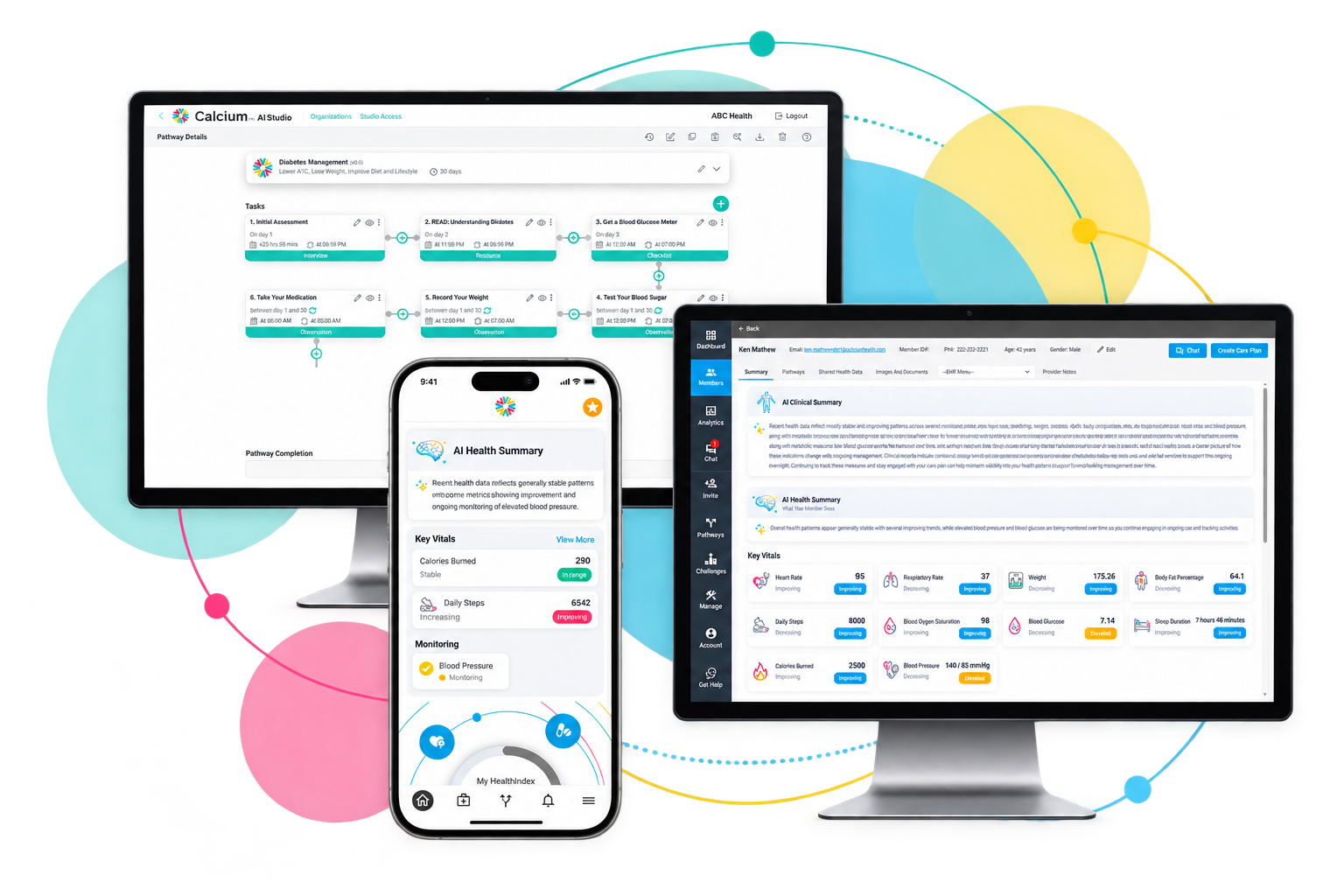
- Calcium Core helps providers monitor patients, assign digital care pathways and track adherence all in one dashboard
- The Calcium Super App gives patients the power to control and contribute to their own health journey
Role-Based Access and Dynamic Consent
Need to manage multiple teams across multiple sites? Calcium’s admin tools let you assign roles, track access and even allow patients to manage who sees their data and when.
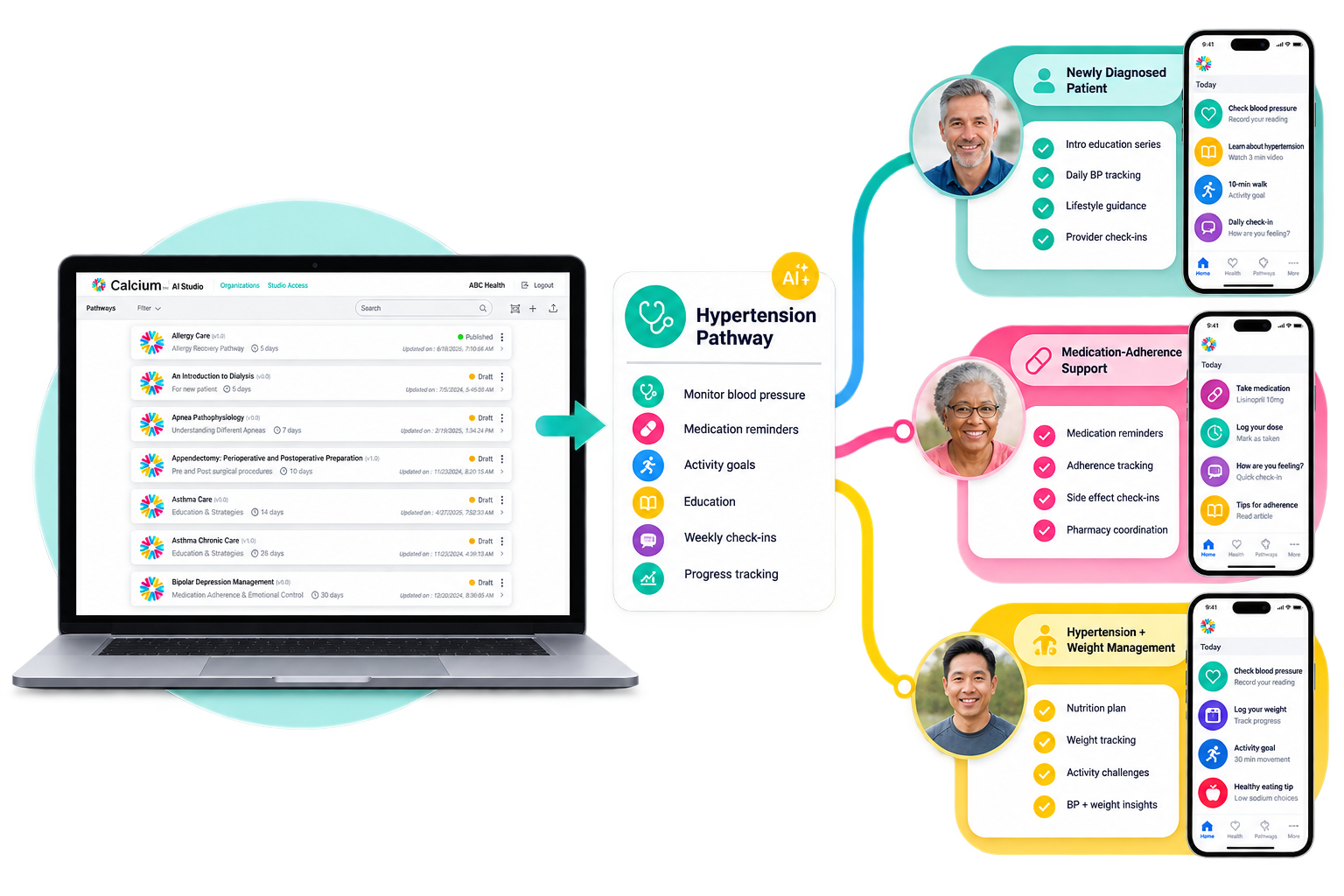
Personalized, AI-Powered Pathways
Providers can assign digital care pathways for:
- Chronic condition management
- Pre-op/post-op guidance
- Behavioral health coaching
- Medication adherence
And best of all, progress is visible in real time on both ends.
Real-World Scenarios That Bring It All Together
Here’s how it looks in practice:
- A behavioral health network uses Calcium to integrate therapy sessions, primary care updates and self-reported mood tracking
- A multi-location orthopedic group assigns post-op pathways and receives alerts if a patient skips steps or reports high pain
- A family medicine clinic allows caregivers to access and manage children’s or elderly parents’ health data, all in one place
This is EHR management done right. It’s connected, proactive and built to scale.
The Wrap
EHRs should be more than storage systems they should be engines of efficiency, insight, and patient-centered care.
For group practices and health systems, adopting smarter EHR management practices isn’t just good strategy, it’s the foundation for scalable, sustainable care. But strategy needs the right tools, and that’s where the Calcium digital health platform comes in. Calcium bridges the gaps between providers, systems, and patients offering a unified, user-friendly platform that transforms how healthcare organizations handle data, workflows, and care coordination.
Whether you're looking to reduce burnout, boost patient engagement, or finally unify your health records across sites, Calcium delivers the flexibility and intelligence today’s providers demand.
Reference
- Kalra, D. (2006). Electronic Health Record Standards. In R. Haux & C. Kulikowski (Eds.), IMIA Yearbook of Medical Informatics 2006 (pp. 136–144). IMIA and Schattauer GmbH. Retrieved from https://www.schattauer.de.
- Ambinder, E. P. (2005). Oncology Enters the Information Age. Journal of Oncology Practice, 1(2), 57–63.
- Hoerbst, A., & Ammenwerth, E. (2010). Electronic Health Records: A Systematic Review on Quality Requirements. Methods of Information in Medicine, 49(4), 1–9. Schattauer GmbH. Retrieved from https://www.schattauer.de.
- Häyrinen, K., Saranto, K., & Nykänen, P. (2008). Definition, structure, content, use and impacts of electronic health records: A review of the research literature. International Journal of Medical Informatics, 77(5), 291–304. Elsevier Ireland Ltd. Retrieved from https://doi.org/10.1016/j.ijmedinf.2007.09.001.
- Safran, C., & Goldberg, H. (2000). Electronic patient records and the impact of the Internet. International Journal of Medical Informatics, 60(1), 77–83. https://doi.org/10.1016/S1386-5056(00)00106-4
- Hassey, A., Gerrett, D., & Wilson, A. (2001). A survey of validity and utility of electronic patient records in a general practice. BMJ, 322(7299), 1401–1405. https://doi.org/10.1136/bmj.322.7299.1401
- Greenhalgh, T., Potts, H. W. W., Wong, G., Bark, P., & Swinglehurst, D. (2009). Tensions and paradoxes in electronic patient record research: A systematic literature review using the meta-narrative method. The Milbank Quarterly, 87(4), 729–788. https://doi.org/10.1111/j.1468-0009.2009.00578.x