
Closed-Loop Predictive Prevention
From Predicting Risk to Preventing It.
Predict. Prioritize. Prevent.
Calcium connects predictive intelligence with preventive action—helping healthcare organizations identify rising risk, prioritize the patients who need attention, activate personalized interventions, continuously monitor progress and reassess risk as new health information becomes available.
The result is a continuous prevention framework designed to help care teams act earlier, focus resources more precisely and manage patient populations more proactively.
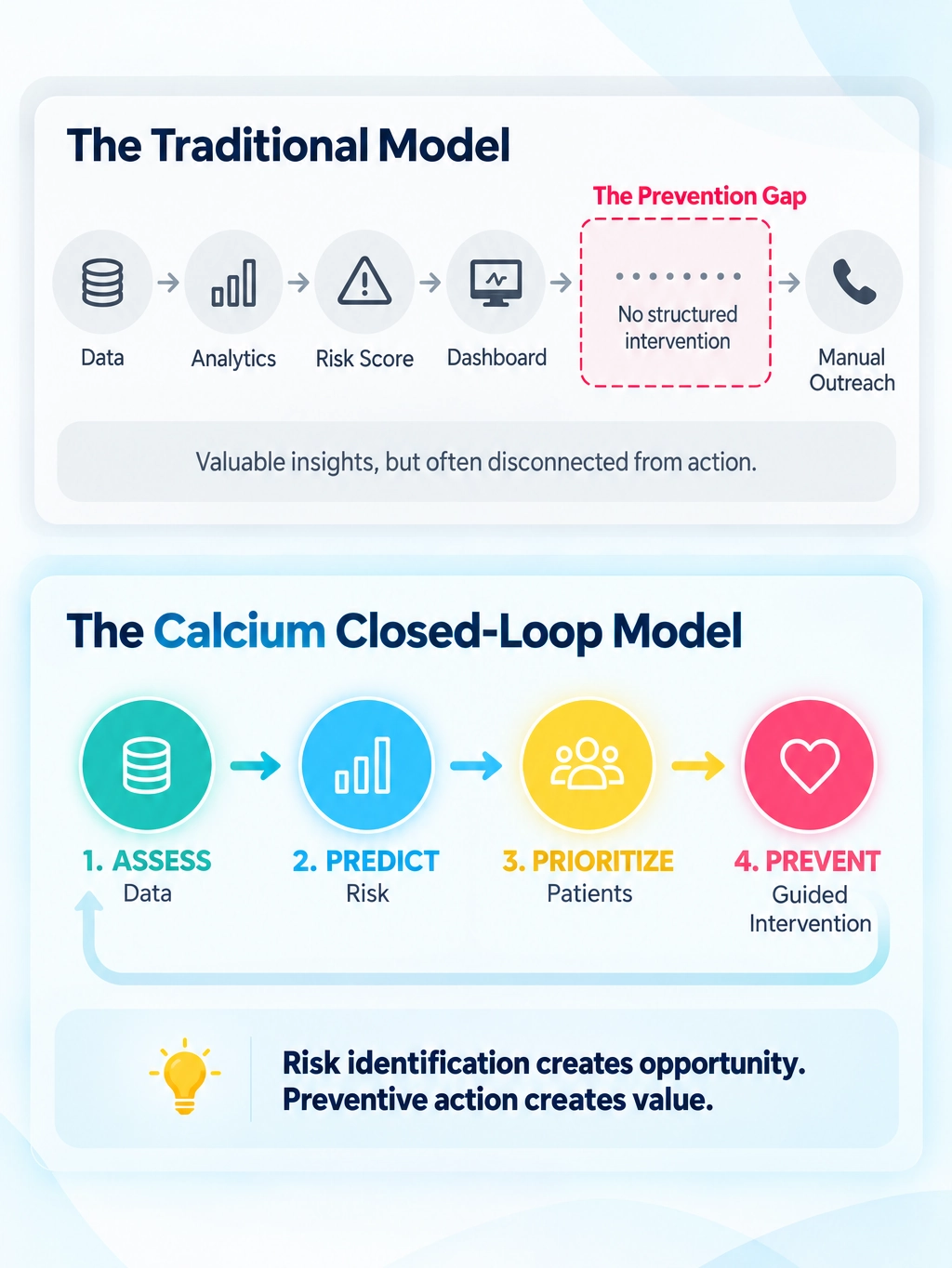
Healthcare Can Predict Risk. But Too Few Organizations Can Prevent It.
Every day, health systems generate thousands of risk scores from predictive analytics, AI models, claims data, EHRs, and remote monitoring. Yet many patients continue to deteriorate between visits because there is no scalable way to translate predictions into timely interventions.This disconnect creates what Calcium calls the Prevention Gap—the difference between knowing who is at risk and consistently preventing adverse events.
BETWEEN VISITS
Risk Doesn’t Wait for the Next Appointment.
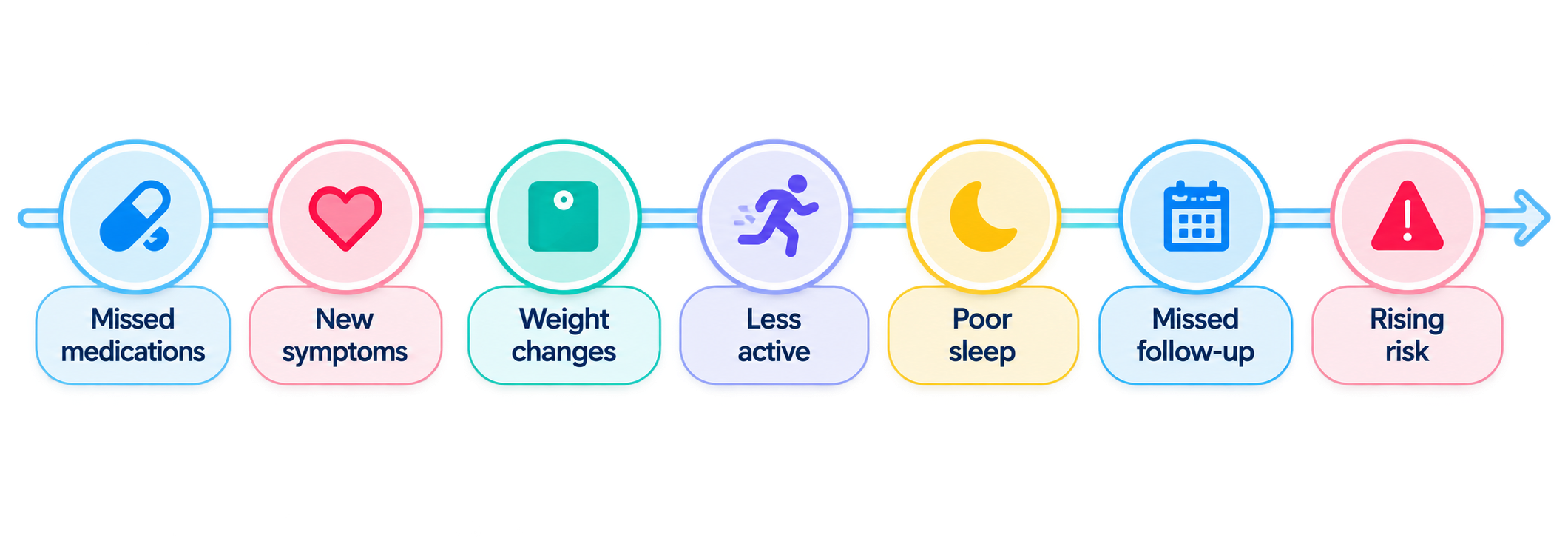
A patient’s health can change every day. Between visits, patients may miss medications, experience new symptoms, gain weight, become less active, or disengage from their care plan.
Predictive Prevention helps you see those changes earlier and take action before they lead to avoidable hospitalizations, readmissions or complications.
Introducing the Predictive Prevention Framework
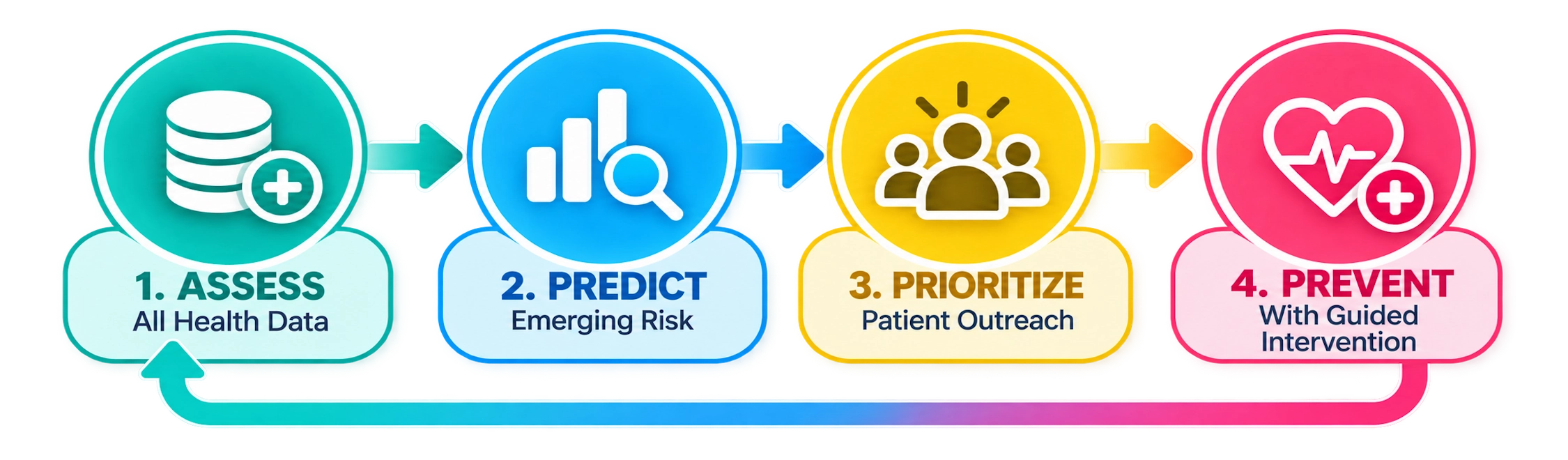
Predictive analytics has transformed healthcare’s ability to identify patients at elevated risk for hospitalization, complications, readmission, disease progression, and other adverse outcomes. But prediction alone does not change what happens next. Calcium extends traditional predictive analytics into a continuous, closed-loop Predictive Prevention model that connects risk intelligence directly to action.
The framework continuously assesses health data, predicts emerging risk, prioritizes patients for outreach, and activates guided interventions through personalized digital pathways. This scalable operating model helps organizations move beyond risk identification toward proactive prevention across population health, value-based care, chronic disease management, perioperative care, and community health initiatives.
PREDICT: Identify Patients Before They Become Patients
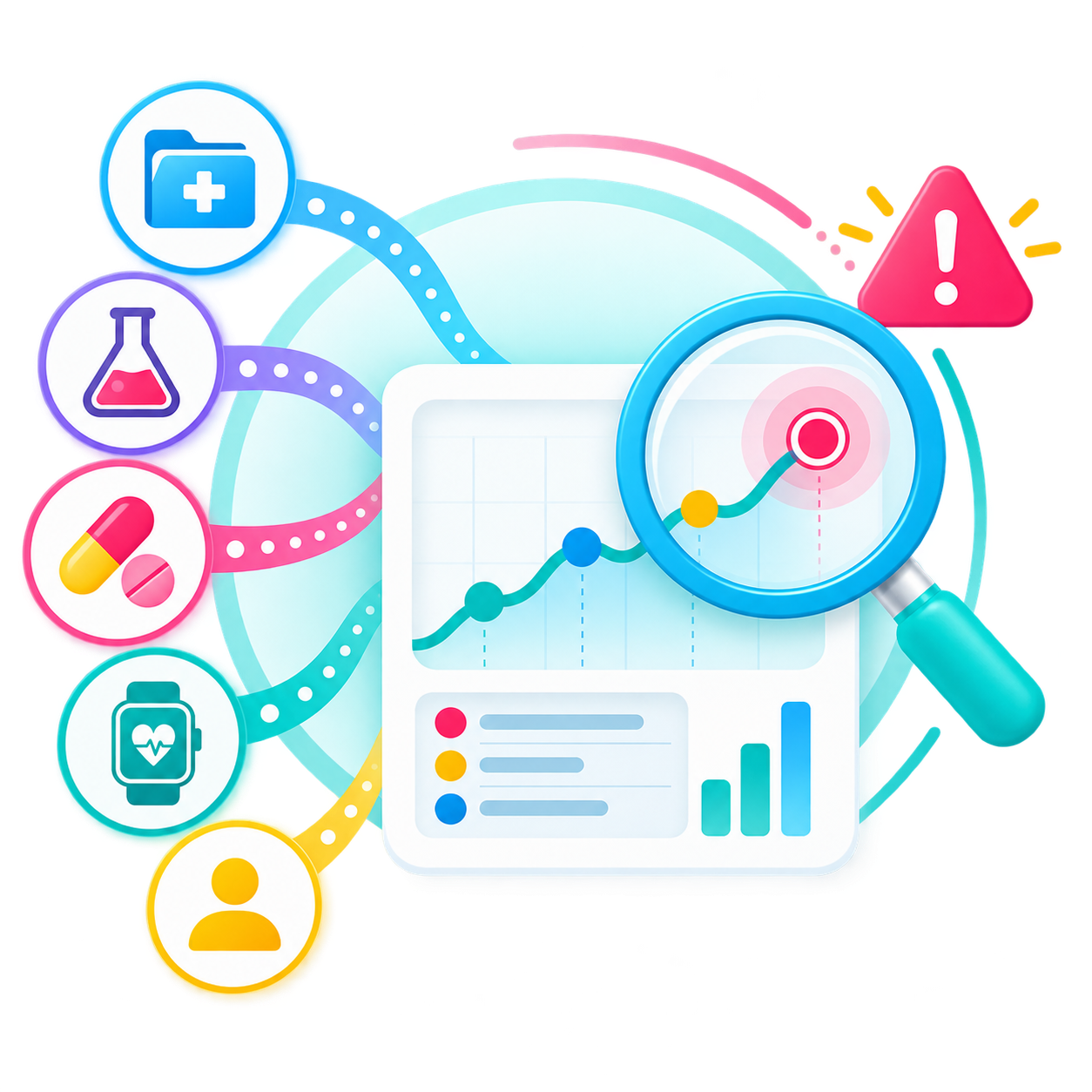
Predictive Prevention begins by building a more complete, longitudinal understanding of each patient. Calcium brings together clinical, claims, behavioral, and patient-generated health information to help identify changing patterns and emerging risks—creating opportunities for care teams to intervene before deterioration leads to more serious or costly events.
Potential data and intelligence sources include:
- Predictive analytics and AI-powered risk scoring
- EHR and claims data
- Clinical registries and medication adherence
- Wearables and connected health devices
- Remote patient monitoring
- Patient-generated health and behavioral data
- Social determinants of health (SDOH)
By continuously assessing available health information, Calcium helps transform fragmented data into actionable risk intelligence—giving healthcare organizations greater visibility into who may be at risk and where earlier intervention may have the greatest impact.
PRIORITIZE: Focus Care Teams Where They Matter Most
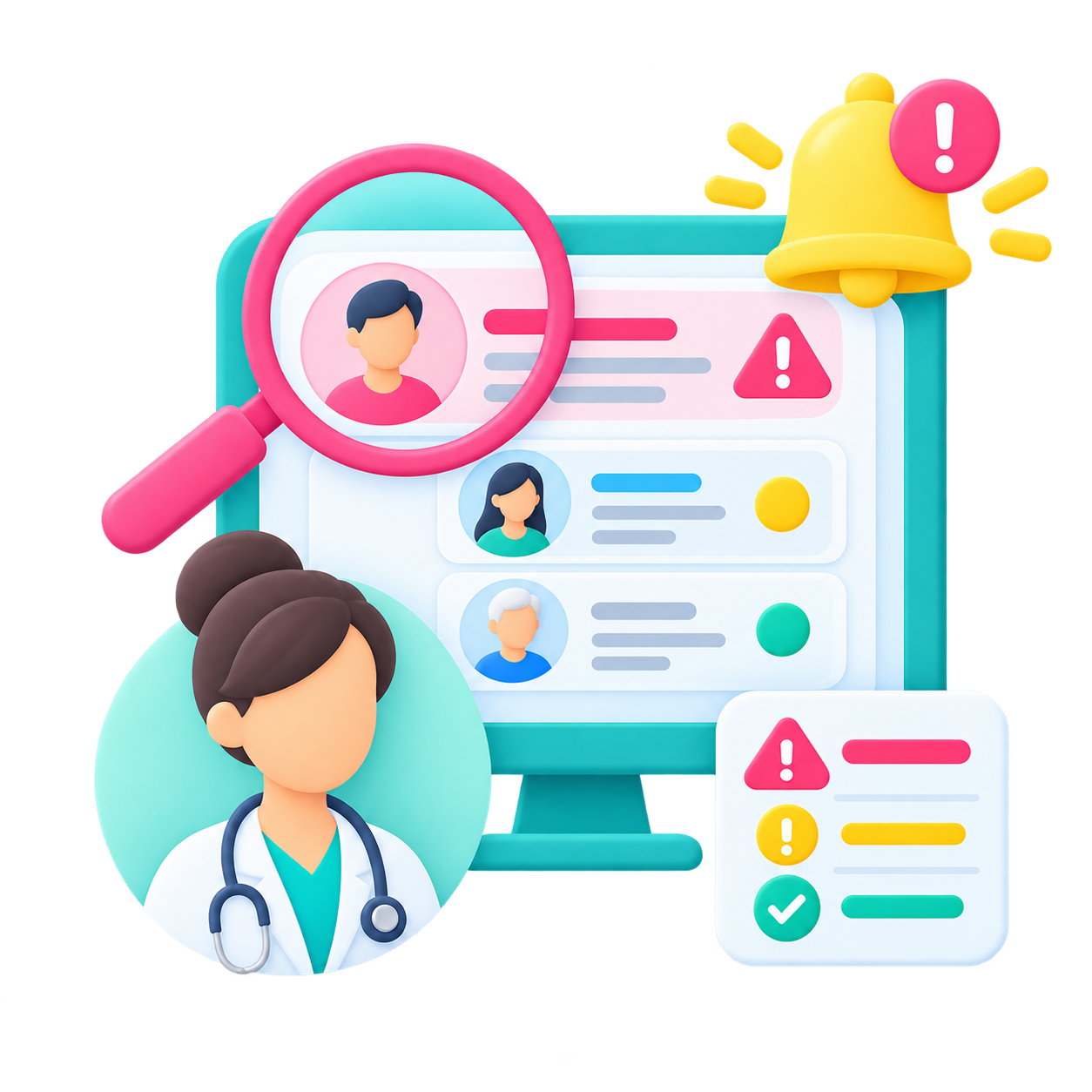
Healthcare organizations cannot manually monitor and engage every patient every day. Calcium helps turn predictive risk intelligence into actionable priorities, enabling care teams to focus limited clinical resources on patients whose changing risk, urgency, or care needs indicate that additional attention may be appropriate.
Prioritization capabilities can support:
- Intelligent, risk-informed work queues
- Care management prioritization
- Automated patient segmentation
- High-risk and rising-risk patient identification
- Clinical alerts based on defined criteria
- Escalation workflows for appropriate follow-up
By translating population-level risk into prioritized action, Calcium helps care teams spend less time searching for patients who may need intervention and more time engaging them. The result is a more scalable approach to care management that helps direct the right attention to the right patients at the right time.
PREVENT: Continuous Engagement Drives Prevention
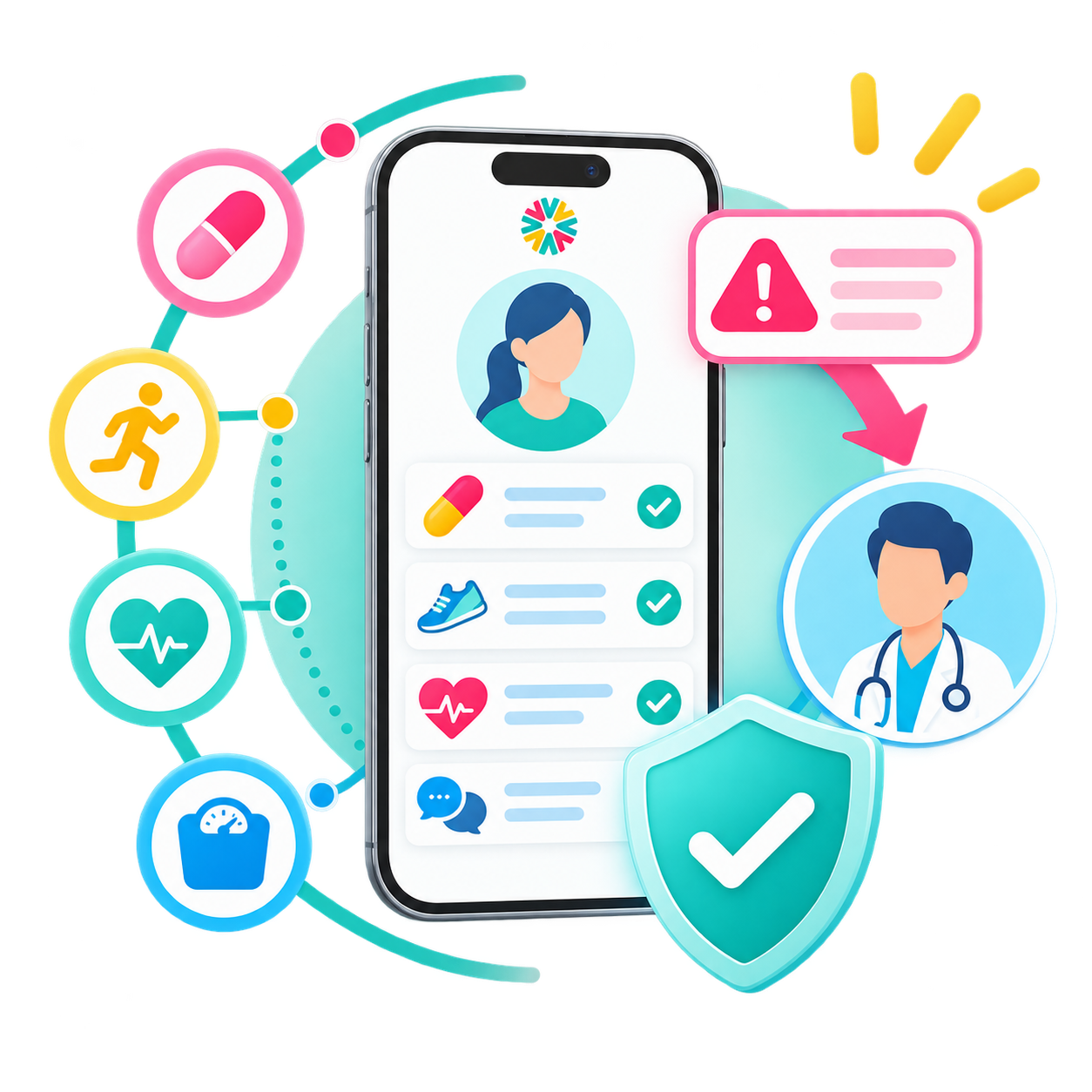
This is where prediction becomes prevention. Calcium transforms risk intelligence into continuous, personalized patient engagement through AI-powered Digital Pathways that help educate, monitor, motivate, and guide patients between traditional healthcare encounters—supporting earlier action and more consistent participation in their care.
Digital engagement capabilities can include:
- AI-generated, personalized care pathways
- Targeted patient education and guidance
- Automated reminders and care-plan tasks
- Symptom monitoring and digital assessments
- Connected device and health data integration
- Escalation alerts for defined risk signals
- Behavioral and lifestyle coaching
By automating routine engagement while continuously capturing new patient information, Calcium helps extend care beyond the clinic. Patients receive ongoing guidance, while care teams gain greater visibility into changing needs—creating a scalable connection between prediction, patient action, and proactive prevention.
Powered by the Calcium Digital Health Platform
A Continuous Prevention Ecosystem that Extends Predictive Analytics.
Closed-Loop Predictive Prevention is powered by three connected components of the Calcium Digital Health Platform.
Calcium Core gives care teams the provider-facing intelligence, analytics, patient data, and workflows needed to manage populations and coordinate interventions. The Calcium Super App extends care directly to patients through personalized Digital Pathways, health tracking, education, reminders, and ongoing engagement. Calcium AI Studio helps healthcare organizations efficiently create, personalize, and manage intelligent Digital Pathways at scale. Together, these components connect provider intelligence with patient action—creating the digital infrastructure required to operationalize continuous, proactive prevention.
Calcium Core
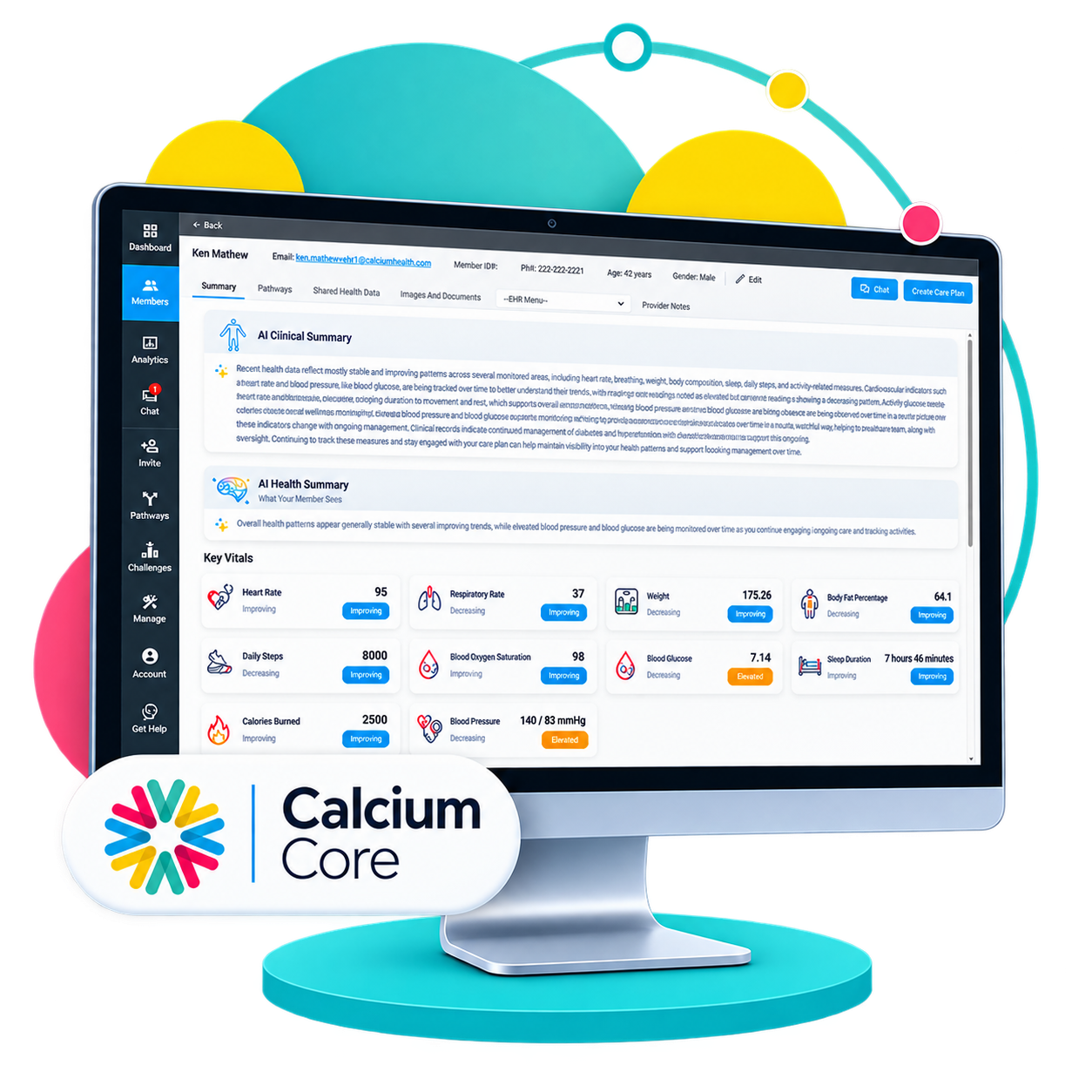
Calcium Core provides the data, intelligence, and provider workflow foundation for Predictive Prevention.
It brings together longitudinal health information to help care teams assess patient health, identify emerging risks, prioritize patients for outreach, and coordinate appropriate interventions. By connecting risk intelligence with actionable provider workflows, Core gives healthcare organizations greater visibility across patient populations and helps care teams focus their attention where timely engagement may have the greatest impact.
Calcium AI Studio
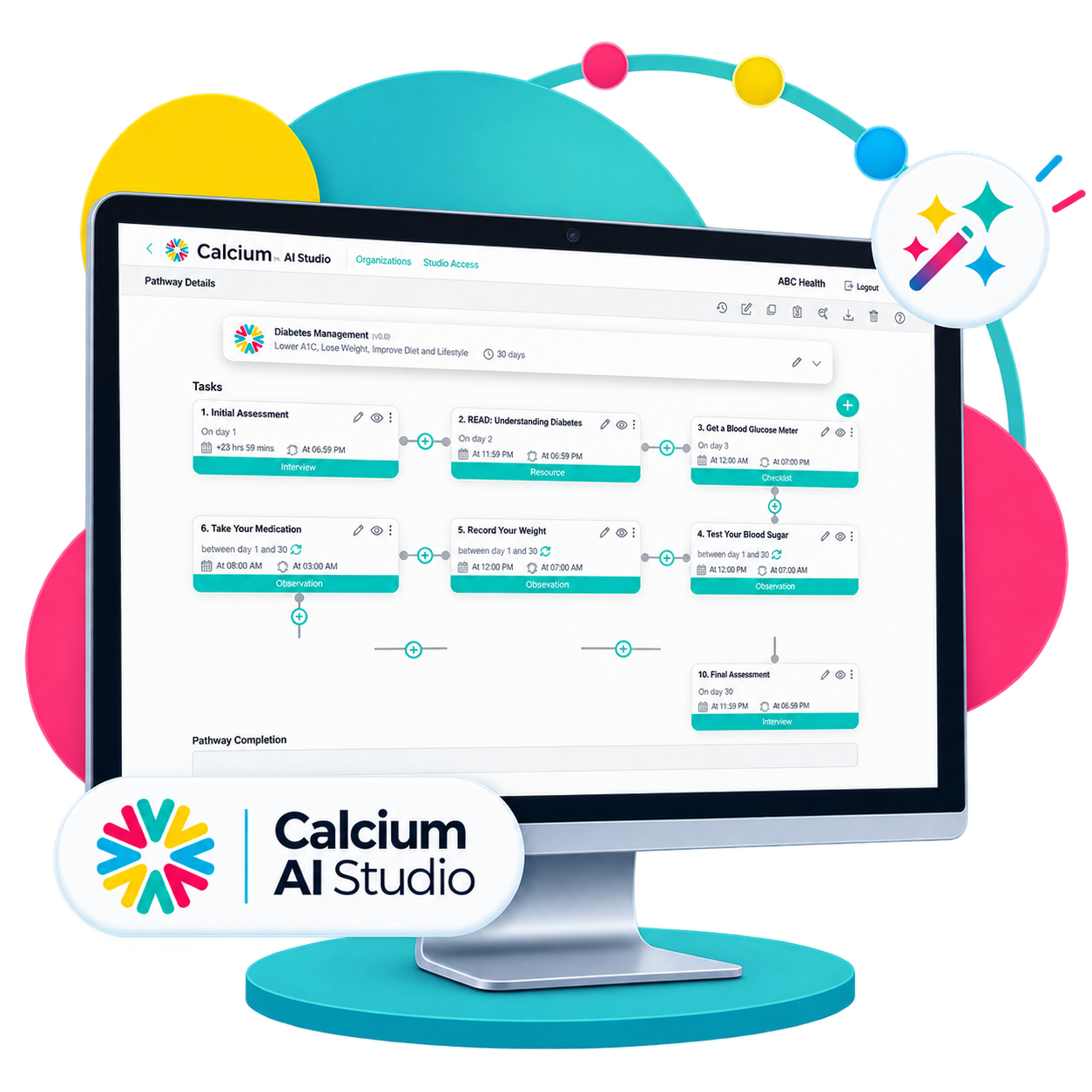
Calcium AI Studio provides the pathway creation and management capabilities that help organizations operationalize Predictive Prevention at scale.
Healthcare teams can efficiently build personalized Digital Pathways incorporating education, assessments, monitoring, reminders, behavioral guidance, and intervention workflows. These pathways translate predictive insights into structured patient experiences, enabling organizations to rapidly deploy targeted engagement programs for specific conditions, populations, risk profiles, and care journeys while supporting more scalable preventive care.
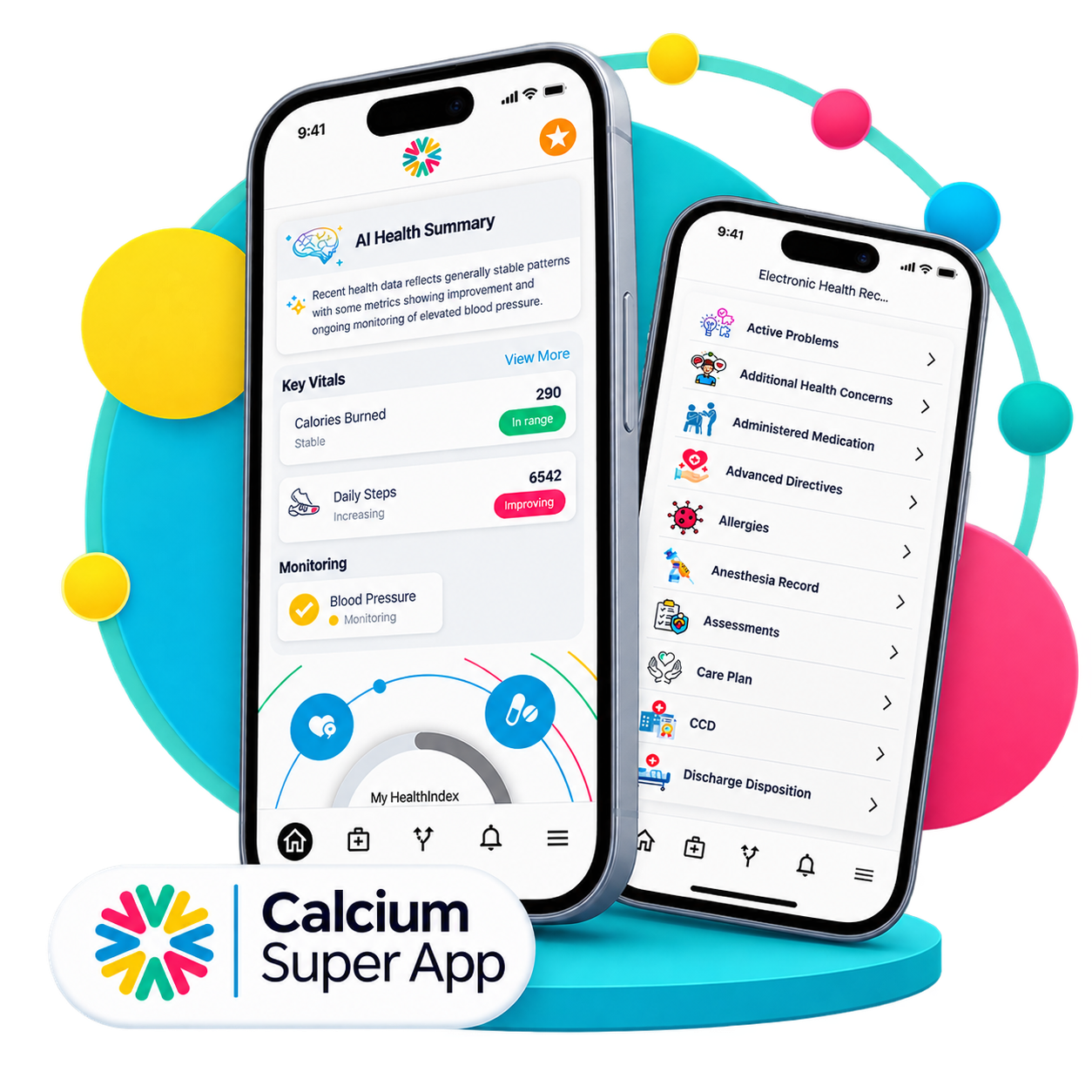
Calcium Super App
The Calcium Super App extends Predictive Prevention directly into patients’ daily lives, creating an ongoing digital connection between healthcare encounters.
Personalized Digital Pathways can deliver education, assessments, reminders, health tracking, behavioral guidance, and other targeted interventions while capturing new patient-generated information. This continuous engagement helps patients participate more actively in their care while giving care teams additional insight into changing health needs, symptoms, behaviors, and potential opportunities for earlier intervention.
Predictive Prevention Across the Care Continuum
Prevention That Works Wherever Care Happens
The opportunity for prevention exists across nearly every healthcare setting—but the populations, workflows, and moments that matter can look very different. Calcium’s Predictive Prevention Framework provides a flexible approach that can be adapted to diverse care models, clinical programs, and organizational priorities. By creating a continuous connection between health intelligence, care teams, and patients, healthcare organizations can build prevention into more of the healthcare journey and address critical challenges across the care continuum.
Population Health
Predictive Prevention helps population health teams move from broad segmentation to continuous, risk-informed action.
By combining longitudinal health data with predictive analytics insights, Calcium can help identify emerging needs, prioritize outreach, and activate personalized Digital Pathways for each patient. Care teams gain a scalable approach for engaging populations while focusing human resources where they matter most.

Value-Based Care
Predictive Prevention helps value-based care organizations connect risk identification with proactive intervention.
Calcium can surface rising-risk patients, prioritize care-team attention, and continuously engage individuals between encounters. This closed-loop approach supports earlier intervention, stronger care management, and greater visibility into patient trajectories—important capabilities when organizations are accountable for outcomes and costs.
Community Hospitals
Predictive Prevention can help community hospitals extend care beyond their facilities without requiring proportional increases in staffing.
Calcium connects patient data, risk intelligence, prioritized workflows, and digital engagement to support earlier outreach. Hospitals can strengthen chronic care, transitions, and community health programs while maintaining closer connections with patients between clinical encounters.
Chronic Disease Management
Chronic conditions require continuous attention, yet most care occurs between appointments.
Predictive Prevention helps organizations monitor changing health signals, identify rising risk, prioritize appropriate outreach, and deliver personalized Digital Pathways. Ongoing education, assessments, reminders, symptom tracking, and behavioral guidance can support patients in managing their health while keeping care teams better informed.
Perioperative Care
Predictive Prevention can create a more connected journey before and after surgery.
Calcium can help identify patient risks, prioritize patients requiring additional support, and deliver personalized pathways for preparation, education, assessments, reminders, and recovery. Continuous digital engagement provides additional visibility into patient progress and potential concerns throughout the perioperative care journey.

Post-Acute Care
The transition from facility-based care to home can create gaps in monitoring, education, and follow-up.
Predictive Prevention helps extend engagement beyond discharge through personalized pathways, assessments, reminders, symptom monitoring, and patient-reported information. Emerging concerns can become more visible, helping teams prioritize follow-up and support more proactive post-acute care management.
Employee Health
Predictive Prevention can help employer health programs move beyond episodic wellness campaigns toward more personalized, continuous engagement.
Calcium can use available health information to identify needs, segment populations, and deliver targeted Digital Pathways supporting prevention, chronic health, healthy behaviors, and navigation—creating a scalable approach to engaging employees throughout their individual health journeys.

Membership Medicine
Predictive Prevention helps membership and concierge practices extend their high-touch care model beyond appointments.
Calcium can provide continuous digital engagement, personalized health pathways, assessments, tracking, education, and preventive guidance between visits. Providers gain greater longitudinal visibility while patients receive a more connected experience designed to support proactive, personalized, and relationship-centered care.
Medicare Advantage
Predictive Prevention can help Medicare Advantage organizations and risk-bearing providers translate population risk intelligence into targeted action.
Calcium supports identification of changing risk, prioritization of outreach, and continuous digital engagement between encounters. This framework can strengthen preventive care, chronic condition management, care coordination, and member engagement across complex Medicare populations.
Accountable Care Organizations (ACOs)
Predictive Prevention supports ACOs in operationalizing proactive care across attributed populations.
By connecting longitudinal data, predictive risk intelligence, patient prioritization, and personalized digital intervention, Calcium helps care teams focus resources on emerging needs. Continuous engagement and reassessment can support population health management while strengthening the infrastructure required for accountable, longitudinal care.
Behavioral Health
Predictive Prevention can help behavioral health programs identify changing needs and maintain engagement between appointments.
Calcium can support risk-informed outreach, personalized Digital Pathways, assessments, education, reminders, and behavioral coaching. Continuous digital engagement provides additional insight into patient-reported needs while helping care teams deliver more proactive, coordinated, and personalized behavioral health support.

Staff Burnout
Predictive Prevention helps care teams work more efficiently by focusing human attention where it can have the greatest impact.
Automated patient segmentation, prioritized work queues, Digital Pathways, routine engagement, and escalation workflows can reduce repetitive tasks. This approach helps organizations scale proactive care while allowing clinical staff to focus on higher-value patient interactions.
Benefits for Healthcare Organizations
Turn Better Prevention Into Better Performance
Predictive Prevention creates value by helping healthcare organizations move from reactive, episodic care toward a more proactive and continuous model. By connecting health intelligence with timely action, Calcium enables organizations to rethink how they engage patients, deploy clinical resources, and manage increasingly complex populations. The impact extends across multiple dimensions of healthcare performance, creating opportunities to strengthen the experience of care while building a more efficient and sustainable operating model. These benefits can be viewed across three key areas: outcomes, operations, and financial performance.
Improve Outcomes
Better Care. Better Health Outcomes.
- Earlier interventions
- Better adherence
- Reduced complications
- Improved patient engagement
Improve Operations
Smarter Work. Greater Efficiency.
- Automated outreach
- Reduced manual workload
- Prioritized care management
- Scalable workflows
Improve Financial Performance
Lower Costs. Stronger Performance.
- Lower readmissions
- Reduced utilization
- Better quality performance
- Stronger value-based care results
Why Calcium?
Moving Beyond Predictive Analytics to Predictive Prevention.
Healthcare organizations have invested heavily in data, analytics, and population health intelligence. The next opportunity is to build on those capabilities with an operating model that connects intelligence more directly to the patient journey. Calcium’s Predictive Prevention Framework represents this evolution—transforming how healthcare organizations use information, engage patients, support care teams, and operationalize prevention across increasingly complex populations and care environments.
From Identifying Risk to Predicting, Prioritizing and Preventing
Traditional analytics identifies risk. Predictive Prevention helps determine what happens next. Rather than stopping with a risk score, Calcium extends analytics into a continuous framework that helps identify emerging risk, prioritize patients who may need attention, and connect those insights to guided interventions.
This creates a clearer pathway from prediction to prevention. Care teams gain more than visibility into which patients may be vulnerable—they gain an operating model designed to help translate risk intelligence into timely patient engagement and appropriate care-team action.
From Static Dashboards to Continuous Engagement
Traditional analytics often presents information through dashboards. Predictive Prevention extends intelligence into continuous engagement. Dashboards can provide valuable visibility into patient populations, but information alone does not engage patients between encounters.
Calcium connects risk intelligence with personalized Digital Pathways that can deliver education, assessments, reminders, monitoring, and behavioral guidance throughout the healthcare journey. As patients participate, new information can become available to care teams. This creates an ongoing connection between health intelligence, patient activity, and care delivery rather than leaving insights primarily within reporting environments.
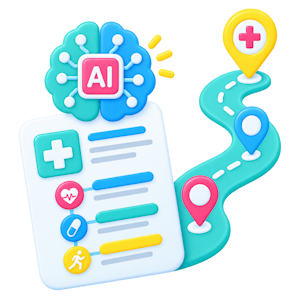
From Manual Outreach to Automated Digital Pathways
Traditional care management frequently depends on manual outreach. Predictive Prevention adds scalable, automated Digital Pathways. Instead of requiring staff to initiate every routine interaction, Calcium can automate personalized education, reminders, assessments, health tracking, and other engagement activities based on configured workflows.
Care teams can then concentrate more of their attention on patients requiring human expertise or additional support. By combining digital automation with defined escalation processes, Predictive Prevention helps organizations expand proactive engagement across larger populations without making every preventive interaction dependent on additional manual care-team capacity.
From Episodic Care to Longitudinal Care
Traditional healthcare is largely organized around individual encounters. Predictive Prevention supports a more longitudinal approach. Patient risk, behaviors, symptoms, and needs can change considerably between scheduled visits, creating gaps in visibility and opportunities for earlier intervention.
Calcium helps maintain a continuous digital connection through ongoing data assessment, patient engagement, monitoring activities, and guided interventions. This allows healthcare organizations to view prevention as an ongoing process rather than an activity limited to appointments—supporting a more connected understanding of the patient journey as health needs and risk evolve over time.
From Insight to Action
Traditional analytics generates valuable insight. Predictive Prevention is designed to make that intelligence more actionable. Knowing that a patient has elevated or rising risk creates an opportunity, but care teams still need a practical way to respond.
Calcium connects predictive intelligence with patient prioritization, provider workflows, Digital Pathways, and defined escalation processes. This helps organizations move from understanding what may be happening across their populations toward determining appropriate next steps—creating a more direct connection between available health intelligence, patient engagement, care-team attention, and proactive intervention.
From Reports to Measurable Outcomes
Traditional analytics often culminates in reports. Predictive Prevention extends the process toward measurable action and outcomes. Calcium creates a closed-loop framework in which organizations can assess health information, identify emerging risk, prioritize attention, deliver guided interventions, and capture new information as patients progress.
This enables teams to evaluate what happened after risk was identified rather than treating reporting as the endpoint. With clearly defined program objectives and performance measures, organizations can better understand engagement, interventions, workflows, patient trajectories, and the results their prevention initiatives are designed to influence.
FAQ
1. How is Predictive Prevention different from traditional predictive analytics?
Traditional predictive analytics can help identify which patients may be at increased risk, but identifying risk is only the beginning. Calcium’s Predictive Prevention Framework extends prediction into a continuous operating model that connects Assess, Predict, Prioritize, and Prevent.
Risk intelligence helps determine where attention may be needed, prioritized workflows guide care teams, and personalized Digital Pathways support ongoing patient engagement. New health information then feeds back into the process, creating a continuous closed-loop approach to prevention.
2. What types of patient data can support the Predictive Prevention Framework?
Predictive Prevention is designed to work with longitudinal health information from multiple available sources. Depending on an organization’s infrastructure and program, these may include EHR data, claims, clinical registries, medication information, patient-reported information, remote patient monitoring, connected devices, wearables, behavioral data, and social determinants of health.
Bringing relevant information together can provide a more complete view of the patient and help organizations identify meaningful changes that may warrant additional attention, engagement, or clinical review.
3. Does Predictive Prevention replace our existing EHR or population health platform?
No. Predictive Prevention is designed to complement the healthcare technology infrastructure organizations already depend on. Rather than replacing the EHR or other core systems,
Calcium can provide a prevention layer that connects available patient information with predictive intelligence, prioritized workflows, and ongoing digital engagement. This helps extend the value of existing data and systems beyond documentation and risk identification, creating a more direct connection between what an organization knows about a patient and what happens next.
4. How does Predictive Prevention help care teams determine which patients need attention?
Healthcare organizations often manage populations too large for every patient to receive the same level of manual attention. Predictive Prevention helps translate available risk intelligence into actionable priorities. Patient populations can be segmented according to defined risk, urgency, clinical criteria, or program requirements, helping create more focused care-management workflows.
Intelligent work queues, alerts, and escalation processes can then help care teams identify where human attention may be appropriate and concentrate resources on patients with emerging or higher-priority needs.
5. How does Predictive Prevention help reduce the burden on already-stretched care teams?
The framework is designed to use automation for routine activities while directing clinical resources toward interactions where human expertise matters most. Personalized Digital Pathways can support education, reminders, assessments, monitoring, behavioral guidance, and routine patient engagement without requiring manual outreach at every step.
At the same time, prioritization and escalation workflows can help teams focus attention on patients requiring additional support. This creates an opportunity to scale proactive care without relying solely on proportional increases in clinical staffing.
6. What happens after the platform identifies a patient with emerging risk?
Identification is intended to trigger an appropriate next step rather than simply generate another score or dashboard notification. Depending on the organization’s configured workflows, a patient may receive a personalized Digital Pathway, assessment, reminder, educational content, monitoring request, or other guided intervention.
Higher-priority signals can also support escalation to care teams for review and follow-up. The objective is to create a structured connection between emerging risk, patient engagement, and appropriate human intervention when it is needed.
7. What role do Calcium Digital Pathways play in Predictive Prevention?
Digital Pathways provide the patient engagement and intervention layer of the Predictive Prevention Framework. They can guide patients through personalized sequences of education, assessments, reminders, health tracking, behavioral support, and other program-specific activities between traditional encounters.
Pathways also create opportunities to capture new patient-generated information throughout the journey. This helps transform prediction into an ongoing process in which patients remain engaged while care teams gain additional visibility into changing needs, behaviors, symptoms, and potential risk signals.
8. How does the framework create a continuous closed-loop prevention model?
The framework operates as a repeating cycle rather than a one-time risk assessment. Calcium helps organizations Assess available health information, Predict emerging risk, Prioritize patients who may need attention, and Prevent through guided digital or care-team interventions.
As patients engage, new information can become available for subsequent assessment, allowing the cycle to begin again. This feedback loop helps organizations maintain a more current understanding of patient needs instead of relying exclusively on episodic encounters or static risk snapshots.
9. Can Predictive Prevention support multiple clinical conditions and care programs?
Yes. The framework is designed as a flexible operating model rather than a single-condition solution. Organizations can apply its assess-predict-prioritize-prevent approach across programs such as chronic disease management, population health, perioperative care, post-acute care, behavioral health, and other preventive initiatives.
Digital Pathways can be configured around specific populations, conditions, and care journeys, enabling health systems to establish a common prevention infrastructure while adapting patient engagement and clinical workflows to different program requirements and organizational priorities.
10. How can Predictive Prevention support value-based care initiatives?
Value-based care increases the importance of understanding patient risk and acting before avoidable deterioration becomes more difficult or costly to address. Predictive Prevention can help organizations connect population-level risk intelligence with prioritized outreach, ongoing patient engagement, and structured interventions.
This approach can support capabilities important to accountable care, including chronic disease management, transitions of care, rising-risk management, preventive engagement, and longitudinal population management—helping organizations build infrastructure aligned with greater accountability for patient outcomes, utilization, quality, and total cost of care.
11. How does Predictive Prevention engage patients between healthcare encounters?
Calcium extends engagement into the periods when patients are managing their health outside hospitals and clinics. Through the Calcium Super App and personalized Digital Pathways, organizations can deliver education, reminders, assessments, health tracking, symptom questions, behavioral guidance, and other targeted activities.
Patients can receive support throughout their care journey while generating information that may provide additional insight into changing needs. This creates a more continuous connection between the patient and healthcare organization than encounter-based care alone can provide.
12. How does Calcium use AI within the Predictive Prevention Framework?
AI can support several elements of the framework, including risk intelligence and the efficient creation of personalized Digital Pathways. Calcium AI Studio helps healthcare organizations develop and manage pathway content, assessments, education, monitoring activities, reminders, and guided engagement experiences.
AI is intended to support scalable healthcare workflows rather than replace professional clinical judgment. Organizations can establish appropriate clinical, operational, and governance processes around how predictive insights, pathway content, escalation criteria, and patient interventions are implemented within their specific care environments.
13. How does Predictive Prevention fit into existing clinical workflows?
Implementation can be designed around the workflows, populations, and priorities of each healthcare organization. Rather than requiring every patient interaction to become a new manual task, the framework combines automated digital engagement with risk-informed prioritization and defined escalation processes.
Care teams can focus on patients requiring their expertise while lower-intensity activities can be supported digitally. This approach allows organizations to incorporate proactive prevention into existing care-management models while configuring workflows around their staffing structures, clinical protocols, and operational requirements.
14. How should a health system begin implementing Predictive Prevention?
A practical starting point is a clearly defined population and use case where earlier intervention has meaningful clinical or operational value. The organization can identify relevant data sources, risk signals, target workflows, patient engagement requirements, escalation criteria, and measurable objectives.
Calcium can then support the connection of data, prioritization workflows, and Digital Pathways around that program. Starting with a focused implementation also gives organizations an opportunity to evaluate performance, refine workflows, demonstrate value, and expand to additional populations over time.
15. How can healthcare organizations measure the impact of Predictive Prevention?
Measurement should begin with objectives established for the specific population and use case. Organizations may evaluate operational measures such as engagement, pathway participation, outreach efficiency, escalations, and care-team workload alongside appropriate clinical, quality, utilization, and financial measures.
The relevant indicators will vary by program and population. Establishing baseline performance and clearly defined success measures before deployment can help organizations determine whether Predictive Prevention is improving workflows, influencing patient engagement, and contributing to the outcomes their programs are designed to achieve.