
Standardize & Optimize Surgical Care Across Hospital Service Lines, Without Sacrificing Clinical Judgment
Orchestrate readiness, reduce variation, and gain visibility across the full surgical episode with digital infrastructure built for hospital surgical service lines.

Hospital Surgical Service Lines, Reimagined: Digital Infrastructure for Standardized, High-Performance Surgical Care at Scale
Surgical service lines sit at the center of hospital performance.
They drive a disproportionate share of revenue, margin, and reputation, yet they are increasingly accountable for outcomes that extend well beyond the operating room. Length of stay, readmissions, complications, and patient experience are shaped just as much by preparation and recovery as by the procedure itself.
Despite this reality, most hospital surgical service lines are still managed with encounter-based systems, fragmented workflows, and retrospective reporting. Leaders are expected to standardize care, reduce variation, and improve outcomes across surgeons, procedures, and sites, without the infrastructure required to see or manage the full surgical episode.
Calcium was built to close that gap.
Calcium provides hospital surgical service lines with digital surgical care infrastructure, orchestrating readiness, risk, coordination, and recovery across the entire episode of care, at enterprise scale.
Surgical Service Lines at an Inflection Point
Surgical care is no longer defined by a single location, team, or moment in time. What was once a tightly bounded inpatient event has become a distributed, multi-phase journey that unfolds across settings and over weeks or months.
As this shift accelerates, surgical service line leaders are being asked to deliver consistent outcomes, operational efficiency, and financial performance across an environment that is fundamentally more complex.

The New Hospital Surgical Care Landscape
Surgical care now unfolds across a fragmented and highly dynamic environment.
Procedures routinely move between inpatient and outpatient settings, while recovery increasingly occurs beyond the hospital’s walls. Patient populations are more complex, referral patterns are broader, and care teams span multiple departments and organizations. This dispersion has made surgical care harder to coordinate, harder to standardize, and harder to manage using encounter-based systems.
Key characteristics of today’s surgical landscape include:
– Care delivered across multiple sites and settings
– Greater patient acuity and comorbidity burden
– Increased reliance on cross-functional teams
– Outcomes influenced well beyond the operating room

New Demands on Surgical Service Lines
This new reality places significant demands on surgical service lines that traditional systems were not designed to meet.
Leaders must now manage performance across the entire surgical episode, not just the procedure itself. They are expected to reduce variation, improve outcomes, and support value-based initiatives, while operating within tight workforce and financial constraints. Achieving this requires new infrastructure that enables visibility, coordination, and control across preparation, surgery, and recovery.
Specifically, today’s environment demands the ability to:
– Manage readiness and risk earlier and more consistently
– Coordinate care across teams and settings
– Extend visibility into post-discharge recovery
– Measure performance at the episode level, not the encounter level
The Systemic Barriers Limiting Surgical Service Line Performance
Hospital surgical service lines are being asked to deliver consistent outcomes across an environment that is increasingly complex, distributed, and outcomes-driven.
Accountability now extends well beyond the procedure itself, yet the infrastructure supporting surgical care remains fragmented and encounter-focused. As surgical volumes grow and care spans multiple settings, gaps in standardization, visibility, and coordination have become structural obstacles.

Variations Across Surgeons, Sites and Procedures
Within many hospital service lines, surgical care varies significantly depending on who performs the procedure and where it occurs.
Differences in preparation, readiness assessment, and recovery guidance introduce inconsistency that undermines outcomes and patient experience. This variability makes it difficult for leaders to enforce best practices or compare performance across sites.
Without a mechanism to standardize workflows while preserving clinical judgment, variation persists and limits the ability to improve outcomes at an enterprise level.
Common sources of variation include:
– Inconsistent preparation and optimization workflows
– Differing readiness thresholds across teams
– Non-standard recovery guidance

Fragmented Pre-Operative Readiness and Risk Assessment
Pre-operative risk assessment is often hindered by fragmented data and manual processes.
Critical patient information may be spread across external systems, arrive late, or require time-consuming reconciliation. As a result, readiness issues are frequently identified too close to surgery, when options for intervention are limited.
This late discovery increases the likelihood of delays, cancellations, and avoidable clinical risk, while placing additional strain on perioperative and anesthesia teams.
Contributing factors often include:
– Incomplete external records
– Disconnected clinical data sources
– Manual, staff-intensive clearance workflows

Limited Visibility Beyond Post-Op Discharge
Once a patient leaves the hospital, recovery often falls outside structured oversight.
Service line teams may not become aware of issues until patients present to the emergency department or are readmitted. This lack of post-discharge visibility forces a reactive approach to care, limiting opportunities for early intervention and learning.
Without insight into recovery trajectories, service lines struggle to improve outcomes that are increasingly tied to value-based performance.

No Way to Manage the Entire Surgical Episode
Most hospital systems are designed to manage individual encounters rather than continuous surgical episodes.
Preparation, surgery, and recovery are often handled in silos, with no shared operating picture across phases of care. This fragmentation prevents service line leaders from understanding how decisions in one phase affect outcomes in another.
Without episode-level orchestration, it becomes difficult to coordinate care, reduce variation, or manage performance across the full surgical journey.

Difficulty Scaling ERAS and Quality Programs
While ERAS and clinical pathway programs are widely adopted, many hospitals struggle to operationalize them consistently across surgeons and sites.
Protocols often exist as static documents, with adherence tracked manually or retrospectively. This limits real-time insight and makes it difficult to measure impact or refine programs over time. Without digital workflows that embed protocols into daily practice, quality initiatives remain fragmented and difficult to scale.
Challenges frequently include:
– Manual adherence tracking
– Limited outcome linkage
– Inconsistent adoption across teams

Scaling Growth Without Adding Staff or Complexity
Surgical service line leaders are increasingly accountable for outcomes, utilization, and financial performance but often lack the infrastructure to manage these responsibilities proactively.
Expectations around length of stay, readmissions, bundled payments, and quality metrics continue to rise, while tools remain fragmented and retrospective. This creates a gap between accountability and control, leaving leaders responsible for results they cannot consistently see or influence across the surgical episode.
This challenge is driven by:
– Episode-level accountability without episode-level visibility
– Metrics disconnected from daily workflows
– Limited ability to intervene before performance is impacted
Why Traditional Hospital Surgical Line Tech Falls Short
Hospitals have invested heavily in technology but gaps remain.
- EHRs are encounter-focused and site-locked
- Analytics are retrospective and slow to act on
- RPM tools address only post-discharge monitoring
- Custom builds are expensive and difficult to scale
These tools solve isolated problems, but they do not support end-to-end surgical care orchestration.
What hospital surgical service lines need is not more tools but infrastructure.
Measurable Benefits: The Digital Infrastructure for Modern Hospital Surgical Lines
Hospital surgical service lines are under pressure to deliver consistent outcomes, operational efficiency, and financial performance across an increasingly complex care environment.
Calcium translates surgical care strategy into execution by addressing the structural gaps that limit visibility, coordination, and control across the surgical episode.

Reduced Variation Across Teams & Procedures
Unwarranted variation is one of the greatest barriers to predictable surgical performance.
Calcium enables service lines to standardize preparation and recovery through configurable, procedure-specific pathways that are applied consistently across surgeons and locations. This creates a shared operating model while preserving clinical judgment where needed.
By reducing variation, service lines can:
- Improve outcome consistency
- Strengthen patient experience
- Enable meaningful enterprise-wide improvement
Start using Calcium today with a 30-day free trial.

Earlier, More Reliable Surgical Readiness and Risk Identification
Late discovery of readiness issues increases cancellations, delays, and clinical risk.
Calcium aggregates longitudinal patient data and monitors readiness continuously, allowing service lines to identify risk earlier in the pre-operative process. This creates time for meaningful intervention rather than last-minute escalation.
Earlier insight supports:
- Safer clearance decisions
- Fewer day-of-surgery disruptions
- Improved coordination with anesthesia and periop teams
Start using Calcium today with a 30-day free trial.

End-to-End Visibility Across the Surgical Episode
Most hospital systems provide insight into isolated encounters, not continuous episodes.
Calcium gives service-line leaders a unified view of preparation, readiness, and recovery connecting phases of care that are typically managed in silos. This shared visibility enables better decision-making and accountability across the full surgical journey.
This visibility allows leaders to:
- Understand downstream impact of upstream decisions
- Identify systemic bottlenecks
- Manage performance holistically
Start using Calcium today with a 30-day free trial.

Scalable ERAS and Quality Program Execution
ERAS and quality initiatives often struggle to move beyond guidelines into daily practice.
Calcium operationalizes these programs by embedding protocols into digital workflows and tracking adherence automatically. Outcomes are linked directly to execution, enabling continuous refinement rather than static compliance.
With Calcium, service lines can:
- Scale ERAS across surgeons and sites
- Measure real-world impact
- Sustain quality improvements over time
Start using Calcium today with a 30-day free trial.

Better Post-Discharge Insight Without RPM Complexity
Recovery increasingly determines outcomes tied to value-based care, yet visibility often ends at discharge.
Calcium extends structured oversight into recovery using pathway-based monitoring that surfaces early warning signals without the burden of traditional RPM programs.
This enables service lines to:
- Detect issues sooner
- Reduce avoidable readmissions
- Improve patient confidence after discharge
Start using Calcium today with a 30-day free trial.

Proactive Management Instead of Reactive Escalation
Retrospective reports do not prevent problems, they explain them after the fact.
Calcium delivers real-time insight through AI-powered alerts and prioritized views, allowing teams to intervene earlier. This shifts service-line management from reactive escalation to proactive control.
Proactive management helps:
- Reduce preventable complications
- Improve operational predictability
- Focus attention where it matters most
Start using Calcium today with a 30-day free trial.

Stronger Support for Value-Based and Bundled Care Models
Value-based reimbursement requires control over utilization, outcomes, and variation across the full episode.
Calcium provides episode-level orchestration and analytics that help service lines manage length of stay, readmissions, and bundle performance proactively.
This support enables:
- Better alignment between care delivery and reimbursement
- Reduced unwarranted utilization
- More predictable financial performance
Start using Calcium today with a 30-day free trial.

Reduced Administrative Burden for Clinical and Operational Teams
Manual coordination consumes time and contributes to burnout.
Calcium automates routine workflows and prioritizes work by exception, reducing the need for phone calls, spreadsheets, and manual tracking. Teams can focus on decision-making rather than administration.
Reduced burden leads to:
Improved staff satisfaction
Greater operational efficiency
More sustainable service-line operations
Start using Calcium today with a 30-day free trial.

Enterprise Ready Infrastructure That Scales With Growth
As health systems expand procedures, sites, and service lines, infrastructure must scale without introducing chaos.
Calcium is built for enterprise governance, allowing centralized oversight with local flexibility. This supports growth without sacrificing consistency or control.
Enterprise scalability supports:
- Multi-hospital deployment
- Cross-service-line standardization
- Long-term digital foundation
Start using Calcium today with a 30-day free trial.
High-Impact Use Cases for Hospital Surgical Service Lines
The most meaningful gains come from use cases that improve readiness, reduce variation, extend visibility beyond discharge, and align care delivery with value-based expectations. Calcium enables these outcomes by orchestrating workflows, data, and insight across the full surgical episode.
Pre-Operative Optimization at Scale
Pre-operative optimization is critical to surgical outcomes, yet many service lines struggle to manage it consistently across surgeons and sites.
Calcium embeds optimization activities directly into digital pathways, allowing teams to manage readiness proactively rather than relying on late-stage clearance checks. This creates earlier visibility into gaps, supports coordinated intervention, and reduces last-minute disruptions.
By standardizing optimization workflows while allowing patient-specific flexibility, service lines can improve preparedness, reduce cancellations, and protect surgical schedules across the enterprise.
Key optimization benefits include:
- Earlier identification of readiness gaps
- Reduced day-of-surgery delays
- More predictable surgical throughput
Learn more and start your 30-day free trial today.
ERAS Operationalization and Measurement
ERAS programs often lose impact when protocols remain static and adherence is tracked manually.
Calcium operationalizes ERAS by converting guidelines into executable workflows that are delivered consistently across procedures and sites. Real-time adherence tracking replaces retrospective audits, while outcome measurement is directly linked to execution. This enables service lines to understand which elements drive results and refine programs over time.
ERAS becomes a living system, scalable, measurable, and integrated into daily surgical operations.
Learn more and start your 30-day free trial today.
Post-Discharge Surveillance Without RPM Burden
Recovery increasingly determines outcomes tied to quality and value-based care, yet traditional RPM programs are costly and difficult to scale.
Calcium provides structured post-discharge surveillance aligned to surgical pathways, offering early insight into recovery deviations without introducing heavy operational burden. Service lines gain visibility into recovery patterns, allowing earlier intervention while avoiding unnecessary escalation.
This supports safer transitions of care, reduces avoidable utilization, and extends service-line influence beyond the hospital walls.
Learn more and start your 30-day free trial today.
High-Risk Surgical Patient Management
Medically complex surgical patients require early identification and coordinated management, but risk is often recognized too late.
Calcium uses longitudinal data and AI-powered signals to help service lines identify high-risk patients earlier in the surgical journey. This supports targeted optimization, more thoughtful surgical planning, and closer post-operative oversight.
By prioritizing attention where it is most needed, service lines can improve outcomes for complex patients without overwhelming clinical teams or increasing administrative burden.
Learn more and start your 30-day free trial today.
Surgical Bundles and Value-Based Care Support
Bundled payments and value-based programs demand control over outcomes, utilization, and variation across the full surgical episode.
Calcium provides episode-level orchestration and analytics that allow service lines to manage these drivers proactively. By connecting preparation, surgery, and recovery into a single operating picture, service lines can reduce unwarranted variation, improve predictability, and align clinical performance with financial accountability.
This makes value-based care a manageable operational model rather than a reporting exercise.
Learn more and start your 30-day free trial today.
Metrics That Move Surgical Service Lines Forward
Surgical service line leaders need more than dashboards, they need measurement that directly connects performance to operational decisions.
True improvement happens when data is aligned with workflows, accountability, and episode-level management. Calcium enables hospitals to track performance across clinical, operational, and strategic dimensions, providing insight that informs action rather than simply documenting results.
Clinical Metrics
Clinical performance reflects how effectively surgical care is delivered across preparation, procedure, and recovery.
Calcium supports structured monitoring of:
Complications – Including surgical site infections, post-operative events, and avoidable adverse outcomes that influence quality ratings and reputation
ICU utilization – Monitoring unexpected or prolonged ICU use that signals readiness or intraoperative risk challenges
Safety indicators – Tracking standardized safety measures tied to compliance, protocol adherence, and preventable harm
Operational Metrics
Operational efficiency determines whether surgical service lines run predictably and sustainably.
Calcium enables visibility into:
Time to clearance – Measuring the duration from surgical decision to readiness confirmation, identifying bottlenecks in optimization workflows
OR utilization – Tracking block efficiency, on-time starts, and throughput consistency across surgeons and sites
Length of stay variability – Identifying unwarranted differences that impact capacity, cost, and patient flow
Strategic Metrics
Strategic performance connects surgical care delivery to financial and value-based outcomes.
The Calcium platform supports tracking of:
- Readmissions – Monitoring avoidable returns that affect reimbursement, quality scores, and patient trust
- Bundle performance – Measuring cost and outcome alignment across episode-based payment models
- Service-line margin contribution – Linking operational and clinical performance to financial sustainability and growth
Orchestrating Surgical Workflows Across the Entire Episode
High-performing surgical service lines do not rely on isolated tasks, they rely on coordinated workflows that connect preparation, execution, and recovery into a continuous operating model.
When these phases function independently, risk surfaces late and accountability becomes fragmented. Calcium aligns workflows across the surgical journey, enabling earlier intervention, clearer ownership, and measurable improvement.
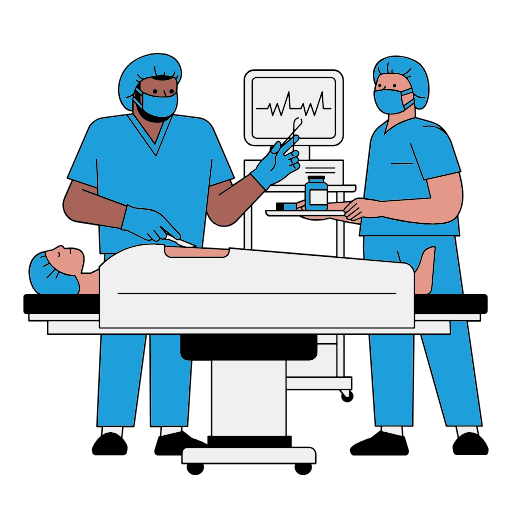
Before Surgery
The pre-operative phase sets the trajectory for surgical outcomes and operational stability.
Calcium establishes early structure by consolidating relevant clinical data, identifying risk signals, and aligning patients to appropriate procedural pathways. This ensures readiness gaps are identified with time to intervene, rather than discovered at the point of no return.
Key elements include:
- Longitudinal data aggregation
- Risk stratification and prioritization
- Assignment to standardized, procedure-specific pathways
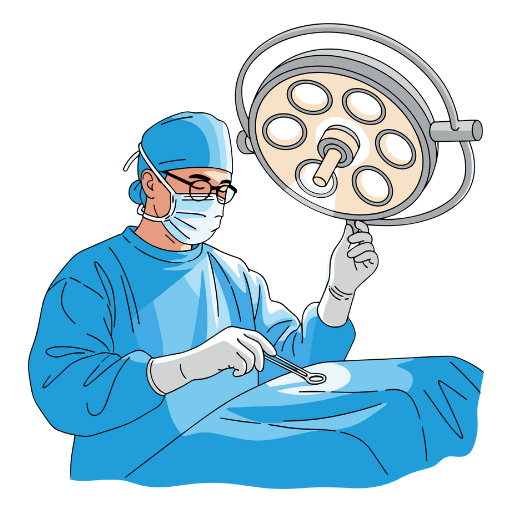
Surgical Readiness
As surgery approaches, real-time visibility becomes essential.
Calcium monitors adherence to required preparation steps and highlights unresolved issues across teams. Structured escalation workflows allow coordinated intervention before schedules are disrupted. This reduces day-of-surgery surprises and supports more consistent OR performance across surgeons and sites.
Core readiness components include:
- Continuous adherence monitoring
- Alert-driven exception management
- Coordinated cross-team escalation
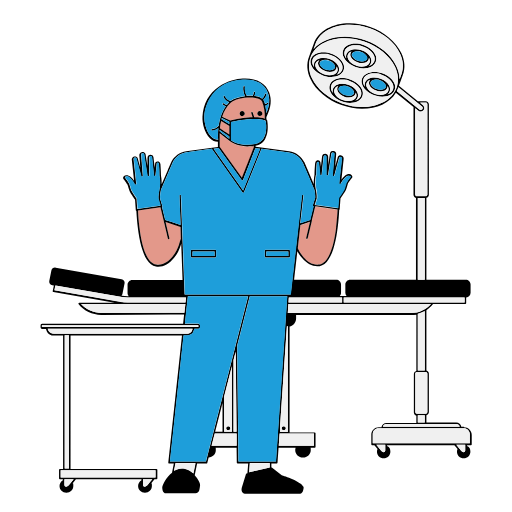
After Surgery
Recovery increasingly determines quality and value-based outcomes.
Calcium extends structured oversight into the post-discharge phase, enabling earlier detection of deviations and feedback into optimization strategies. This transforms recovery from a reactive process into a managed phase of the surgical episode.
Post-operative workflow elements include:
- Structured recovery tracking
- Early warning signal detection
- Continuous learning and pathway refinement
Why Hospital Surgical Service Lines Choose Calcium
Hospital surgical service lines choose Calcium because it is designed around the full surgical episode rather than isolated encounters, enabling leaders to manage preparation, surgery, and recovery as one continuous performance model.
Its system-agnostic architecture allows it to operate across hospitals and care settings without being locked into a single EHR environment. Calcium prioritizes orchestration over fragmented tools, delivering actionable, real-time insight instead of retrospective reports. Built for enterprise scale, it supports governance, flexibility, and growth across service lines and locations.
The result is durable infrastructure that strengthens surgical performance long term, rather than another siloed solution to manage.
FAQ
1. What is Calcium’s solution for hospital surgical service lines?
Calcium’s Hospital Surgical Service Line solution is a digital surgical care orchestration platform designed to help hospitals standardize workflows, reduce variation, and improve outcomes across the full surgical episode. Unlike encounter-based tools, Calcium supports episode-level management from pre-operative readiness through post-discharge recovery. The platform combines configurable surgical pathways, longitudinal patient data aggregation, and AI-powered intelligence to help service lines manage risk proactively, scale ERAS programs, and align surgical performance with value-based reimbursement initiatives.
2. How does Calcium reduce variation across surgeons and hospital sites?
3. Can Calcium aggregate patient data across multiple hospitals and health systems?
Yes. Calcium is system-agnostic and aggregates relevant patient data from hospitals and health systems nationwide. This includes prior surgeries, diagnoses, medications, and other clinical history that may reside outside the primary EHR. By creating a longitudinal surgical patient record, Calcium enables earlier and more complete risk assessment. This reduces late discovery of risk factors, minimizes manual chart chasing, and supports safer clearance decisions across hospital service lines.
4. How does Calcium support ERAS and hospital quality initiatives?
Calcium operationalizes ERAS and other quality initiatives by embedding protocols directly into executable digital workflows. Instead of relying on static guidelines and retrospective audits, hospitals can track adherence in real time and link execution to outcomes. This enables service lines to scale ERAS programs across surgeons and sites while measuring impact continuously. The result is sustainable quality improvement rather than compliance-based documentation.
5. Does Calcium support post-discharge monitoring for hospital surgical patients?
6. How does Calcium help hospitals manage value-based and bundled payment programs?
Calcium provides episode-level visibility that connects preparation, surgery, and recovery into a single performance framework. This allows hospitals to proactively manage drivers of bundle performance such as length of stay, complications, readmissions, and unwarranted variation. By aligning workflows with financial accountability, service lines can better control utilization and improve predictability under value-based reimbursement models.
7. Does Calcium replace the hospital EHR?
No. Calcium does not replace the EHR. It functions as an orchestration and intelligence layer that complements existing hospital systems. While EHRs manage encounters and documentation, Calcium connects workflows, data, and teams across the entire surgical episode. This approach enhances existing infrastructure without requiring costly re-engineering or disruptive system replacement.
8. How does Calcium improve surgical readiness and reduce cancellations in hospitals?
Calcium improves readiness by continuously monitoring adherence to required preparation steps and identifying unresolved risks earlier in the process. Instead of discovering issues on the day of surgery, teams can intervene proactively. This reduces avoidable cancellations, protects OR utilization, and improves coordination among perioperative, anesthesia, and surgical teams.
9. What metrics can hospital surgical service lines track with Calcium?
Calcium enables hospitals to track clinical, operational, and strategic metrics directly tied to surgical workflows. These include complication rates, ICU utilization, clearance timelines, OR utilization, length-of-stay variability, readmissions, bundle performance, and service-line financial contribution. Because metrics are connected to real-time workflows, leaders gain actionable insight rather than retrospective reports.
10. Is Calcium suitable for multi-hospital systems and large health networks?
11. How long does it take to implement Calcium in a hospital surgical service line?
12. How does Calcium help manage high-risk surgical patients?
13. Can Calcium support coordination across perioperative, anesthesia, and surgical teams?
Yes. Calcium provides shared visibility and structured coordination tools that align surgeons, anesthesia providers, perioperative clinicians, nursing, and care management around a single surgical episode. Role-aware dashboards and escalation workflows reduce communication breakdowns and improve accountability across disciplines and care settings.
14. How does Calcium reduce administrative burden for hospital teams?
15. Why choose Calcium over point solutions for hospital surgical management?
