Turning Technology into a Competitive Advantage for Accountable Care Organizatoins
Pressure on Accountable Care Organizations (ACOs) is higher than ever. They’re expected to do more with less delivering better outcomes, reducing costs, and improving patient experiences, all while navigating outdated systems and fragmented care models.
It’s a tall order. And yet, amidst these growing demands, one powerful solution remains massively underleveraged: Digital Health for ACOs. We're not just talking about telehealth visits or mobile apps, we’re talking about an entire ecosystem of tools that can transform how ACOs engage patients, coordinate care, and achieve real, measurable results.
So why are so many ACOs still stuck in the slow lane? In this post, we’ll explore why Digital Health for ACOs isn't just a nice-to-have, but a must-have for ACOs striving to lead in a value based care world. If you're ready to turn technology into a strategic advantage rather than a daily frustration, keep reading, because the future of high-performing ACOs is already here.
The Real-World Struggles of Today’s ACOs
Accountable Care Organizations (ACOs) were designed to fix some of the biggest flaws in U.S. healthcare, fragmentation, inefficiency, and poor outcomes. But let’s be real: most ACOs today are juggling way more than just patient care. They’re dealing with outdated tech, disconnected systems, and a whole lot of administrative noise.
Sound familiar? If you're part of an ACO, you've probably wrestled with some of these digital health headaches:
- Too many electronic health records (EHRs) that don’t talk to each other
- Difficulties pulling data together to track outcomes and quality
- Limited ways to engage patients outside the clinic
- Challenges managing chronic conditions or behavioral health across large populations
And the numbers don’t lie. One major study found that 77% of ACOs are using six or more EHR systems, and nearly 40% are managing sixteen or more (Perloff & Sobul, 2022). Imagine trying to coordinate a football team when every player is reading from a different playbook that’s how care delivery feels for many ACOs today.
This is where digital health for ACOs comes in not just as a helpful add-on, but as the missing playbook that brings the whole team together.
What Digital Health Really Means for ACOs
We hear the term "digital health" thrown around a lot. But what does it really mean in the context of ACOs?
At its core, digital health for ACOs refers to the use of connected technologies like mobile apps, remote monitoring tools, AI-driven care pathways, and data-sharing platforms to deliver care more effectively, efficiently, and personally (Periáñez et al., 2024).
For ACOs trying to improve outcomes while reducing costs, digital health isn't just a trend. It's a necessity.
Why Digital Health Isn’t Optional Anymore
So, why is digital health such a game changer for ACOs? Because it directly addresses the challenges that ACOs face every day. Here's how:
1. It Breaks Down Data Silos
Data fragmentation is the kryptonite of value based care. Without a clear, unified view of each patient, it’s nearly impossible to coordinate care or spot issues early.
Digital health platforms help fix this by:
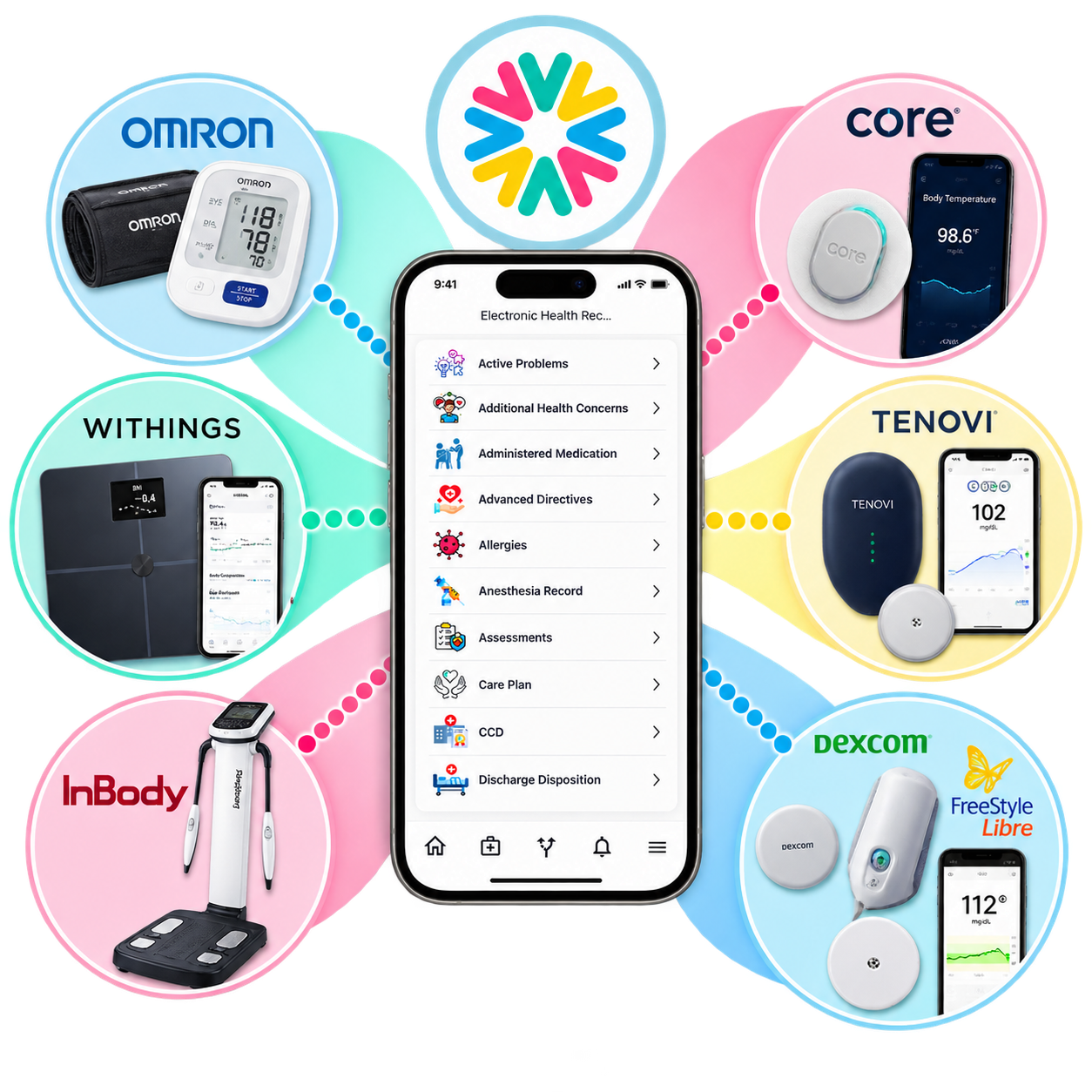
- Integrating data from multiple EHRs and sources into one view
- Standardizing health metrics so they’re actually usable
- Making real-time insights available to care teams
In one national survey, ACOs using 16+ EHR systems reported the lowest ability to aggregate their data, and 67% of them said data access was a serious concern (Perloff & Sobul, 2022). Digital platforms that centralize and simplify this process give ACOs the visibility they need to make smart decisions, fast.
2. It Turns Patients into Partners
You can’t meet value-based care goals if patients aren’t following through. That’s why engagement is everything.
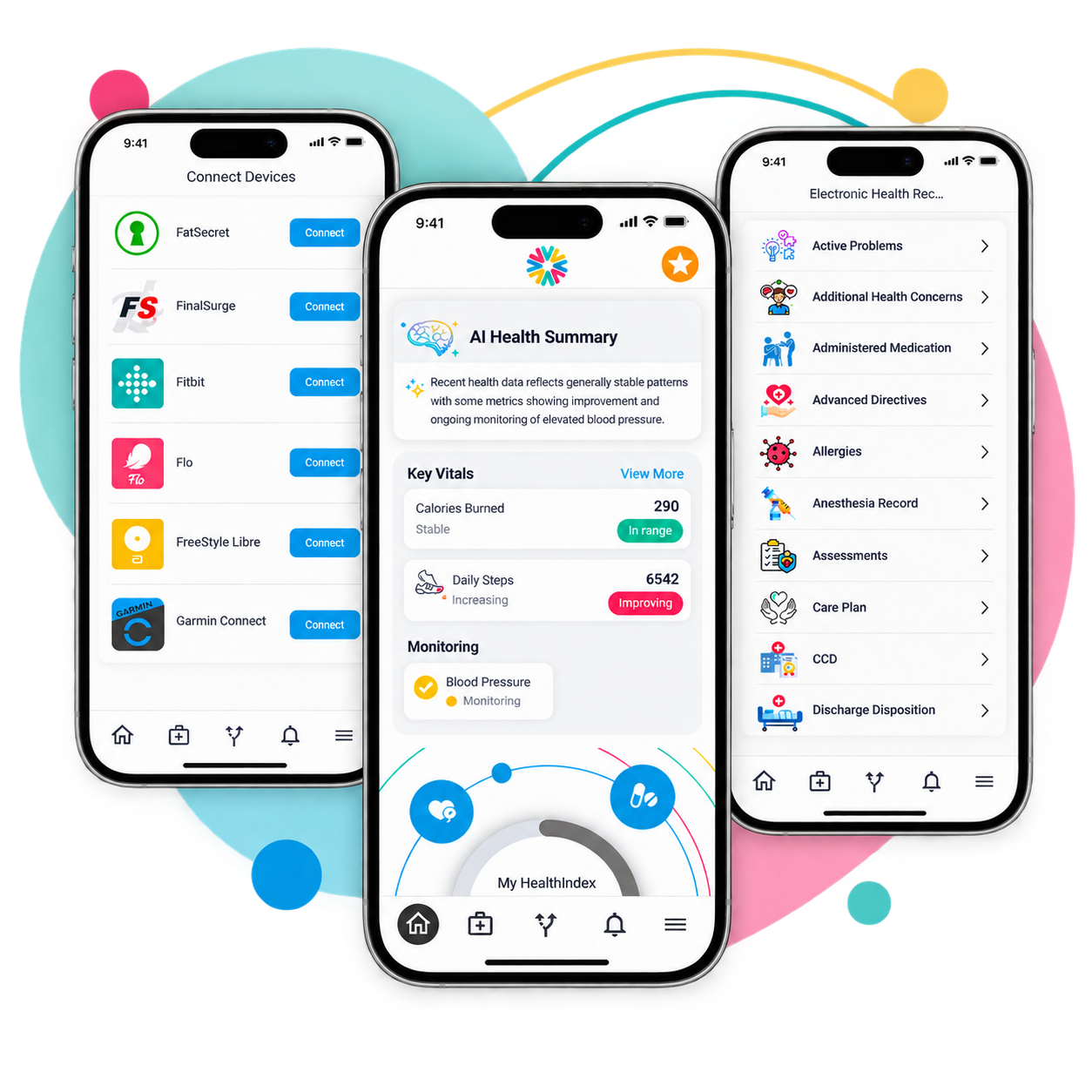
Digital health for ACOs apps (like the Calcium Super App) keep patients in the loop every day not just during appointments. Through personalized notifications, health tracking, and reminders, patients are nudged to take action and stay on track with their care plans.
Here’s what great engagement looks like through digital tools:
- Daily or weekly reminders for medications, check-ins, or lifestyle goals
- Educational content delivered right when the patient needs it
- Symptom tracking and journaling that feeds back to the care team
- Motivational messages that encourage progress
Think of it like a Fitbit for your whole health constantly guiding you, nudging you, and celebrating your wins (Periáñez et al., 2024).
3. It Finally Makes Behavioral Health Scalable
Mental health isn’t a side issue, it’s central to whole-person care. But for too long, ACOs have struggled to integrate behavioral health into their workflows. Especially for aging populations and underserved communities, digital mental health solutions are urgently needed.
One recent study found that older adults with mental health disorders had 60–75% higher healthcare costs than those without. And post-COVID, mental health needs among Medicare populations have skyrocketed (Maguire et al., 2024).
Digital health for ACOs offers:
- Behavioral health pathways that include daily check-ins, coping tools, and progress tracking
- Automated support for depression, anxiety, ADHD, and other conditions
- Remote symptom monitoring that flags risk early
These tools don’t replace therapists, they extend their reach. Patients who might otherwise fall through the cracks stay connected, supported, and seen.
Where Telehealth Fits into the Puzzle
We can’t talk about digital health without addressing telemedicine. But here’s the twist: ACO providers have actually used telehealth less than non-ACO peers, especially during the early years of the Medicare Shared Savings Program (Modi et al., 2019).
Why? Mainly due to Medicare reimbursement limits, urban ACO focus, and tech infrastructure gaps. But the tide is turning. As CMS relaxes location rules and expands coverage, ACOs are better positioned than ever to embrace virtual care.
Telehealth is a natural fit for:
- Routine follow-ups and medication management
- Mental health visits where physical exams aren’t needed
- Care coordination among specialists and PCPs
- Chronic disease check-ins that reduce unnecessary ER visits
By weaving telemedicine into a larger digital care strategy, ACOs can meet patients where they are literally.
How Calcium Bridges the Digital Divide for ACOs
Let’s bring it down to earth: What does this look like in practice?
The Calcium Digital Health Platform was built to address these exact issues. Here's how it helps ACOs thrive:
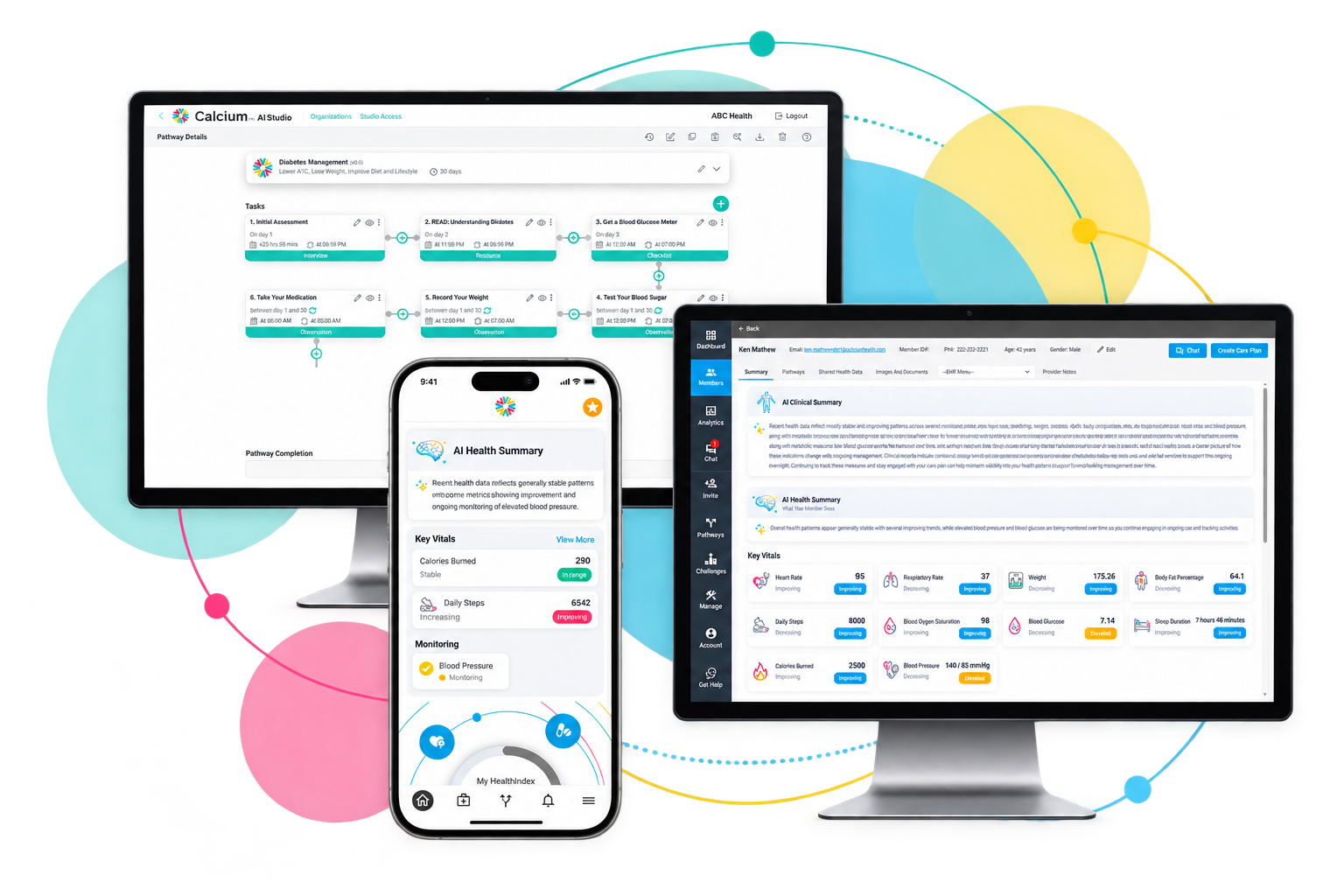
Calcium Health Core (for providers & administrators)
- Connects to multiple EHRs to unify patient data
- Tracks clinical outcomes and quality metrics automatically
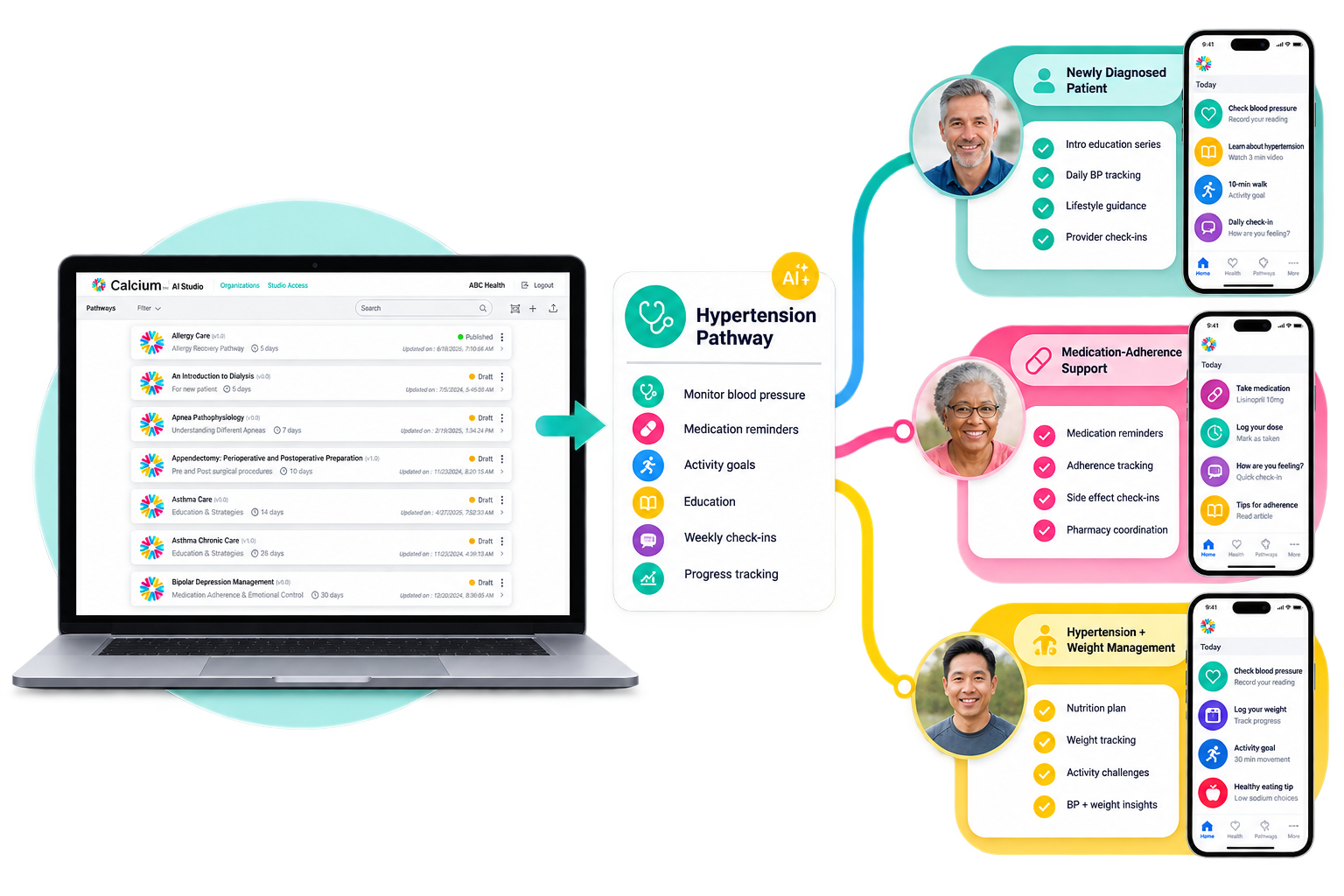
- Helps care teams assign digital health pathways to specific patients
Calcium Super App (for patients & families)
- Offers access to hundreds of digital pathways chronic care, behavioral health, recovery, and more
- Syncs with wearables and home devices to track vitals and symptoms
- Engages patients with reminders, journaling tools, and education
- Enables secure communication with care teams
Calcium AI Studio (for customization)
- Allows ACOs to create tailored digital pathways using AI + clinical guidance
- Personalizes content, timing, and interventions based on real-time behavior and health status
These tools work together like a digital nervous system keeping ACOs informed, patients empowered, and care teams aligned.
The Wrap
Accountable Care Organizations are facing complex challenges, but they also have a powerful opportunity: the chance to lead the future of value-based care through smarter, more connected solutions. Digital health isn’t just about keeping up, it’s about getting ahead. By embracing tools that streamline care coordination, boost patient engagement, and close gaps in behavioral and chronic care, ACOs can finally unlock the performance they’ve been striving for.
Platforms like Calcium Health are built specifically for this moment, bridging technology with real-world care delivery to help ACOs thrive, not just survive. Whether you’re dealing with fragmented EHRs, limited patient follow-through, or mounting quality reporting demands, there’s a better way forward.
Reference
Modi, P. K., Kaufman, S. R., Portney, D. S., Ryan, A. M., Hollenbeck, B. K., & Ellimoottil, C. (2019). Telemedicine utilization by providers in accountable care organizations. MHealth, 5, 10–10. https://doi.org/10.21037/mhealth.2019.03.02
África Periáñez, Fernández, A., Nazarov, I., Enric Jané, Hassan, M., Rastogi, A., & Tang, D. (2024). The Digital Transformation in Health: How AI Can Improve the Performance of Health Systems. Health Systems & Reform, 10(2). https://doi.org/10.1080/23288604.2024.2387138
Jennifer Perloff, P., & Sam Sobul, M. P. A. (2022). Use of electronic health record systems in accountable care organizations. (2022). The American Journal of Managed Care, 28(1), e31–e34. https://doi.org/10.37765/ajmc.2022.88818
Teagan Knapp Maguire, Jang, S., Alice Shijia Yan, & Chen, J. (2024). Accountable Care Organizations, Mental Health, and Aging in the New Era of Digital Health. Public Policy & Aging Report. https://doi.org/10.1093/ppar/prae003