Unlocking Better Outcomes Through Smarter Tools and Patient Centered Innovation
Healthcare is evolving fast and if you're operating under a value based care model, you can feel the pressure every day. You're expected to manage chronic diseases, improve patient outcomes, reduce costs, and keep people satisfied, all while juggling limited time, resources, and outdated technology. Sound familiar?
Here's the reality: you can't deliver high-value care using low-tech tools. The shift from fee for service to value-based care isn't just a policy change it's a fundamental transformation in how care is delivered, coordinated, and measured. And it's exposing just how unprepared many health systems still are.
That’s why more and more providers are turning to digital health platforms. These aren't just fancy add ons they're becoming mission-critical infrastructure for managing risk, engaging patients, and driving results in a competitive, outcomes-focused world.
If you're serious about succeeding in value based care, it's time to ask: is your organization equipped for what comes next?
The Pressure Is On for Providers in Value Based Care
Value based care isn’t just a buzzword anymore it’s quickly becoming the new standard. Providers are expected to deliver better outcomes while keeping costs down and patients satisfied. But here’s the catch: doing that with outdated systems is like trying to win a Formula One race in a minivan.
Fee-for-service models might have tolerated inefficiency, but value based contracts demand results. Whether it’s a shared savings agreement, a bundled payment initiative, or a CMS ACO model, your organization is now responsible for performance. And that means managing chronic diseases, behavioral health, patient engagement, and preventive care often all at once.
This shift is massive. And without the right tools, even the most experienced care teams can find themselves falling short.
Why Current Systems Are Holding You Back
EHRs have come a long way, but they’re not designed for real-time, whole person care. Most value-based care programs still struggle with the same systemic gaps:
- Fragmented Data. Patient information lives in silos labs, hospital systems, apps, wearables. None of it connects in a way that tells the full story.
- Limited Visibility Between Visits. Once a patient leaves the clinic, their care often becomes a black hole. Are they taking their meds? Managing their symptoms? Getting worse?
- Weak Patient Engagement. People aren’t logging into clunky portals. They want seamless, mobile first tools that work with their lifestyle.
- Disconnected Behavioral Health. Physical and mental health aren’t separate but they’re still treated that way in most systems.
- Lack of Actionable Insights. Having data isn’t the same as using it. Providers need smart alerts, not just reports.
These barriers aren’t just frustrating they’re expensive. Fragmentation alone is linked to higher rates of unnecessary testing, inappropriate prescriptions, and even higher mortality among patients with multiple chronic conditions, as shown in a Danish nationwide cohort study. In other words, disconnected care costs lives.
What a Digital Health Platform Brings to the Table
So what’s the fix? A true digital health platform goes beyond the EHR. It’s designed to support real-time, whole-person care across the patient journey especially between visits.
Here’s what it should do:
1. Unify Health Data from Every Source
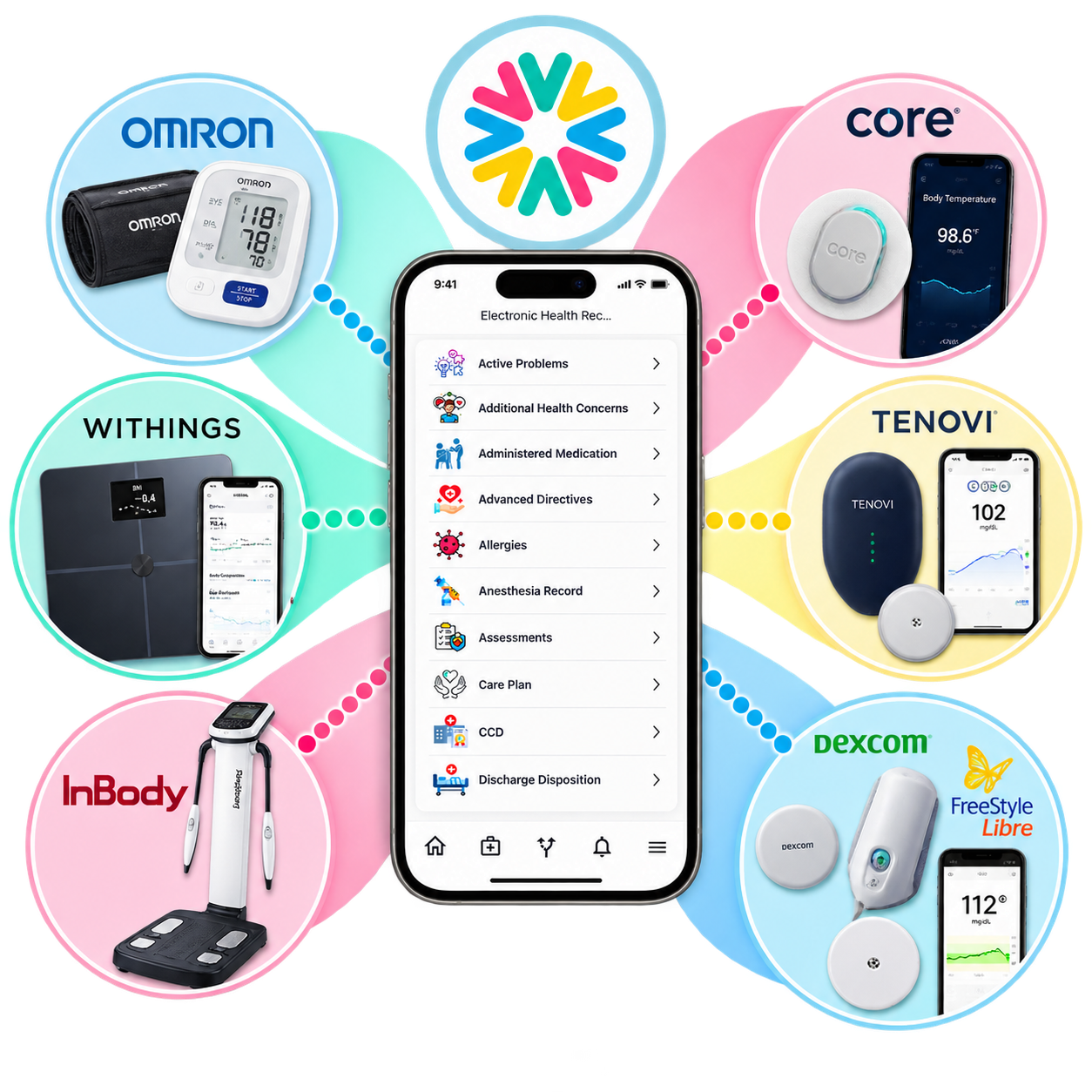
A modern platform pulls data from:
- Electronic health records
- Lab systems
- Wearables and remote monitoring devices
- Fitness and nutrition apps
- Medication trackers
- Behavioral health inputs
Instead of sifting through charts or logging into five systems, you get a single, unified view. That’s critical when managing chronic illness, coordinating care, or catching issues early. As discussed in recent research on laboratory testing’s role in value-based care, labs and diagnostics carry untapped potential when connected to the broader patient story.
2. Engage Patients Every Day, Not Just at Appointments
A platform should do more than store data it should talk to patients. That means:
- Medication reminders
- Daily vitals check-ins
- Health education
- Goal tracking
- Guided care plans
It’s not about micromanaging people. It’s about keeping them involved in their care, so they don’t fall off the radar. This kind of ongoing engagement is especially important for older adults, a population growing fast and increasingly reliant on virtual tools, according to reports on aging and venture capital investment in digital health.
3. Put Behavioral Health on Equal Ground
The mind-body connection isn’t a theory, it’s reality. Anxiety, depression, trauma, addiction these all shape a patient’s physical health. But behavioral health data often stays hidden from primary care.
A digital health platform should integrate mental health screenings, journaling, therapy check-ins, and behavioral care pathways into the same interface used for chronic disease. Not only does this improve outcomes, but it also helps providers address the root causes of noncompliance and readmission.
4. Provide Real-Time Alerts and AI-Driven Insights
The best platforms don’t just collect data they know what to do with it.
AI-powered platforms like Calcium use smart algorithms to:
- Flag abnormal trends
- Trigger alerts for missed medications or high-risk vitals
- Suggest adjustments to care plans
- Prioritize patients by risk level
Of course, AI has its critics. Some articles warn about overhyping machine learning without real-world value. But when AI is grounded in quality data and used transparently, it becomes a powerful ally, not a gimmick. Calcium’s approach to explainable, clinically validated AI meets that standard.
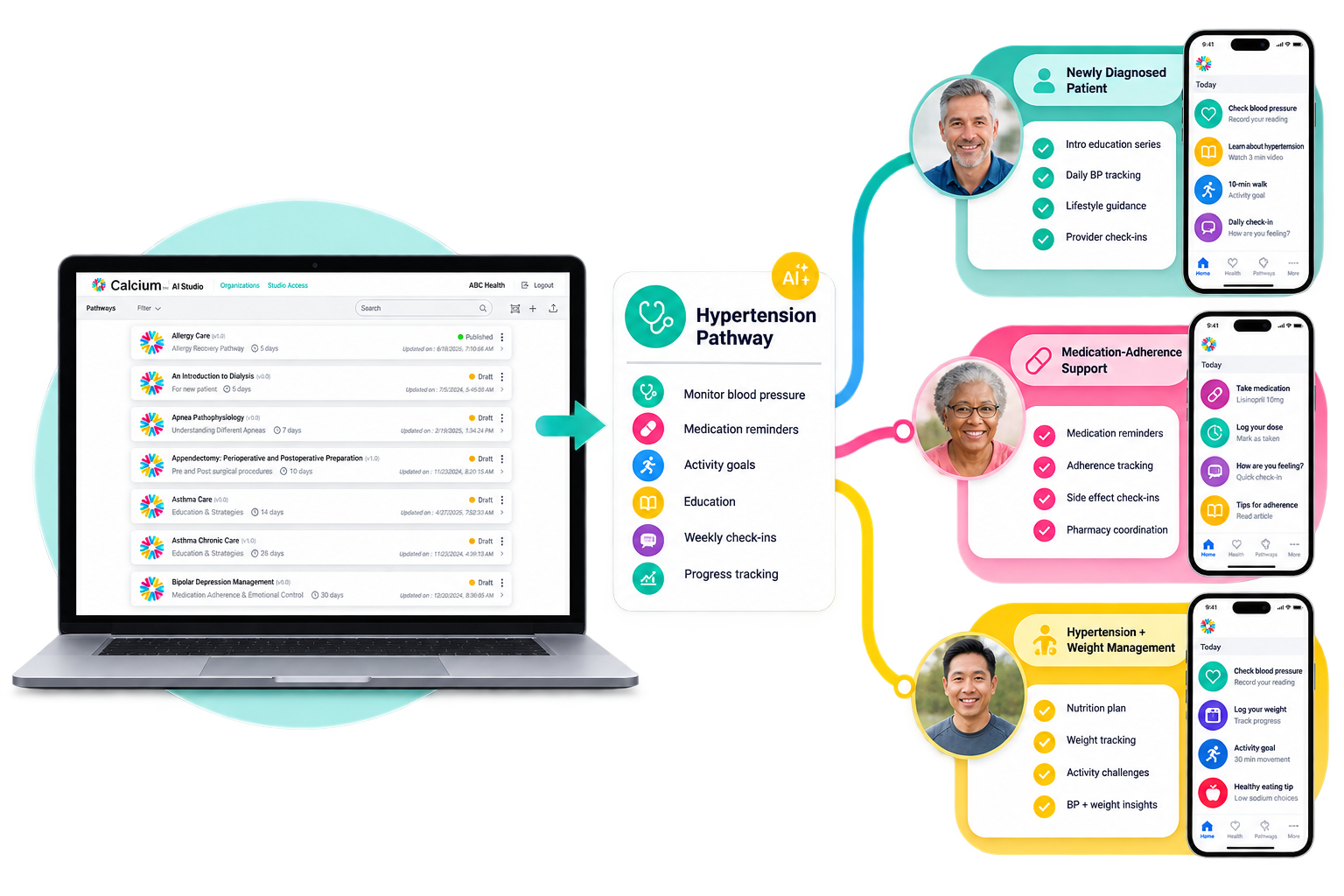
5. Deliver Personalized, Scalable Pathways
Every patient has different needs. What works for a 30 year old marathoner won’t work for a 70-year-old with heart failure and depression.
A digital platform should offer:
- Dynamic care plans that evolve based on patient data
- Education tailored to conditions and goals
- Built-in flexibility for providers to customize interventions
- Gamification and rewards to keep users motivated
With these pathways, you’re not just monitoring you’re coaching. And thanks to automation, you can scale that personalized support across thousands of patients.
The Business Case: Why It Pays to Get It Right
Let’s talk numbers.
When care is coordinated, patients stay healthier. That means fewer ER visits, hospital readmissions, and unnecessary procedures. It also means better quality scores and higher shared savings under value based contracts.
Here’s how a digital health platform drives ROI:
- Improved adherence to medications and care plans
- Fewer gaps in care through alerts and daily monitoring
- More efficient workflows with automated messaging and triage
- Higher satisfaction scores, which affect reimbursement
- Better risk stratification, helping prioritize limited staff resources
And let’s not forget the long-term brand impact. Organizations that offer seamless, connected, patient-centered care will earn loyalty, attract top talent, and position themselves as leaders in a competitive, outcomes driven landscape.
How to Choose the Right Platform for Your Organization
Not all digital health platforms are created equal. Before investing, make sure it checks the boxes that matter most in value-based care:
- Integrates with your EHR and lab systems
- Supports RPM and wearable data
- Includes behavioral health and chronic condition pathways
- Offers AI-driven insights and alerts
- Provides secure, HIPAA compliant data sharing
- Has a mobile-friendly patient interface
- Enables care team collaboration
If you’re still piecing together multiple tools to manage care, communicate with patients, and analyze performance, it’s time to consolidate. A unified platform brings simplicity, consistency, and most importantly better outcomes.
What Calcium Brings to the Table
Calcium isn’t just another health app. It’s a full digital health platform built specifically for the needs of value-based care organizations.
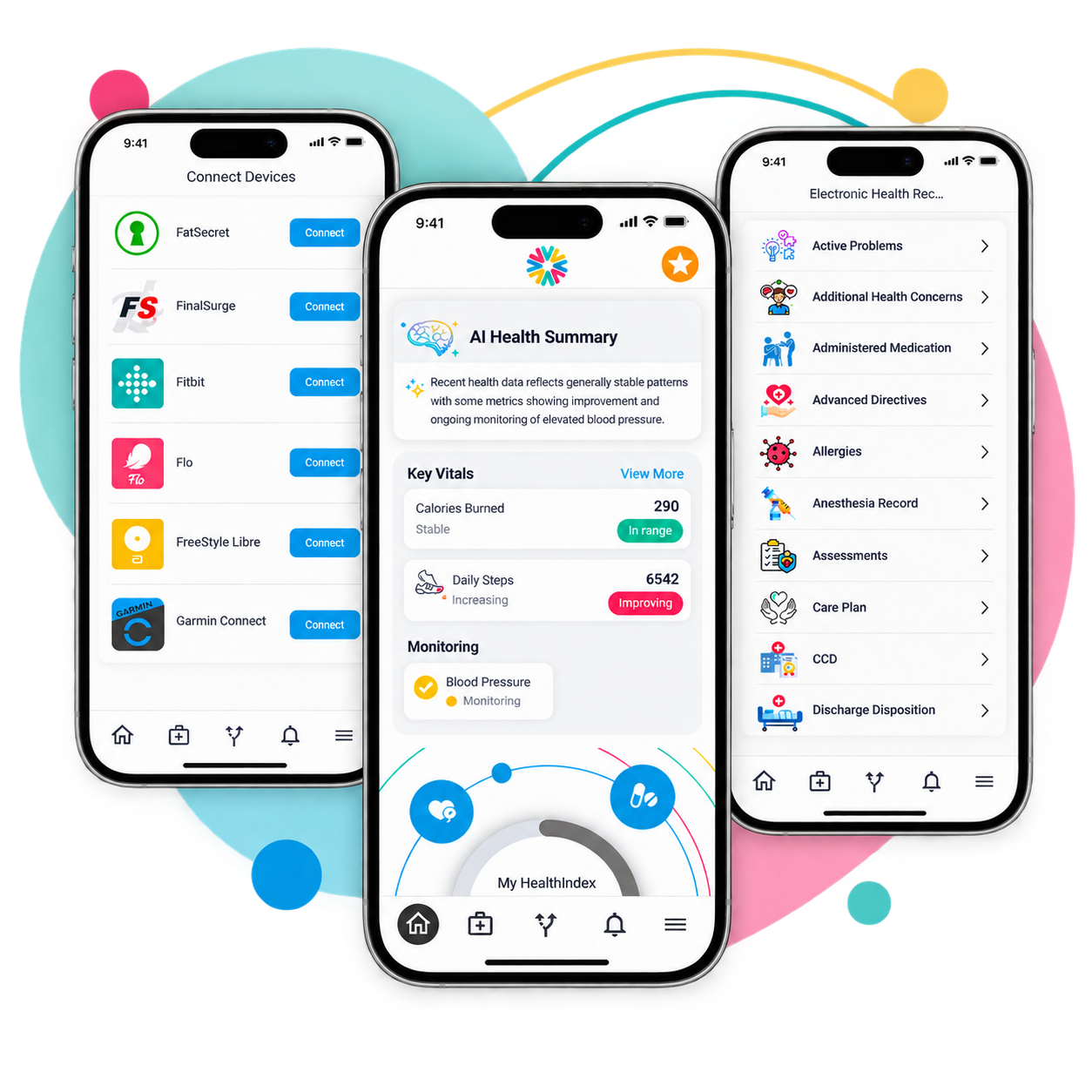
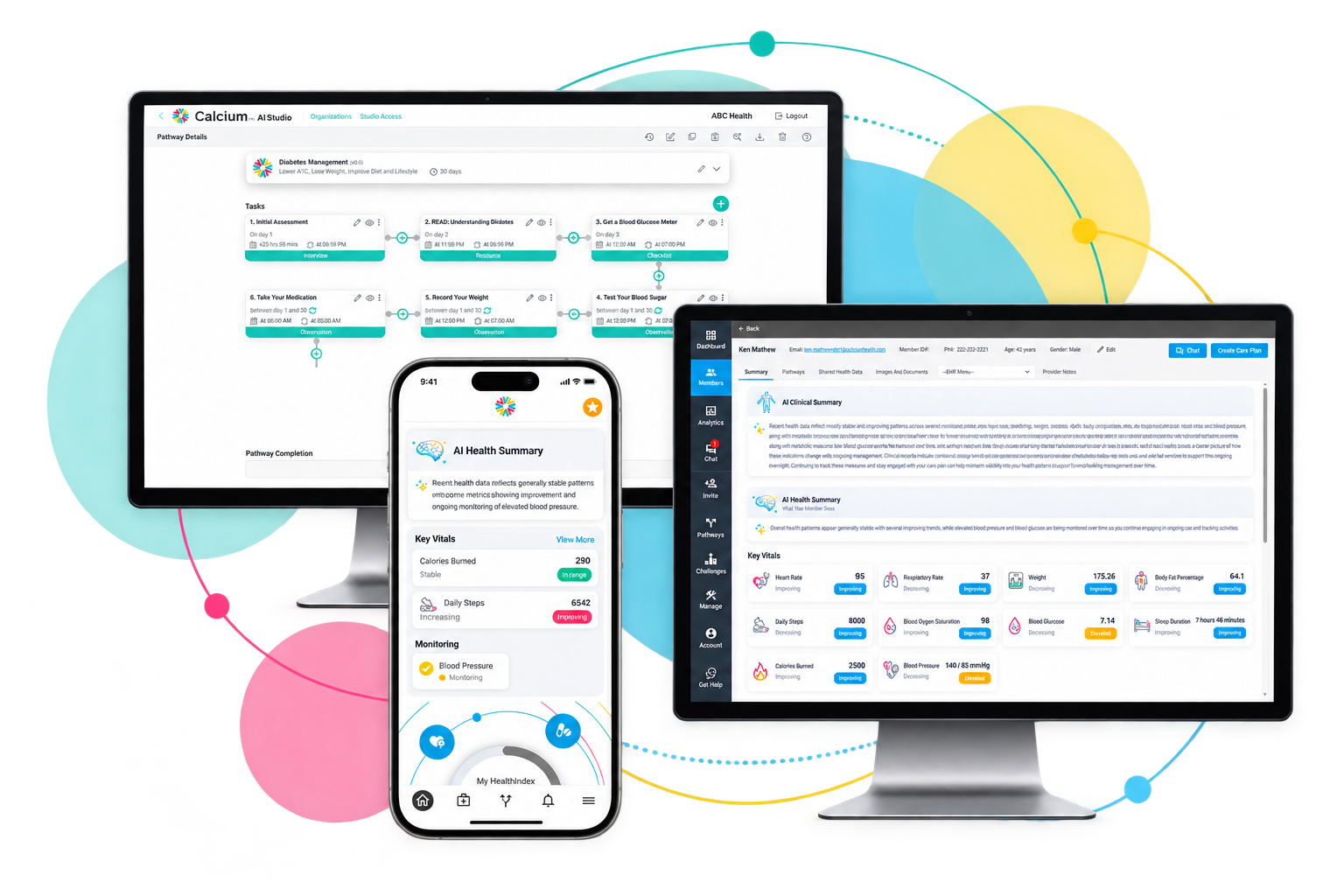
- The Calcium Super App gives patients tools to manage everything from vitals to meds to mood tracking right from their phone.
- The Calcium Core dashboard gives providers a live snapshot of patient health, trends, alerts, and risk levels.
- And Calcium AI Studio makes it easy to build and assign custom care pathways that guide patients 24/7.
Together, these tools offer a complete, connected system for improving outcomes and reducing the burdens on clinical staff.
The Wrap
Value-based care isn’t a future goal, it’s happening now. And the organizations that succeed will be the ones that stop relying on outdated systems and start investing in smart, scalable solutions. A digital health platform isn’t just a convenience anymore, it’s a necessity for delivering connected, coordinated, and cost-effective care.
Whether you’re managing a high-risk population, integrating behavioral health, or simply trying to keep patients engaged between visits, the right platform can make the difference between hitting your metrics and falling short.
Calcium’s digital health platform was built from the ground up to meet the real-world demands of value-based care. From AI-powered care pathways to real-time patient monitoring and seamless data integration, it’s everything your team needs to work smarter, not harder.
Reference
- Garcia, C. (2022, May). Creating New Value from Laboratory Testing and Services in Value-Based Healthcare: Investigating Data Monetization Strategies from Clinical Laboratories. Massachusetts Institute of Technology. https://dspace.mit.edu/bitstream/handle/1721.1/145165/garcia-cagarcia-sm-sdm-2022-thesis.pdf
- Kampmann, D. (2024). Venture capital, the fetish of artificial intelligence, and the contradictions of making intangible assets. Economy and Society, 1–28. https://doi.org/10.1080/03085147.2023.2294602
- Cohen, D., Hung, A., Weinberg, E., & Zhu, D. (2020, December 1). Healthtech in the fast lane: What is fueling investor excitement? McKinsey & Company. https://www.mckinsey.com/industries/life-sciences/our-insights/healthtech-in-the-fast-lane-what-is-fueling-investor-excitement