Why Connected Data Is the Key to Better Outcomes and Smarter Healthcare Decisions
In today’s fast-paced, data-driven world, healthcare still struggles with one basic problem seeing the whole patient.
Despite an explosion of digital tools and health data, too much of it lives in isolated systems that don’t speak to each other. Providers are left piecing together fragmented information while patients bounce between specialists, apps, and devices, often without anyone connecting the dots. And in value-based care, where outcomes matter more than ever, this fragmented picture isn’t just frustrating, it’s costly, risky, and unsustainable.
We don’t have a shortage of health data, we have a connectivity crisis. And until we fix it, providers will keep working with incomplete stories, and patients will keep slipping through the cracks. So how do we finally break down these silos and deliver truly connected, person-centered care? It starts with rethinking how we gather, share, and act on data—from every angle of the patient’s life
The Hidden Costs of Healthcare Data Silos
We talk a lot about innovation in healthcare, but here's the truth: most providers are still working with incomplete patient pictures. Why? Because their data lives in silos. EHRs that don’t talk to one another. Patient-reported data trapped in wearables or mobile apps. Lab results tucked away in disconnected systems. It’s like trying to solve a puzzle when half the pieces are missing.
These silos don’t just slow us down they hurt patients. Studies show that fragmentation in care can lead to duplicated tests, medication errors, and missed warning signs. One major study from Denmark even linked fragmented care with higher risks of inappropriate medication use and mortality, especially among patients with multiple chronic conditions.
When systems can’t connect, patients fall through the cracks.
Value-Based Care Requires the Full Picture
Value-based care is built on a powerful promise: better outcomes for less cost. But to deliver on that promise, providers need more than just lab values or clinic visit notes. They need to see the whole patient, including what’s happening between visits.
That includes:
- Physical health data like vitals and symptoms
- Medication adherence and prescription data
- Mental and behavioral health insights
- Lifestyle data from fitness or nutrition apps
- Social determinants of health like housing or food access
- Patient-reported outcomes and feedback
Think about managing a patient with diabetes and depression. If you’re only seeing blood sugar numbers, you’re missing half the battle. Mood, stress levels, sleep quality—these all play a role in glycemic control. But without a system to collect and synthesize all this data, it’s easy to misinterpret progress or miss a looming crisis.
What the Research Says About Fragmentation
Research backs this up. A qualitative study published in The Journal of General Internal Medicine found that both patients and providers identify fragmented data systems as a major barrier to quality care. They described frustration with disconnected records, repeat procedures, and poor coordination across teams.
Another study on big data in digital health emphasized that data volume alone isn’t enough. What matters is turning big data into smart data insights that are timely, relevant, and actionable. This is especially critical in primary care, where clinicians are already juggling full schedules and diverse patient needs.
And in the realm of AI, a comprehensive review of deep learning in healthcare highlighted two key things:
- AI can unlock powerful diagnostic and predictive tools
- But only if it’s trained on integrated, high-quality data from across the care continuum
Without full visibility into the patient’s world, AI becomes just another black box.
Calcium: Connecting the Dots to See the Whole Patient
This is where platforms like Calcium are changing the game.
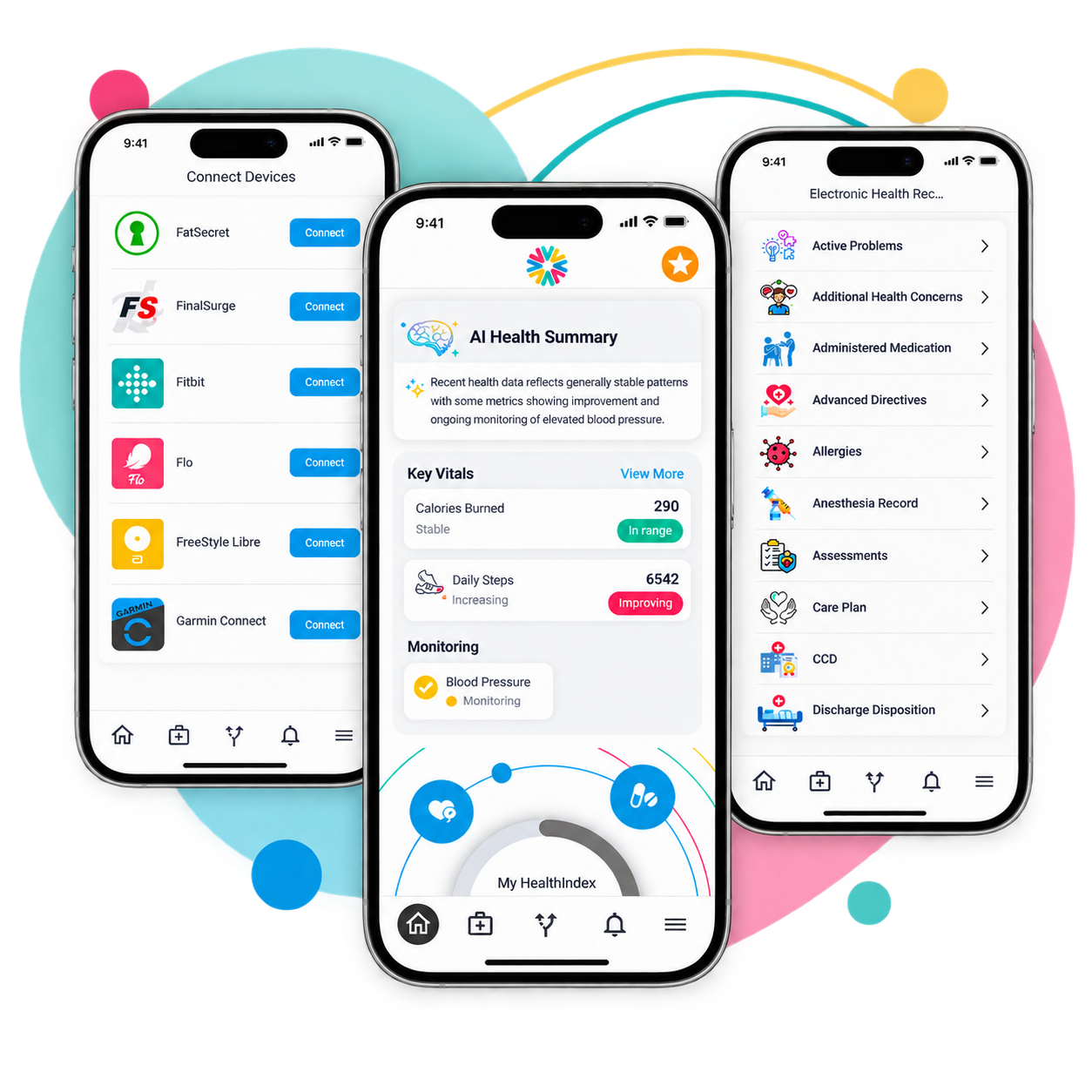
The Calcium digital health platform breaks down silos by pulling health data from nearly everywhere a patient interacts with care hospital records, primary care, fitness apps, smart devices, and even daily journals. It connects the dots so you can see trends, not just snapshots.
Here’s what makes Calcium different:
1. All-in-One Patient View
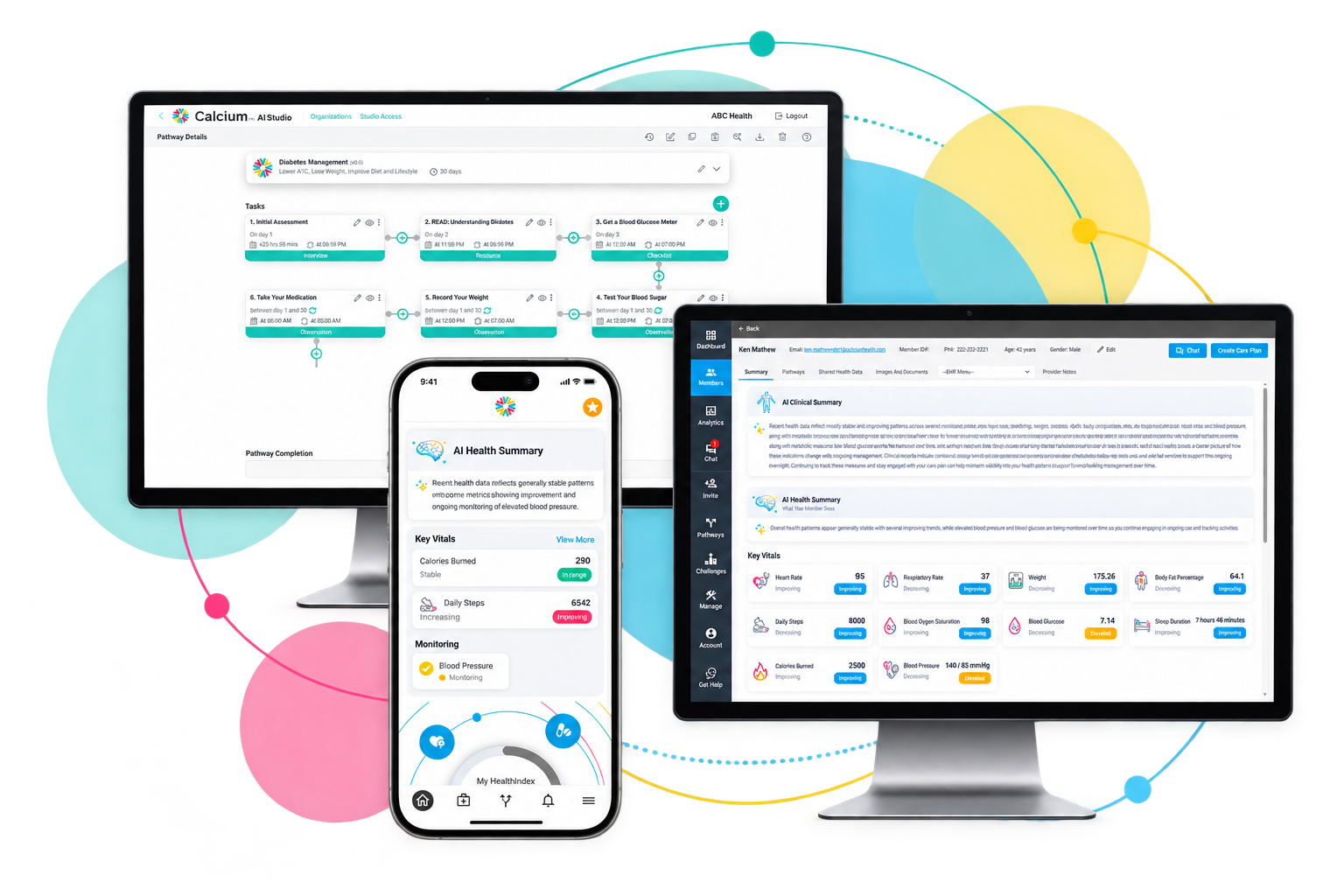
With Calcium, providers can access a 360-degree view of the patient right down to their step counts, sleep data, and medication intake. Instead of switching between platforms, all the insights live in one, easy-to-read dashboard.
2. Personalized, AI-Driven Pathways
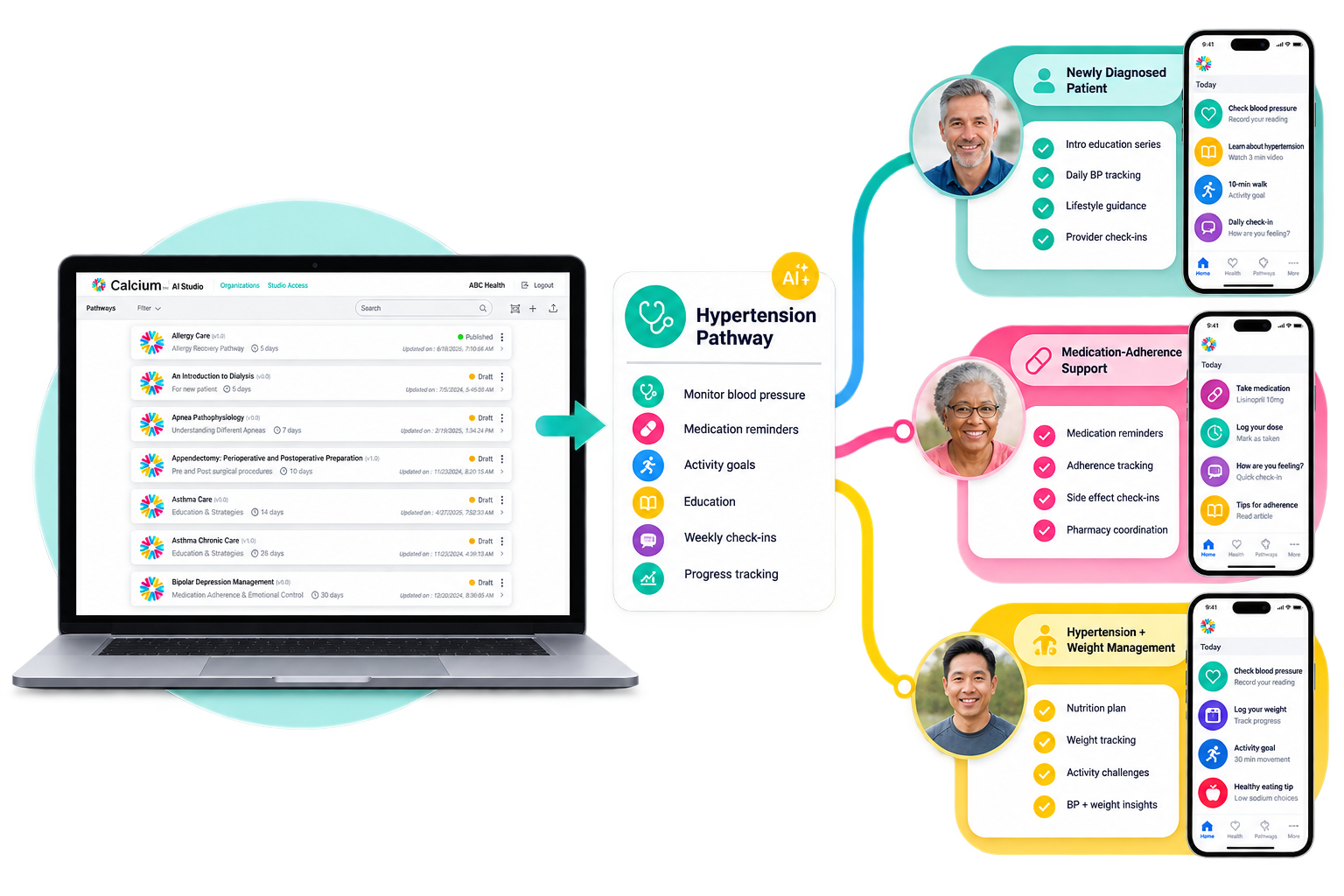
Patients aren’t just passively tracked they’re actively guided. Calcium’s AI-powered pathways adapt to real-time user data, offering reminders, education, and motivation. Whether it's managing hypertension or preparing for surgery, each pathway evolves with the patient’s needs.
3. Two-Way Engagement
Care shouldn’t be a one-way street. Calcium lets patients log how they feel, journal symptoms, and communicate with care teams directly through the app. Providers get alerts when something’s off and patients feel heard.
4. Medication & Device Integration
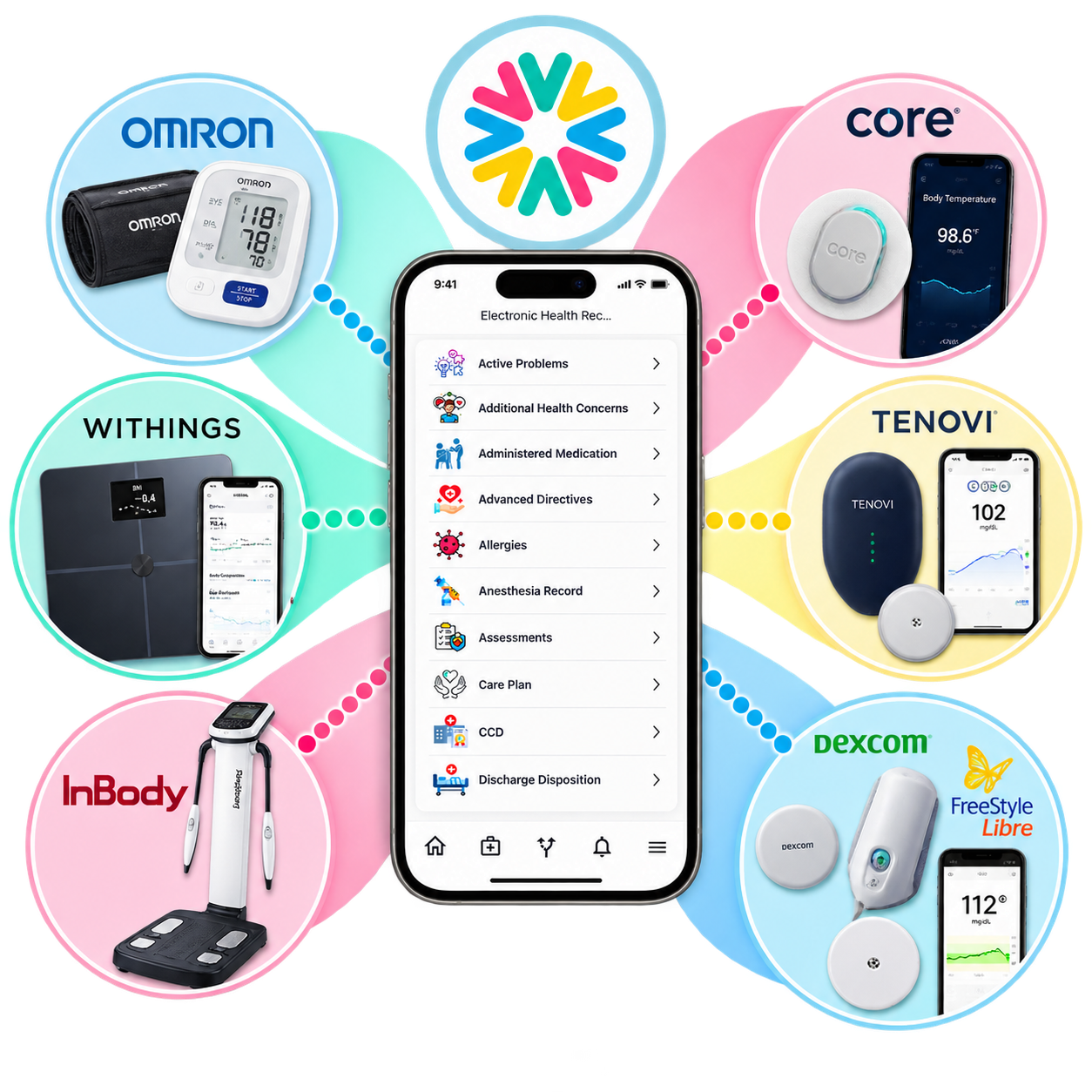
Medication adherence is a cornerstone of chronic disease management. Calcium helps users schedule reminders and track doses. It also integrates with blood pressure monitors, glucose sensors, and other at-home devices, offering real-time data flow back to the provider.
5. Behavioral Health in Focus
Many platforms ignore behavioral health, or treat it as an afterthought. Calcium makes it front and center. Patients can follow guided mental health pathways, track mood and stress, and get support for everything from anxiety to addiction.
Real-Life Use Cases in Chronic and Behavioral Health
Let’s put this into context. Imagine you're managing a patient with heart failure and anxiety. Traditionally, you'd rely on in-office vitals, maybe a phone call or two, and hope the patient followed instructions between visits.
Now, picture using Calcium:
- The patient logs weight and blood pressure daily with a connected scale and cuff.
- Their anxiety pathway reminds them to track mood and breathing exercises.
- The system notices their weight is up and mood is down and triggers an alert.
- You get that alert before their condition deteriorates, adjust their meds, and avoid a costly ER visit.
This is what precision, real-time, whole-person care looks like.
Beyond the Clinic: Supporting Caregivers and Families
Calcium also helps patients who aren't managing their health alone. Family caregivers can access health records, monitor pathways, and receive alerts for loved ones, all within the same platform. For aging parents with multiple conditions or children with behavioral needs, this level of access brings peace of mind and improves coordination.
In value-based models, where success depends on keeping patients healthier at home, this kind of support is essential.
Getting Ahead of the Curve
The future of value-based care isn’t just about reimbursement models or checklists. It’s about breaking down the barriers that prevent us from truly understanding and supporting the people we serve. That means seeing beyond the clinic walls—into the rhythms of daily life where most health decisions actually happen.
With platforms like Calcium, we’re not just collecting data, we’re translating it into actionable insight, personalized care, and better outcomes.
The future of value-based care depends on our ability to see patients as whole people not isolated data points. That means breaking down the silos that separate physical health from mental health, clinical records from daily habits, and providers from the patients they serve. It means moving beyond reactive care toward a connected, proactive, and personalized approach.
That’s exactly what the Calcium digital health platform is built to do. By unifying health data, empowering patients, and equipping providers with real-time insights and AI-driven guidance, Calcium helps healthcare teams close the gaps that have plagued care for too long.
Reference
- Miotto, R., Wang, F., Wang, S., Jiang, X., & Dudley, J. T. (2018). Deep Learning for healthcare: review, Opportunities and Challenges. Briefings in Bioinformatics, 19(6), 1236–1246.https://doi.org/10.1093/bib/bbx044
- Kern, L. M., Safford, M. M., Slavin, M. J., Makovkina, E., Fudl, A., Carrillo, J. E., & Abramson, E. L. (2019). Patients’ and Providers’ Views on Causes and Consequences of Healthcare Fragmentation in the Ambulatory Setting: a Qualitative Study. Journal of General Internal Medicine, 34(6), 899–907. https://doi.org/10.1007/s11606-019-04859-1
- Agrawal, R., & Prabakaran, S. (2020). Big data in digital healthcare: lessons learnt and recommendations for general practice. Heredity, 124(4), 525–534. https://doi.org/10.1038/s41437-020-0303-2
- Prior, A., Claus Høstrup Vestergaard, Vedsted, P., Smith, S. M., Line Flytkjær Virgilsen, Linda Aagaard Rasmussen, & Morten Fenger-Grøn. (2023). Healthcare fragmentation, multimorbidity, potentially inappropriate medication, and mortality: a Danish nationwide cohort study. BMC Medicine, 21(1). https://doi.org/10.1186/s12916-023-03021-3