How Smarter Tech and Patient-Centered Tools Are Reshaping Modern Healthcare Delivery
Value-based care isn’t just a buzzword anymore, it’s quickly becoming the standard by which providers are measured and paid.
But here’s the catch: delivering high-quality outcomes while controlling costs sounds great in theory, yet it’s far more complex in practice. From fragmented health records to inconsistent benchmarks, many organizations find themselves stuck in systems built for volume, not value. Meanwhile, patients demand more personalized care, and providers are burning out trying to keep up.
So how do we make value-based care work in the real world not just on paper? The answer lies in rethinking how we use technology. Not as a burden, but as a bridge between goals and outcomes. In this blog, we explore the top barriers holding value-based care back and more importantly, how smart digital health tools can help overcome them.
If you’re serious about thriving in today’s healthcare landscape, this is where the transformation starts.
Barrier #1: Disconnected Data Systems
Trying to deliver coordinated care with siloed data is like trying to complete a jigsaw puzzle with half the pieces hidden in other rooms. Providers need a full view but that’s nearly impossible when patient information is trapped in separate systems.
The Problem: Most EHRs don’t talk to each other. Claims data, lab results, device readings, and social history often live on different platforms. Even within the same organization, there can be major gaps.
Why It Matters: When systems can’t sync, providers can’t get real-time insights. That means duplicated tests, missed red flags, and patients falling through the cracks.
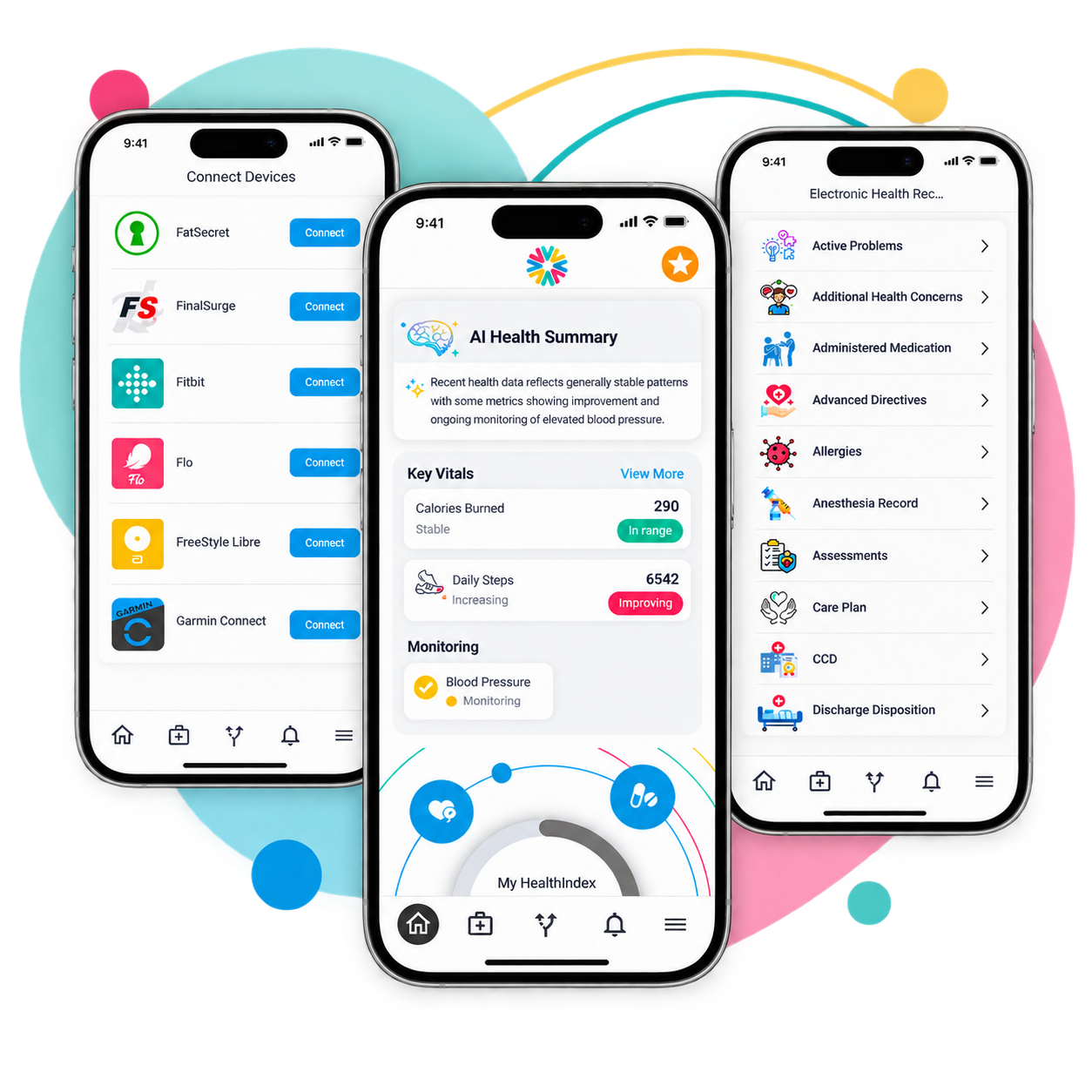
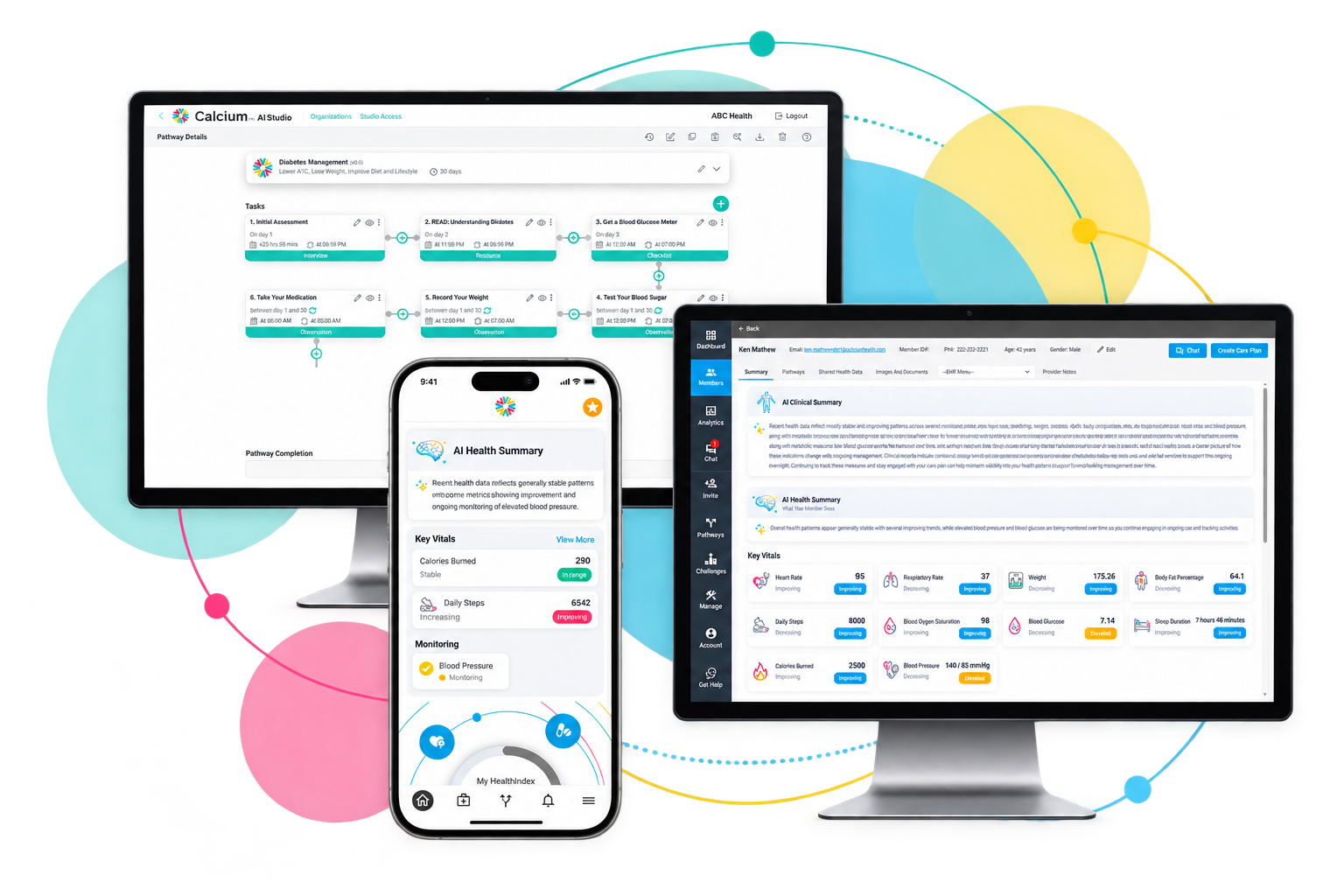
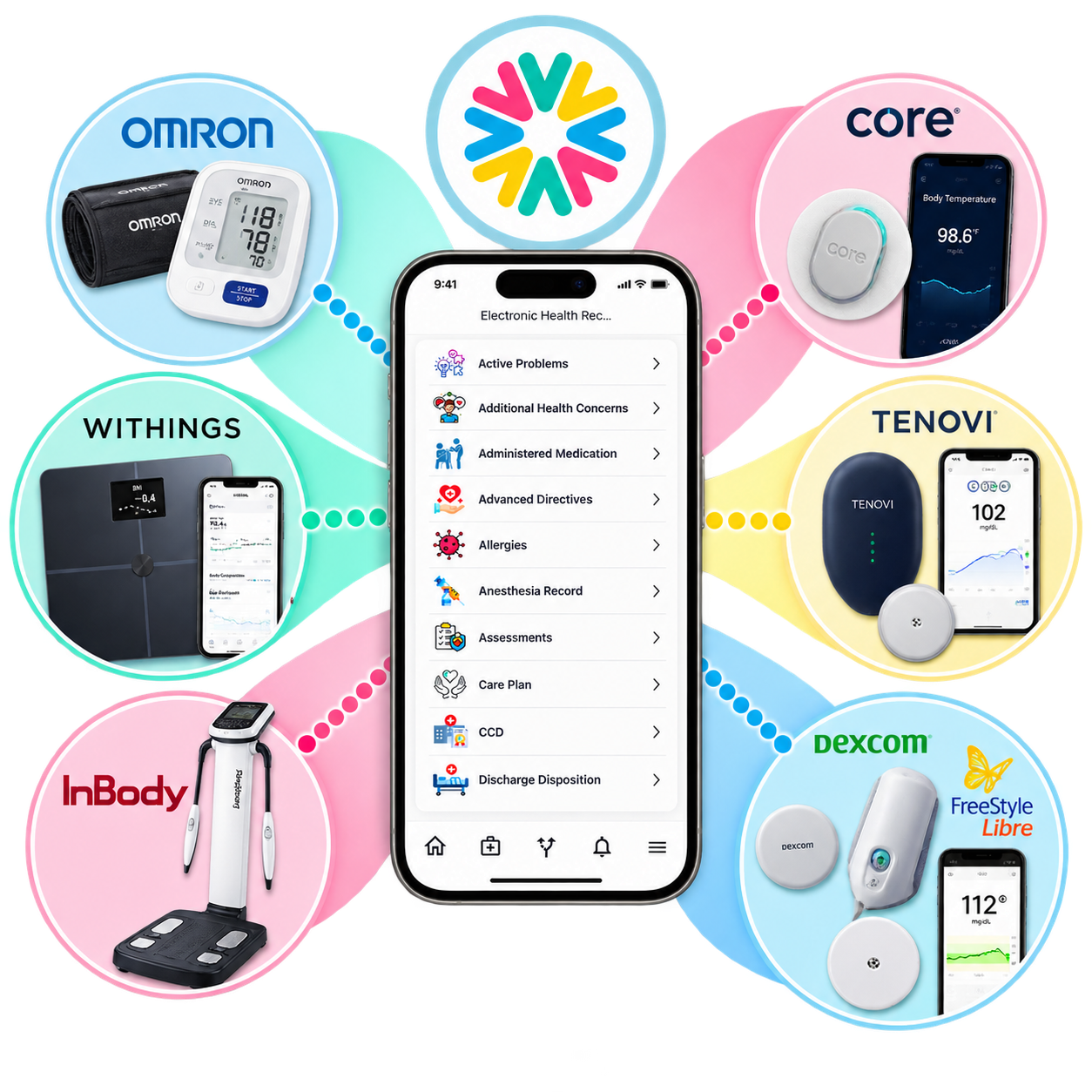
The Digital Fix: Tools like Calcium Core pull together data from EHRs, wearables, lab systems, and even wellness apps into one connected dashboard. With a 360-degree view of each patient, clinicians can deliver smarter, faster, and more personalized care. And the best part? It updates in real time.
Barrier #2: Unclear or Inconsistent Quality Metrics
How do you measure success when every payer uses a different yardstick?
- The Problem. In value-based care, payers want proof of “value.” But what that means isn’t always consistent. Some focus on readmission rates. Others care about patient satisfaction or blood pressure control.
- Why It Matters. This confusion leaves providers in a tough spot. Do you prioritize metrics for Medicare, or your largest commercial insurer? Without clarity, it’s hard to build workflows that align with all contracts.
- The Digital Fix. A smart analytics dashboard like the one in Calcium Core lets providers map performance metrics to specific payer contracts. You can track KPIs, measure outcomes, and see which targets need attention. That’s how you stop flying blind and start driving results that pay off.
Barrier #3: Low Patient Engagement Between Visits
Let’s face it, patients don’t always think about their care plans between appointments. Life gets busy, and unless someone’s checking in, health often slips to the back burner.
- The Problem. Without ongoing support, patients forget medications, skip exercises, or wait too long to report symptoms. They become passive passengers instead of active drivers of their health.
- Why It Matters. Value-based care hinges on consistent follow-through. Gaps between visits can lead to ER trips, readmissions, and worse outcomes—all of which drag down performance scores.
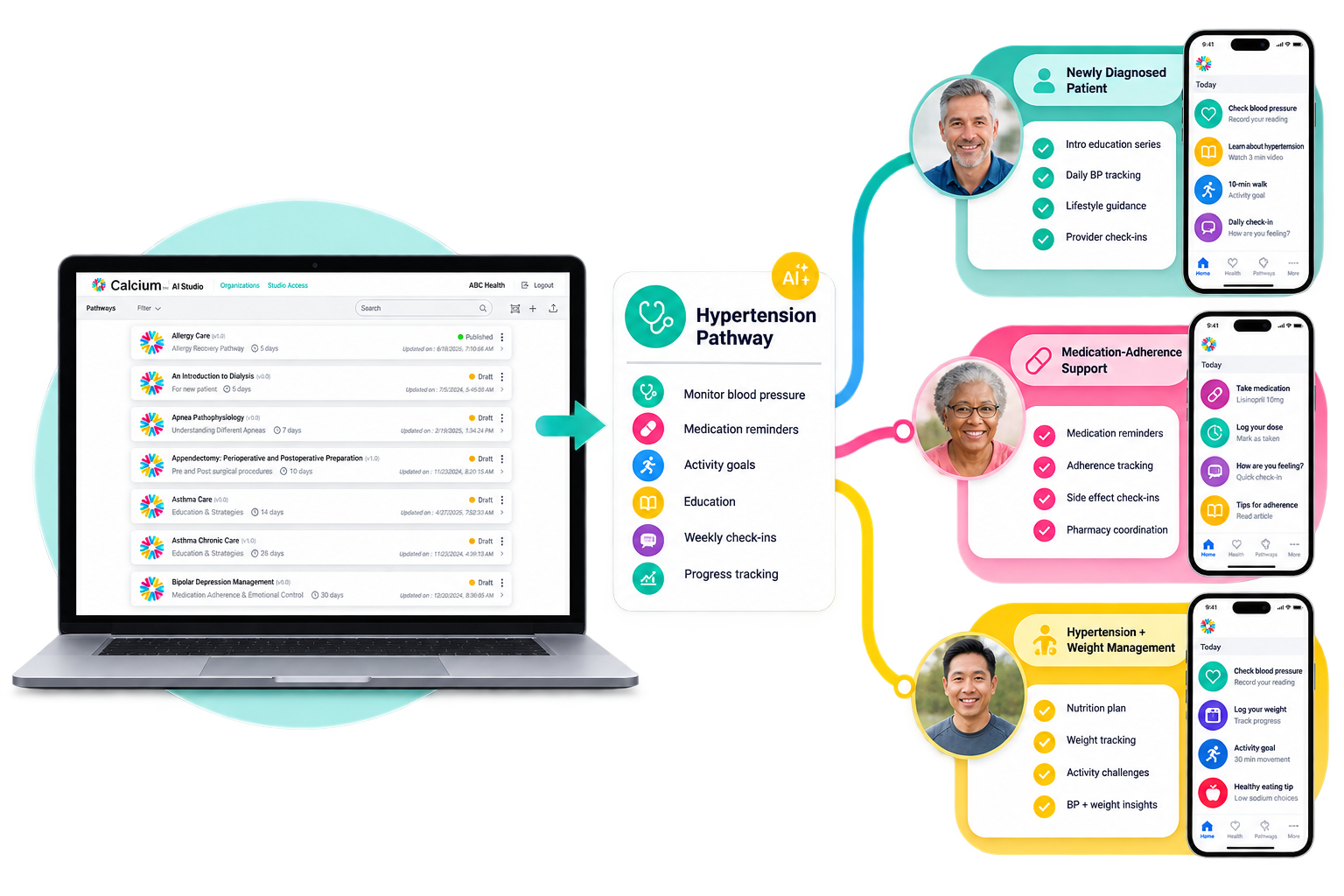
- The Digital Fix. The Calcium Super App keeps patients engaged through AI-powered digital pathways. These guided care plans offer daily prompts, symptom tracking, reminders, and motivational messages. Patients receive bite-sized, personalized actions they can take every day like texting with a health coach, only automated and always available.
Barrier #4: Limited Support for Social Determinants of Health (SDOH)
You can’t treat what you can’t see and that includes non-medical issues like food insecurity or housing instability that heavily influence outcomes.
- The Problem. Many providers want to address social determinants but lack tools to capture or act on that information. Traditional EHRs aren’t built to track whether a patient has stable transportation or enough groceries.
- Why It Matters. These factors affect everything from medication adherence to post-surgical recovery. Ignoring them creates blind spots in patient care—and can unfairly penalize providers under VBC contracts.
- The Digital Fix. Calcium’s platform offers built-in SDOH screeners and referral pathways. Patients can complete quick surveys through the app, flagging needs like housing support or financial stress. Providers get alerts and can assign follow-up tasks or connect patients to local resources—all tracked in the same system that monitors vitals and medications.
Barrier #5: Lack of Interdisciplinary Coordination
Value-based care works best when everyone—from the primary doc to the social worker is on the same page. But that’s rarely the case.
- The Problem. Specialists, therapists, pharmacists, and home health aides often operate in separate systems. They might never see each other’s notes, plans, or concerns.
- Why It Matters. This fragmentation creates delays, redundancies, and conflicting advice for patients. Worse, it can lead to missed complications or medication errors.
- The Digital Fix. Calcium’s provider-facing tools give care teams a shared workspace. Each provider can access real-time updates, assign care plan tasks, chat securely, and view patient-generated data, all in one HIPAA-compliant interface. No more phone tag or guesswork—just smart, streamlined care.
Barrier #6: Burnout and Resistance to Workflow Changes
If you’ve ever introduced a new tool in a busy clinic, you know this look. wide eyes, crossed arms, and the inevitable “Do we really have to learn another system?”
- The Problem. Clinicians are overwhelmed. Even when new tools promise better results, they often require extra steps, more logins, or awkward workarounds. That’s a nonstarter in fast-paced settings.
- Why It Matters. Burnout isn’t just a morale issue it’s a barrier to VBC success. If frontline staff don’t adopt the tech, it won’t help anyone.
- The Digital Fix. Calcium’s design prioritizes ease of use and workflow alignment. The platform offers:
- Role-based automation to reduce repetitive tasks
- Intuitive navigation for faster training and fewer clicks
- Real-time alerts that only show what matters
Instead of adding to the workload, Calcium’s tools shave minutes off routine tasks while giving back control to clinicians.
Barrier #7: Insufficient Tracking of Patient-Reported Outcomes (PROMs)
Vitals and labs tell part of the story but how patients feel, function, and experience care matters just as much.
- The Problem. Most systems overlook Patient-Reported Outcome Measures (PROMs). They prioritize what’s measurable in a lab, not how well a person’s actually living.
- Why It Matters. PROMs are increasingly tied to quality scores and payer bonuses. Plus, they help providers understand what’s working and what’s not from the patient’s perspective.
- The Digital Fix. Calcium integrates built-in PROM tools right into the Super App. Patients can log symptoms, complete quality-of-life surveys, and track progress through journaling all of which flows into the provider dashboard. It’s a more complete picture of patient health both clinical and experiential.
Real-World Use Case: From Chaos to Clarity
Let’s zoom in on a real success story.
A large primary care group in Texas was struggling with three major barriers: siloed data, low engagement, and no process for capturing PROMs.
Here’s what changed when they deployed the Calcium platform:
- Data Disconnection Solved. Using Calcium Core, they unified EHR, lab, and wearable data. Result: 22% fewer redundant labs in the first quarter.
- Patient Engagement Boosted. Over 700 patients were enrolled in digital pathways. Medication adherence rose by 35% and emergency visits dropped by 18%.
- PROM Integration. Patients logged daily feedback on fatigue, mood, and function. That info informed care adjustments and qualified the group for new payer incentives.
Their story proves it: Digital tools don’t just make value-based care easier they make it work.
Value-based care doesn’t have to be a constant uphill battle. With the right digital tools, the biggest barriers like disconnected data, low patient engagement, and workflow burnout become opportunities for smarter, more efficient care. It’s not about adding more to your team’s plate. It’s about giving them the right support to do what they do best: improve lives.
Platforms like Calcium were built for this very moment empowering providers with real-time insights, and patients with daily guidance that keeps them on track. If your organization is ready to turn vision into action, we invite you to explore how the Calcium digital health platform can accelerate your transition to value-based success.
Reference
- Goff, S. L., Gurewich, D., Alcusky, M., Kachoria, A. G., Nicholson, J., & Himmelstein, J. (2021). Barriers and Facilitators to Implementation of Value-Based Care Models in New Medicaid Accountable Care Organizations in Massachusetts: A Study Protocol. Frontiers in Public Health, 9. https://doi.org/10.3389/fpubh.2021.645665
- Bandurska, E., Ciećko, W., Olszewska-Karaban, M., Damps-Konstańska, I., Szalewska, D., Janowiak, P., & Jassem, E. (2023). Value-Based Integrated Care (VBIC) Concept Implementation in a Real-World Setting—Problem-Based Analysis of Barriers and Challenges. Healthcare, 11(8), 1110. https://doi.org/10.3390/healthcare11081110
- Reed, M. (2018) Examining Barriers to Expanding Innovative, Value-Based Care in Medicare. Testimony of Morgan Reed, executive director of the Connected Health Initiative, before the U.S. House of Representatives. . https://actonline.org/wp-content/uploads/2018-09-13-Testimony-CHI-House-EC-Health-Sub.pdf