Transforming Information Overload Into Streamlined, Patient-Centered Care
Healthcare data is exploding but can your practice actually use it to your advantage?
In today’s value-driven care environment, data isn’t just about compliance or recordkeeping anymore. It’s about survival. Providers are expected to deliver more personalized, preventive, and coordinated care while juggling tighter budgets, staffing shortages, and rising patient expectations. That’s a tough balancing act, especially when critical information is locked in disconnected systems or buried under layers of digital clutter.
The truth is, managing a modern healthcare practice without a clear data strategy is like trying to fly blind. You might be collecting the right numbers, but if you can’t turn them into action, you're just spinning your wheels.
The good news? You don’t need more data you need smarter tools to make sense of the data you already have. And that starts with understanding where the breakdowns happen, and how to fix them.
You’d think with all the data we’re collecting in healthcare from EHRs and labs to smartwatches and symptom trackers, we’d be delivering better, faster, more personalized care. But ask most providers and you’ll hear the opposite. They’re overwhelmed, not empowered.
We’re in a paradox. There's more healthcare data than ever before, yet it often fails to translate into better outcomes or smarter operations. Instead of delivering insights, this data frequently sits in silos, locked behind firewalls or trapped in unreadable formats. Practices are drowning in numbers but starved for meaning.
So what’s going wrong? And more importantly, how can practices unlock the true power of healthcare data to improve workflows, care delivery, and patient outcomes?
Let’s start by breaking down the core challenges.
7 Challenges Blocking the Full Potential of Healthcare Data
Despite all the advancements in digital health tools, healthcare data continues to underdeliver in everyday practice. Here are the top seven reasons why:
1. Data Fragmentation Across Systems
Every provider, specialist, and facility a patient sees leaves a digital footprint often in a different EHR, app, or health portal. These disconnected sources rarely sync, leaving you with an incomplete picture. It’s like trying to read a novel where half the chapters are missing.
This fragmentation leads to repeated tests, delayed decisions, and frustrated patients. Dr. Ambinder’s research highlighted just how disjointed and burdensome it can be for providers trying to piece together data in high-acuity settings like oncology.
2. Lack of Interoperability
Even when systems do talk to each other, they often speak different “languages.” Kalra’s work on interoperability explains how inconsistent data structures strip health information of clinical meaning during transfers. Without standards like HL7 or FHIR in place, valuable insights get lost in translation.
Interoperability shouldn’t just mean “can you send it?” It should mean “can you actually use it once it arrives?”
3. Inconsistent Data Quality
It’s hard to trust data when it’s outdated, duplicated, or riddled with gaps. Incomplete medication histories. Lab results that never made it into the chart. Vitals recorded under the wrong patient file. Sound familiar?
Low-quality data isn’t just annoying, it’s a liability. It can lead to missed diagnoses, prescription errors, and non-compliance with care protocols.
4. Limited Real-Time Access
In most EHRs, the only time new data gets entered is during or after a visit. But what about the 99% of the time when the patient isn’t in the exam room?
Chronic conditions don’t wait for appointment slots. Real-time health data from wearables, smart devices, and home monitoring tools offers a continuous view of what’s happening but if your system can’t accept that input, you’re missing the full story.
5. Low Patient Engagement and Ownership
Patients generate data daily, yet most don’t know where their health records are or how to access them. According to Hoerbst & Ammenwerth, a lack of patient empowerment is one of the biggest failures in today’s EHR systems.
When patients don’t understand or control their data, they become passive observers instead of active partners in their own health.
6. Security and Compliance Concerns
Healthcare data is highly sensitive, making it a prime target for breaches. Many practice management tools still lack robust encryption, role-based access controls, or transparent audit logs. That’s not just a privacy issue, it’s a compliance risk.
You can’t build a data-driven strategy on a shaky foundation. Patients must trust that their data is protected, or they won’t use your digital tools.
7. Data Without Clinical Context
Not all data is helpful. In fact, too much unfiltered data can actually hurt decision-making. Ambinder noted that oncology providers often feel buried in data that lacks relevance or timeliness. It’s like looking for a needle in a haystack made entirely of other needles.
Clinicians don’t need more data. They need smarter data presented in a way that supports decisions, not distracts from them.
What Practices Need from Healthcare Data Tools Today
If we want to fix these challenges, we need to rethink what we expect from our health data platforms. It’s not enough to capture information. Systems must help providers and patients use it.
Here’s what a modern healthcare data solution should offer:
- Unified Records. A single, comprehensive view of each patient integrating EHRs, lab results, device data, and patient-reported outcomes
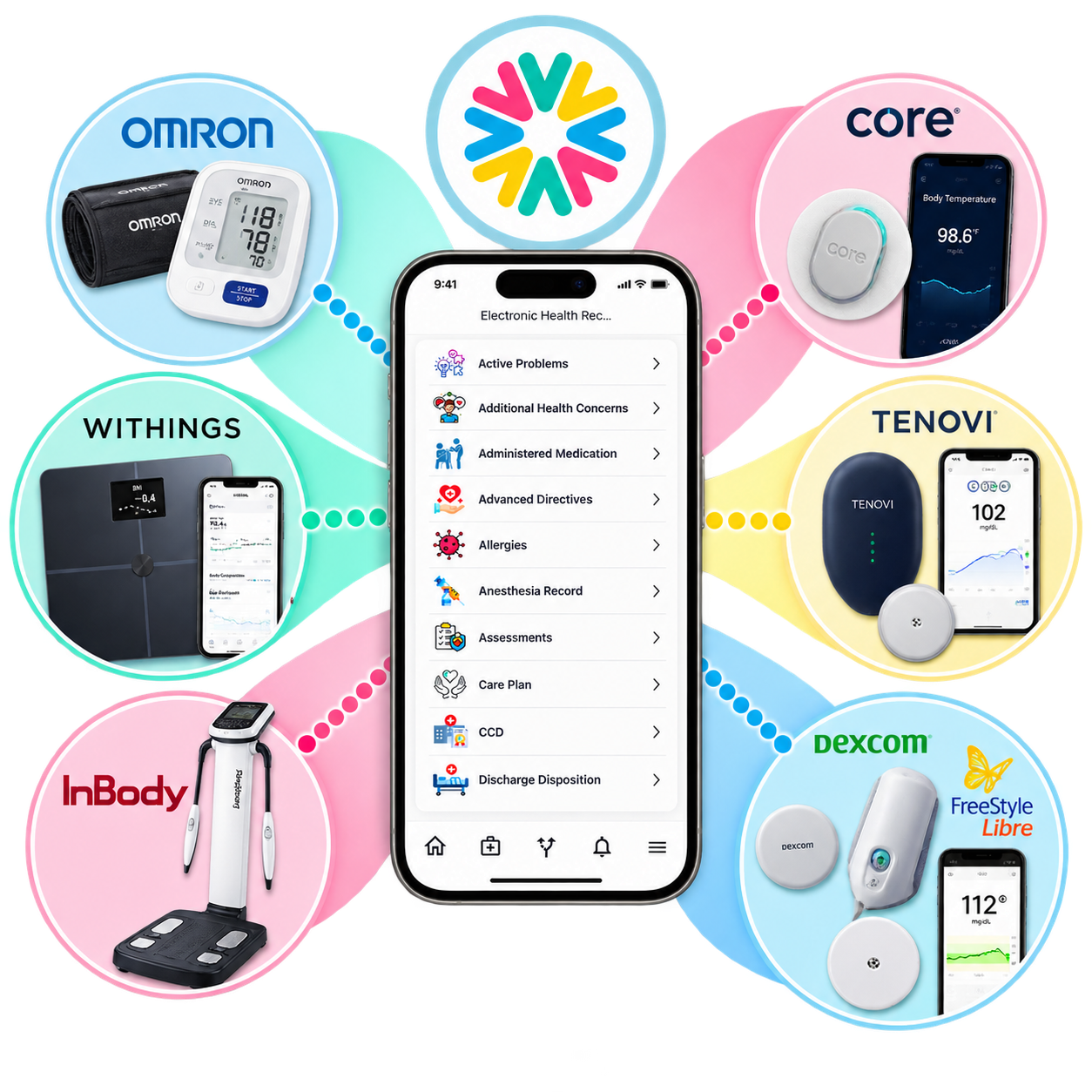
- Real-Time Syncing. Seamless integration with wearables, glucose monitors, and other smart tools to keep data current
- Smart Dashboards. Filtered, prioritized insights that help providers act quickly not scroll endlessly
- Patient Empowerment Tools. User-friendly apps that let patients access and share their data, track progress, and participate in care planning
- Built-in Security. Role-based access, HIPAA compliance, and audit logs to protect privacy and build trust
- Clinical Relevance. Alerts, trends, and care pathways based on real data not guesswork
How Calcium Solves the Healthcare Data Puzzle
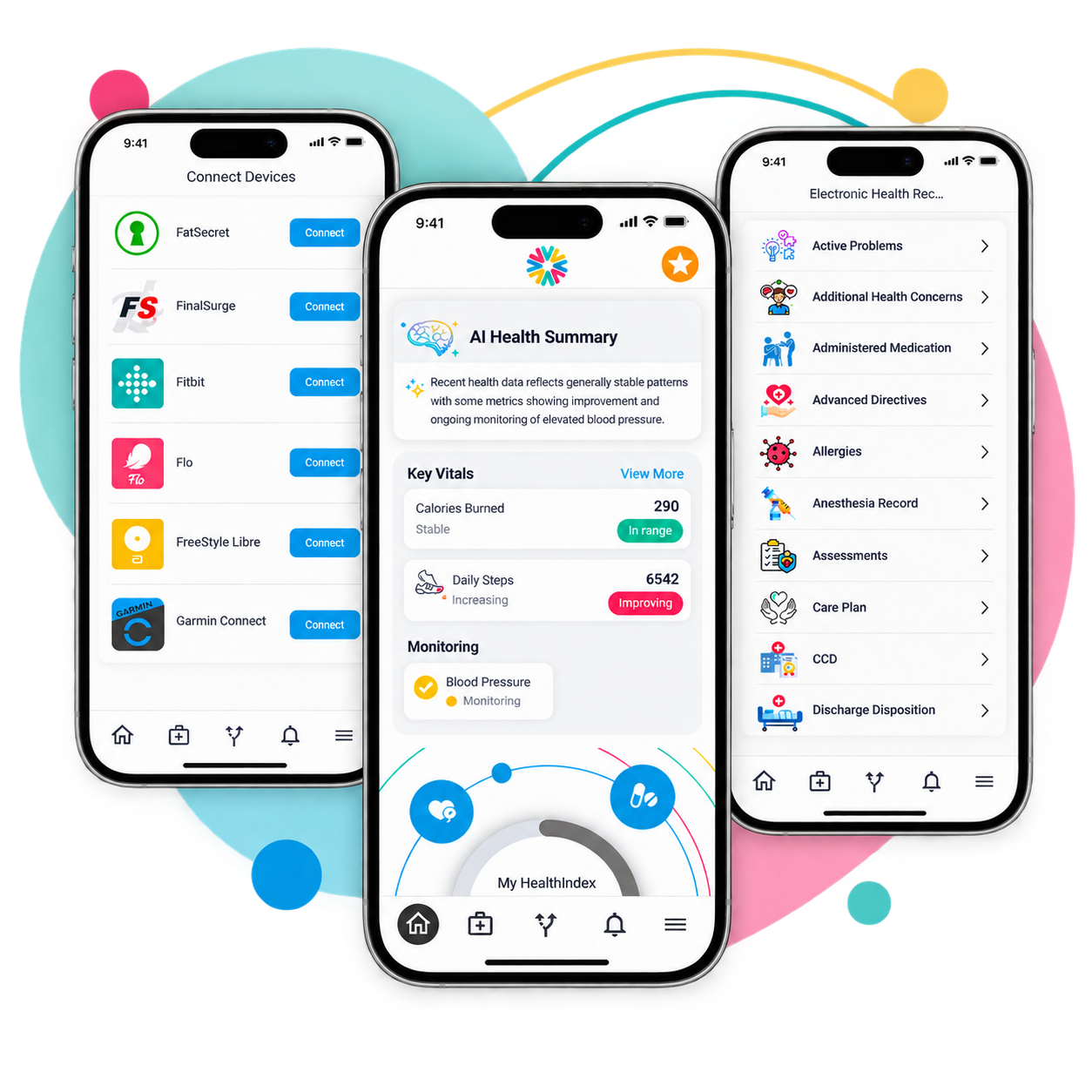
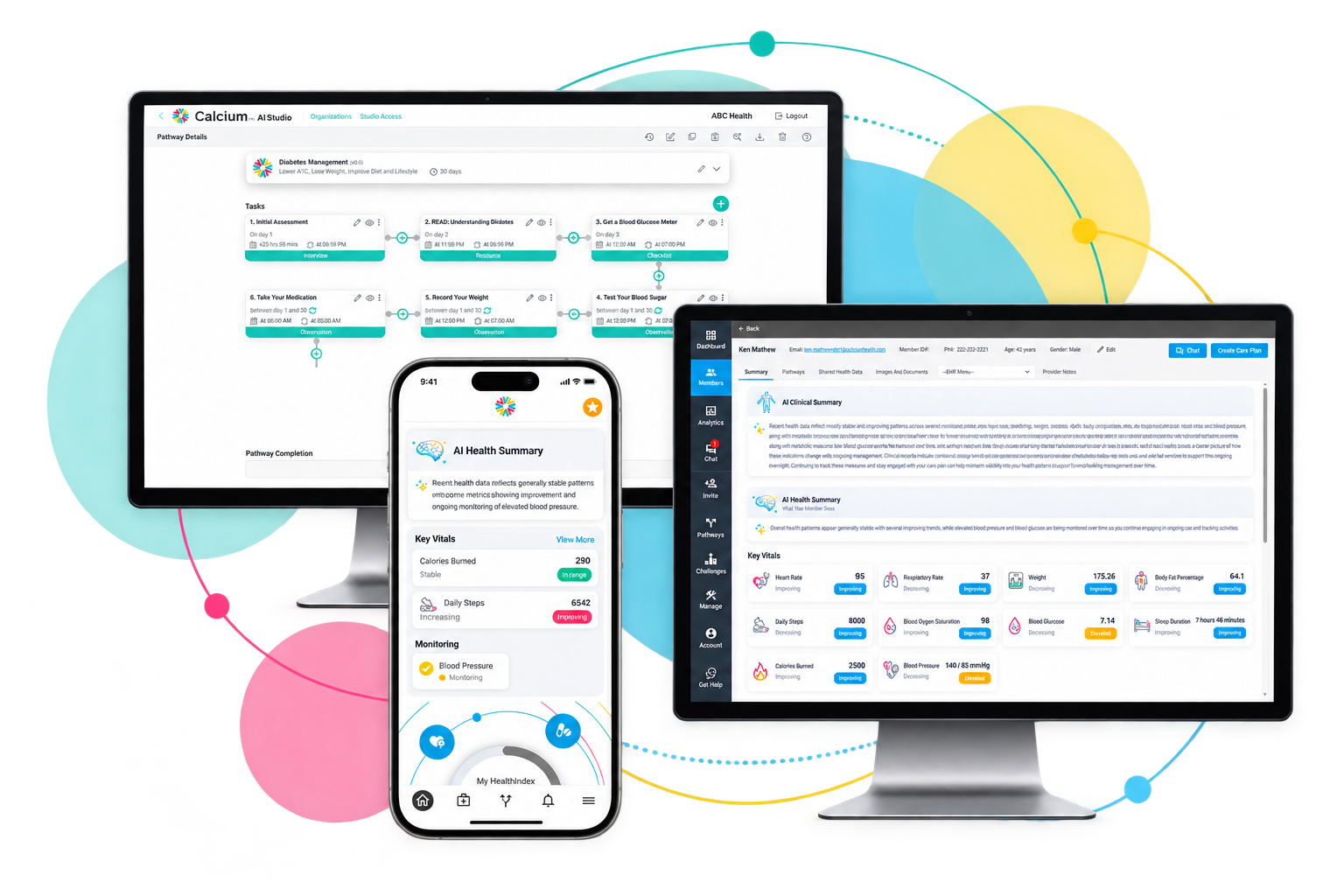
Enter Calcium a digital health platform that was built to solve these exact problems. Rather than replacing your existing EHR, Calcium works alongside it to bring fragmented healthcare data together in one secure, intelligent platform.
Here’s how Calcium tackles the top seven challenges:
- Eliminates Fragmentation by connecting to over 95% of U.S. health systems, labs, and imaging centers
- Delivers True Interoperability using HL7 and FHIR standards for seamless sharing between providers and platforms
- Improves Data Quality with clean, structured dashboards for meds, vitals, labs, and conditions no clutter, no duplicates
- Enables Real-Time Insights by syncing with Apple Health, Fitbit, Omron, Dexcom, and more
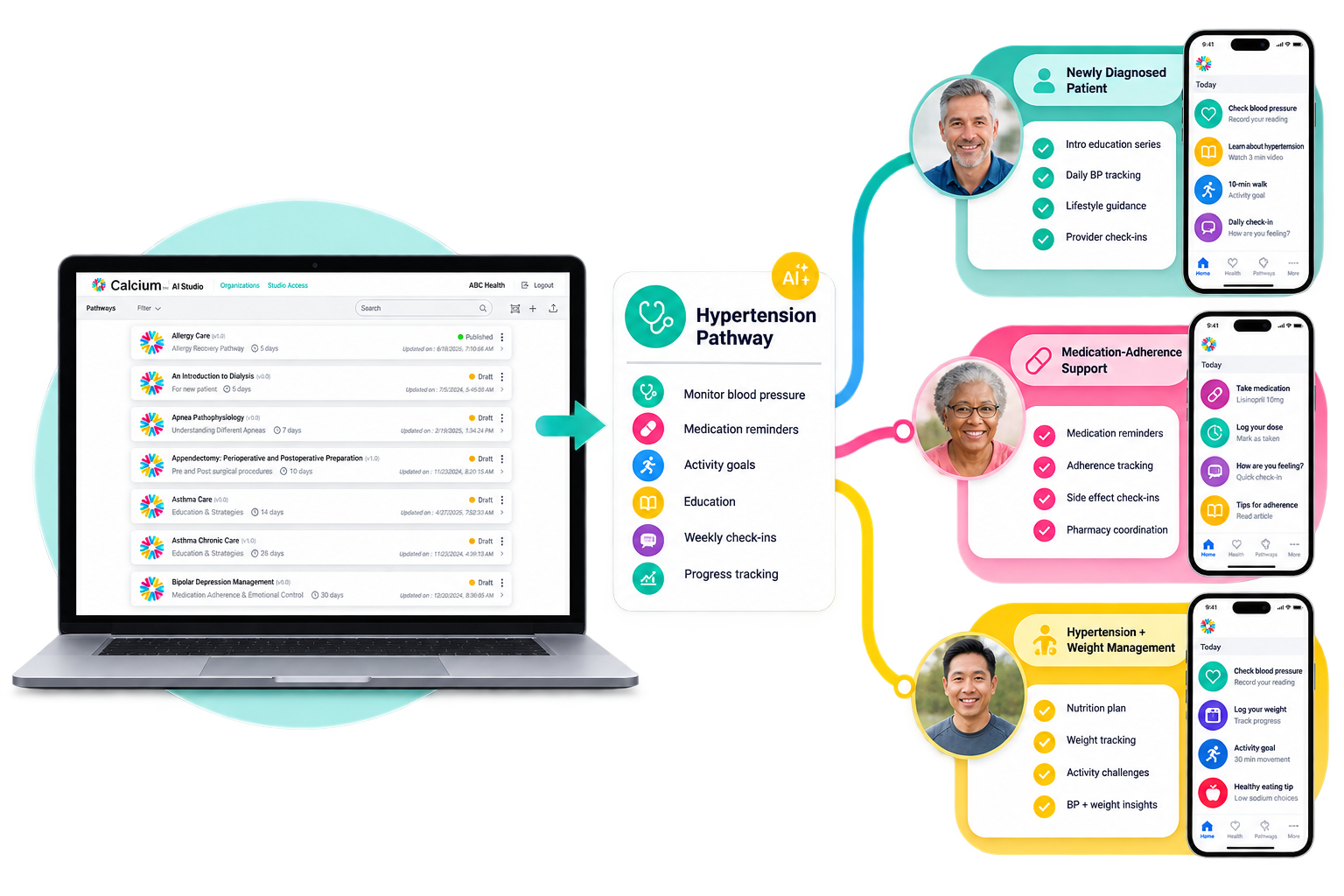
- Empowers Patients through the Calcium Super App, where users can access their records, track symptoms, and enroll in personalized digital care pathways
- Secures Data with end-to-end encryption, audit logs, and full patient control over sharing and access
- Delivers Clinical Context by organizing data into actionable insights that support treatment decisions and care team collaboration
And for providers? Calcium Core offers a robust dashboard to monitor patient trends, assign pathways, receive alerts, and stay proactive instead of reactive.
Smarter Data = Smarter Practice Management
Managing a practice means managing more than just appointments and billing. It means managing information quickly, securely, and meaningfully. Healthcare data should be a strategic asset, not a logistical burden.
When organized correctly, data helps providers detect issues early, coordinate care better, reduce no-shows, improve medication adherence, and enhance the entire patient experience. In short, it helps you run a better practice.
With tools like Calcium, you can finally move from fragmented systems and static records to connected care and real-time action.
The Wrap
Healthcare data shouldn’t be a burden, it should be your most powerful ally. When organized, accessible, and actionable, it empowers providers to work smarter, engage patients more deeply, and deliver care that’s timely and truly personalized. The challenge isn’t collecting more data, it’s making better use of the data you already have.
Platforms like Calcium are built for this moment. Whether you're managing chronic care, improving operational efficiency, or aligning with value-based care goals, Calcium gives you the tools to unlock clarity from complexity. It doesn’t replace your EHR, it completes it.
From seamless integration to secure sharing and real-time insights, Calcium helps transform scattered information into a unified care experience for both providers and patients.
Reference
- Kalra D. (2006). Electronic health record standards. Yearbook of medical informatics, 136–144. https://pubmed.ncbi.nlm.nih.gov/17051307/
- Ambinder E. P. (2005). A history of the shift toward full computerization of medicine. Journal of oncology practice, 1(2), 54–56. https://doi.org/10.1200/JOP.2005.1.2.54
- Hoerbst, A., & Ammenwerth, E. (2010). Electronic health records. A systematic review on quality requirements. Methods of information in medicine, 49(4), 320–336. https://doi.org/10.3414/ME10-01-0038
- Häyrinen, K., Saranto, K., & Nykänen, P. (2008). Definition, structure, content, use and impacts of electronic health records: A review of the research literature. International Journal of Medical Informatics, 77(5), 291–304. Elsevier Ireland Ltd. Retrieved from https://doi.org/10.1016/j.ijmedinf.2007.09.001