Empowering Patients, Enhancing Care, and Embracing the Future of Health Data Access
Would you feel comfortable flying blind? Probably not—and yet, that’s often how healthcare operates when patients don’t have full access to their own medical information. In an era where we can track every step, monitor heartbeats in real time, and video chat with providers from our phones, it’s surprising how many people still struggle to see their complete health story.
The truth is that today’s patients expect more.
They want transparency, control and a seamless experience managing their care. And that includes having a personal electronic medical record (EMR) they can actually use and understand. As healthcare shifts toward value-based models and patient empowerment, giving individuals access to their own health data isn’t just a nice-to-have—it’s essential.
But how do you offer that access without overwhelming your practice or your patients? That’s the question smart clinics are starting to ask—and the answer starts with rethinking how we use digital tools.
What Is a Personal EMR, Really?
When people talk about accessing their health records, they usually mean a personal EMR—a digital record they can see, control and carry across providers. Unlike the traditional EHR systems used by clinics and hospitals, a personal EMR is meant to live with the patient. Think of it as a digital health passport, something that travels with them wherever they go in the healthcare system.
It includes everything from doctor’s notes and medication lists to lab results, immunizations, allergies, and vitals. In more advanced systems, it might even include wearable data, symptom logs or guided care plans. But what makes a personal EMR powerful isn’t just the data—it’s the access and ownership it gives to the patient.
The Top Challenges of Offering Personal EMR Access
So, if the benefits seem obvious, why isn’t personal EMR access more widespread? The truth is, giving patients this level of transparency and control still comes with some real-world friction.
Here are the most common challenges practices face when considering this shift:
1. Fragmented Data
Most patients receive care from multiple providers—primary care, specialists, urgent care, pharmacy, lab centers—you name it. Without a centralized system, their data is scattered and disconnected. As one study noted, EHR systems still struggle to sync with each other, often using different formats and standards that don’t translate well across systems.
2. Limited Interoperability
Even when patients want to share their records, the systems often don’t talk to each other. Kalra’s research emphasized that most EHRs are structurally incompatible, making it hard to maintain the clinical meaning of shared data. In other words, the message gets lost in translation.
3. Inconsistent Data Quality
Not all health data is created equal. Some information comes from verified clinical sources, while other data might be entered manually by the patient or collected from consumer-grade devices. Without validation tools and consistent training, data quality can vary—and that creates risk.
4. Clunky User Experience
Most EHR systems were designed for billing or documentation, not for patients. That leaves users stuck with outdated portals that are hard to navigate and even harder to understand. Ambinder’s frontline research in oncology clinics found that even physicians were overwhelmed by poor design and lack of functionality. Imagine how a non-clinician feels.
5. Privacy and Security Concerns
People are rightfully cautious when it comes to their medical data. If you’re giving patients more control over their personal EMR, you need to be able to guarantee top-tier encryption, audit logs and access permissions. Anything less opens the door to breaches or mistrust.
6. Information Overload
Giving someone access to their full record doesn’t always lead to better understanding. Without context or guidance, personal EMRs can feel more confusing than empowering. Patients might misinterpret test results or worry unnecessarily over benign findings.
7. Provider Pushback
There’s a fear that personal EMR access could create extra work for providers. Will patients flood the office with questions? Will you spend hours correcting misunderstood lab results? These concerns are valid, especially in already time-strapped practices.
Why It’s Time to Say Yes to Patient Access
Despite these challenges, there’s a growing consensus that personal EMRs are worth the effort. Why? Because patients are no longer passive recipients of care. They want to be active participants—and giving them access to their own records is one of the best ways to support that shift.
Here’s what your practice can gain by embracing personal EMR access:
- Higher patient satisfaction: Transparency builds trust, and patients appreciate providers who empower them with information.
- Better care outcomes: Studies show that engaged patients are more likely to follow care plans, manage chronic conditions and report symptoms early.
- Reduced duplication: When patients can share their complete history, it prevents redundant tests or prescriptions.
- Improved caregiver support: Personal EMRs allow family members or health proxies to monitor treatment, meds and appointments more effectively.
- Stronger behavioral health collaboration: When patients log symptoms, moods or triggers, therapists gain a richer understanding of what’s happening between visits.
So yes—offering access to personal EMRs can absolutely add value. But only if the system is built right.
How Calcium Makes Personal EMRs Easy, Secure and Scalable
The Calcium digital health platform was designed with these challenges in mind. It bridges the gap between legacy EHRs and modern patient expectations—without requiring a major overhaul of your workflows.
Here’s how it solves the common roadblocks…
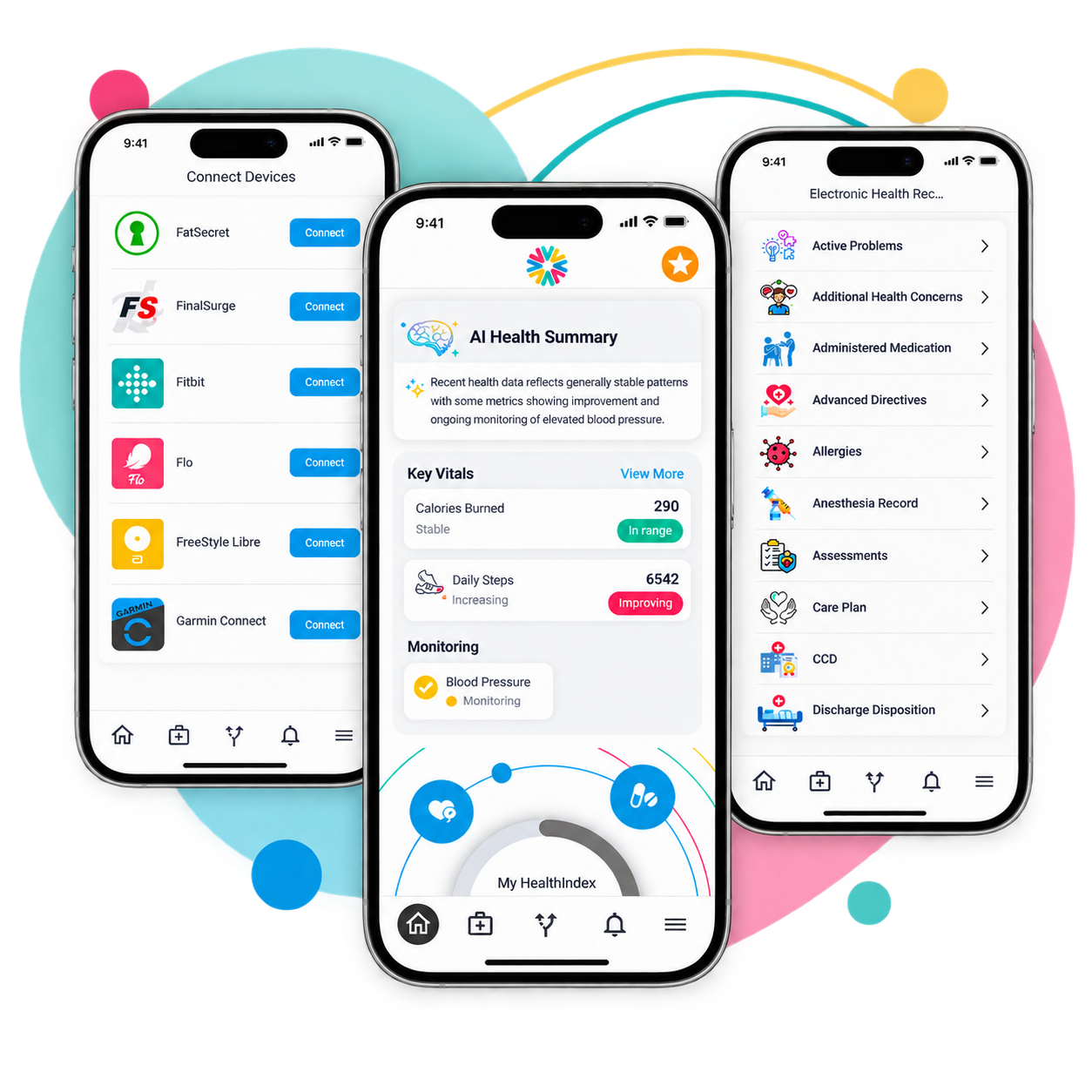
Unified Data, All in One Place
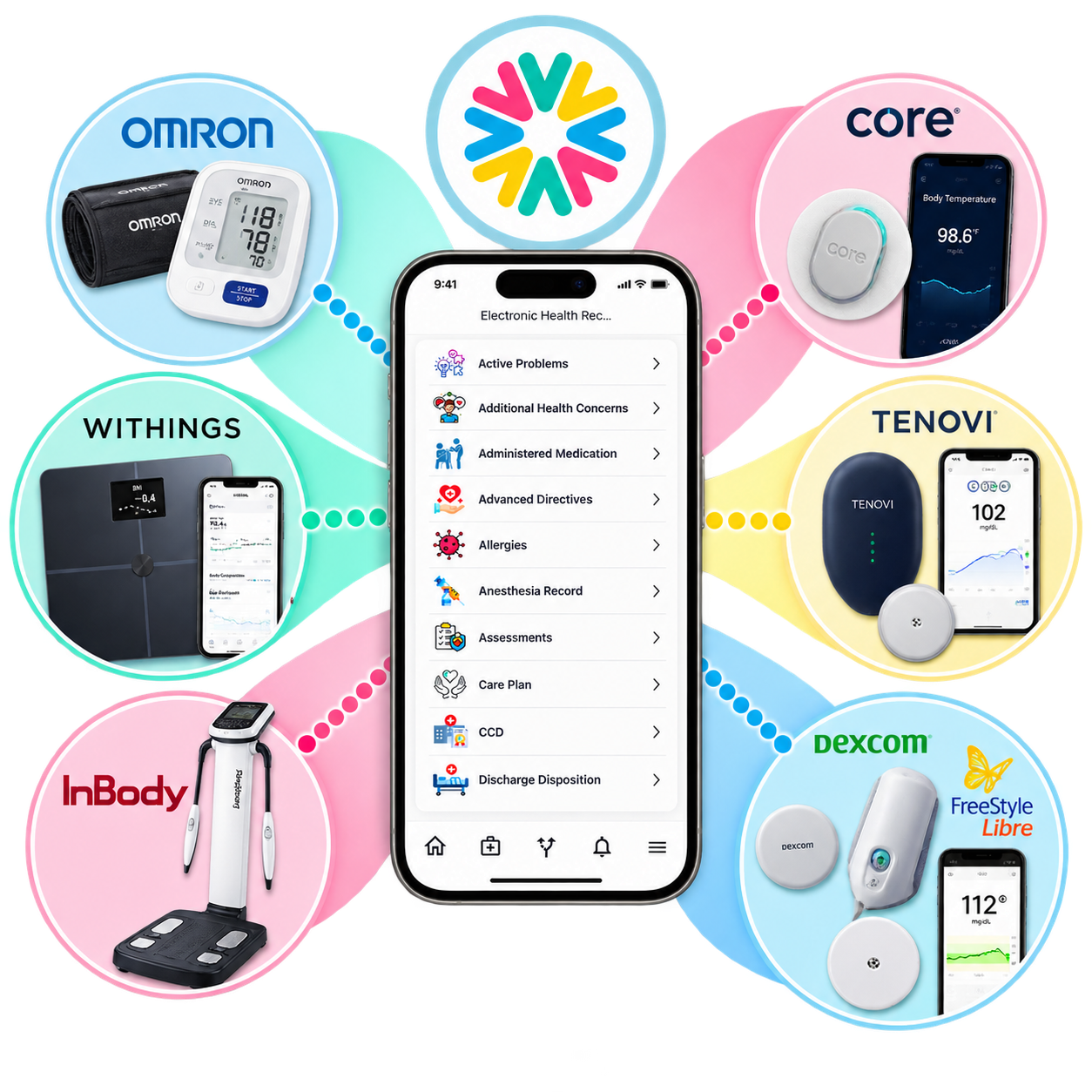
Calcium connects with over 95% of U.S. health systems, labs, and medical groups using national standards like HL7 and FHIR. It pulls together records from multiple providers and formats them into a single, structured health record that’s organized by condition, date and context.
So instead of flipping through PDFs and trying to decode abbreviations, patients see a clean, intuitive summary of their health.
True Interoperability and Real-Time Syncing
Whether it’s lab results, medication changes, or home-monitored vitals, Calcium keeps everything updated in real-time. It also syncs with Apple Health, Fitbit, Dexcom, Omron and dozens of wearables, making it easy to see what’s happening both inside and outside the clinic.
This combination of EHR data and real-world inputs offers what traditional systems can't: a living, breathing health record.
Secure, Patient-Controlled Sharing
Patients can choose exactly what they want to share and with whom. They can grant access to a specific provider, caregiver or family member—without handing over their entire record. And since Calcium is HIPAA-compliant with role-based access, security is built into every interaction.
Guided Pathways for Context and Action
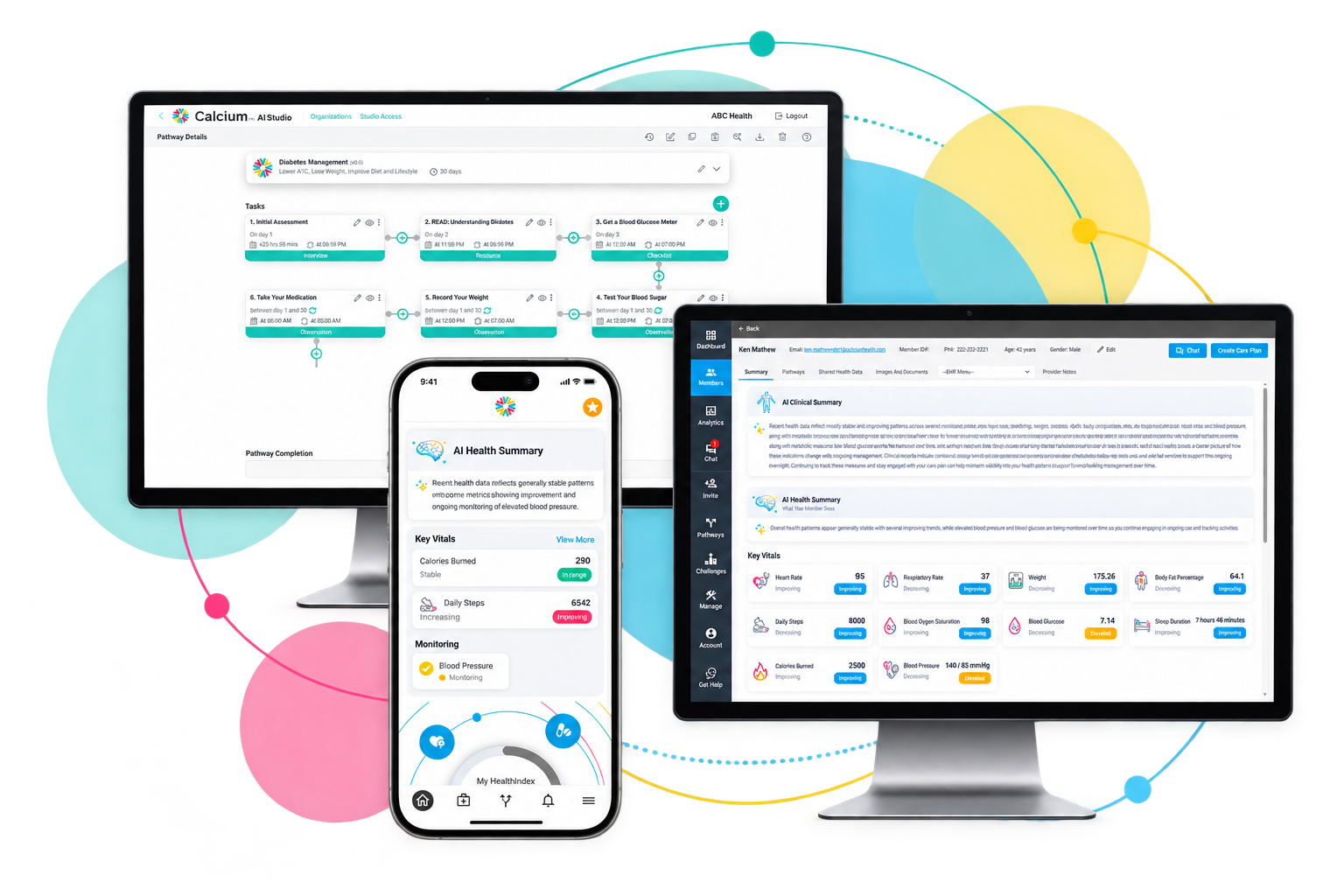
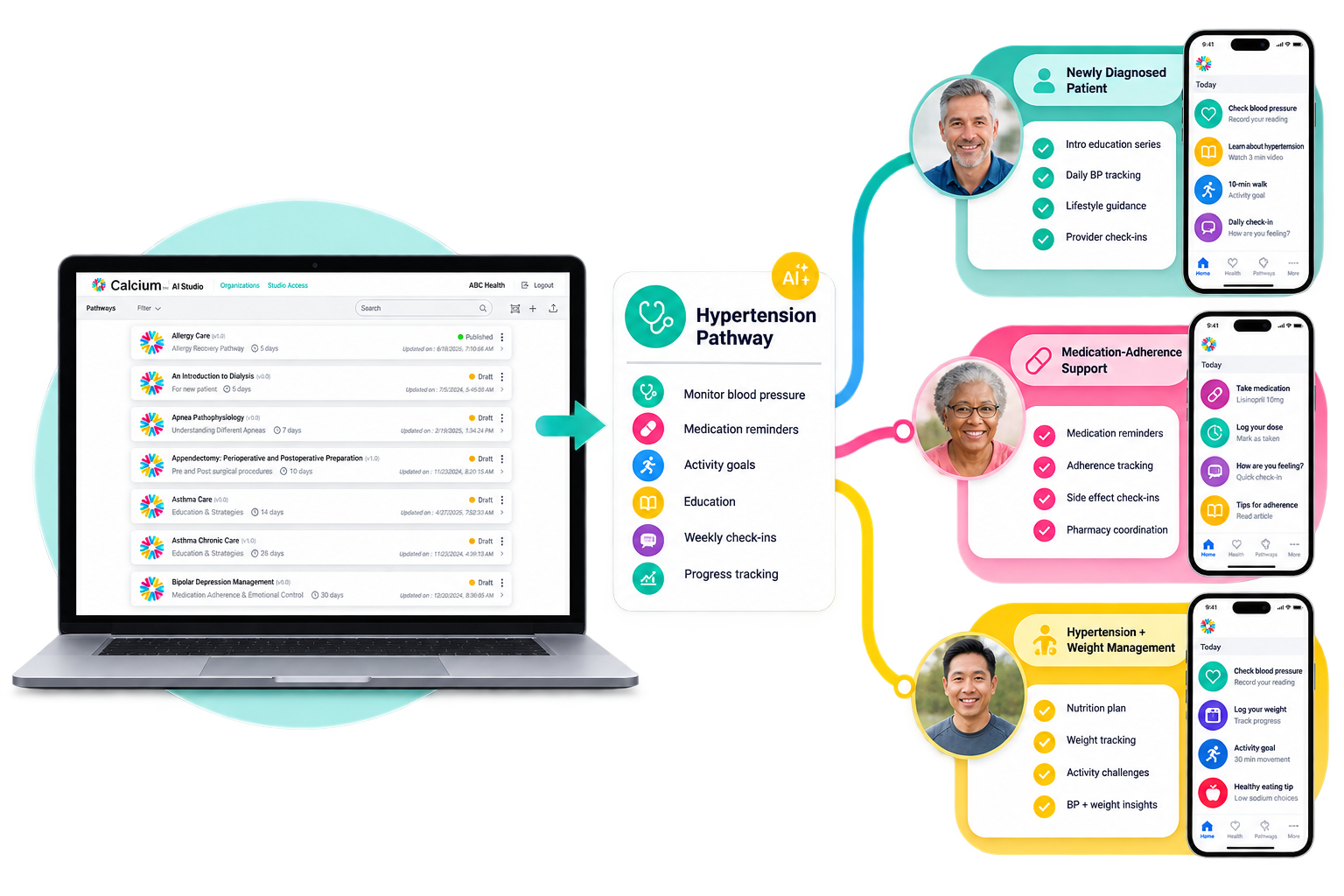
Calcium doesn’t just hand patients their data—it gives them the tools to act on it. With digital health pathways, users can follow guided plans for chronic conditions, surgery recovery, weight loss or wellness goals. These pathways include educational content, daily tasks, vitals tracking and motivational nudges.
That means patients don’t just see their health record—they interact with it.
Seamless Integration for Providers
On the provider side, Calcium Core brings patient data into one actionable dashboard. It offers trend tracking, alerts, care plan compliance and smart analytics. You can view a patient’s personal EMR and see how their home data matches up with clinical results—without needing to switch systems or open new apps.
And thanks to filters and alerts, you only see what’s clinically relevant.
Addressing Common Provider Concerns About Patient Access to EHR
Let’s tackle a few of the most common hesitations you might hear in your practice:
“Will this flood my inbox with questions?”
Not likely. Calcium’s guided pathways and educational content reduce confusion before it starts. Patients get context with their data, so they’re less likely to call in a panic over a lab result they don’t understand.
“Is this safe from a liability standpoint?”
Absolutely. Calcium uses enterprise-grade encryption, two-factor authentication and audit trails to protect user data. Patients also control access, which reduces your compliance burden.
“Do I have time to manage another platform?”
That’s the beauty of it—you don’t have to. Calcium Core works alongside your existing systems and can be configured to show only the data you need, when you need it.
Real-World Scenarios That Show the Value
Let’s say your diabetic patient is struggling to control their blood sugar. They’ve had a few ER visits and your notes show erratic A1C results. But with Calcium, you now have access to their daily glucose logs, diet journal and activity level—all tracked through their personal EMR.
Or imagine a post-surgical patient recovering at home. Through their guided recovery pathway, they log pain levels, take vitals and follow mobility goals. You receive an alert when their heart rate spikes or they skip a task for three days in a row. That’s a chance to intervene early—before readmission becomes necessary.
This isn’t just data. It’s decision-ready insight that supports proactive care.
The Wrap
Empowering patients with access to their personal EMR isn’t about giving away control—it’s about sharing it. When patients have visibility into their health records, they become more engaged, more informed and more likely to follow through on care plans. And when practices can view both clinical data and real-world insights in one place, the result is more proactive care and better outcomes.
With the Calcium digital health platform, your practice doesn’t have to choose between simplicity and innovation. You get both—an intuitive system that connects patients, providers and data securely and intelligently. From unified records to real-time tracking to customizable sharing tools, Calcium turns personal EMRs into a practical, powerful part of everyday care.
Reference
- Kalra D. (2006). Electronic health record standards. Yearbook of medical informatics, 136–144. https://pubmed.ncbi.nlm.nih.gov/17051307/
- Ambinder E. P. (2005). A history of the shift toward full computerization of medicine. Journal of oncology practice, 1(2), 54–56. https://doi.org/10.1200/JOP.2005.1.2.54
- Hoerbst, A., & Ammenwerth, E. (2010). Electronic health records. A systematic review on quality requirements. Methods of information in medicine, 49(4), 320–336. https://doi.org/10.3414/ME10-01-0038
- Häyrinen, K., Saranto, K., & Nykänen, P. (2008). Definition, structure, content, use and impacts of electronic health records: A review of the research literature. International Journal of Medical Informatics, 77(5), 291–304. Elsevier Ireland Ltd. Retrieved from https://doi.org/10.1016/j.ijmedinf.2007.09.001
- Safran, C., & Goldberg, H. (2000). Electronic patient records and the impact of the Internet. International Journal of Medical Informatics, 60(1), 77–83. https://doi.org/10.1016/S1386-5056(00)00106-4
- Hassey, A., Gerrett, D., & Wilson, A. (2001). A survey of validity and utility of electronic patient records in a general practice. BMJ, 322(7299), 1401–1405. https://doi.org/10.1136/bmj.322.7299.1401
- Greenhalgh, T., Potts, H. W. W., Wong, G., Bark, P., & Swinglehurst, D. (2009). Tensions and paradoxes in electronic patient record research: A systematic literature review using the meta-narrative method. The Milbank Quarterly, 87(4), 729–788. https://doi.org/10.1111/j.1468-0009.2009.00578.x