Why Smart Platforms Are the Key to Safer, Stronger Patient Recoveries
Every recovery journey tells a different story. Some unfold quietly, with smooth progress and no surprises. Others take an unexpected turn pain flares, wounds don’t heal, or warning signs go unnoticed until it’s too late.
The common thread? What happens after discharge is still one of the most under-monitored phases of surgical care. For patients, that can mean anxiety, confusion, or worse complications that could have been prevented. For providers and health systems, it’s a blind spot that drains resources and inflates costs.
But what if we could change the narrative? What if recovery didn’t rely on guesswork, but on data that works in real time? As digital health accelerates, we’re witnessing the beginnings of this shift and it’s redefining how post-operative care should look, feel, and function. This isn’t about gadgets. It’s about smarter recovery that starts the moment a patient walks out of the OR.
The Problem with Traditional Post-Op Recovery
For decades, the standard post-surgical recovery routine has followed a predictable path. discharge the patient, hand them a list of instructions, maybe schedule a follow-up, and hope everything goes smoothly. But here’s the reality. many complications don’t happen in the hospital. They happen at home, when patients are alone and far from their care team.
So what’s the cost of this disconnected model?
- Surgical site infections (SSIs) often go unnoticed until they’re advanced. In one UK study, nearly 73% of SSIs were diagnosed after discharge, not during hospitalisation.
- Patients either delay care or seek it from urgent care centers or ERs, driving up healthcare costs unnecessarily.
- Providers are left in the dark during the most critical days of recovery.
Simply put, post-op care has been reactive, not proactive and that comes at a high cost, both clinically and financially.
The Rise of Digital Monitoring in Post-Op Care
Digital monitoring tools are starting to flip the recovery script. Rather than waiting for problems to surface, these tools aim to detect issues in real time, enabling early intervention and personalised support. Think of it as moving from the rearview mirror to a real-time dashboard.
So, what exactly does digital post-op monitoring look like?
- Patients use mobile apps to track symptoms, pain levels, and mobility.
- Smart devices like blood pressure monitors, wearables, or even wound photo uploads collect data passively or through guided prompts.
- That data streams to a secure clinician portal, where care teams can respond quickly to red flags.
Studies back this up. In a pilot study of 200 patients recovering from abdominal surgery, over 80% successfully used a smartphone-based wound monitoring app. Patients reported high satisfaction, and clinicians caught infections earlier without requiring in-person visits.
Meanwhile, another app tested in the NHS showed that 70% of patients felt the tool helped them avoid unnecessary trips to the hospital. That’s not just convenience it’s cost savings and peace of mind.
Still, not all platforms are created equal. Many lack personalised care paths, real-time alerts, or meaningful integration with clinical workflows. This is where smarter solutions step in.
The Power of Real-Time Data in Recovery
Imagine driving a car without a dashboard. You wouldn’t know your speed, fuel level, or if your engine’s about to fail. That’s essentially how most post-op care has worked until now.
Real-time data brings visibility and foresight to recovery. Instead of waiting for a patient to call about worsening symptoms, clinicians can act when trends show something’s off.
Let’s break down the core benefits.
- Early detection of complications
Whether it’s abnormal vital signs, increased wound redness, or poor mobility, digital tools help detect red flags before they escalate into emergencies. - Tailored escalation paths
A spike in heart rate might trigger a nurse call. Signs of infection? Route to the surgeon. Real-time alerts streamline triage and reduce unnecessary in-person visits. - Pattern recognition and predictive insight
Platforms that layer AI on top of patient data can spot trends over time. For instance, if a patient’s pain scores remain stagnant while mobility declines, the system can flag the case for review, even before the patient complains.
One orthopaedic study tested this approach using remote blood pressure and heart rate monitors. About 28% of patients experienced post-op hypotension but were able to manage it at home using a hydration protocol, avoiding risky falls and unnecessary hospital trips.
That’s the magic of real-time monitoring. it doesn’t just collect data it puts it to work.
The Calcium Digital Health Platform. A Smarter Recovery Model
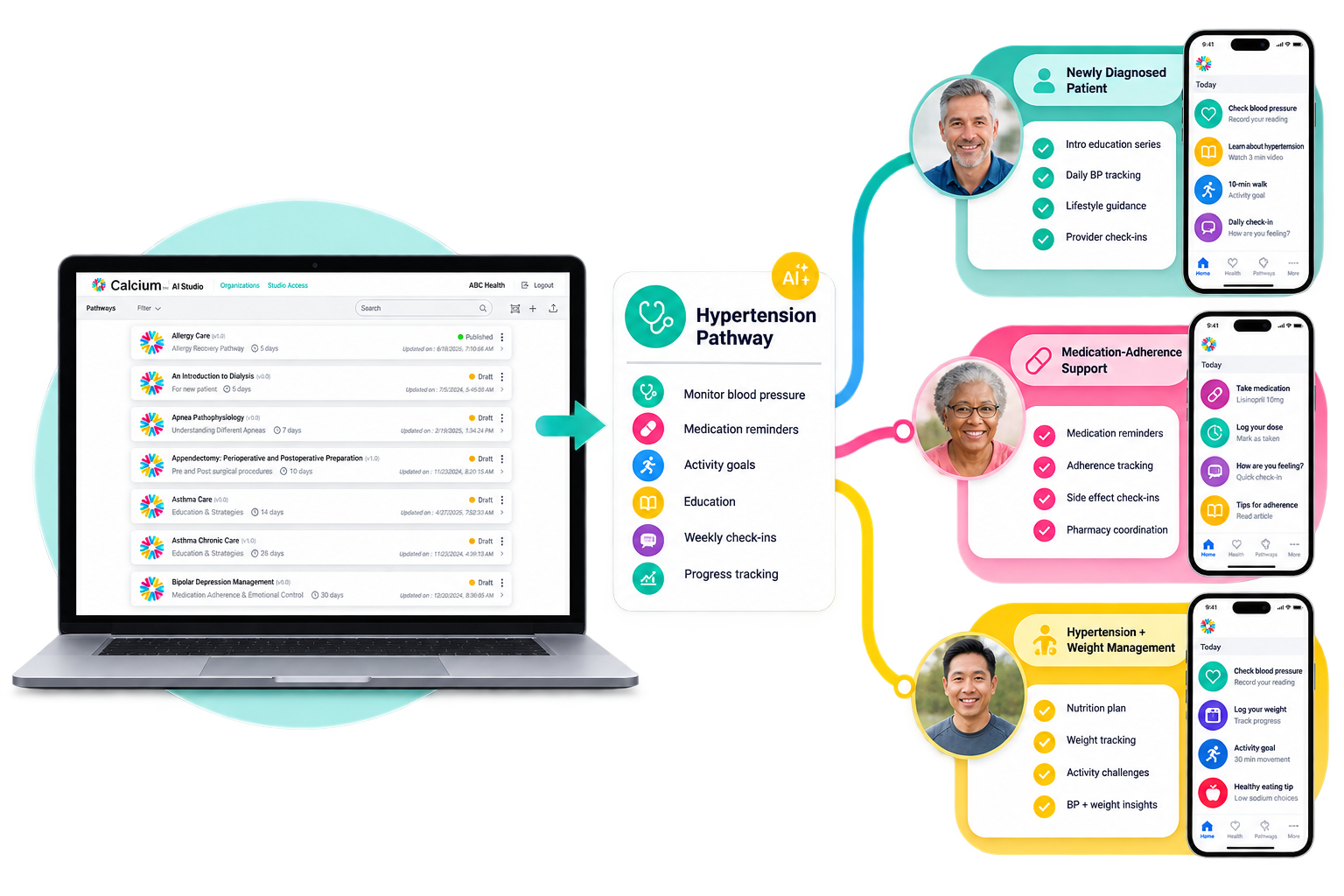
While many tools offer fragmented solutions, the Calcium platform brings everything under one roof, designed for both clinicians and patients.
Let’s walk through how it solves today’s most pressing post-op monitoring challenges.
1. Unified Monitoring Across Vitals, Wounds, and Rehab
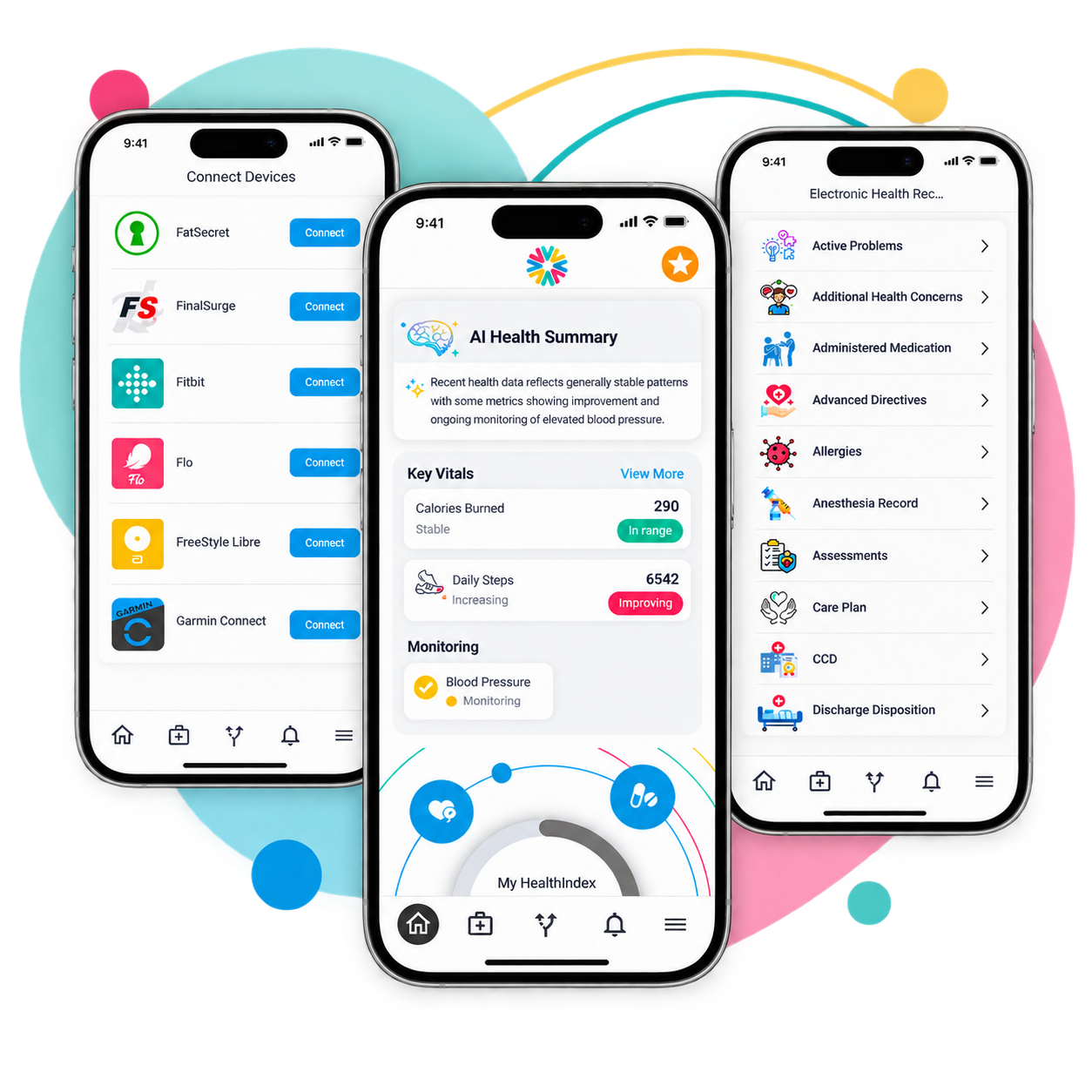
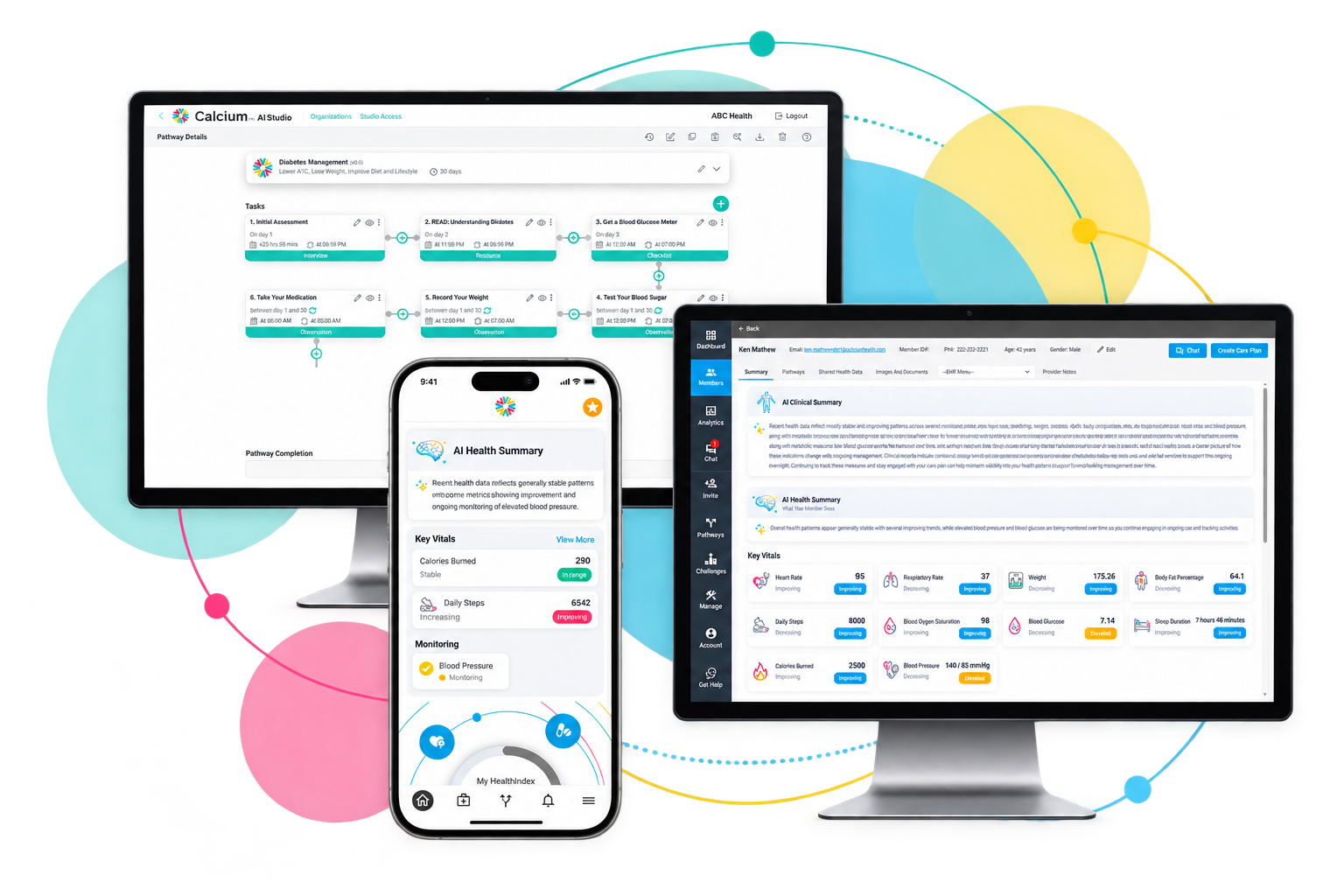
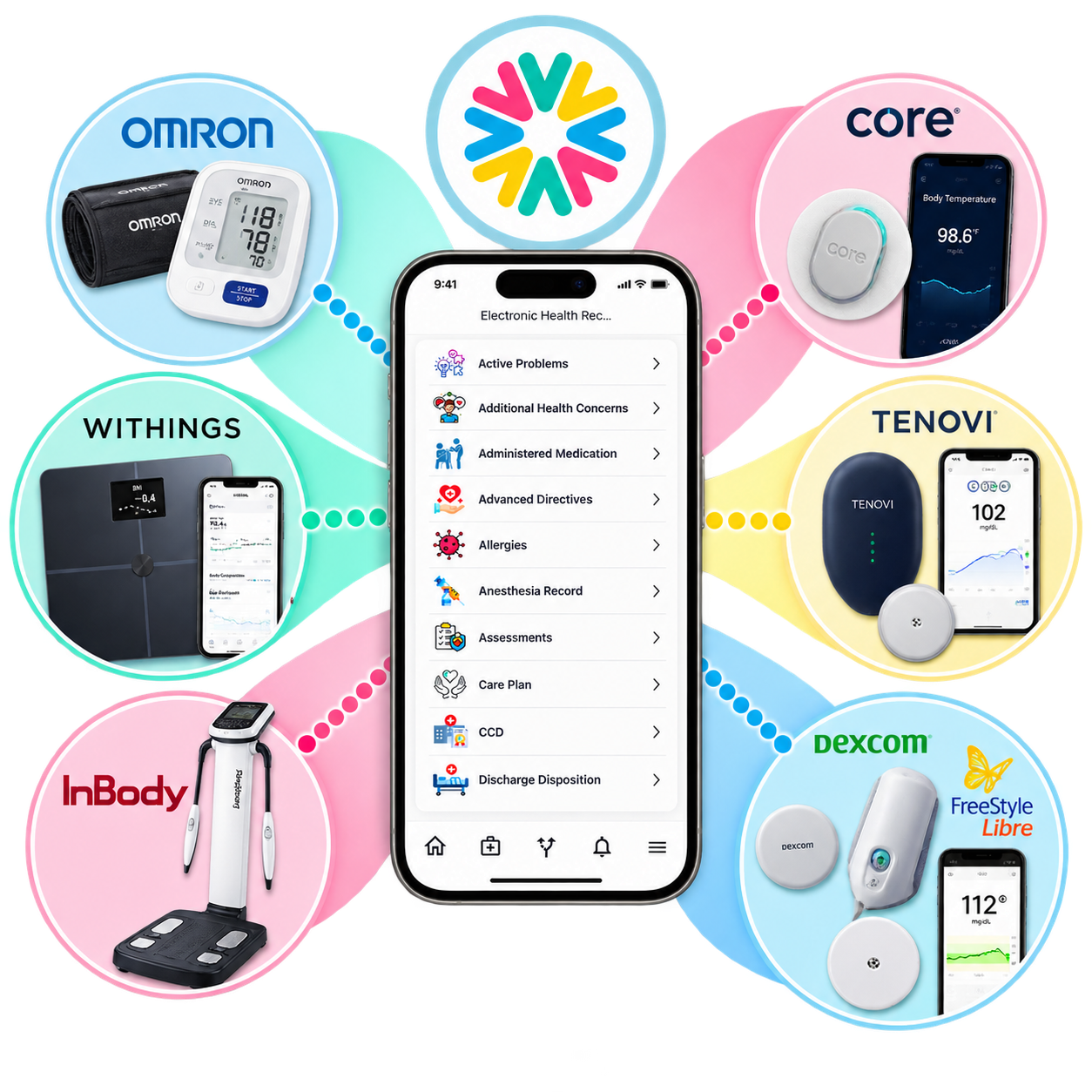
Calcium consolidates biometric data, wound imaging, medication adherence, and patient-reported symptoms into a single interface. This eliminates the need to juggle multiple apps or EHR logins. For care teams, it means a real-time dashboard that tells the whole story.
2. Personalised Recovery Plans by Procedure and Risk Level
Not all recoveries are equal. A hip replacement isn’t the same as an appendectomy and neither should their recovery plans be.
Calcium’s pathways adjust based on procedure type, risk level, and patient profile. Post-op rehab for orthopaedic patients can even integrate augmented reality modules, as seen in a recent rotator cuff study where AR-based rehab improved adherence and functional outcomes.
3. Interoperability and HIPAA-First Design
Many solutions hit a wall when it comes to integration. Calcium is built with FHIR and HL7 protocols, ensuring smooth connectivity with leading EHR systems. It’s also fully HIPAA-compliant, with end-to-end encryption and secure user authentication no shortcuts.
4. Built-In Engagement for Patients and Caregivers
Technology alone doesn’t guarantee adherence. That’s why Calcium combines smart nudges with human-centered design. Patients receive reminders, daily check-ins, and educational support. Caregivers can be looped in through shared dashboards, improving accountability and support.
And the result? More engaged patients, more informed providers, and better recovery outcomes all without adding friction to clinical workflows.
Value-Based Care and the ROI of Digital Monitoring
Healthcare is increasingly being judged not just by outcomes, but by the cost and quality of those outcomes. That’s the heart of value-based care and where digital monitoring shines.
Here’s what a digitally optimised post-op recovery can deliver.
- Fewer readmissions and ER visits. By catching complications early, patients avoid emergency escalations.
- Lower antibiotic misuse. Targeted wound monitoring reduces unnecessary prescriptions, a key step in antimicrobial stewardship.
- Improved PROMs (Patient-Reported Outcome Measures). Tools like Calcium help track pain, mobility, and quality of life metrics essential data for bundled payments and payer contracts.
- Provider efficiency. Rather than chasing down follow-ups or sorting through EHR notes, clinicians get prioritised alerts that focus their attention where it’s needed most.
In one cost-effectiveness study, the use of a digital post-op platform was projected to save over £60,000 per 100 patients, just by reducing unnecessary hospital visits and improving resource allocation.
That’s not just good care, it’s smart business.
Predictive, Equitable, and Personalised Recovery
We’re only scratching the surface of what post-op digital monitoring can do. With AI advancing rapidly, tomorrow’s platforms will be able to.
- Predict complications before symptoms even appear
- Recommend tailored interventions based on prior outcomes
- Adapt care based on social determinants like transportation access or caregiver availability
Platforms like Calcium are already building toward this future, not just for surgery, but for chronic care, mental health recovery, and beyond.
But let’s not forget that technology must be inclusive. That means designing apps that work for all age groups, reading levels, and languages. It means offering low-friction onboarding and support for patients who may not be tech-savvy.
The future of recovery isn’t just digital. It’s personal, real-time, and built around the people who need it most.
The Wrap
The days of crossing our fingers after a surgical discharge are behind us. With digital tools and real-time data, we have the power to turn recovery into a guided, informed, and proactive experience for every patient, every time. Platforms like Calcium are not only helping detect complications early, they’re connecting providers, patients, and caregivers in ways that traditional care models never could.
The result? Safer recoveries, fewer surprises, and care that feels human again. If you’re a provider, digital health leader, or part of a value-based care initiative looking to future-proof your surgical pathways, now is the time to act.
Reference
- McLean, K. A., Sgrò, A., Brown, L. R., Buijs, L. F., Daines, L., Potter, M. A., Bouamrane, M.-M., & Harrison, E. M. (2023). Evaluation of remote digital postoperative wound monitoring in routine surgical practice. Npj Digital Medicine, 6(1), 1–9. https.//doi.org/10.1038/s41746-023-00824-9
- Vlazaki, M., Sajjad Raja, M., Gomaa, A.-R., & Rayan, F. (2024). Cost effectiveness unlocked. Redefining clinical outcomes augmented by “Post Op” Digital Care Platform. Journal of Surgery and Research, 7(3). https.//doi.org/10.26502/jsr.10020383
- Mouli, V. H., Carrera, C. X., Schudrowitz, N., Flanagan Jay, J., Shah, V., & Fitz, W. (2021). Post-Operative Remote Monitoring for Same-Day Discharge Elective Orthopedic Surgery. A Pilot Study. Sensors, 21(17), 5754. https.//doi.org/10.3390/s21175754
- Semple, J. L., Sharpe, S., Murnaghan, M. L., Theodoropoulos, J., & Metcalfe, K. A. (2015). Using a Mobile App for Monitoring Post-Operative Quality of Recovery of Patients at Home. A Feasibility Study. JMIR MHealth and UHealth, 3(1), e18. https.//doi.org/10.2196/mhealth.3929
- Chang, W. K., Lee, J. I., Hwang, J. H., & Lim, J.-Y. (2022). Post-operative rehabilitation using a digital healthcare system in patients who had undergone rotator cuff repair. protocol for a single-center randomized controlled trial. Trials, 23(1). https.//doi.org/10.1186/s13063-022-06648-4
- bcmj.org Telephone-based interpretation in family physician offices in BC Electronic wound monitoring after breast cancer surgery Chikungunya. A disease risk for Canadians traveling in the tropics. (n.d.). Retrieved July 20, 2025, from https.//bcmj.org/sites/default/files/public/BCMJ_Vol58_No8_complete%20%28ID%20106154%29.pdf#page=16