
Close the Loop Between Predictive Insight and Prevention for ACOs
Calcium connects predictive analytics, digital care pathways, and continuous monitoring into one unified prevention infrastructure for Accountable Care Organizations.

Closed-Loop Predictive Prevention Platform for Accountable Care Organizations: Moving From Reactive Population Health to Predictive Prevention
Accountable Care Organizations are responsible for improving patient outcomes while controlling the total cost of care across large attributed populations. Yet many ACOs still operate with fragmented systems that make it difficult to detect rising risk early enough to prevent costly complications.
The Calcium platform enables ACOs to identify emerging patient risk earlier, prioritize interventions more effectively, and prevent deterioration before high-cost events occur.
Through Calcium’s Closed-Loop Predictive Prevention platform, healthcare organizations can move beyond retrospective population health analytics and activate a proactive prevention model that continuously monitors patient health signals, guides individuals through preventive care behaviors, and escalates emerging risks to care teams.
Predict → Prioritize → Prevent.
The result is a scalable prevention infrastructure that allows ACOs to stabilize patient health, improve quality metrics, and protect financial performance in an increasingly risk-based healthcare environment.
Calcium: The Closed-Loop Prevention Platform for Value-Based Care
Value-Based Care organizations are increasingly responsible for improving patient outcomes while controlling the total cost of care. Yet many health systems and physician groups still lack the infrastructure needed to detect rising patient risk early enough to prevent costly complications.
The Calcium digital health platform was built to solve this challenge.
By combining predictive intelligence, behavioral monitoring, and digital care pathways, Calcium enables healthcare organizations to identify emerging risk earlier, prioritize clinical attention, and prevent deterioration across large patient populations.
Instead of simply identifying high-risk patients through dashboards and reports, Calcium transforms predictive insight into continuous preventive action.
Predict. Prioritize. Prevent.
– Identify rising patient risk earlier
– Guide patients through preventive care pathways
– Enable scalable prevention across large populations
– Reduce avoidable hospitalizations and emergency utilization
Prevention Infrastructure for Modern Accountable Care Organizations
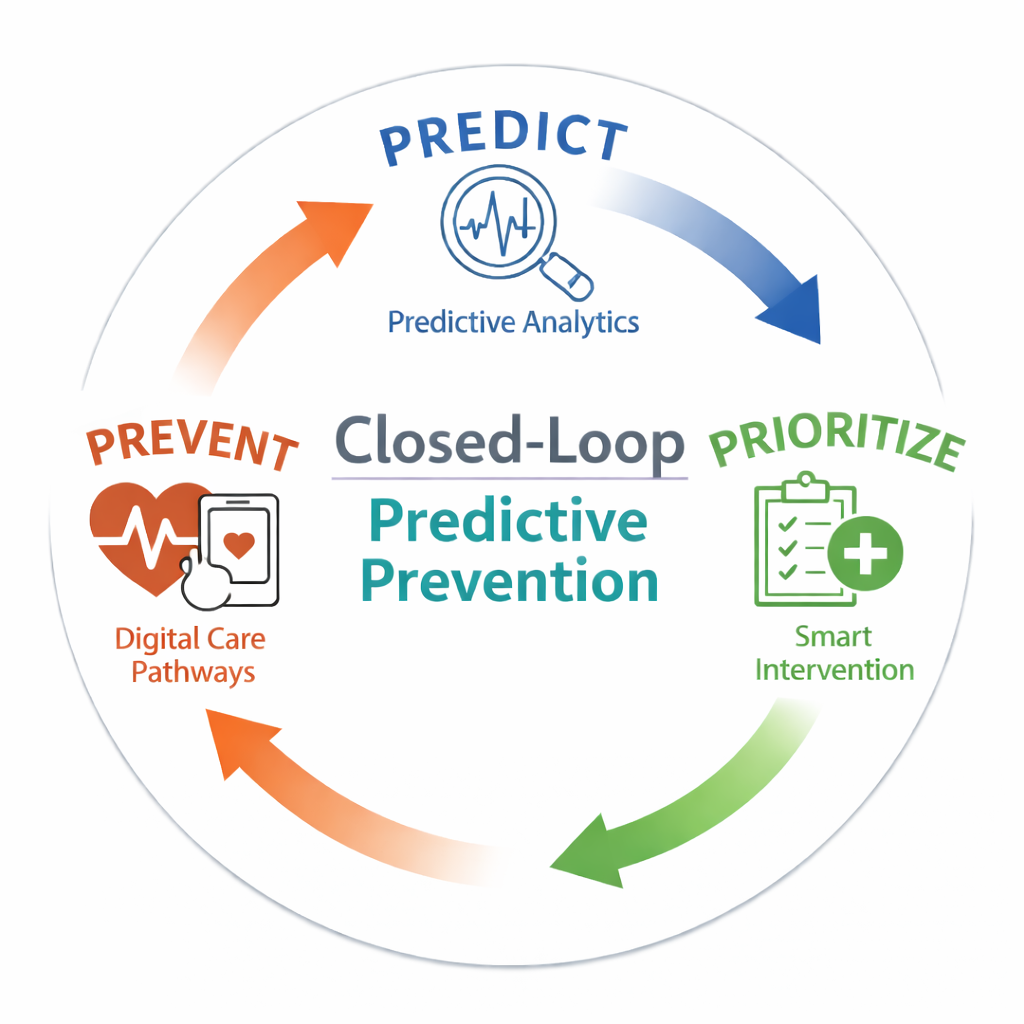
Many ACOs face a persistent gap between risk identification and operational intervention. Predictive dashboards may highlight high-risk patients, but care teams often lack the infrastructure to monitor those individuals continuously or guide preventive behaviors between clinical visits. As a result, deterioration frequently occurs before providers can intervene. Calcium addresses this challenge by serving as a digital prevention infrastructure layer that connects predictive intelligence with real-world care execution.
The platform integrates:
- Predictive risk detection
- Patient prioritization workflows
- Digital care pathways
- Continuous symptom and behavior monitoring
- Automated alerts and provider escalation
Together these capabilities enable a continuous prevention cycle—helping ACOs stabilize patients earlier and reduce avoidable complications across large populations.
Why It Matters
ACO Success Depends on Preventing Deterioration Before It Happens
Under programs such as the Medicare Shared Savings Program (MSSP), ACO REACH, Medicare Advantage value-based contracts, and commercial shared savings arrangements, providers are responsible for improving population health outcomes while controlling the total cost of care.
Financial performance under these models depends heavily on the ability to prevent costly health events before they occur.
Hospital admissions, emergency department visits, and complications often result from clinical deterioration that develops gradually between clinical encounters. Without systems that continuously monitor patient health signals, early warning signs frequently go unnoticed.
Workforce Constraints
At the same time, care management teams face increasing operational pressure.
Many ACOs oversee tens of thousands of patients across multiple risk tiers and chronic conditions. Traditional care management approaches such as phone outreach, appointment reminders, and manual follow-up are difficult to scale across populations of this size.
Even the most dedicated care teams cannot maintain continuous engagement with every patient.
Without digital infrastructure, preventive care efforts become limited to the highest-risk individuals, leaving large segments of the population without proactive support.
The Prevention Gap
Most ACOs have strong analytics capabilities. They can identify which patients are at risk. Yet they often lack the tools required to guide patients through preventive behaviors or monitor health signals outside the clinical setting.
This gap between insight and intervention represents one of the greatest barriers to success in value-based care.
Calcium was built to close this gap by transforming predictive insights into continuous preventive action across entire patient populations.
Calcium’s Revolutionary Framework
Operationalizing Closed-Loop Predictive Prevention
The Calcium platform was designed to help healthcare organizations transform predictive insight into coordinated preventive action.
Through the Closed-Loop Predictive Prevention framework, Calcium connects predictive analytics, patient engagement, monitoring systems, and provider workflows into a continuous prevention ecosystem.
This model enables ACOs to stabilize patient health earlier and reduce avoidable healthcare utilization.
Predict
Calcium aggregates patient data from multiple sources across the ACO ecosystem, including electronic health records, claims systems, medication histories, wearable devices, and patient-reported inputs.
Predictive models analyze these signals to identify early indicators of rising risk across attributed populations.
This enables ACOs to detect patients who may be approaching clinical deterioration before complications occur, giving care teams earlier visibility into emerging health issues that could lead to hospital admissions, emergency department visits, or costly disease progression under value-based care contracts.
Prioritize
ACO care management teams cannot intervene with every patient simultaneously across large attributed populations. Calcium prioritizes patients based on risk severity, engagement patterns, utilization trends, and predicted outcomes.
Care teams receive prioritized dashboards highlighting individuals who require immediate attention.
This ensures that limited clinical resources are directed toward patients most likely to benefit from intervention helping ACOs focus care management efforts where they can have the greatest impact on patient outcomes, utilization reduction, and shared savings performance.
Prevent
Digital care pathways guide ACO patients through preventive behaviors and chronic disease management activities between clinical visits.
Continuous monitoring detects changes in symptoms, adherence patterns, and patient engagement across the population. When concerning signals appear, automated alerts escalate to care teams for timely intervention.
This proactive approach allows ACOs to intervene earlier stabilizing patient conditions before deterioration leads to hospitalizations, emergency department utilization, or preventable complications that increase total cost of care under risk-based contracts.
The Evolving Landscape
The New Population Health Environment: More Risk, Greater Accountability
The Accountable Care Organization model continues to expand across both public and private healthcare markets. Participation in programs such as MSSP and ACO REACH has grown steadily as healthcare organizations assume greater responsibility for managing population health outcomes.
At the same time, financial accountability under these programs has increased.
Many ACOs now operate under two-sided risk arrangements, meaning they may share in savings when costs are reduced but also bear financial responsibility if expenditures exceed targets.
Analytics Infrastructure Has Matured
Most ACOs now operate sophisticated population health analytics systems capable of analyzing clinical data, claims records, and utilization patterns.
These platforms generate valuable insights by identifying patients who are likely to incur high healthcare costs or experience complications.
However, analytics systems primarily function as diagnostic tools. They identify potential problems but rarely provide the operational infrastructure required to guide patients through preventive interventions.
The Next Phase of Population Health
The next stage of value-based care requires healthcare organizations to move beyond insight and toward execution.
Success increasingly depends on the ability to translate predictive risk signals into structured interventions that guide patient behavior, monitor health trends, and escalate issues to care teams before complications occur.
This is where prevention infrastructure becomes critical.
Calcium provides the technology foundation that enables ACOs to operationalize predictive prevention at scale.
Challenges & Issues
The Prevention Gap in Accountable Care
ACOs operate under growing financial accountability for total cost of care, quality performance, and utilization management. Yet many ACOs still rely on fragmented systems and manual workflows that make proactive prevention difficult to achieve across large attributed populations.
Even with sophisticated population health analytics and risk stratification tools, organizations often struggle to translate predictive insight into consistent intervention. As a result, clinical deterioration frequently occurs before providers can act.
The following structural challenges continue to limit the ability of many ACOs to scale preventive care and stabilize patient populations under value-based contracts.
Rising Hospital Utilization
Avoidable hospital admissions and emergency department visits remain major drivers of total cost of care for ACO populations. Many events stem from chronic disease instability or missed early warning signs.
Key contributors include:
– unmanaged chronic conditions
– delayed intervention after symptom changes
– gaps in post-discharge follow-up
– limited visibility into patient health between visits
Delated Detection of Patient Deterioration
Clinical deterioration rarely occurs without warning. Early signals such as worsening symptoms, declining medication adherence, or reduced engagement often emerge weeks before hospitalization.
Without continuous monitoring infrastructure, these early indicators are frequently missed. As a result, providers often identify worsening conditions only after a patient requires urgent care or hospital admission.
Limited Care Team Capacity
Care management teams are responsible for overseeing thousands of attributed patients across multiple risk categories and chronic conditions. Traditional outreach methods such as phone calls and manual follow-ups cannot scale effectively across entire populations.
Without automation and digital engagement infrastructure, care teams are forced to focus primarily on the highest-risk individuals while many rising-risk patients remain unmonitored.
Medication Adherence Challenge
Medication non-adherence remains one of the most common causes of chronic disease deterioration across ACO populations. Patients may forget doses, misunderstand instructions, or stop medications when symptoms improve.
Without consistent monitoring and reinforcement, providers often lack visibility into adherence patterns until complications emerge and require clinical intervention.
Inconsistent Patient Engagement
Successful population health management depends heavily on patient behavior between clinical visits. However, many patients struggle to follow treatment plans or preventive care recommendations without structured guidance.
When engagement declines, patients may miss preventive screenings, ignore symptom changes, or discontinue lifestyle interventions—leading to increased risk of disease progression and costly complications.
Difficulty Prioritizing High-Risk Patients
Care teams often face overwhelming volumes of patient data and alerts. Without intelligent prioritization systems, it can be difficult to determine which patients require immediate attention.
As a result, clinical resources may be directed toward lower-risk individuals while patients experiencing rising deterioration signals remain unnoticed until complications escalate.
Fragmented Patient Data
ACO organizations frequently manage patient data across multiple disconnected systems, including EHR platforms, claims databases, remote monitoring vendors, and patient engagement tools.
This fragmentation limits real-time visibility into patient health trends and makes it difficult for care teams to identify emerging risk patterns or coordinate preventive interventions across the population.
Translating Population Health and Predictive Analytics Into Scalable Prevention
Accountable Care Organizations increasingly operate under financial models where outcomes, utilization, and patient stability directly determine performance. Yet many ACOs still rely on fragmented systems that identify risk without providing the operational infrastructure required to intervene early.
The Calcium platform was built to close this gap. Through the Closed-Loop Predictive Prevention framework, Calcium connects predictive intelligence, patient engagement, monitoring systems, and care team workflows into a continuous prevention ecosystem. Rather than reacting after complications occur, ACOs gain the ability to detect emerging risk earlier, guide patients through preventive behaviors, and intervene before deterioration leads to costly health events.

Predictive Risk Detection
ACOs rely heavily on risk stratification to identify patients likely to incur high healthcare costs. However, traditional analytics often identify problems after deterioration has already begun. Calcium enhances predictive insight by continuously aggregating data from electronic health records, claims systems, patient-reported inputs, and connected health devices.
Predictive models analyze these signals to identify subtle early indicators of rising patient risk, allowing care teams to intervene before conditions escalate.
Early signals may include:
- Changes in symptom reporting
- Declining engagement with care pathways
- Medication adherence patterns
- Device-based health data trends
By detecting deterioration earlier, ACOs can stabilize patients before complications lead to hospital admissions or emergency care.
Discover how Calcium detects rising patient risk earlier. Start your 30-day free trial today.

Intelligent Patient Prioritization
Care management teams must oversee large attributed populations with limited staffing resources. Without prioritization tools, clinicians may struggle to determine which patients require immediate attention.
Calcium solves this challenge by dynamically prioritizing patients based on predicted risk, behavioral engagement patterns, and clinical indicators. Care teams receive prioritized dashboards highlighting individuals most likely to benefit from intervention.
Prioritization helps ACO teams:
- Focus clinical attention on rising-risk patients
- Reduce time spent reviewing large patient lists
- Allocate care management resources efficiently
- Intervene earlier to prevent complications
This approach ensures that limited care team capacity is directed toward patients where intervention can deliver the greatest impact on outcomes and cost reduction.
See how intelligent prioritization improves care team efficiency. Start your 30-day free trial of Calcium today.

Customizable Digital Care Pathways
Population health success depends heavily on patient behavior outside the clinical setting. Yet many patients struggle to follow treatment plans between visits without structured support.
Calcium provides configurable digital care pathways that guide patients through preventive care activities and chronic disease management tasks. These pathways translate clinical protocols into structured, easy-to-follow workflows delivered directly to patients.
Digital pathways can include:
- Symptom check-ins and progress tracking
- Medication reminders and adherence prompts
- Lifestyle guidance and education
- Preventive screening reminders
By reinforcing preventive behaviors daily, ACOs can stabilize chronic conditions earlier and reduce the likelihood of avoidable complications.
Learn how digital care pathways guide patients toward better outcomes. Start your 30-day free trial today.

Continuous Patient Monitoring
Many clinical deteriorations occur gradually between visits, when providers have limited visibility into patient health status. Calcium addresses this challenge by enabling continuous monitoring of both clinical and behavioral signals across ACO populations.
The platform collects real-time insights from patient-reported symptoms, engagement patterns, and connected health devices. These signals are analyzed continuously to identify deviations that may indicate emerging instability.
Monitoring insights may include:
- Symptom progression trends
- Changes in engagement behavior
- Device-generated health metrics
- Missed pathway activities
When concerning patterns appear, alerts notify care teams so they can intervene quickly. Continuous monitoring helps prevent complications before they escalate into hospitalizations.
See how continuous monitoring improves early intervention. Start your 30-day free trial of Calcium today.

Medication Adherence Support
Medication adherence plays a critical role in chronic disease control, yet many patients struggle to follow prescribed regimens consistently. Missed doses and treatment interruptions often contribute to disease progression and preventable hospitalizations.
Calcium reinforces medication adherence through automated reminders, education, and adherence tracking embedded within digital care pathways.
The platform supports medication management by providing:
- Personalized medication reminders
- Patient-reported adherence tracking
- Alerts when adherence patterns decline
- Educational reinforcement of treatment plans
These capabilities help providers identify adherence challenges early and intervene before medication lapses lead to clinical deterioration.
Improve medication adherence across your patient population. Start your 30-day free trial today.

Automated Post-Discharge Monitoring
The period immediately following hospital discharge represents one of the most vulnerable moments in the patient care journey. Without structured follow-up, complications can develop quickly, increasing the risk of readmission.
Calcium supports post-discharge recovery through structured monitoring pathways that guide patients through recovery activities while collecting symptom data and behavioral signals.
Post-discharge monitoring includes:
- Recovery check-ins and symptom tracking
- Medication reminders and discharge instructions
- Alerts for worsening symptoms
- Escalation workflows for provider intervention
This proactive monitoring allows care teams to detect complications early and intervene before readmissions occur.
Reduce readmissions with proactive post-discharge monitoring. Start your 30-day free trial today.

Chronic Disease Stabilization
Chronic conditions such as diabetes, hypertension, COPD, and heart failure represent some of the largest cost drivers for ACO populations. Effective management requires continuous reinforcement and monitoring outside clinical visits.
Calcium supports chronic disease stabilization by combining digital pathways, monitoring tools, and behavioral engagement insights. Patients receive daily guidance while providers gain visibility into evolving health trends.
Chronic care capabilities include:
- Condition-specific care pathways
- Symptom tracking and health reporting
- Behavioral engagement monitoring
- Early alerts for worsening conditions
This continuous support helps stabilize chronic conditions and reduce complications that drive hospital utilization and healthcare costs.
Stabilize chronic disease populations with predictive prevention. Start your 30-day free trial today.

Care Team Workflow Optimization
Care management teams often face overwhelming patient panels and fragmented information systems. Without workflow optimization, clinicians spend valuable time navigating data rather than focusing on intervention.
Calcium streamlines care team operations by consolidating patient intelligence into prioritized dashboards that highlight individuals requiring attention.
Workflow optimization benefits include:
- Risk-prioritized patient dashboards
- Automated alerts for emerging issues
- Reduced manual data review
- Improved care manager productivity
This approach enables ACO teams to scale population health programs without dramatically increasing staffing requirements.
Improve care team productivity with intelligent workflows. Start your 30-day free trial today.

Preventive Screening Engagement
Preventive screenings play a critical role in early disease detection and quality metric performance. However, many ACOs struggle to maintain consistent screening compliance across large patient populations.
Calcium improves preventive care adherence by guiding patients through structured screening pathways that provide reminders, education, and progress tracking.
The platform helps drive preventive compliance by supporting:
- Cancer screening reminders
- Chronic disease monitoring tests
- Annual wellness visit prompts
- Preventive care education
By increasing screening completion rates, ACOs can improve quality performance while detecting health risks earlier.
Boost preventive screening completion across your population. Start your 30-day free trial today.

Reduced Total Cost of Care
Under value-based contracts, preventable hospitalizations, emergency visits, and complications directly affect financial performance. Calcium helps ACOs reduce total cost of care by enabling earlier detection of deterioration and proactive intervention.
Through predictive prevention infrastructure, organizations can prevent many high-cost events before they occur.
Financial performance improvements may include:
- Reduced hospital admission rates
- Lower emergency department utilization
- Improved chronic disease control
- Better shared savings performance
By stabilizing patient health earlier, ACOs can improve both clinical outcomes and financial sustainability.
See how predictive prevention reduces total cost of care. Start your 30-day free trial of Calcium today.
The Calcium Difference: Closing the Gap Between Insight and Action
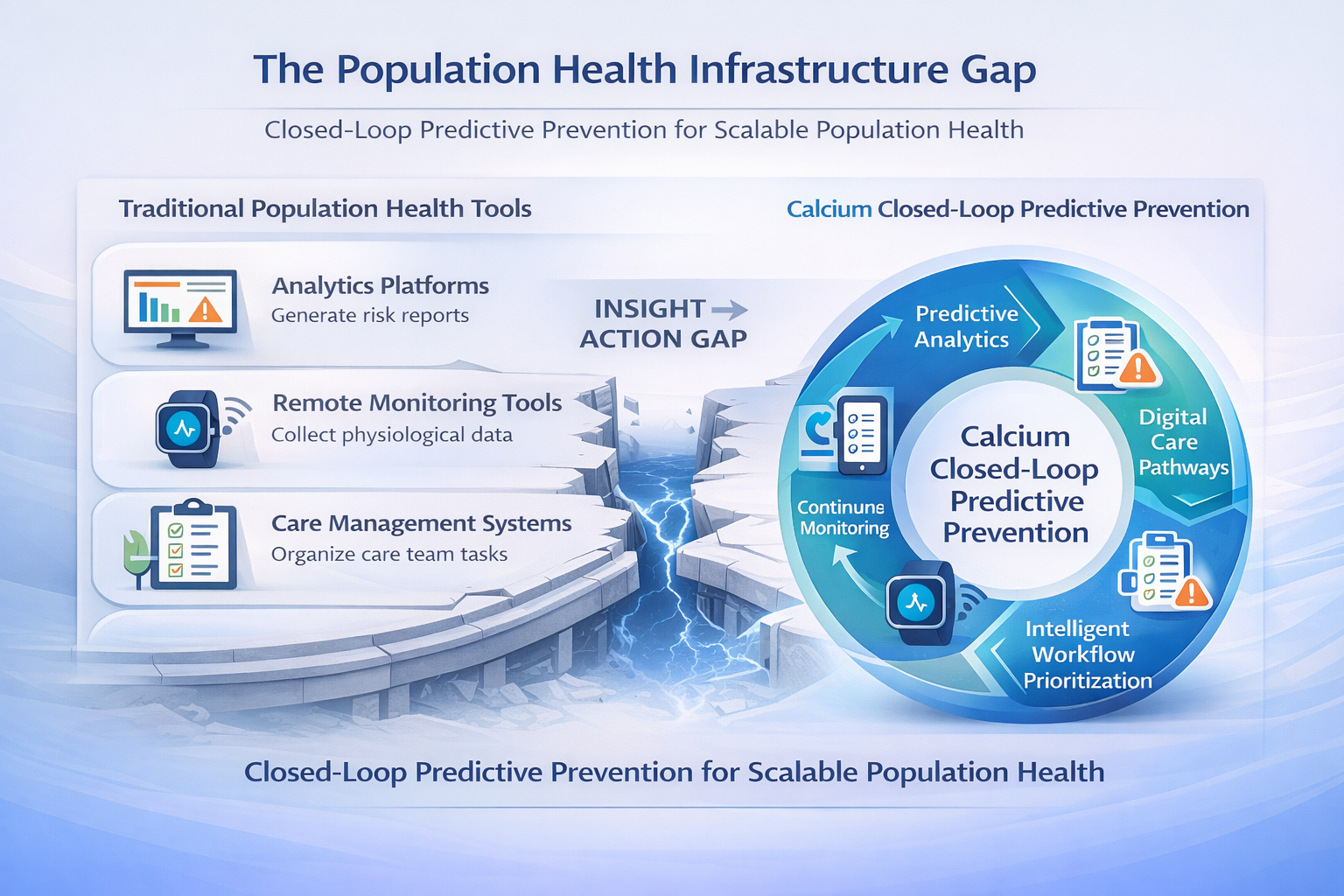
Most healthcare technology platforms address only one aspect of population health analytics generate risk reports, monitoring tools collect physiological data, and care management systems organize tasks. While valuable, these tools often operate in isolation.
Calcium bridges this gap by connecting predictive analytics directly to operational workflows.
Predictive insights trigger digital care pathways, monitoring identifies early warning signals, and intelligent workflows guide care team intervention creating a closed-loop prevention system that turns population health insight into coordinated, timely action.
Use Cases
Turning Predictive Insight Into Preventive Action
Accountable Care Organizations succeed when predictive insight translates into real-world intervention that improves outcomes and lowers total cost of care. Calcium enables ACOs to operationalize prevention across the entire patient journey from early risk detection to long-term disease stabilization.
By connecting predictive analytics, digital care pathways, continuous monitoring, and intelligent care team workflows, the Calcium platform supports scalable intervention across large patient populations. These capabilities allow ACOs to move beyond passive population health reporting and instead activate coordinated preventive action that reduces hospital utilization, improves quality metrics, and stabilizes high-risk patients before complications occur.
Chronic Disease Stabilization
Chronic diseases such as diabetes, heart failure, COPD, and hypertension represent some of the largest drivers of healthcare utilization within ACO populations. Without continuous engagement and monitoring, patients often experience gradual deterioration that leads to emergency department visits or hospital admissions.
Calcium helps stabilize chronic disease populations by combining predictive risk detection with digital care pathways that guide patients between clinical visits. Continuous monitoring allows care teams to identify early warning signals and intervene before conditions escalate.
Core capabilities include:
- Symptom and behavior monitoring between visits
- Digital care pathways for chronic disease management
- Lifestyle coaching and medication adherence prompts
- Early alerts when patient conditions begin to deteriorate
This proactive approach helps ACOs reduce avoidable hospitalizations and improve long-term disease control across large patient populations.
Post-Discharge Risk Monitoring
The period immediately following hospital discharge is one of the highest-risk phases of the care continuum. Many readmissions occur because complications develop after patients return home and remain undetected until symptoms worsen.
Calcium supports structured post-discharge recovery pathways that guide patients through the critical transition period after hospitalization. Patients report symptoms, complete recovery checkpoints, and receive automated guidance aligned with their clinical care plan.
Key elements include:
- Structured recovery monitoring and symptom reporting
- Daily patient engagement workflows during recovery
- Early detection of complications or deterioration
- Escalation alerts for care teams when intervention is needed
By providing visibility into patient recovery outside clinical settings, Calcium helps ACOs reduce preventable readmissions while improving patient safety during vulnerable post-discharge periods.
Medication Adherence Support
Medication non-adherence remains one of the most common contributors to chronic disease complications and preventable hospital utilization. Patients frequently struggle with complex medication regimens, side effects, or simple forgetfulness that disrupts treatment adherence.
Calcium addresses this challenge by embedding medication adherence workflows directly within digital care pathways. Patients receive structured reminders, guidance, and monitoring that reinforce treatment plans while providing care teams with visibility into adherence patterns.
Capabilities include:
- Automated medication reminders and adherence prompts
- Patient-reported adherence tracking
- Behavioral reinforcement through digital care pathways
- Alerts when adherence patterns indicate rising risk
Improving medication adherence not only stabilizes chronic conditions but also contributes directly to improved quality scores and reduced utilization across ACO populations.
High Emergency Dept. Utilizer Management
A small percentage of patients often accounts for a disproportionate share of emergency department utilization and healthcare spending. These high-utilizer populations frequently experience unstable chronic conditions, medication adherence challenges, or behavioral health factors that drive repeated ED visits.
Calcium enables ACOs to identify these individuals earlier and stabilize their care through targeted monitoring and engagement programs. Predictive models highlight patients with rising utilization risk, while digital care pathways guide patients through preventive behaviors and care management activities.
Program components may include:
- Identification of patients with frequent ED utilization patterns
- Continuous symptom monitoring for high-risk individuals
- Structured care management engagement workflows
- Escalation pathways when patient conditions deteriorate
By stabilizing high-utilizer populations earlier, ACOs can significantly reduce emergency department visits and associated healthcare costs.
Preventive Screening Completion
Many value-based care programs depend on preventive screening compliance to meet quality performance benchmarks. However, patients often miss recommended screenings due to lack of awareness, scheduling barriers, or limited follow-up engagement.
Calcium helps ACOs improve preventive screening completion by guiding patients through personalized digital pathways that reinforce preventive care recommendations and coordinate follow-through.
These pathways may support:
- Cancer screening reminders and education
- Chronic disease monitoring tests
- Annual wellness visit engagement
- Preventive care milestone tracking
Automating these preventive care workflows improves quality measure performance while supporting earlier disease detection and long-term population health outcomes.
Care Team Prioritization
Care management teams often oversee large patient panels, making it difficult to identify which individuals require immediate intervention. Without intelligent prioritization systems, clinical resources may be spread too thin across entire populations.
Calcium addresses this challenge through predictive prioritization dashboards that highlight patients most likely to benefit from timely intervention. By analyzing risk signals, engagement patterns, and clinical indicators, the platform ensures care teams focus attention where it will have the greatest impact.
Prioritization capabilities include:
- Risk-stratified patient dashboards
- Predictive alerts for rising clinical risk
- Workflow tools for targeted outreach
- Escalation pathways for urgent intervention
This targeted approach allows ACOs to scale care management programs more effectively while maximizing the clinical and financial impact of preventive intervention efforts.
Accountable Care Organization Insights

Winning Strategies to Optimize Health Outcomes in a VBC Model

Why Are Value-Based Care Models Failing for Some Healthcare Providers

Why Your Value-Based Care Program Needs a Digital Health Platform

What Is an ACO? A Simple Guide for Providers and Practice Managers

Why You Need an Integrated Platform to Manage ACO Performance

Why Digital Health Is the Secret Weapon for High-Performing ACOs
FAQ
1. What is Closed-Loop Predictive Prevention?
Closed-Loop Predictive Prevention is a population health approach designed to move healthcare organizations from reactive care to proactive intervention. It connects predictive analytics, digital patient engagement, continuous monitoring, and coordinated provider workflows into one integrated prevention cycle. Instead of simply identifying risk, the system activates preventive action by guiding patients through care pathways while monitoring real-world health signals. When early warning signs appear, alerts escalate to care teams for intervention. This continuous loop ensures emerging risks are addressed before they escalate into complications, hospitalizations, or worsening chronic disease outcomes across large patient populations.
2. How does Calcium support ACOs?
Calcium helps Accountable Care Organizations operationalize value-based care by transforming predictive insight into coordinated preventive action. The platform aggregates patient data from electronic health records, claims systems, connected devices, and patient-reported inputs to identify individuals with rising clinical risk. Once identified, patients are guided through digital care pathways that reinforce treatment adherence, preventive behaviors, and symptom monitoring between visits. Care teams receive prioritized dashboards that highlight patients requiring intervention. This infrastructure allows ACOs to stabilize chronic conditions earlier, reduce avoidable utilization, improve quality performance, and lower total cost of care across entire patient populations.
3. Can Calcium reduce hospital admissions?
Yes. Calcium helps reduce hospital admissions by detecting early indicators of clinical deterioration before complications escalate into acute events. Continuous monitoring of symptoms, behaviors, and engagement patterns allows the platform to identify subtle warning signals days or weeks before hospitalization typically occurs. When these signals appear, alerts are routed to care teams who can intervene through outreach, medication adjustments, or clinical evaluation. By stabilizing patients earlier in the disease progression cycle, ACOs can prevent many avoidable hospital admissions while improving chronic disease management and strengthening overall population health performance under value-based care models.
4. Can the platform integrate with EHR systems?
Yes. Calcium is designed to integrate with major electronic health record systems and healthcare data platforms used across hospitals, health systems, and physician networks. The platform aggregates clinical information from EHRs, claims data, medication histories, patient-reported inputs, and connected health devices to create a more comprehensive view of patient health. This unified data environment supports more accurate predictive modeling and care team decision-making. By integrating with existing technology infrastructure, Calcium enhances population health workflows without requiring organizations to replace their core clinical systems or disrupt established clinical documentation processes.
5. What types of patients benefit most?
Patients who face elevated risk for complications or high healthcare utilization tend to benefit most from the Calcium platform. This includes individuals living with chronic conditions such as diabetes, heart failure, hypertension, or COPD, as well as patients recovering from hospital discharge or those with patterns of frequent emergency department use. These populations often experience gradual clinical deterioration between visits, which can go unnoticed without structured monitoring. Calcium’s predictive analytics, digital care pathways, and continuous engagement tools help stabilize these patients earlier, improving health outcomes while reducing costly acute care events.
6. How does Calcium detect risk?
Calcium detects rising patient risk through predictive analytics that evaluate multiple data streams simultaneously. The platform analyzes clinical records from electronic health systems, medication histories, claims data, patient-reported symptoms, and inputs from connected health devices. These data signals are continuously assessed for patterns that may indicate early deterioration, declining adherence, or behavioral disengagement. When risk indicators reach predefined thresholds, the system flags those patients for care team review or automated pathway engagement. This predictive intelligence enables healthcare organizations to intervene earlier in the disease progression cycle and prevent avoidable complications across large populations.
7. What are digital care pathways?
Digital care pathways are structured, technology-enabled workflows that guide patients through preventive care activities and disease management tasks outside traditional clinical visits. These pathways deliver reminders, educational guidance, symptom check-ins, and behavioral prompts aligned with a patient’s care plan. Patients receive step-by-step guidance designed to reinforce adherence to medications, lifestyle recommendations, and preventive screenings. At the same time, the platform captures patient responses and engagement signals. If concerning symptoms or deviations appear, alerts are sent to care teams. This structured engagement model helps reinforce healthy behaviors and maintain continuity of care between appointments.
8. Can the platform reduce readmissions?
Yes. Hospital readmissions often occur because complications emerge after discharge while patients are recovering at home without clinical visibility. Calcium addresses this challenge by providing structured post-discharge monitoring through digital recovery pathways. Patients regularly report symptoms, complete recovery checkpoints, and receive guidance aligned with their discharge instructions. Continuous monitoring detects early signs of complications such as infection, medication issues, or worsening symptoms. When these signals appear, alerts escalate to care teams who can intervene before conditions worsen. This early intervention capability helps ACOs reduce preventable readmissions and improve post-discharge recovery outcomes.
9. How scalable is the platform?
Calcium is designed as enterprise-scale prevention infrastructure capable of supporting large patient populations across complex healthcare organizations. The platform uses configurable digital pathways, automated monitoring systems, and predictive prioritization tools that allow care teams to manage thousands of patients simultaneously. Rather than relying on manual outreach or traditional care management programs, Calcium automates many engagement and monitoring functions while directing clinical attention only to patients who require intervention. This scalable architecture allows ACOs to extend preventive care programs across entire populations without requiring proportional increases in staffing or operational resources.
10. What financial outcomes can organizations expect?
Healthcare organizations using predictive prevention infrastructure can achieve measurable financial improvements under value-based care models. Earlier detection of patient deterioration helps reduce avoidable hospital admissions, emergency department visits, and preventable readmissions. Improved medication adherence and chronic disease stabilization also contribute to better long-term health outcomes and reduced complications. These improvements directly influence shared savings performance, medical loss ratios, and total cost of care metrics. By stabilizing high-risk populations earlier and strengthening preventive care engagement, ACOs can improve both clinical outcomes and economic performance across their managed patient populations.
