Türkiye’de bahis severler için en çok tercih edilen bettilt giriş adreslerden biri olmaya devam ediyor.
Curacao lisanslı platformlar arasında güvenilirlik açısından üst sıralarda bahsegel giriş yer alan, uluslararası denetimlerden başarıyla geçmiştir.
Kazançlı bahis deneyimi arayan herkes için bettilt doğru seçimdir.
Rulet masalarında en çok tercih edilen bahis türleri arasında kırmızı/siyah ve tek/çift seçenekleri yer alır; pinco giriş bu türleri destekler.
Basketbol tutkunları için en iyi kupon fırsatları bettilt sayfasında yer alıyor.
Smart Security Strategies for the Digital Age of Outpatient Surgery
Ambulatory Surgery Centers (ASCs) are leading the charge toward faster, more affordable, and patient-friendly care. But as ASCs expand their capabilities with digital tools—from scheduling software to telehealth platforms—there’s a quiet but critical requirement looming in the background: safeguarding patient data.
HIPAA compliance isn’t just a regulatory checkbox; it’s a foundation for trust, safety, and long-term success. In a landscape where a single breach can jeopardise both your reputation and your bottom line, understanding the digital demands of compliance is more urgent than ever.
Whether you’re a tech-savvy administrator, a provider juggling multiple systems, or simply trying to modernise your ASC’s operations, you need more than a surface-level understanding. You need practical, actionable insight into how compliance works in the real world of outpatient surgery. That’s where we come in—let’s break it down.
The Role of Software in Today’s ASCs
Ambulatory Surgery Centers (ASCs) are the workhorses of modern outpatient care. They’re fast, efficient, and laser-focused on delivering high-quality procedures without the high overhead of hospitals. But as care delivery evolves, so does the need for digital support. Electronic health records, scheduling software, telehealth platforms, and patient portals have become essential to ASC operations.
However, all that digital convenience comes with a major responsibility—protecting patient information. That’s where HIPAA compliance becomes not just a best practice but a non-negotiable requirement. And for ASC software, that’s often easier said than done.
What Does HIPAA Compliance Mean for ASC Software?
The Health Insurance Portability and Accountability Act (HIPAA) sets the standard for protecting sensitive patient data, also known as Protected Health Information (PHI). If your ASC software touches PHI—and it almost certainly does—it must meet HIPAA’s technical, physical, and administrative safeguards.
HIPAA isn’t just about avoiding penalties (though they can be steep). It’s about building trust. Patients are putting their health in your hands, and they need to know their information is just as safe as their surgery.
So, how does software meet that standard?
Top 7 HIPAA Compliance Challenges in ASC Software
It’s one thing to know that software should be HIPAA-compliant—it’s another to make it happen in the real world. These are the most common hurdles ASC leaders and IT teams face:
1. Encryption and Data Security
Your ASC software must protect data both in transit and at rest. That means encrypting every data packet sent between users and systems, as well as any stored files on a server or cloud.
But many ASCs still use outdated systems that don’t support modern encryption standards. A single vulnerability—like an unsecured Wi-Fi network or a laptop without disk encryption—can expose thousands of patient records.
In one case, a HIPAA-compliant smartphone application was used to track real-time surgical complications, with encryption baked in at every level. That’s the gold standard ASC software should aim for.
2. Role-Based Access Controls
Not everyone in your center needs access to every record. Front-desk staff shouldn’t see surgical notes. Surgeons don’t need billing data. That’s where role-based access comes in—it ensures each team member sees only what they need to do their job.
The problem? Too many systems still offer “all-or-nothing” access, creating unnecessary exposure and increasing the risk of HIPAA violations. Secure software should allow administrators to define access rules with surgical precision.
3. Detailed Audit Logs
Imagine a patient claims someone snooped through their chart. Can you prove who accessed it, when, and why?
HIPAA requires audit trails for exactly this reason. Software should log every access, every edit, and every communication involving PHI. This level of tracking was a key feature in the STS Database, which used unique HIPAA-compliant identifiers to ensure long-term traceability across multiple hospitals.
Without a robust audit system, your ASC could be flying blind and non-compliant.
4. Secure Messaging and Telehealth
Emailing a patient post-op instructions? Sending a text about their follow-up? Those messages must be encrypted and stored securely.
Many ASCs turned to telehealth during COVID-19. And while video visits are convenient, they introduce new HIPAA risks if platforms aren’t secure. A study on perioperative messaging showed how mobile platforms could streamline communication while staying HIPAA-compliant through strict encryption and role-based controls.
The takeaway? Convenience shouldn’t come at the cost of compliance.
5. Integration with EHRs and Billing Systems
ASCs often use multiple systems for clinical documentation, labs, imaging, and billing. If your ASC software can’t integrate securely with these systems, it may lead to risky workarounds like copy-pasting PHI into spreadsheets or emails.
The National Hospital Care Survey (NHCS) faced this exact challenge while collecting real-time ambulatory surgery data from across the country. The solution? A structured integration with electronic claims and hospital systems using standardised data formats.
True HIPAA compliance requires seamless, secure data sharing—without shortcuts.
6. Telehealth Workflow Optimization
It’s not just about having a telehealth platform—it’s about using it the right way. Can your ASC handle pre-op consults, follow-ups, and patient education remotely without sacrificing privacy?
A doctoral study on ASC telehealth found that replacing manual steps with virtual touchpoints improved efficiency, but only when supported by secure platforms and clear workflows.
If your telehealth solution isn’t fully integrated and HIPAA-secure, you’re missing a huge opportunity to streamline care safely.
7. Managing Vendor Compliance and BAAs
You’re only as secure as your software vendors. HIPAA requires any third party that handles PHI on your behalf to sign a Business Associate Agreement (BAA). This legally binds them to protect patient data.
But not all vendors are up to the task. Some fail to update security protocols or let BAAs lapse. That leaves your ASC vulnerable.
Always ask: Does this vendor sign a BAA? Do they undergo independent audits? Can they show proof of HIPAA training and breach response plans?
How to Know If Your ASC Software Is Truly HIPAA-Compliant
If you’re unsure whether your software meets the mark, start by asking these questions:
- Is all patient data encrypted at rest and in transit?
- Are access controls customizable by role?
- Can we track who accessed what data, and when?
- Are all messages, emails, and texts sent via secure channels?
- Does our software integrate safely with our EHR and billing systems?
- Do we have BAAs signed with all vendors handling PHI?
If the answer to any of these is no—or even “I’m not sure”—it’s time to reevaluate.
Why Calcium Stands Out in HIPAA-Compliant ASC Software
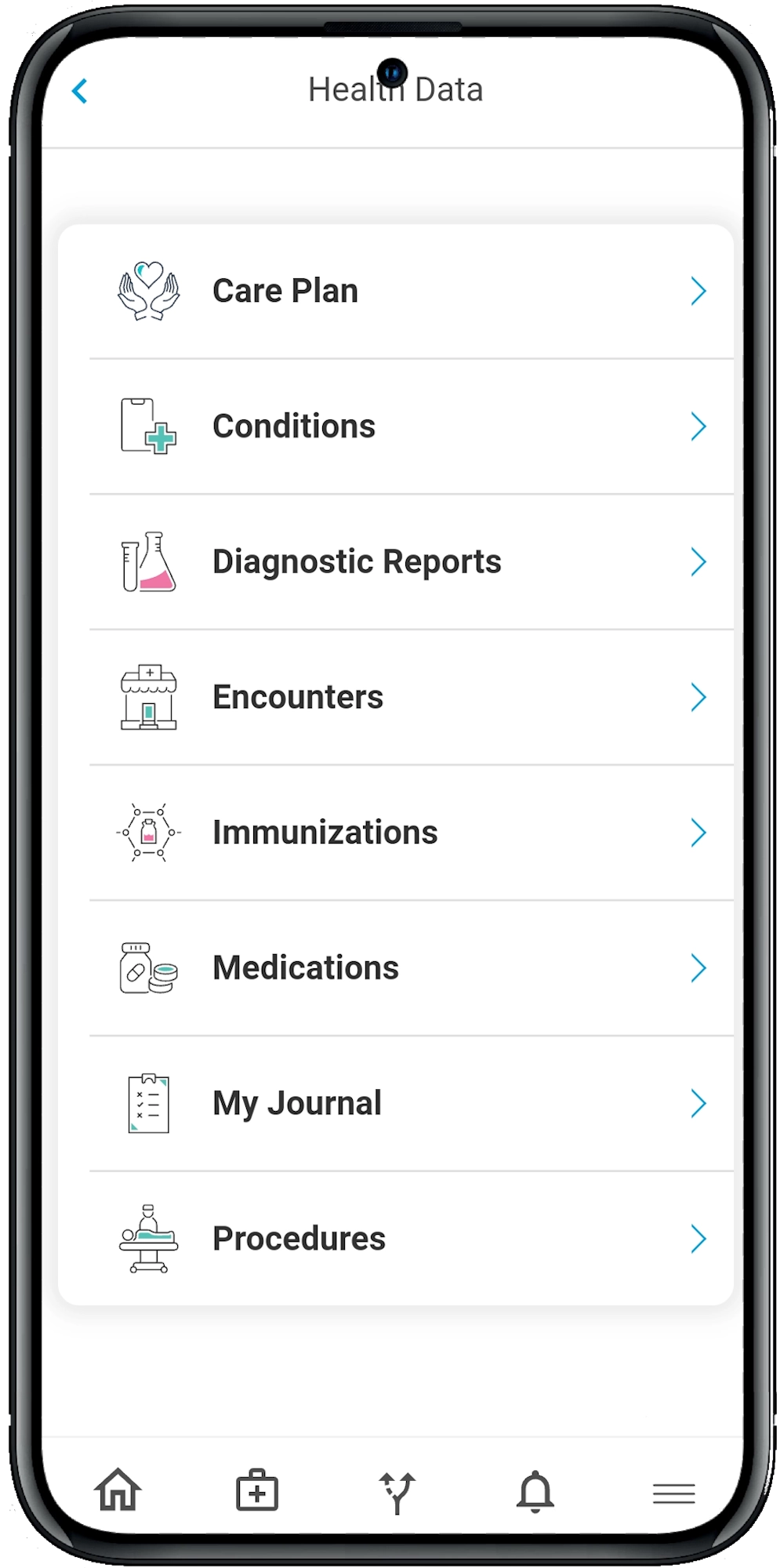
Calcium’s digital health platform was designed from the ground up to meet the unique needs of modern ASCs. Here’s how it addresses the compliance challenges we’ve covered:
- Security First. End-to-end encryption, secure cloud hosting, and audit-ready architecture
- Smart Access Controls. Granular permissions based on role, team, and care pathway
- Real-Time Audit Logs. Track every access and edit with full transparency
- Compliant Communication Tools. Integrated secure messaging, notifications, and telehealth modules
- Vendor Integrity. Signed BAAs, third-party audits, and full compliance documentation available on request
Plus, Calcium’s platform is built to grow with you. Whether you’re running a single-site orthopaedic ASC or a multispecialty network, it’s scalable, customizable, and always secure.
The Wrap
Compliance shouldn’t be an obstacle—it should be your launchpad for delivering smarter, safer, and more efficient care. As ASCs continue to evolve, choosing the right software partner can make all the difference in staying HIPAA-compliant while staying ahead.
Calcium’s digital health platform was designed to meet the high-speed demands of modern surgical care without compromising on security or patient trust. From encrypted communications to intuitive access controls, we’ve built every feature with your patients—and regulators—in mind.
Reference
- Meneghini, R. M. (2020). Resource Reallocation during the COVID-19 Pandemic in a Suburban Hospital System: Implications for Outpatient Hip and Knee Arthroplasty. The Journal of Arthroplasty. https://doi.org/10.1016/j.arth.2020.04.051
- Buehler, D. A., Mattison, T. R., & Mayberry, D. E. (2008). Developing an Orthopedic Ambulatory Surgery Center. Orthopedic Clinics of North America, 39(1), 17–25. https://doi.org/10.1016/j.ocl.2007.09.002
- Blackburn, K. W., Brubaker, L. S., Van, G., Feng, E., Mohamed, S., Ramamurthy, U., Ramanathan, V., Wood, A. L., Navarro, M. E., & Fisher, W. E. (2024). Real-time Reporting of Complications in Hospitalized Surgical Patients by Surgical Team Members Using a Smartphone Application. The Joint Commission Journal on Quality and Patient Safety. https://doi.org/10.1016/j.jcjq.2024.02.004
- Levant, S., & DeFrances, C. (2012). Electronic collection of inpatient and ambulatory hospital care data. https://doi.org/10.1145/2307729.2307761
- Welcome To Zscaler Directory Authentication. (2025). Annalsthoracicsurgery.org. https://www.annalsthoracicsurgery.org/article/S0003-4975(08)00924-7/fulltext
- Allison, K. (2021). Assessing Transformation of Optimizing Ambulatory Surgery Center Services with Telehealth. MUSC Theses and Dissertations. https://medica-musc.researchcommons.org/theses/648/
- Gordon, C. R., Rezzadeh, K. S., Li, A., Vardanian, A., Zelken, J., Shores, J. T., Sacks, J. M., Segovia, A. L., & Jarrahy, R. (2015). Digital mobile technology facilitates HIPAA-sensitive perioperative messaging, improves physician-patient communication, and streamlines patient care. Patient Safety in Surgery, 9(1). https://doi.org/10.1186/s13037-015-0070-9
- Gordon, C. R., Rezzadeh, K. S., Li, A., Vardanian, A., Zelken, J., Shores, J. T., Sacks, J. M., Segovia, A. L., & Jarrahy, R. (2015). Digital mobile technology facilitates HIPAA-sensitive perioperative messaging, improves physician-patient communication, and streamlines patient care. Patient Safety in Surgery, 9(1). https://doi.org/10.1186/s13037-015-0070-9