Türkiye’de bahis severler için en çok tercih edilen bettilt giriş adreslerden biri olmaya devam ediyor.
Curacao lisanslı platformlar arasında güvenilirlik açısından üst sıralarda bahsegel giriş yer alan, uluslararası denetimlerden başarıyla geçmiştir.
Kazançlı bahis deneyimi arayan herkes için bettilt doğru seçimdir.
Rulet masalarında en çok tercih edilen bahis türleri arasında kırmızı/siyah ve tek/çift seçenekleri yer alır; pinco giriş bu türleri destekler.
Basketbol tutkunları için en iyi kupon fırsatları bettilt sayfasında yer alıyor.
Unlocking the Power of Real-Time Health Data to Improve Patient Outcomes and Reduce Care Gaps
Imagine being able to spot a serious health issue before symptoms ever appear. Sounds like science fiction, right? But in today’s digital health landscape, it’s not just possible — it’s necessary.
As healthcare shifts from reactive to preventive, one of the greatest untapped resources is sitting right in front of us: patient health records. Unfortunately, too many warning signs are still missed, buried deep in disconnected systems or lost in the noise.
For providers navigating value-based care, identifying at-risk individuals early isn’t just a nice-to-have — it’s critical to delivering better outcomes, improving efficiency, and avoiding costly interventions. The real question is, how do we harness the full potential of this data to act before it’s too late? That’s where innovation steps in.
The Promise and Pitfalls of Patient EMRs
Electronic Medical Records (EMRs) have revolutionized how we store and manage patient health data. Instead of dusty file cabinets and scattered paper charts, we now have digital access to diagnoses, lab results, medications, and treatment plans. In theory, that should mean better care, faster decisions, and improved outcomes. But is that always the case?
The truth is, while EMRs can unlock massive value for both patients and providers, they often fall short in execution.
Here’s why:
- Data is siloed. EMRs typically don’t talk to one another. A cardiologist in one hospital might not have access to records from a patient’s visit to a community clinic or urgent care center.
- Patient-generated data is missing. Information from wearables, home monitoring devices or lifestyle apps rarely makes it into the EMR — even though it can reveal early warning signs.
- It’s passive, not proactive. EMRs are designed more for recordkeeping than active health management. They often reflect what has already happened, rather than predicting what’s coming next.
The result? Missed opportunities to intervene early, especially for people quietly drifting into at-risk categories for chronic conditions, behavioral health challenges or avoidable hospitalizations.
What We’re Missing: The At-Risk Patient That Goes Unnoticed
One of the biggest blind spots in healthcare today is the invisible risk. These are people who don’t look sick — yet. They might be on the edge of hypertension, prediabetes, depression or even heart failure. They’re going to work, caring for families, maybe even exercising. But their health data, scattered across systems and devices, is waving a red flag that no one is seeing.
Here are some of the most common risk indicators that go unnoticed:
- Missed medication refills or lapses in adherence
- Slight but consistent rises in blood pressure, blood glucose or weight
- Mental health shifts like disrupted sleep or social withdrawal
- Gaps in follow-up care after a hospital visit or surgery
- No recent preventive screenings or labs
These signs often exist within the EMR — but buried in silos, obscured by volume or simply not connected to real-time insights.
And unfortunately, traditional EMRs weren’t built to solve this. They’re excellent as digital filing cabinets. But we need something more like a smart assistant — a system that can see patterns, raise a hand and say, “Hey, this patient needs attention now.”
How the Calcium Digital Health Platform Connects the Dots
This is where platforms like Calcium come into play. Calcium doesn’t just store your health data. It activates it.
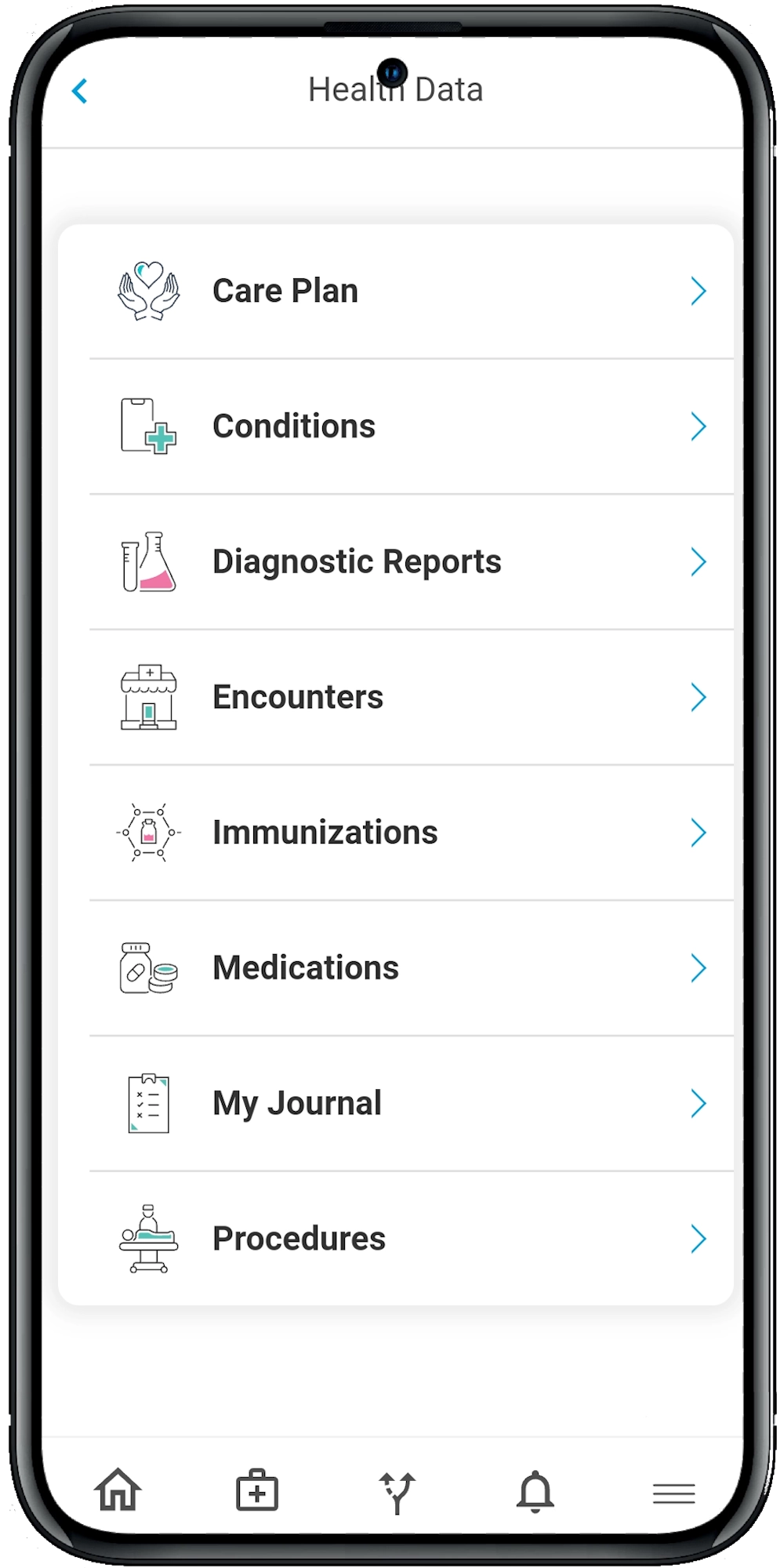
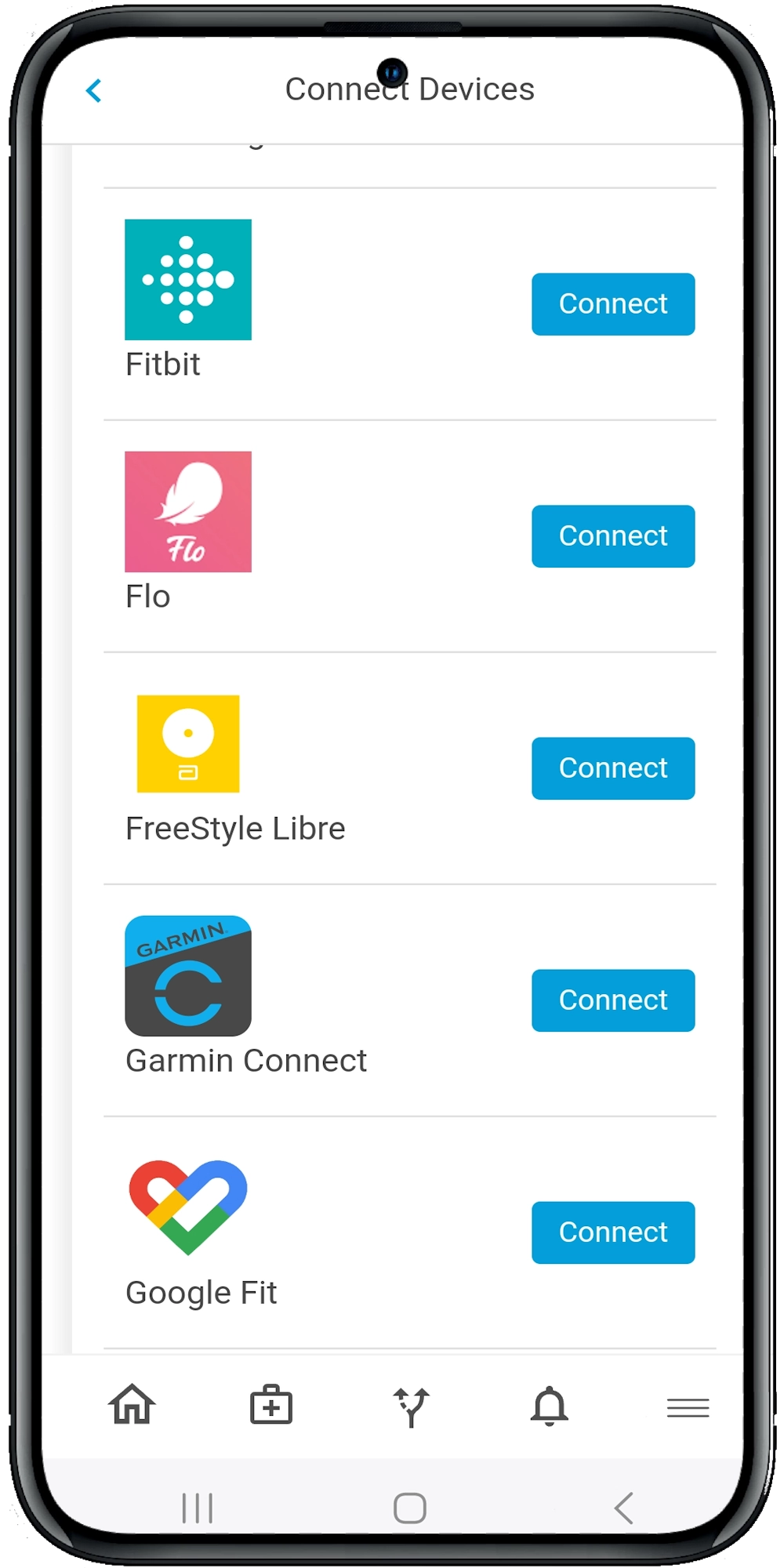
The Calcium Super App allows patients to combine all their health information into one place — not just EMRs from their doctor’s office, but also data from:
- Apple Health and Google Fit
- Smartwatches and fitness trackers
- Blood pressure cuffs, glucose monitors, and smart scales
- Nutrition, sleep and workout apps
- Medication tracking and personal health journals
This all-in-one integration creates a living, breathing profile of your health — constantly updating and adapting in real time.
And on the provider side? That’s where Calcium Core comes in. Healthcare teams can see a 360-degree view of their patient’s health. Not just what happened at the last visit, but how the patient is doing right now — at home, at work, and in between appointments.
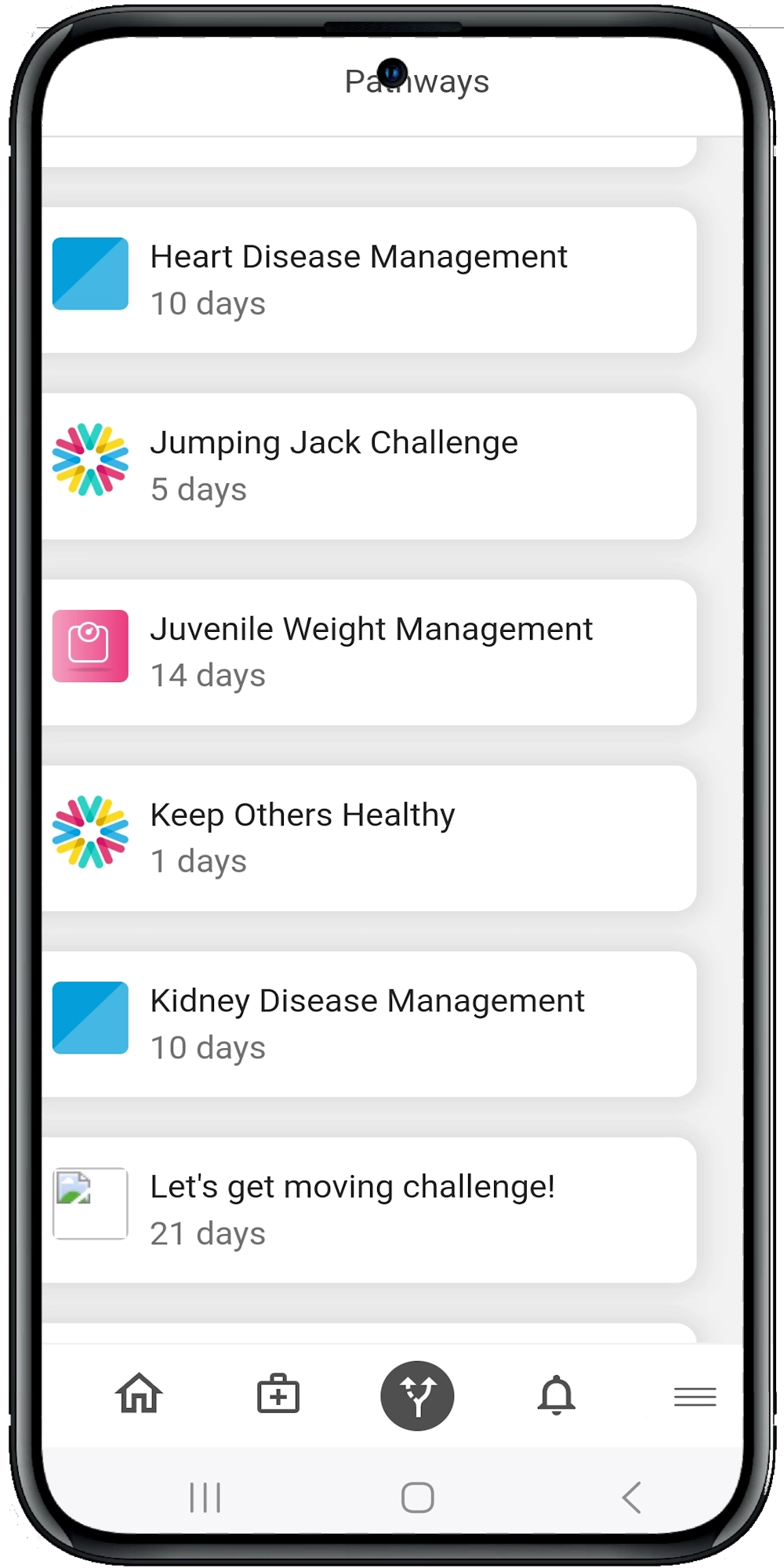
They can spot trends, set alerts for abnormal vitals, monitor treatment compliance, and even assign digital care pathways that guide patients step-by-step toward their goals.
Turning Raw EMR Data into Early Intervention
Let’s break that down. How exactly does Calcium turn raw EMR data into a life-saving tool?
- Real-Time Alerts for Emerging Risks. The platform continuously monitors health inputs. If someone’s blood pressure is slowly climbing or if they skip their meds for several days in a row, Calcium sends alerts to both the patient and their care team.
- Digital Pathways Tailored to the Individual. These aren’t one-size-fits-all templates. Calcium’s AI-powered pathways adjust based on your data and health goals. Whether you’re managing diabetes, recovering from surgery, or working on weight loss, you get daily guidance — and your provider sees your progress.
- Provider Dashboards That Prioritize Action. Calcium Core helps healthcare teams prioritize their attention. Rather than sorting through dozens of EMR files, they see who’s doing fine and who needs help now.
- Better Collaboration Across the Care Team. With EMR data shared securely across specialists, therapists and family caregivers, everyone is finally on the same page. No more faxing lab results or guessing about medication changes.
Real-World Example: Catching Trouble Before It Escalates
Let’s say a 58-year-old man has been borderline hypertensive for years. His EMR shows a diagnosis, but his primary care doctor hasn’t seen him in 8 months. He’s also gained 10 pounds, started sleeping poorly, and hasn’t been taking his prescribed meds consistently.
With traditional EMRs, that story might unfold into a stroke, an ER visit or a costly inpatient stay.
But with Calcium:
- His weight and sleep patterns are tracked via his wearable
- He logs his missed medications in the app
- The system triggers an alert in the provider dashboard
- His doctor assigns him to a hypertension pathway, which includes daily reminders, stress-reduction tips, and a weekly check-in
By the time he comes in for a follow-up, his BP is down, his compliance is up and he’s back on track — no hospitalization needed.
Why EMRs Alone Aren’t Enough — And Never Were
Research shows that while EMRs improve accuracy and reduce duplication, they also carry unintended consequences. One study in the summary you provided reveals that data entry fatigue and lack of flexibility can actually frustrate clinicians and reduce engagement.
EMRs weren’t designed to engage, they were built to record.
But the future of healthcare demands more. We need tools that are dynamic, patient-facing and actionable. Calcium steps into that gap — merging the power of EMR data with real-time monitoring, personalized guidance and actionable insights.
From Paper Charts to Predictive Health Ecosystems
What we’re witnessing is a shift from passive information systems to predictive health ecosystems. Imagine your EMR not as a storage unit, but as a smart dashboard — one that nudges you when something looks off and supports you in doing something about it.
That’s the future. And honestly, it’s the present — for those using platforms like Calcium.
Because by the time an at-risk patient ends up in the hospital, we’ve already missed several chances to intervene. But when EMRs are combined with real-time data and AI-powered tools, we get more than a record of the past — we get a window into the future.
The Wrap
Healthcare isn’t just about treating illness — it’s about preventing it. And that starts with knowing who’s at risk before they land in the ER.
Patient EMRs offer the raw material, but without integration, real-time monitoring and smart guidance, they fall short of their potential. The Calcium Digital Health Platform changes that. By uniting EMRs with live health data, personalized care pathways and AI-powered insights, Calcium empowers providers to deliver proactive, value-based care that works. Patients stay engaged. Providers stay informed. And health outcomes improve across the board.
References
- Kalra D. (2006). Electronic health record standards. Yearbook of medical informatics, 136–144. https://pubmed.ncbi.nlm.nih.gov/17051307/
- Ambinder E. P. (2005). A history of the shift toward full computerization of medicine. Journal of oncology practice, 1(2), 54–56. https://doi.org/10.1200/JOP.2005.1.2.54
- Hoerbst, A., & Ammenwerth, E. (2010). Electronic health records. A systematic review on quality requirements. Methods of information in medicine, 49(4), 320–336. https://doi.org/10.3414/ME10-01-0038
- Safran, C., & Goldberg, H. (2000). Electronic patient records and the impact of the Internet. International Journal of Medical Informatics, 60(1), 77–83. https://doi.org/10.1016/S1386-5056(00)00106-4
- Hassey, A., Gerrett, D., & Wilson, A. (2001). A survey of validity and utility of electronic patient records in a general practice. BMJ, 322(7299), 1401–1405. https://doi.org/10.1136/bmj.322.7299.1401
- Greenhalgh, T., Potts, H. W. W., Wong, G., Bark, P., & Swinglehurst, D. (2009). Tensions and paradoxes in electronic patient record research: A systematic literature review using the meta-narrative method. The Milbank Quarterly, 87(4), 729–788. https://doi.org/10.1111/j.1468-0009.2009.00578.x