Türkiye’de bahis severler için en çok tercih edilen bettilt giriş adreslerden biri olmaya devam ediyor.
Curacao lisanslı platformlar arasında güvenilirlik açısından üst sıralarda bahsegel giriş yer alan, uluslararası denetimlerden başarıyla geçmiştir.
Kazançlı bahis deneyimi arayan herkes için bettilt doğru seçimdir.
Rulet masalarında en çok tercih edilen bahis türleri arasında kırmızı/siyah ve tek/çift seçenekleri yer alır; pinco giriş bu türleri destekler.
Basketbol tutkunları için en iyi kupon fırsatları bettilt sayfasında yer alıyor.
How to Future-Proof Your Practice with Smarter Digital Health Tools
Digital records are now the backbone of every clinical decision, patient interaction, and operational workflow. But as practices try to modernize, one question keeps coming up: What’s the real difference between Electronic Medical Records (EMR) and Electronic Health Records (EHR)—and why does it matter?
It’s easy to assume these systems are interchangeable. After all, both store patient data, replace paper charts, and aim to streamline care. More importantly, many people in the healthcare field use EMR and EHR interchangeably.
But under the hood, they serve very different purposes. And choosing the wrong one (or sticking with an outdated setup) could mean more than just inefficiency—it could mean missed insights, poor patient engagement, or even compliance issues.
Whether you’re launching a new practice, scaling operations, or simply trying to keep up with industry standards, understanding the EMR vs. EHR debate is more than a tech issue—it’s a strategy decision that shapes how you deliver care.
What’s the Real Difference Between EMR and EHR?
If you’re in healthcare, chances are you’ve heard the terms EMR and EHR used interchangeably. But while they sound similar, they serve very different purposes—and choosing the right one can seriously impact how your practice delivers care.
Let’s start with the basics:
- EMR (Electronic Medical Record) refers to a digital version of a paper chart. It’s limited to one practice and mostly focuses on clinical data like diagnoses, prescriptions, and visit notes.
- EHR (Electronic Health Record) is much broader. It follows a patient across multiple providers, care settings, and time points. It includes medical history, lab results, imaging, medications, and even patient-generated data.
Think of EMRs as the digital filing cabinets of healthcare. EHRs? They’re more like intelligent ecosystems designed for care coordination and insight sharing.
What the Research Tells Us About Digital Health Records
Electronic records promise efficiency, better outcomes, and smarter care. But they also come with trade-offs. The most recent research on Electronic Patient Records (EPRs)—which conceptually overlap with EMRs and EHRs—shows just how complex the landscape really is.
One study found EPRs offer high accuracy and strong clinical support, improving prescription accuracy up to 99.7%. That’s great. But accuracy alone isn’t enough.
Another study explored how standardization and culture are key. Even the most advanced EPR won’t work if the system clashes with a practice’s workflow or overwhelms the care team. And a third piece dove into the human side of digital records—highlighting how poorly designed systems create tensions like data entry fatigue, loss of clinical autonomy, and fractured communication.
The takeaway? Records are more than tools. They shape how care is delivered, how teams collaborate, and how patients engage. That’s why understanding the difference between EMRs and EHRs—and what comes next—is more important than ever.
Common Challenges Providers Face with EMR Records
Still relying on EMR records to manage patient care? Here are the most common barriers healthcare teams run into—and why sticking with EMRs might be holding you back.
1. Siloed Systems and Fragmentation
EMRs are usually locked within one clinic or organization. If a patient sees another provider, that information rarely follows them. You’re left making decisions without the full story—or spending hours tracking it down.
2. Limited Interoperability
EMRs don’t play well with others. They often lack standardized APIs or compliance with HL7 and FHIR. That means no easy record exchange with hospitals, specialists, or pharmacies.
This aligns with Kalra’s findings: EPRs fail when systems can’t preserve the clinical meaning of data across platforms. Interoperability isn’t just about access—it’s about understanding.
3. Outdated Interfaces and Workflow Disruption
Many EMR platforms are hard to use. They slow down documentation, frustrate providers, and contribute to burnout. Ambinder’s study of oncology clinics revealed how poor design makes digital records a burden, not a benefit.
If your team spends more time navigating the software than engaging with patients, something’s broken.
4. No Real-Time Data Integration
EMRs rely on episodic input—office visits, lab uploads, or post-discharge summaries. Meanwhile, patients are generating valuable data daily through wearables, glucose monitors, and fitness apps.
Without real-time syncing, you miss trends that could inform early intervention or chronic care management.
5. Minimal Patient Access or Ownership
Most EMRs weren’t built with patients in mind. They offer limited portals—if any—and rarely give users control over their own records. This leaves patients feeling disconnected from their care journey.
Research on EPRs shows that empowerment matters. Systems that invite participation lead to better outcomes and adherence.
6. Security and Privacy Gaps
Data breaches are a growing threat. Many EMRs still lack modern safeguards like role-based access, encryption, or transparent audit logs.
Hoerbst and Ammenwerth’s research emphasized that security isn’t optional—it’s foundational to any digital record system that patients and providers can trust.
7. Data Without Context or Clinical Value
Raw data can overwhelm providers if it’s not structured or prioritized. Alerts, test results, and visit summaries flood the screen, but offer little guidance.
What’s missing is context—timelines, trends, correlations—that help clinicians act decisively. Without it, records become digital noise.
How to Choose the Right Digital Record System for Your Practice
So what should providers look for when deciding between EMR, EHR, or something more advanced?
Here are a few must-haves:
- Multi-provider Connectivity. Your system should support care beyond your clinic—integrating with labs, specialists, and hospitals.
- Patient Engagement. Look for tools that let patients view, track, and share their data easily.
- Usability. Your team shouldn’t need a manual or a three-hour training session to document a basic visit.
- Interoperability. HL7, FHIR, and API support are non-negotiable.
- Real-Time Syncing. Pull in data from wearables, home devices, and wellness apps for a full health picture.
- Security Compliance. HIPAA standards, audit trails, and encryption should be baked in—not added later.
- Scalability. Make sure the platform can grow with your practice and support future models like telehealth and remote care.
Why Calcium Is More Than Just an EHR or EMR
This is where Calcium stands out. It’s not just a better EMR or EHR—it’s a full digital health platform designed to unify records, empower patients, and support providers with decision-ready insights.
Here’s how Calcium bridges the gap:
- It’s connected. Calcium pulls data from over 95% of U.S. health systems using HL7 and FHIR.
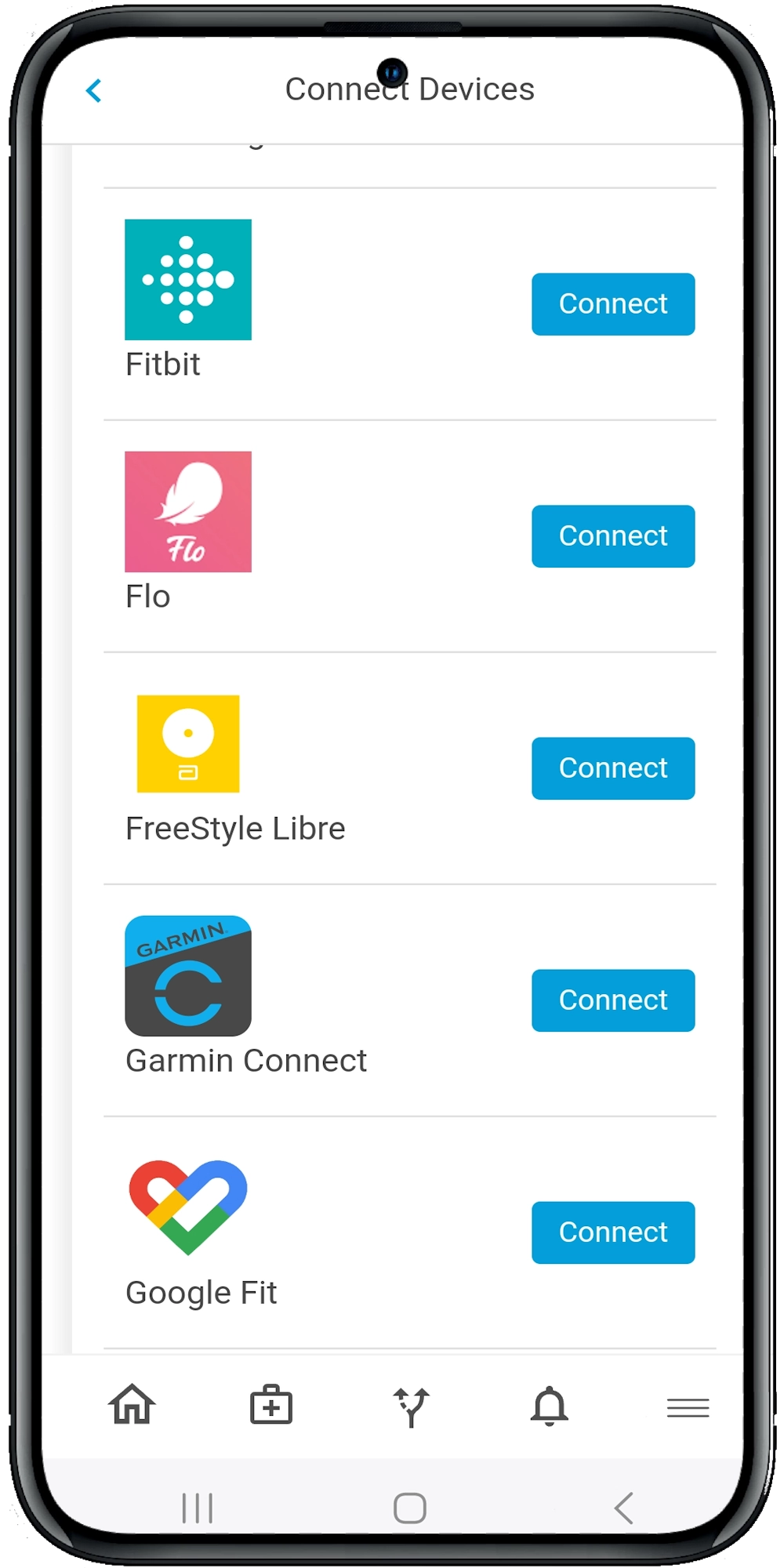
- It’s real-time. Syncs with Apple Health, Fitbit, Omron, Dexcom, and other smart devices.
- It’s patient-centered. The Calcium Super App lets patients manage conditions, track vitals, and share records securely.
- It’s secure. HIPAA-compliant, encrypted, and built with role-based access.
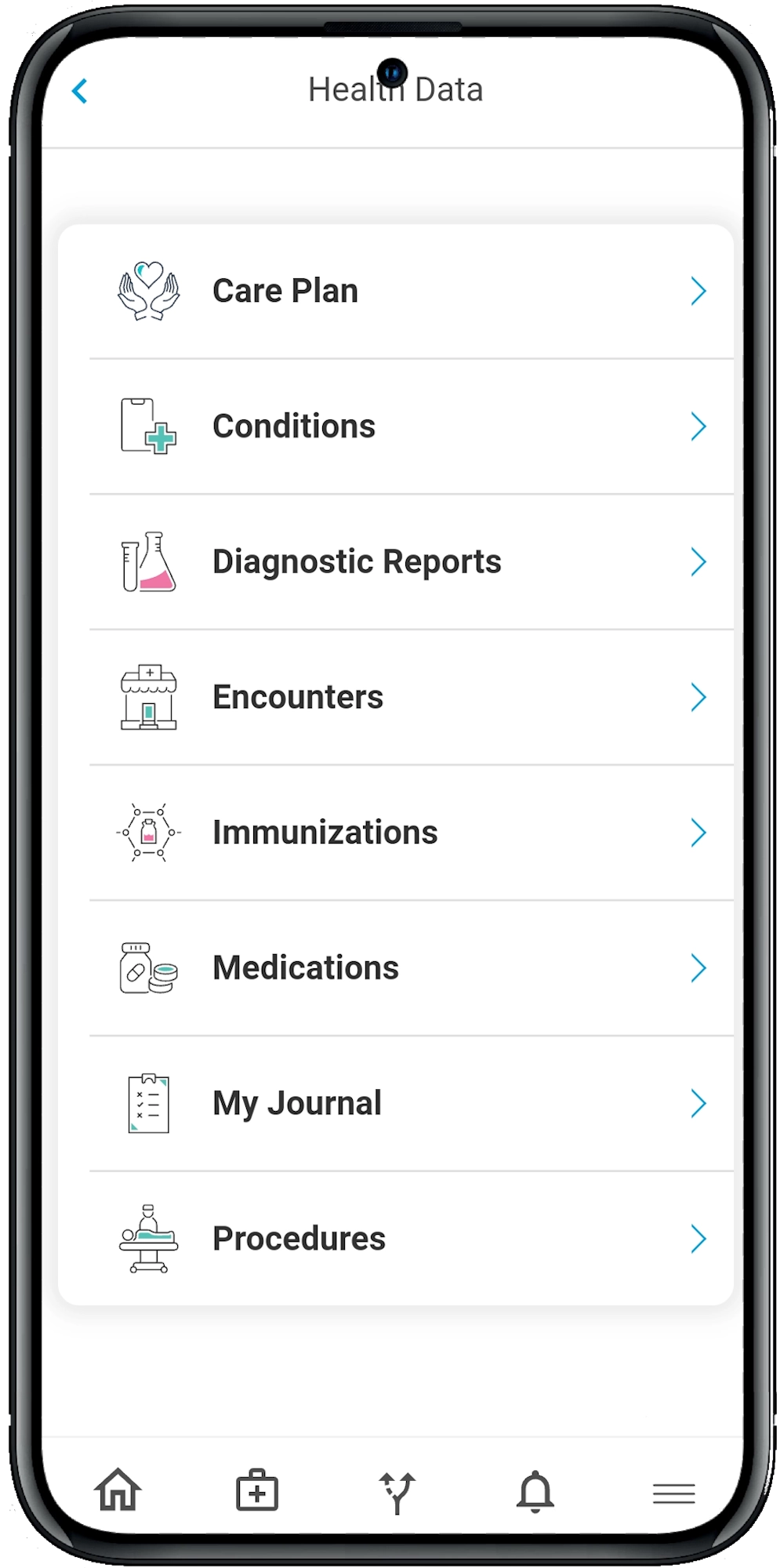
- It’s smart. Organizes data into structured modules—conditions, meds, labs, care plans—and delivers clinical context.
Unlike traditional EMRs, Calcium doesn’t require you to abandon your current system. Instead, it layers intelligence and interoperability on top—enhancing what you already use.
Why the EMR vs. EHR Debate Might Be Outdated
Choosing between EMR and EHR isn’t just a matter of semantics—it’s a decision that can shape the future of your practice. As the healthcare landscape evolves, so should your digital tools. Providers need solutions that go beyond static records and support truly connected, patient-centered care.
But let’s be honest: The real question isn’t “Should I use EMR or EHR?” The question is, “How can I get the full value out of my digital records—without compromising on usability, security, or patient care?”
That’s where platforms like Calcium come in. Calcium bridges the gap between traditional systems and modern needs—integrating real-time data, enhancing care coordination, and empowering patients with full access and control over their health journey. It’s not about replacing your EMR or EHR—it’s about completing it.
If you’re ready to move from fragmented records to intelligent, actionable insight, it’s time to explore what smarter digital health really looks like.
Reference
- Kalra D. (2006). Electronic health record standards. Yearbook of medical informatics, 136–144. https://pubmed.ncbi.nlm.nih.gov/17051307/
- Ambinder E. P. (2005). A history of the shift toward full computerization of medicine. Journal of oncology practice, 1(2), 54–56. https://doi.org/10.1200/JOP.2005.1.2.54
- Hoerbst, A., & Ammenwerth, E. (2010). Electronic health records. A systematic review on quality requirements. Methods of information in medicine, 49(4), 320–336. https://doi.org/10.3414/ME10-01-0038
- Häyrinen, K., Saranto, K., & Nykänen, P. (2008). Definition, structure, content, use and impacts of electronic health records: A review of the research literature. International Journal of Medical Informatics, 77(5), 291–304. Elsevier Ireland Ltd. Retrieved from https://doi.org/10.1016/j.ijmedinf.2007.09.001.
- Campbell, K., Louie, P., Levine, B., & Gililland, J. (2020). Using patient engagement platforms in the postoperative management of patients. Current Reviews in Musculoskeletal Medicine. https://doi.org/10.1007/s12178-020-09638-8
- Knapp, P. W., Keller, R. A., Mabee, K. A., Pillai, R., & Frisch, N. B. (2021). Quantifying patient engagement in total joint arthroplasty using digital application-based technology. The Journal of Arthroplasty, 36(11), 3108–3117. https://doi.org/10.1016/j.arth.2021.04.022