Türkiye’de bahis severler için en çok tercih edilen bettilt giriş adreslerden biri olmaya devam ediyor.
Curacao lisanslı platformlar arasında güvenilirlik açısından üst sıralarda bahsegel giriş yer alan, uluslararası denetimlerden başarıyla geçmiştir.
Kazançlı bahis deneyimi arayan herkes için bettilt doğru seçimdir.
Rulet masalarında en çok tercih edilen bahis türleri arasında kırmızı/siyah ve tek/çift seçenekleri yer alır; pinco giriş bu türleri destekler.
Basketbol tutkunları için en iyi kupon fırsatları bettilt sayfasında yer alıyor.
How to Choose an EHR App That Enhances Care, Engages Patients, and Actually Works
Electronic Health Record (EHR) apps are everywhere—but are they actually helping your patients? In a healthcare world driven by outcomes, efficiency, and patient satisfaction, simply having an EHR system isn’t enough. What matters is how well it works for the people using it—especially the patients.
Today’s patients aren’t passive recipients of care. They’re tech-savvy, data-aware, and increasingly expect healthcare experiences to mirror the convenience of the apps they use daily. So if your EHR app feels more like a glorified spreadsheet than a true health companion, it might be time for a serious upgrade.
Whether you’re a physician, care manager, or digital health leader, choosing the right EHR app can mean the difference between empowered patients and missed opportunities. But with so many platforms out there, how do you know what features actually matter?
Let’s break it down—feature by feature—so you can make the best choice for your practice and your patients.
Electronic Health Records were supposed to revolutionize healthcare. Yet here we are—decades later—still struggling with clunky systems, siloed data, and burned-out clinicians. So if you’re a provider or care organization looking for a better EHR app solution for your patients, you’re not alone.
Let’s walk through the top features you really want to see in an EHR app that actually improves outcomes—for both your patients and your team.
1. True Interoperability That Actually Works
If an EHR app can’t talk to other systems, it’s basically a digital island—and that’s not helping anyone.
Most traditional EHRs still struggle to connect with outside providers, specialists, labs, or even other hospital systems. This lack of interoperability creates fragmented records, duplicated tests, and ultimately, delays in care. As Dr. D. Kalra’s research pointed out back in 2006, the core issue isn’t just technology—it’s meaning. Without shared structure and context, medical records lose clinical value during transfers.
A truly interoperable EHR app should:
- Use national standards like HL7 and FHIR to pull in data from multiple systems
- Consolidate labs, diagnoses, medications, and provider notes into one clean view
- Maintain the clinical intent behind the data
This is where newer digital platforms like Calcium shine. Calcium integrates with over 95% of U.S. health systems, allowing patients and providers to access a unified, patient-owned record that stays consistent—no matter where care happens.
2. Real-Time Health Data, Not Just Snapshots
Traditional EHRs give you a snapshot of your patient’s health—but what about the rest of the time?
Today’s patients are wearing smartwatches, tracking steps, logging meals, monitoring blood pressure from home—you name it. That data is valuable. It gives providers a fuller picture of daily life beyond the clinic walls. Yet, most EHRs ignore it entirely.
Your EHR app should be able to:
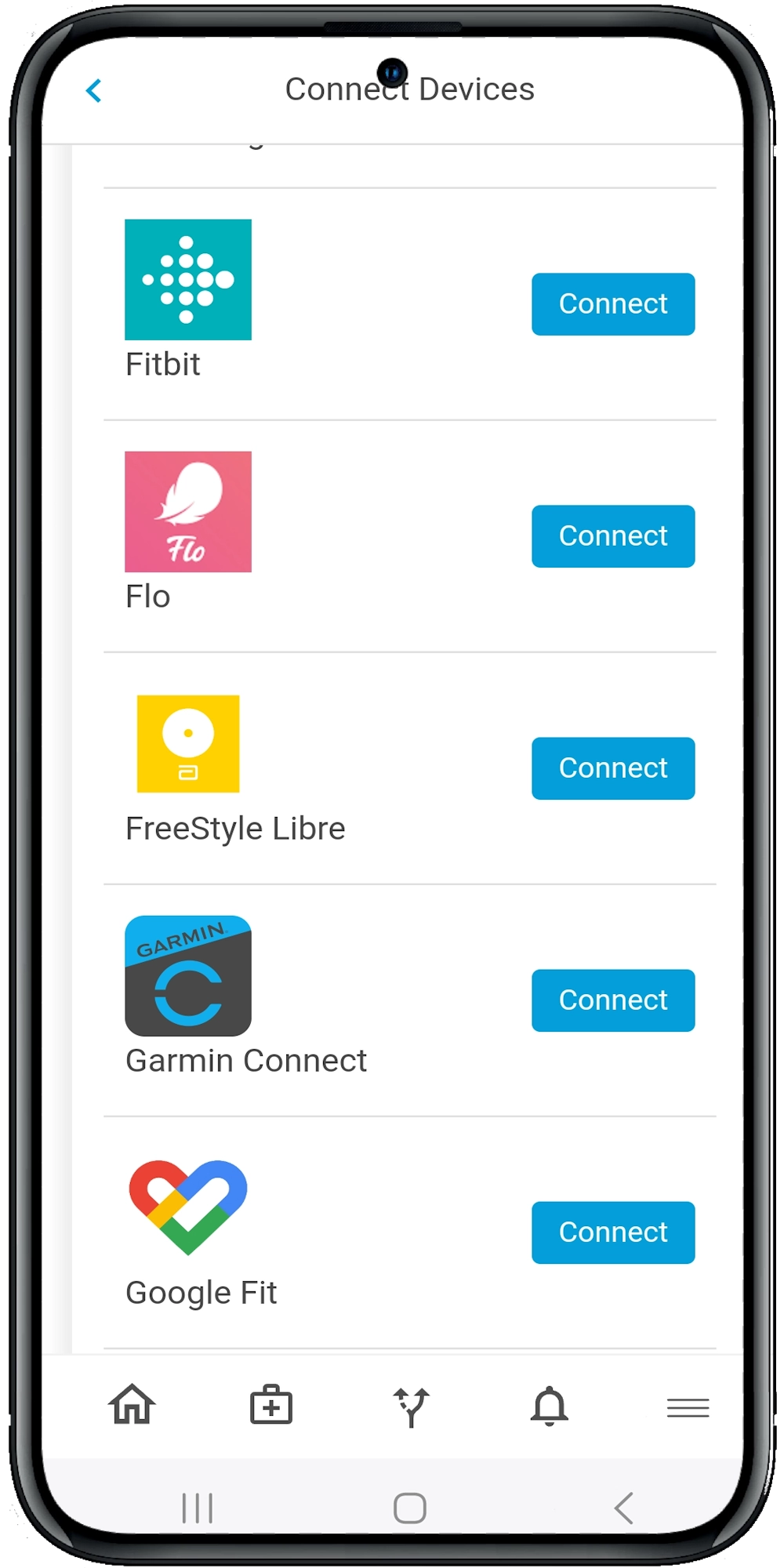
- Integrate with Apple Health, Google Fit, Fitbit, and other popular platforms
- Pull in real-time vitals like heart rate, sleep patterns, glucose levels, and more
- Sync automatically with home medical devices like Omron or Dexcom
Calcium does all this natively. It’s designed to unify medical-grade data with lifestyle metrics so that providers can see not just what happened, but why it happened.
3. A User Experience That Puts Patients in Control
Let’s be honest—most EHR apps look like they were designed in the early 2000s. If your patients can’t figure it out in under five minutes, they won’t use it. Period.
Oncology-focused research from Ambinder (2005) shows just how overwhelming EHRs can be for clinicians, let alone patients. Poor design doesn’t just waste time—it creates risk. Data gets missed, tasks get skipped, and people disengage.
So instead of giving patients a glorified PDF viewer, choose an EHR app with:
- A clean, mobile-friendly interface that’s easy to use
- Simple tools to log symptoms, view medications, and track progress
- Language that’s friendly, not filled with medical jargon
The Calcium Super App is built with this in mind. From medication reminders to guided wellness pathways, it helps patients stay organized and active in their care—all from their phones.
4. Actionable, Context-Rich Information
Not all data is helpful. A giant dump of test results and doctor notes is overwhelming unless it’s organized clearly and meaningfully.
What providers—and patients—really need is structured insight, not just raw numbers.
Look for an EHR app that organizes data into:
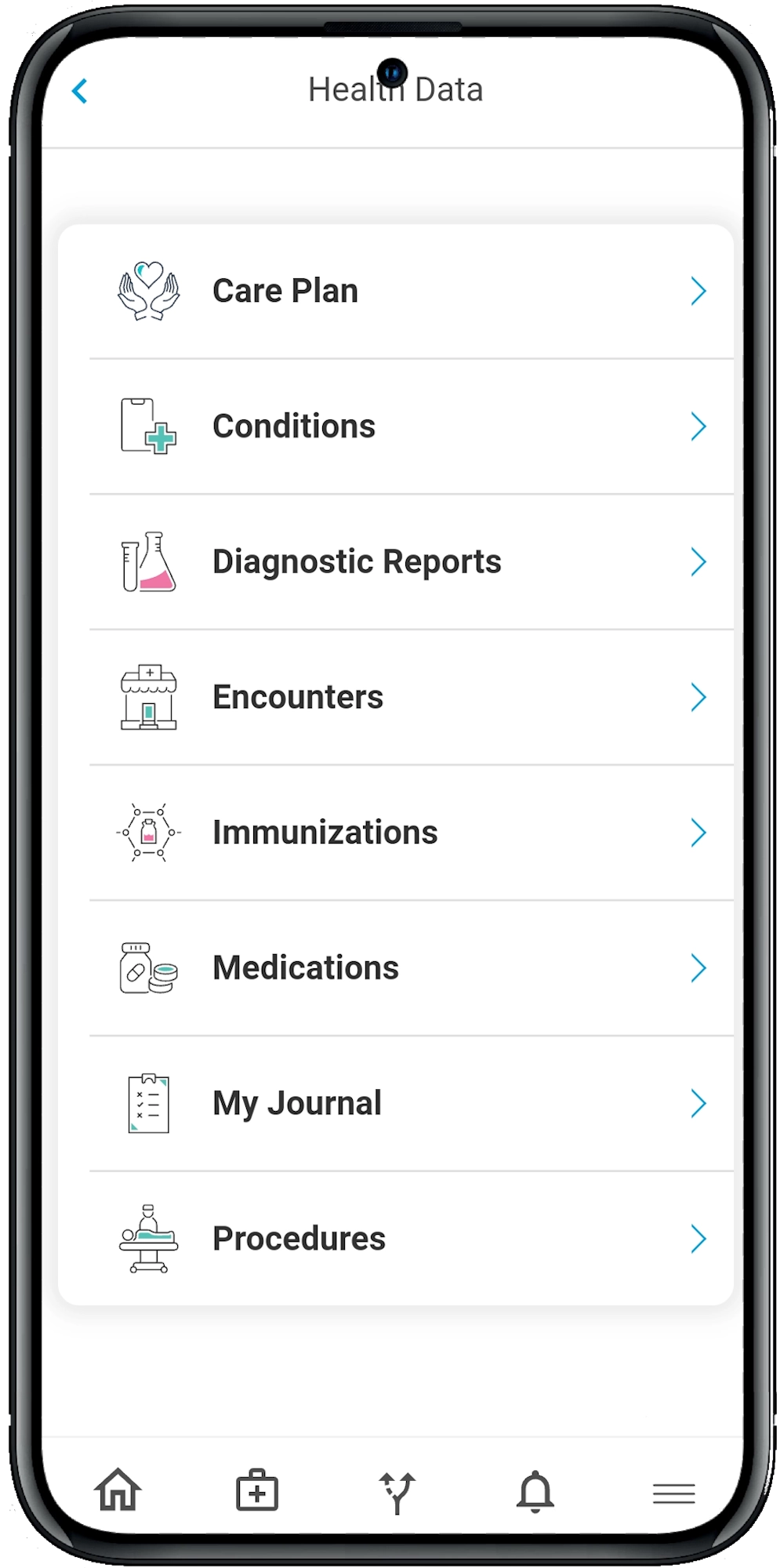
- Modules like “Medications,” “Allergies,” “Procedures,” and “Lab Results”
- Timeline views of care episodes and diagnoses
- Flags or alerts for potential issues or upcoming tasks
Platforms like Calcium Core do this by creating a dashboard that highlights what’s important now. It turns the chaos of healthcare into a focused, prioritized action plan.
5. Security and Privacy That Patients Can Trust
Health data is personal. Really personal. Your EHR app has to treat it that way.
According to the international standards highlighted in Hoerbst & Ammenwerth’s review, many EHR systems still fall short on basic security principles. That’s a major red flag. You don’t want your patients wondering if their health info is safe.
A secure EHR app should offer:
- HIPAA compliance (obviously)
- Role-based access so patients can choose who sees what
- End-to-end encryption and secure authentication
Calcium includes audit logs, patient-controlled sharing, and even emergency access tools—making privacy practical, not painful.
6. Tools That Encourage Engagement, Not Just Storage
EHRs shouldn’t be dusty digital filing cabinets. They should be living tools that actually guide patients through their health journey.
The best EHR apps offer engagement features that remind, educate, and motivate users. Think of it like having a pocket-sized health coach that never sleeps.
Look for features like:
- Automated reminders for meds, follow-ups, or pathway steps
- Push notifications with motivational tips or education
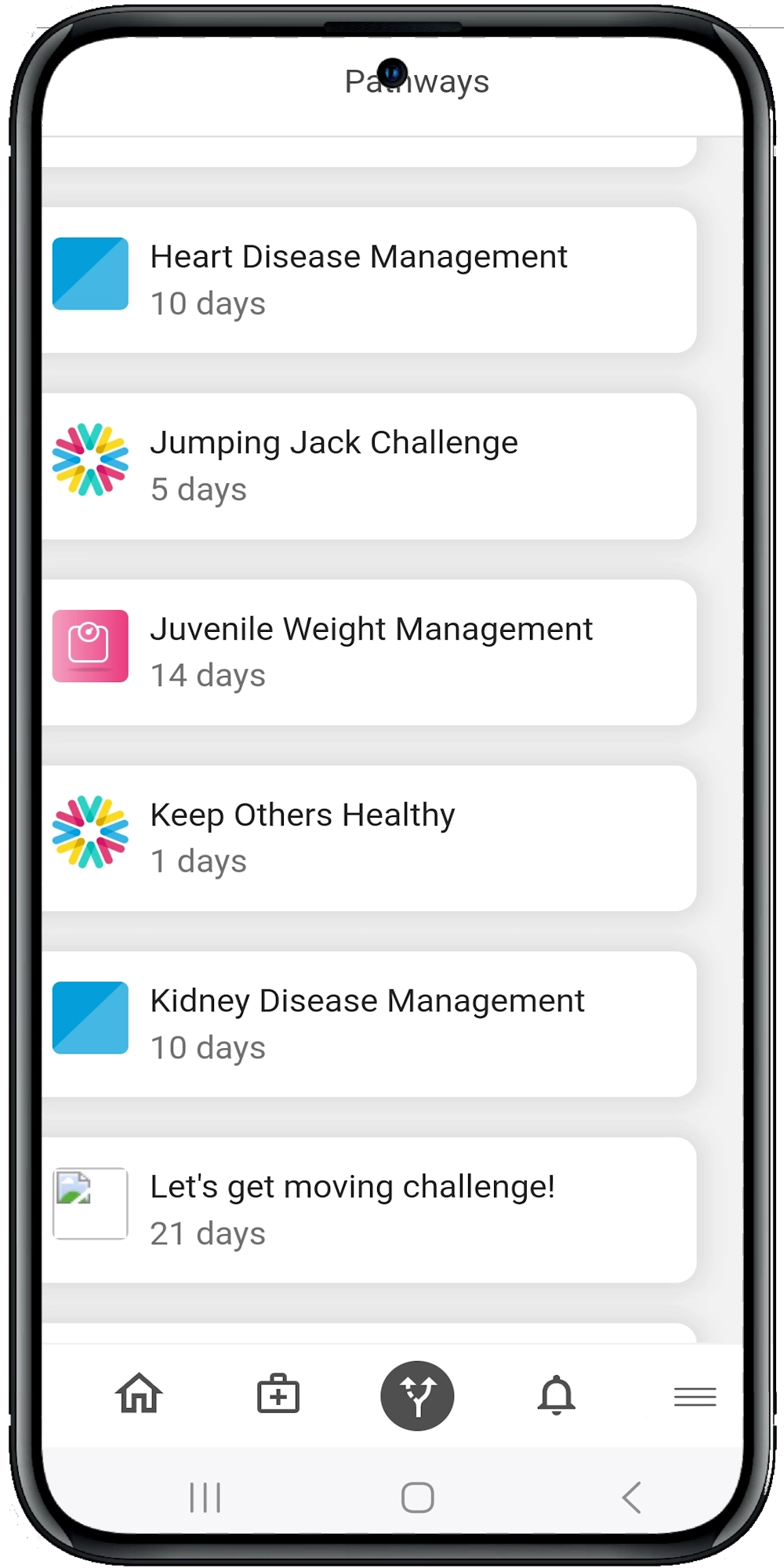
- Built-in digital care plans or “health pathways” tailored to the patient
Calcium’s AI-powered pathways are a game-changer here. Whether it’s diabetes management, post-op recovery, or mental wellness, these guided plans give users step-by-step support to stay on track—just like a provider would.
7. Easy, Secure Sharing Across the Care Network
Healthcare isn’t a solo act. Patients often see multiple specialists, therapists, or caregivers. That’s why your EHR app should make sharing effortless and secure.
A good EHR app lets patients:
- Share records with family members or emergency contacts
- Grant access to new providers without faxing forms or waiting on IT
- View who accessed their data and when
Calcium’s approach is smart: with just a few taps, users can control exactly who sees their health data—and revoke access just as easily. That’s transparency in action.
The Wrap
When you combine all of these features—interoperability, usability, security, and engagement—you get more than just an EHR. You get a true health experience platform.
And isn’t that what we’ve been aiming for all along?
The right electronic health record app isn’t just a tool—it’s a bridge between patients and better outcomes. As healthcare continues shifting toward personalization, real-time data, and patient-centered experiences, your choice of EHR app can either drive that momentum forward or hold it back.
If your current system falls short on usability, integration, or patient engagement, it’s time to rethink what’s possible. Platforms like Calcium are redefining what an EHR experience should be—intuitive, connected, and designed with both providers and patients in mind.
Reference
- Kalra D. (2006). Electronic health record standards. Yearbook of medical informatics, 136–144. https://pubmed.ncbi.nlm.nih.gov/17051307/
- Ambinder E. P. (2005). A history of the shift toward full computerization of medicine. Journal of oncology practice, 1(2), 54–56. https://doi.org/10.1200/JOP.2005.1.2.54
- Hoerbst, A., & Ammenwerth, E. (2010). Electronic health records. A systematic review on quality requirements. Methods of information in medicine, 49(4), 320–336. https://doi.org/10.3414/ME10-01-0038
- Häyrinen, K., Saranto, K., & Nykänen, P. (2008). Definition, structure, content, use and impacts of electronic health records: A review of the research literature. International Journal of Medical Informatics, 77(5), 291–304. Elsevier Ireland Ltd. Retrieved from https://doi.org/10.1016/j.ijmedinf.2007.09.001