Türkiye’de bahis severler için en çok tercih edilen bettilt giriş adreslerden biri olmaya devam ediyor.
Curacao lisanslı platformlar arasında güvenilirlik açısından üst sıralarda bahsegel giriş yer alan, uluslararası denetimlerden başarıyla geçmiştir.
Kazançlı bahis deneyimi arayan herkes için bettilt doğru seçimdir.
Rulet masalarında en çok tercih edilen bahis türleri arasında kırmızı/siyah ve tek/çift seçenekleri yer alır; pinco giriş bu türleri destekler.
Basketbol tutkunları için en iyi kupon fırsatları bettilt sayfasında yer alıyor.
A Smarter Way to Support Recovery Beyond the OR
Surgery doesn’t end at discharge—it just changes location. Once the procedure is done, families suddenly become the care team, often without the training or tools they need. And in ambulatory surgery centers (ASCs), where same-day discharge is the norm, the gap between clinical care and home care can feel like a chasm.
For many families, that gap is filled with guesswork, sticky notes, and a growing sense of overwhelm. What’s the right dose of medication? Is this swelling normal? Did we miss the follow-up call? These questions can create unnecessary anxiety, and worse, they can impact patient outcomes. Yet despite the crucial role family members play, they’re often left out of the loop.
So, how can we fix that? The answer isn’t just more instructions—it’s smarter, shared health tracking that bridges the clinical-to-home divide and puts families back in the care conversation.
What Makes Family Health Tracking So Challenging?
Even the most dedicated caregivers can struggle when tracking a loved one’s post-op recovery. The typical ASC discharge includes a stack of papers, a rushed explanation, and maybe a follow-up appointment—if the patient remembers it. That’s not a system; that’s a gamble.
Let’s break down the seven core challenges families face when trying to stay on top of post-surgical health tracking:
-
Inconsistent Pre-Op Communication
Families often receive fragmented updates, if they get any at all. Missed instructions or misunderstandings around fasting, medication pauses, or transportation can derail a surgery before it begins. One study showed that better preoperative phone communication cut pediatric surgery cancellations nearly in half.
-
No Real-Time Post-op Monitoring
Once the patient is home, families have no structured way to track pain, healing, or warning signs. It’s guesswork unless a problem becomes obvious—and by then, it may be too late. Studies show remote symptom monitoring after surgery reduces unnecessary urgent care visits by up to 42%.
-
Lack of Centralised Health Records
Caregivers juggle multiple documents, portals, and verbal instructions. There’s no single source of truth. As a result, it’s easy to forget the right medication dose or miss a post-op appointment.
-
Barriers to Follow-Up Care
Many patients must travel for in-person follow-ups, even when a simple update would do. This isn’t just inconvenient; it’s costly and unnecessary. Mobile app follow-up care has been shown to cut in-person visits by more than half without compromising outcomes.
-
Low Digital Literacy Among Caregivers
Some caregivers, especially older adults, find digital tools confusing. If a platform isn’t intuitive or mobile-friendly, it ends up unused, regardless of its benefits.
-
Disconnected Care Teams
There’s often a breakdown between the surgical team, the primary care provider, and other specialists. Without shared communication, families become the default messengers. That’s not just inefficient—it’s unsafe.
-
Limited Visibility into Recovery Milestones
Most families aren’t sure what a “normal” recovery looks like. Is that redness around the incision okay? Should the patient still need pain meds after five days? Without guidance, families either panic unnecessarily or overlook real complications.
Traditional Tools Aren’t Built for Families
You might wonder: Don’t patient portals solve this? Not really.
Patient portals were designed for one-on-one communication between the provider and the patient, not to support collaborative care. They often don’t allow caregiver access, don’t push reminders, and don’t provide real-time symptom tracking. Worse, they vary wildly between systems and usually lack mobile optimisation.
Paper instructions? They get lost. Verbal instructions? Forgotten. Apps that track steps or water intake? Great for fitness, not for managing a post-op recovery plan.
The reality is: families need more than just access—they need engagement, clarity, and shared responsibility.
How Calcium Turns Tracking into Empowerment
That’s where the Calcium digital health platform steps in. Designed with both patients and families in mind, Calcium bridges the gap between the ASC and the home, making it easier for caregivers to stay informed, organised, and proactive.
Here’s how Calcium addresses each of those seven pain points:
Streamlined Pre-op Instructions
Families receive clear, mobile-accessible prep checklists, reducing confusion and cancellations. Think of it as a GPS for surgery prep.
Real-Time Symptom Monitoring
Pain levels, medication logs, incision photos, and mood trackers can all be logged through the platform. Alerts flag any deviations, letting care teams respond faster and more precisely.
All-In-One Health Dashboard
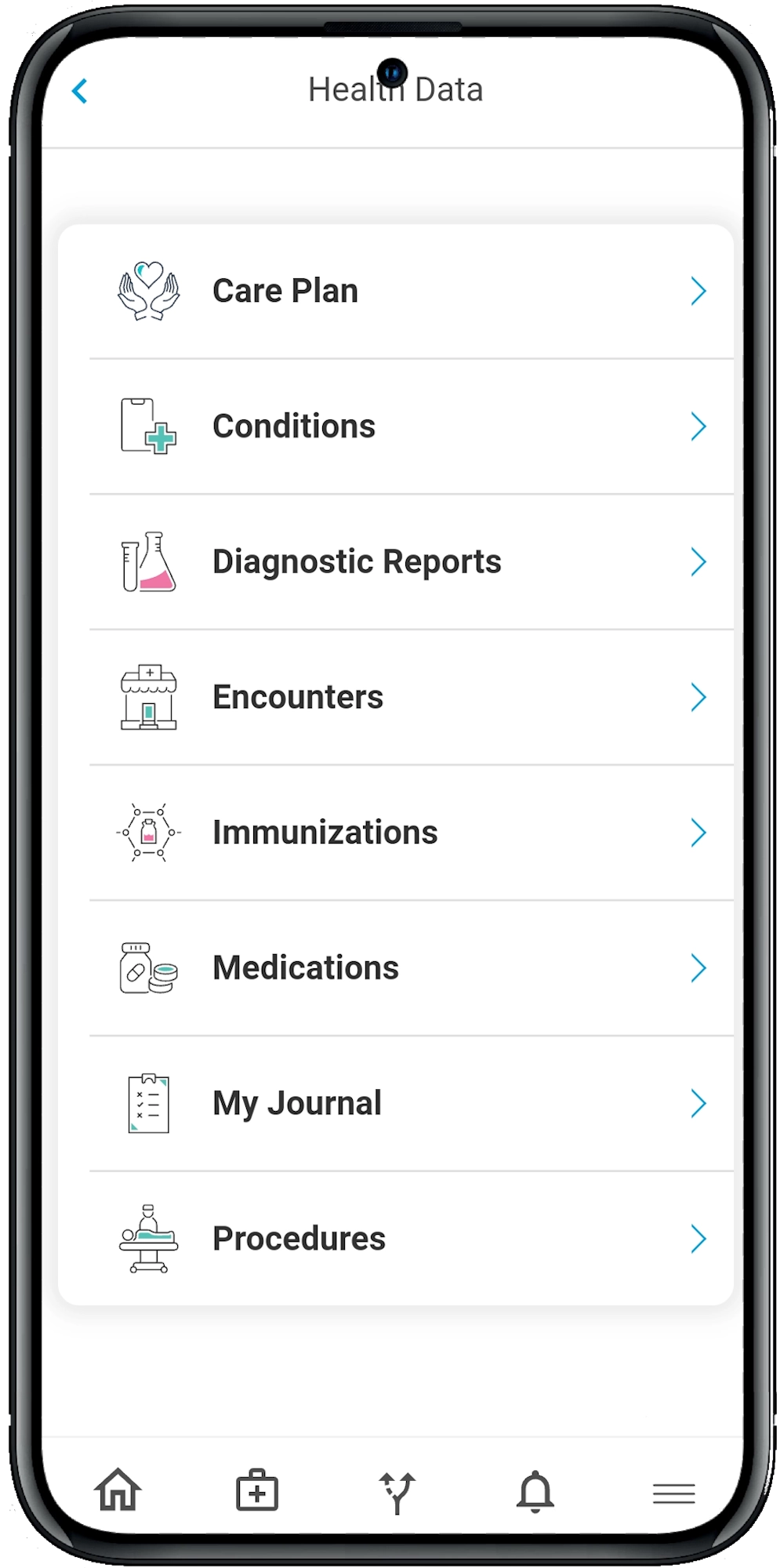
Instead of juggling paper discharge notes and portal passwords, families have one secure place to view meds, appointments, and progress updates.
Virtual Follow-Ups
Post-op care doesn’t always need an in-person visit. Through Calcium, patients can complete check-ins via the app, upload photos, and chat with clinicians. This cuts down on unnecessary trips while keeping providers in the loop.
Easy-To-Use Interface
The platform is intuitive, with step-by-step guides and visual prompts. It’s made for patients and caregivers with all levels of digital literacy.
Shared Access for Families
Multiple family members can have viewing privileges, meaning everyone stays informed. No more repeating updates or second-guessing whether Dad remembered to take his meds.
Recovery Timeline Tools
Caregivers can see where their loved one should be in recovery and get nudges when it’s time for a dressing change, a follow-up visit, or a mental health check-in.
Why This Matters for Value-Based Care
Empowering families isn’t just good practice—it’s good business in a value-based care model.
ASCs that adopt tools like Calcium can reduce readmissions, prevent complications, and boost satisfaction scores—all of which impact reimbursement and reputation. When care extends beyond the walls of the surgery center and into the home in a structured, trackable way, outcomes improve.
Family-centered tracking also helps meet CMS quality measures and patient experience benchmarks. Organisations that actively engage caregivers often see higher HCAHPS scores and better Press Ganey performance.
And let’s not forget—when families feel empowered, they’re more likely to trust the care team, follow instructions, and return to the same facility for future care.
Tech Isn’t Replacing Care—It’s Extending It
Some worry that technology might depersonalise care. But in reality, platforms like Calcium do the opposite. They humanise recovery by putting actionable information into the hands of those who need it most—family members at home, wondering what to do next.
Just like a pilot needs co-pilots to navigate a safe flight, ASC patients need co-navigators at home. Calcium gives caregivers the map, the compass, and the updates they need to help their loved ones land safely on the other side of surgery.
The Wrap
Families are the invisible engine behind every successful outpatient recovery—and it’s time we gave them the tools they deserve. With digital platforms like Calcium, we’re not just making health tracking easier; we’re making it collaborative, proactive, and empowering.
When everyone involved in a patient’s care journey has access to the same real-time information, recovery becomes safer, smoother, and more predictable. That’s not just convenience—that’s better care. For ASCs, embracing shared digital tracking means fewer avoidable readmissions, higher satisfaction scores, and stronger alignment with value-based care goals. But most importantly, it means supporting families who want to do right by their loved ones.
References
- Andrews, S. M. (2009). Patient Family–Centered Care in the Ambulatory Surgery Setting. Journal of PeriAnesthesia Nursing, 24(4), 244–246. https://doi.org/10.1016/j.jopan.2009.05.100
- Allen, J., & Petersen, B. (n.d.). Clinical Gastroenterology and Hepatology 2014;12:911-918 PRACTICE MANAGEMENT: THE ROAD AHEAD. https://doi.org/10.1016/j.cgh.2014.04.002
- Lee, C. M., Rodgers, C., Oh, A. K., & Muckler, V. C. (2017). Reducing Surgery Cancellations at a Pediatric Ambulatory Surgery Center. AORN Journal, 105(4), 384–391. https://doi.org/10.1016/j.aorn.2017.01.011
- Pai, S.-L., Ladlie, B., Locke, K., & Getting, R. G. (2024). Patient-Centered Care for Ambulatory Surgery. International Anesthesiology Clinics, 63(1), 14–22. https://doi.org/10.1097/aia.0000000000000461
- Pusic, A. L., Stetson, P., & Temple, L. (2021). Remote Monitoring for Patients After Ambulatory Surgery—Is It Ready for Prime Time? JAMA Surgery. https://doi.org/10.1001/jamasurg.2021.1799
- Armstrong, K. A., Coyte, P. C., Bhatia, R. S., & Semple, J. L. (2015). The Effect of Mobile App Home Monitoring on Number of In-Person Visits Following Ambulatory Surgery: Protocol for a Randomized Controlled Trial. JMIR Research Protocols, 4(2), e65. https://doi.org/10.2196/resprot.4352
- Armstrong, K. A., Coyte, P. C., Brown, M., Beber, B., & Semple, J. L. (2017). Effect of Home Monitoring via Mobile App on the Number of In-Person Visits Following Ambulatory Surgery. JAMA Surgery, 152(7), 622. https://doi.org/10.1001/jamasurg.2017.0111