Türkiye’de bahis severler için en çok tercih edilen bettilt giriş adreslerden biri olmaya devam ediyor.
Curacao lisanslı platformlar arasında güvenilirlik açısından üst sıralarda bahsegel giriş yer alan, uluslararası denetimlerden başarıyla geçmiştir.
Kazançlı bahis deneyimi arayan herkes için bettilt doğru seçimdir.
Rulet masalarında en çok tercih edilen bahis türleri arasında kırmızı/siyah ve tek/çift seçenekleri yer alır; pinco giriş bu türleri destekler.
Basketbol tutkunları için en iyi kupon fırsatları bettilt sayfasında yer alıyor.
How Smart Technology and Streamlined Systems Can Elevate Patient Care and Operational Performance
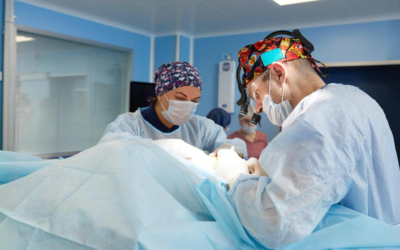
Imagine running a high-performing surgery center that’s growing fast—until paperwork slows you down, staff miscommunication causes delays, and patients start slipping through the cracks.
Sound familiar? While ambulatory surgery centers (ASCs) were built to be lean and efficient, many still rely on outdated systems that can’t meet today’s demands. As healthcare shifts toward value-based models, patient expectations rise, and reimbursement hinges on outcomes, not just volume. In this environment, clunky workflows and fragmented data are more than just annoying—they’re dangerous.
The solution? It’s not just “going digital.” It’s building a smart, connected digital workflow that works for your team, your patients, and your bottom line. Whether running an orthopaedic center or an endoscopy suite, the path forward starts with rethinking how information flows from intake to recovery.
Ready to future-proof your surgery center? Let’s explore what a high-performing digital workflow looks like—and how to build one.
Why Traditional Surgery Center Workflows Are Breaking Down
Surgery centers are built for efficiency, but ironically, many are held back by inefficient workflows. From clunky paper charts to disconnected scheduling tools, these old systems slow everything down. Staff waste time chasing documentation. Surgeons face delays between consultation and procedure. Patients sit confused, often receiving conflicting information from different departments.
Why does this still happen in the digital age?
Part of the problem is that many ambulatory surgery centers (ASCs) simply haven’t caught up with other parts of healthcare when it comes to technology. While over 90% of hospitals use electronic health records (EHRs), only about 31% of ASCs had adopted them as of a few years ago. Even fewer centers have fully integrated systems that combine scheduling, charting, communication, and billing into one workflow.
These disconnects lead to bottlenecks, medical errors, billing problems, and missed opportunities for patient engagement. And in today’s competitive, value-based environment, that’s not just inconvenient—it’s costly.
What Makes a Digital Workflow Work?
Creating a digital workflow isn’t just about adding technology. It’s about making sure the right information reaches the right people at the right time. A truly effective digital workflow should be:
- Connected across all departments and functions
- Automated where appropriate, to reduce human error
- Transparent, giving every staff member a real-time view of patient flow
- Patient-centred, enhancing communication and outcomes
Let’s break down the core components that help build a high-performing digital workflow.
1. A Unified, Interoperable EHR System
Think of your EHR as the nervous system of your ASC. If it’s fragmented or disconnected, messages don’t flow properly, and bad outcomes follow.
Many ASCs still rely on systems that don’t “talk” to one another. That means your surgical scheduler, pre-op nurse, and billing coordinator might all be looking at different versions of a patient’s information. That’s a recipe for delay.
But a unified, interoperable EHR changes the game. When the vascular team at a hospital adopted an EHR-driven consultation workflow, time to the OR for urgent patients dropped by 63%. That’s the power of streamlined information flow.
2. Real-Time Workflow Dashboards
Ever played telephone in a crowded room? That’s what running a busy ASC can feel like without a digital command center.
A real-time workflow dashboard helps everyone, from nurses to front-desk staff, see where each patient is in their perioperative journey. Who’s checked in? Who’s in pre-op? Who’s delayed in recovery?
This kind of visibility helps eliminate double work, reduces idle time, and keeps cases moving smoothly. It also allows administrators to spot and fix recurring bottlenecks faster than ever.
3. Automated Patient Communication
Patients are more connected than ever. So why are so many ASCs still calling them on landlines and sending paper instructions?
Automated messaging tools can send appointment reminders, pre-op fasting instructions, and even post-op recovery tips directly to a patient’s phone. These messages reduce no-shows, improve compliance, and create a smoother experience for everyone involved.
Plus, digital communication tools make it easier to collect feedback or satisfaction scores in real-time—something that’s increasingly important under value-based reimbursement models.
4. Integrated Telehealth for Pre-Op and Post-Op Care
You wouldn’t drive across town to ask a yes-or-no question. So why should patients have to come in person just to go over basic pre-op checklists?
Telehealth can replace or augment many manual processes that currently bog down ASC staff and delay surgical timelines. One study found that using telehealth for pre-op assessments and patient education cut down on clerical time and improved overall efficiency.
Even post-op follow-ups, which often involve checking incision sites or asking about pain levels, can be done remotely. That saves staff time, gives patients convenience, and frees up in-person slots for higher-acuity care.
5. Compliance and Safety Built Into the Workflow
Regulatory requirements aren’t just boxes to check—they’re vital to patient safety and ASC accreditation. But paper-based compliance tracking is prone to errors and omissions.
Digital workflows help ensure that time-sensitive tasks like surgical site marking or antibiotic administration happen when they’re supposed to. With timestamped EHR entries and automated alerts for missing documentation, nothing slips through the cracks.
Electronic chart audits have been shown to increase the completeness and accuracy of patient records while reducing the time it takes staff to find and fix errors.
6. Data and Analytics That Drive Smarter Decisions
Data is the new scalpel—precise, powerful, and indispensable.
With a digital workflow in place, your ASC can track:
- Case durations and turnover times
- Patient satisfaction scores
- Cancellation and no-show rates
- Revenue cycle metrics
- Clinical outcomes and complication rates
By making this data easily accessible through dashboards and reports, administrators can pinpoint inefficiencies and make smarter, faster decisions. It’s no longer guesswork—it’s insight on demand.
7. Scalable and Configurable Systems
Not every ASC is built the same. Some specialise in orthopaedic cases. Others focus on ophthalmology or GI procedures. Your workflow should match your speciality, not force you to fit a generic mold.
That’s why configurability is crucial. Whether you’re mapping out intake forms, pre-op screening protocols, or post-op survey flows, your platform should adapt to your center, not the other way around.
A modular digital platform allows you to scale as your center grows, adding features like remote patient monitoring or AI-based scheduling without overhauling your core system.
The Wrap
A modern surgery center can’t thrive on paper charts and disconnected systems. To stay competitive, efficient, and patient-focused, you need a workflow that works as hard as your clinical team does—one that’s digital, streamlined, and built for the future.
From faster pre-op assessments to smarter post-op follow-ups, every touchpoint matters. With the right digital tools in place, you can reduce delays, boost team productivity, and deliver the kind of seamless experience patients expect.
Reference
- Geier, A., & Smith, D. (2019). The Role of Electronic Documentation in Ambulatory Surgery Centers. AORN Journal, 109(4), 444–450. https://doi.org/10.1002/aorn.12636
- Allison, K. (2021). Assessing Transformation of Optimizing Ambulatory Surgery Center Services with Telehealth. MUSC Theses and Dissertations. https://medica-musc.researchcommons.org/theses/648/
- Iguidbashian, J., Lun, Z., Bata, K., King, R. W., Gunn-Sandell, L., Crosby, D., Stoebner, K., Tharp, D., Lin, C. T., Cumbler, E., Wiler, J., & Yi, J. (2023). Novel Electronic Health Records-Based Consultation Workflow Improves Time to Operating Room for Vascular Surgery Patients in an Acute Setting. Annals of Vascular Surgery, 97, 139–146. https://doi.org/10.1016/j.avsg.2023.07.101
- Bobadilla, J. L., Roe, C. S., Estes, P., Lackey, J., & Steltenkamp, C. L. (2017). Leveraging Electronic Health Record Implementation to Facilitate Clinical and Operational Quality Improvement in an Ambulatory Surgical Clinic. Journal of Ambulatory Care Management, 40(1), 9–16. https://doi.org/10.1097/jac.0000000000000170
- Wiggins, C., Peterson, T., & Moss, C. (2015). Ambulatory surgery centers׳ use of Health Information Technology. Health Policy and Technology, 4(2), 100–106. https://doi.org/10.1016/j.hlpt.2015.02.006