Türkiye’de bahis severler için en çok tercih edilen bettilt giriş adreslerden biri olmaya devam ediyor.
Curacao lisanslı platformlar arasında güvenilirlik açısından üst sıralarda bahsegel giriş yer alan, uluslararası denetimlerden başarıyla geçmiştir.
Kazançlı bahis deneyimi arayan herkes için bettilt doğru seçimdir.
Rulet masalarında en çok tercih edilen bahis türleri arasında kırmızı/siyah ve tek/çift seçenekleri yer alır; pinco giriş bu türleri destekler.
Basketbol tutkunları için en iyi kupon fırsatları bettilt sayfasında yer alıyor.
Unlocking Clinical Clarity Through Smarter Integration, Real-Time Access, and Patient-Centered Design
We’re drowning in health data—but are we actually using it to save lives, improve outcomes, or even make better decisions?
In hospitals, clinics, and homes, data is flowing constantly—from electronic health records to wearables to wellness apps. Yet for many providers, all that information feels more like noise than insight. Instead of empowering action, it often clutters workflows and overwhelms care teams. At the same time, patients are generating health information every day that rarely makes it into their clinical story.
The truth is, health data isn’t inherently valuable—it only becomes powerful when it’s accessible, connected, and meaningful. And that’s where the real opportunity lies.
This isn’t about collecting more data. It’s about making better use of what we already have. Whether you’re a provider, care manager, or digital health strategist, understanding how to transform raw numbers into actionable insight is key to building smarter, more effective care.
The Health Data Boom: More Doesn’t Always Mean Better
We’re living in the age of health data. From hospital systems to smartwatches, data is constantly being collected—heart rates, glucose levels, medication adherence, lab results, sleep cycles. It’s everywhere. And while that sounds like a goldmine for personalized care, the truth is… most of it isn’t being used effectively.
Healthcare providers are sitting on mountains of raw information that often go untapped. Patients generate data daily, but much of it never makes its way into clinical workflows. Even when it does, it’s often scattered, outdated, or hard to interpret.
The problem isn’t lack of data. It’s the lack of meaningful insight. And that’s what we need to fix.
The 7 Biggest Health Data Challenges Holding Providers Back
To understand where things break down, we need to pinpoint the core issues. Here are the biggest health data challenges that prevent providers—and patients—from making the most of this valuable resource.
1. Fragmented Data Across Systems
Imagine trying to complete a puzzle with pieces from five different boxes. That’s what providers deal with when health data is split across hospital EHRs, urgent care systems, third-party labs, and personal health apps.
Each system speaks its own language. Lab results from one platform might not line up with medication records from another. There’s no unified view, which leads to blind spots, repeated tests, and treatment delays.
2. Poor Interoperability
Data fragmentation wouldn’t be such a headache if the systems could talk to each other. But interoperability remains a major pain point.
Dr. Dipak Kalra’s research highlighted that EHR systems often can’t preserve the clinical meaning of shared data. One platform’s “medication list” may not match another’s format or coding. So even when data is exchanged, it arrives in pieces or loses its context.
That’s not just inconvenient—it’s dangerous.
3. Delayed or Incomplete Access
Most traditional health data systems operate on a delay. Records are updated after a clinic visit or hospital discharge, not in real time. Meanwhile, patients are out in the world—working out, managing chronic conditions, logging symptoms at home—but none of that information gets captured or analyzed.
This lack of real-time visibility limits providers from intervening early or making data-informed decisions at critical moments.
4. Disconnected Patients and Data
Let’s be honest: Most patients have no idea where their health data lives—or how to access it. Some don’t know they have records scattered across multiple systems. Others feel overwhelmed by portals and medical jargon.
Hoerbst and Ammenwerth’s work pointed to a troubling gap in EHR design—one that consistently leaves patient empowerment out of the equation. Without tools that are built for usability, patients remain on the sidelines of their own care.
5. Security and Privacy Risks
With great data comes great responsibility. As data volume grows, so does the risk. From ransomware attacks to unauthorized access, health data is a prime target for cybercriminals.
What’s worse is that many legacy systems don’t have built-in protections. They lack audit trails, secure sharing permissions, or even basic encryption. That creates mistrust and limits the adoption of otherwise useful tools.
6. Raw Data Without Clinical Relevance
You might have gigabytes of numbers—but what do they mean?
Ambinder’s study of oncology clinics revealed that even in high-stakes settings, EHRs often failed to deliver relevant, decision-ready insights. Physicians found themselves buried in documentation rather than supported by it. That’s a massive missed opportunity.
To make data useful, we need platforms that organize, filter, and surface the right info at the right time.
7. Missed Opportunities for Prevention
Too much of healthcare is still reactive. A patient has a problem, shows up at a clinic, and then action is taken. But what if we could see the early warning signs—days or weeks ahead?
That’s exactly what connected health data can enable—if used properly. When wearable data, lifestyle trends, and EHR insights are combined, providers can catch changes before they become crises. But only if the data is actually collected, accessible, and understandable.
Turning Health Data Into Action: What to Look For in a Smarter System
To make the leap from information overload to intelligent care, we need platforms that can do more than just store data. They need to organize it, analyze it, and deliver it in ways that are meaningful and actionable.
Here’s what a truly effective health data platform should include:
- Unified Data Dashboard. One place to see EHR records, lab results, pathway compliance, wearable data, and home monitoring tools.
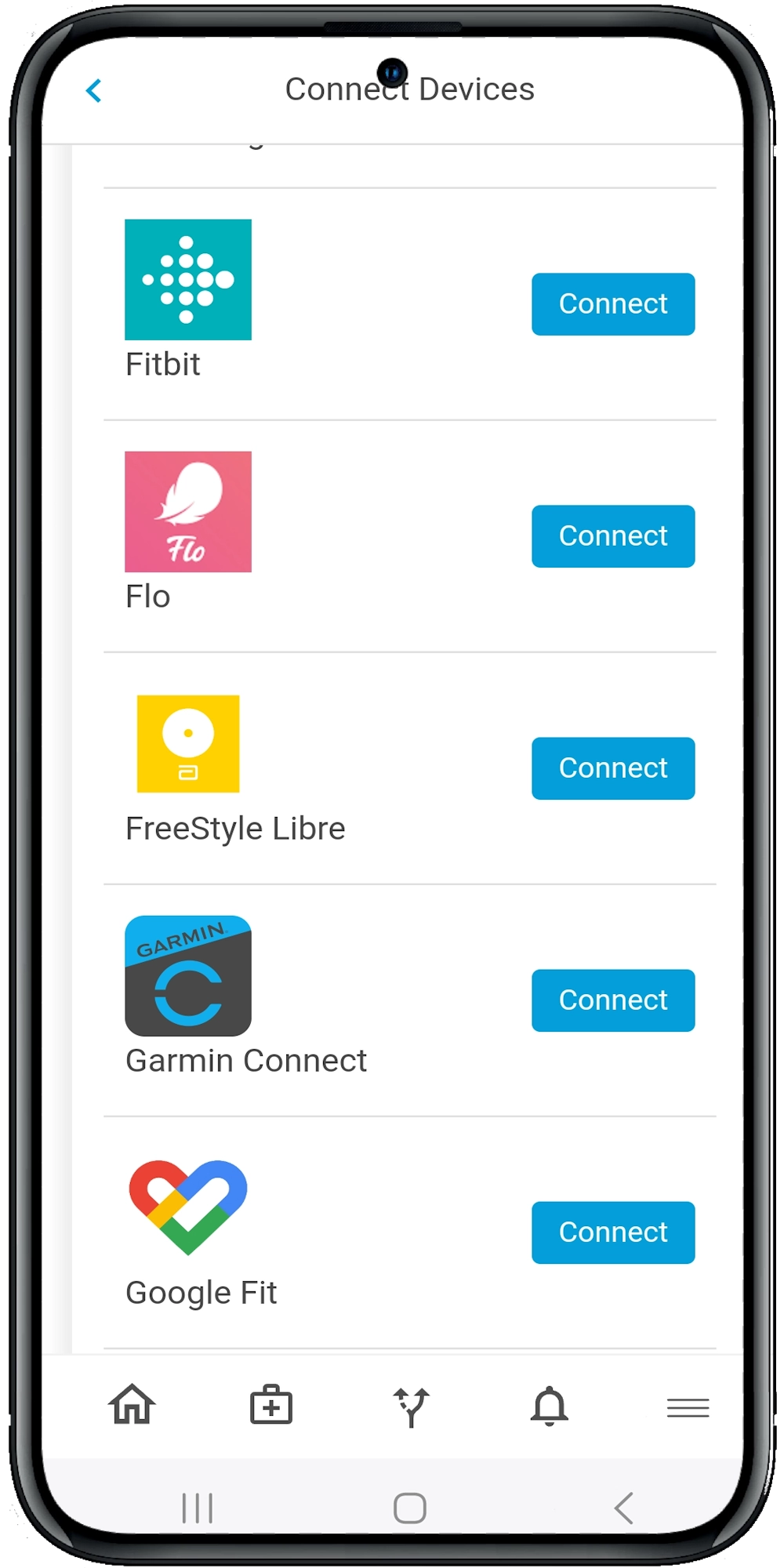
- Real-Time Syncing. Integration with Apple Health, Fitbit, Omron, and other popular apps and devices.
- Smart Filtering. Tools to highlight trends, outliers, or missed medications—so providers can focus on what matters.
- Patient-Friendly Interface. Simple tools for patients to view, share, and act on their data—without needing a medical degree.
- Secure Sharing & Controls. Role-based permissions, encrypted transfers, and audit logs that meet HIPAA and beyond.
- Actionable Alerts. Built-in reminders, provider notifications, and AI-suggested interventions based on patient activity.
- Chronic & Preventive Pathways. Guidance that helps users manage conditions, reach goals, and build better health habits over time.
That’s not a wish list—it’s the bare minimum we should expect in today’s data-rich environment.
How Calcium Turns Health Data Into a Living Ecosystem
Calcium isn’t just another EHR; in fact, we don’t really consider ourselves an EHR – even though we provide access to electronic health records from almost every hospital and health system in the United States. Rather, Calcium is a digital health platform that wraps around the systems you already use—unifying data, boosting usability, and delivering real-time insights to both providers and patients.
Let’s look at how Calcium solves the biggest challenges we just walked through:
- Fragmentation? Calcium pulls data from 95% of U.S. health systems, plus labs, devices, and wellness apps.
- Interoperability? Built on HL7 and FHIR, it connects seamlessly across systems.
- Real-Time Access? The platform integrates with wearables and devices to track vitals and symptoms as they happen.
- Patient Engagement? The Calcium Super App is mobile-first, intuitive, and built for everyday users—not just clinicians.
- Security? HIPAA-compliant encryption, audit trails, and full user control over who sees what.
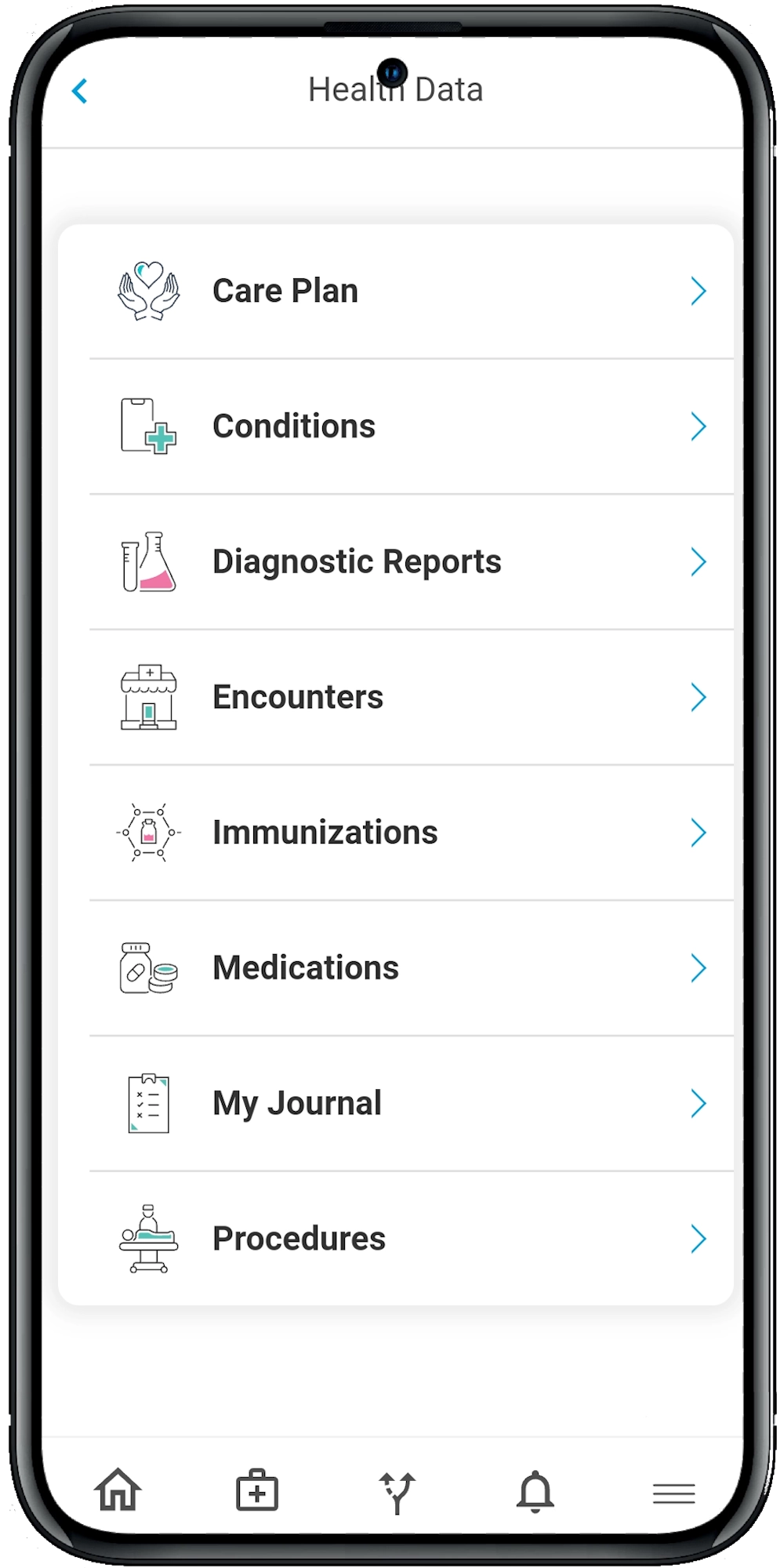
- Contextual Data? Calcium organizes everything into relevant dashboards—conditions, meds, vitals, care plans—and surfaces what matters.
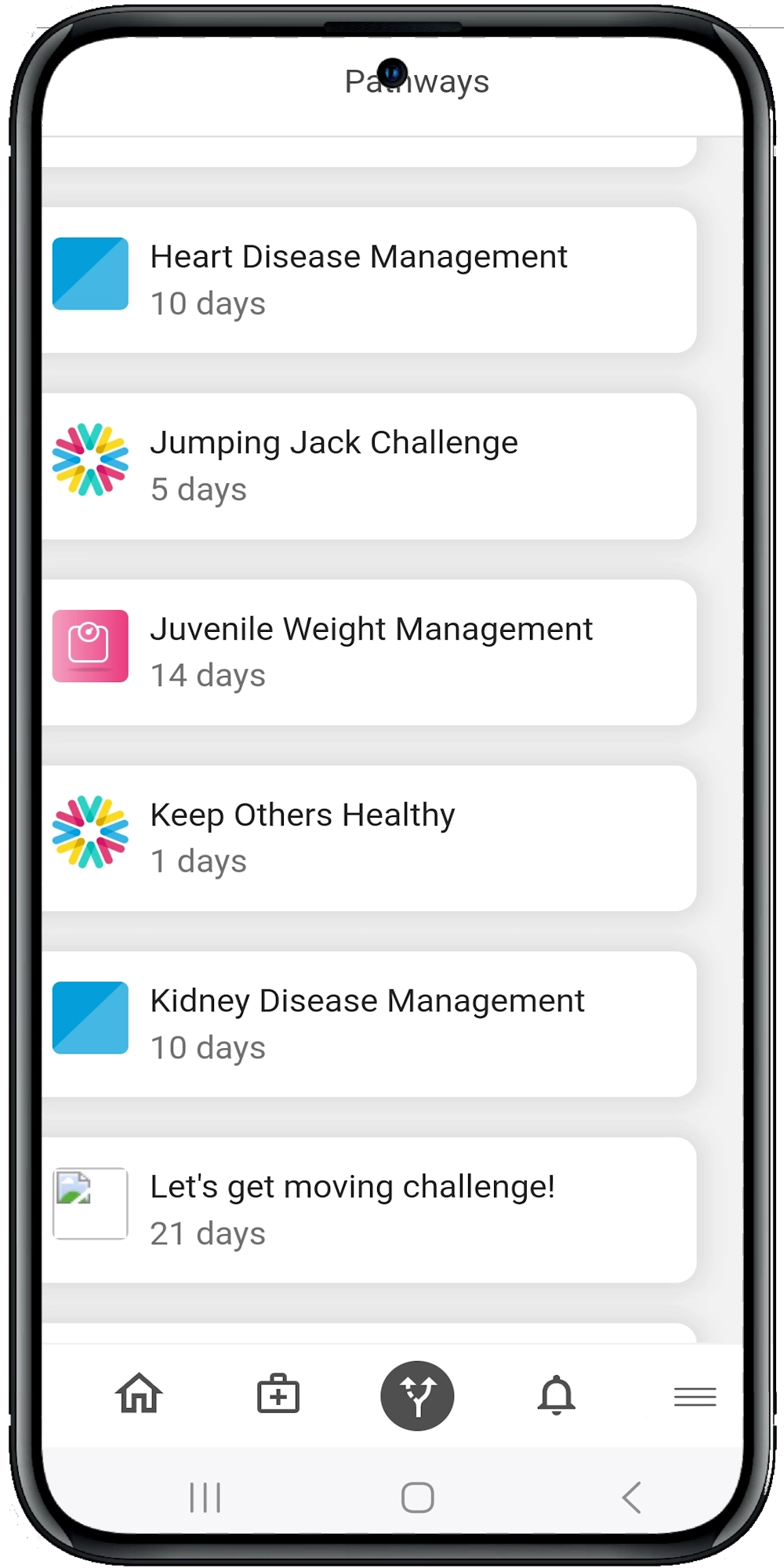
- Prevention? AI-powered care pathways guide users through wellness routines, chronic disease management, and more—helping spot risks early.
And for providers? The Calcium Core dashboard gives real-time visibility into patient progress, alerts for at-risk individuals, and streamlined communication across the care team.
Health Data Is a Clinical Asset—If You Treat It That Way
The truth is, health data on its own won’t improve outcomes. It’s what you do with it that counts.
Health data holds incredible promise—but only if we stop treating it like digital clutter and start using it as a strategic asset. Whether you’re trying to improve patient outcomes, reduce clinician burnout, or streamline chronic care management, the ability to turn scattered data into meaningful insight is a game-changer.
That’s where platforms like Calcium step in. With real-time syncing, intuitive dashboards, AI-powered care pathways, and secure patient sharing, Calcium isn’t just organizing data—it’s activating it. It bridges the gap between numbers and next steps, between isolated records and connected care.
If you’re ready to make your data work harder and smarter for your patients and your team, now’s the time to explore a better way forward.
Reference
- Kalra, D. (2006). Electronic Health Record Standards. In R. Haux & C. Kulikowski (Eds.), IMIA Yearbook of Medical Informatics 2006 (pp. 136–144). IMIA and Schattauer GmbH. Retrieved from https://www.schattauer.de.
- Ambinder, E. P. (2005). Oncology Enters the Information Age. Journal of Oncology Practice, 1(2), 57–63. Retrieved from https://www.jopasco.org.
- Hoerbst, A., & Ammenwerth, E. (2010). Electronic Health Records: A Systematic Review on Quality Requirements. Methods of Information in Medicine, 49(4), 1–9. Schattauer GmbH. Retrieved from https://www.schattauer.de.
- Häyrinen, K., Saranto, K., & Nykänen, P. (2008). Definition, structure, content, use and impacts of electronic health records: A review of the research literature. International Journal of Medical Informatics, 77(5), 291–304. Elsevier Ireland Ltd. Retrieved from https://doi.org/10.1016/j.ijmedinf.2007.09.001.